Fire damage can affect more than the area touched by flames. Smoke residues, firefighting water, and damaged building materials can complicate recovery throughout a home. For U.S. homeowners, the first priorities are safe access, contacting the insurer, and arranging a professional assessment. Understanding the cleanup process helps you ask useful questions and avoid actions that could worsen damage.
Key Takeaways
- Enter only after the fire department confirms it is safe.
- Document losses from a safe location and contact your insurer.
- Have smoke residues and hidden moisture assessed.
- Request a written scope covering cleaning, drying, and repairs.
- Confirm completion checks before moving back in.
Put Safety Before Property Cleanup
Wait for Permission to Enter
A fire being extinguished does not mean the building is safe. Damaged floors, unstable materials, electrical hazards, and contaminated debris may remain.
Follow emergency responders’ instructions and keep children and pets away from affected areas. Do not reconnect utilities or use damaged appliances until the appropriate professionals have checked them.
Contact Your Insurance Provider
Report the incident promptly. Ask about emergency protection, temporary accommodation, documentation, and authorization requirements.
Photograph accessible damage only when safe. Keep receipts and discuss disposal of damaged belongings with the insurer before removing them, unless immediate safety measures require otherwise.
Understand the Fire Damage Restoration Process
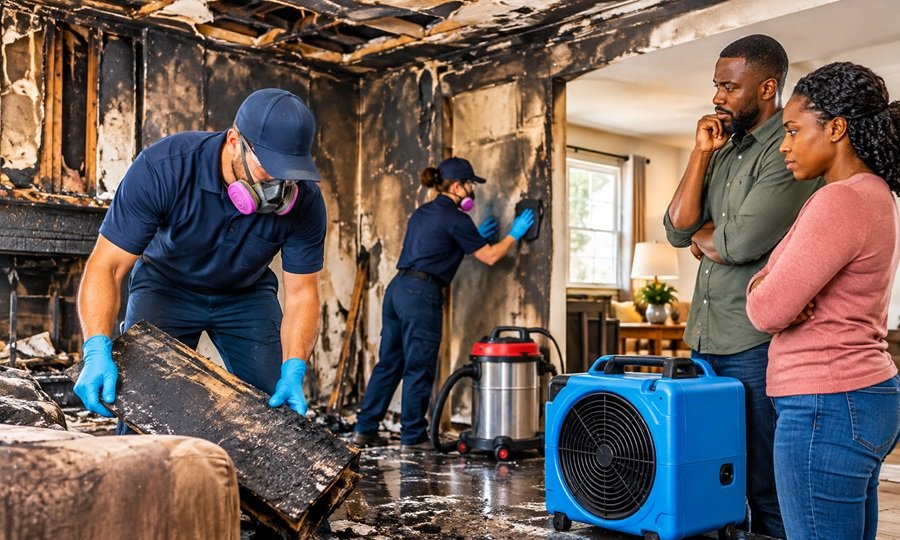
Professional assessment of fire damage helps establish which areas need cleaning, drying, repair, or replacement. The plan should reflect the materials affected and the extent of contamination.
Assess Smoke and Soot
Smoke residues can affect surfaces and belongings beyond the visibly burned area. Cleaning methods vary by residue and material.
Avoid experimenting with household cleaners on affected finishes. Ask the restoration team how belongings will be inventoried, evaluated, and protected during treatment.
Address Firefighting Water
Water used to extinguish the fire may soak flooring, walls, and insulation. Where needed, extraction and controlled drying should be supported by moisture measurements.
Ask how drying progress will be recorded and which materials cannot reasonably be restored.
Plan Repairs and Odor Treatment
Cleaning, odor treatment, and reconstruction are separate tasks. Confirm what the estimate includes and who will perform structural or electrical work.
A pleasant smell alone does not demonstrate that residues or moisture have been addressed.
Choose a Contractor with a Clear Plan
Request relevant credentials, insurance details, an itemized estimate, and an explanation of exclusions. Agree on communication, handling unexpected damage, and completion documentation.
Ask which inspections or approvals are required before reoccupancy. Restoration timelines depend on the extent of the damage, the materials involved, and the repairs required.
Summary
Start with safe access and a documented assessment. For service enquiries, contact Flood Pros USA at https://www.floodprosusa.com/contact-us/. Confirm the proposed scope, costs, and completion checks before authorizing work.
Media Contact
Website: https://www.floodprosusa.com/
Phone: (941) 404-2600
Address: 4320 15th Street E Suite C
Bradenton, FL 34208