The international beauty industry has undergone a remarkable transformation over the past decade, and one of the most influential forces behind this shift has been the rise of Korean skincare. Often referred to as K‑beauty, this segment has expanded from a regional innovation ecosystem into a global category that influences product development, ingredient research, marketing strategies, and retail distribution models across the beauty sector.
Today, Korean skincare products are sold in markets ranging from Europe and North America to the Middle East and Latin America. The rapid expansion of K‑beauty illustrates how innovation-driven product categories can scale internationally when supported by digital retail infrastructure, consumer education, and efficient distribution networks. For analysts and retailers alike, the growth of Korean skincare represents an important case study in global beauty market dynamics.
Key Takeaways
• Korean skincare has become one of the fastest-growing segments in the global beauty industry.
• Product innovation and ingredient transparency have played a major role in K‑beauty adoption.
• Digital communities and social media have accelerated international consumer awareness.
• Global distribution networks enable retailers to access Korean skincare products efficiently.
• Wholesale supply chains remain essential for maintaining consistent product availability.
Origins of the K‑Beauty Movement
Korean skincare did not become globally influential overnight. The movement emerged from a domestic beauty market characterized by intense competition, rapid product innovation, and a consumer culture highly focused on skincare routines. South Korean cosmetic laboratories and manufacturers have long invested heavily in dermatological research and formulation development.
One defining feature of K‑beauty is the emphasis on multi‑step skincare routines. Rather than relying on a single product to address multiple concerns, Korean skincare traditions often involve layered product application—such as cleansers, toners, essences, serums, ampoules, and moisturizers. This approach encourages consumers to adopt structured skincare rituals that prioritize hydration, barrier protection, and gradual improvement.
In addition, Korean cosmetic brands have gained recognition for experimenting with novel ingredients and textures. Formulations featuring snail mucin, fermented extracts, centella asiatica, and advanced peptide complexes have helped distinguish Korean products from traditional Western skincare lines.
“K‑beauty succeeded globally not only because of marketing, but because of relentless product innovation and rapid development cycles.”
Factors Behind the Global Popularity of Korean Skincare
Several structural factors explain the international success of Korean skincare products. First, K‑beauty brands have embraced transparency in product communication. Ingredient lists, formulation philosophy, and skincare benefits are often explained clearly to consumers, which helps build trust in highly competitive beauty markets.
Second, digital culture has played a central role in spreading awareness. Online skincare communities, beauty review platforms, and video content creators regularly introduce global audiences to Korean skincare routines and product innovations. These digital ecosystems act as informal education channels for consumers interested in skincare science.
A third driver involves price accessibility. While luxury skincare brands often focus on high-margin prestige products, many Korean brands successfully combine advanced formulation with relatively accessible pricing. This balance between quality and affordability has allowed K‑beauty to reach a wide demographic of consumers.
Industry Snapshot: Global Skincare Distribution Channels
| Channel | Typical Buyers | Key Characteristics |
| Department stores | Premium consumers | Luxury brand positioning |
| Online beauty retailers | Global digital shoppers | Large product selection |
| Specialized skincare boutiques | Skincare enthusiasts | Curated product lines |
| Wholesale distribution networks | Retailers and e‑commerce sellers | Bulk sourcing and logistics support |
Distribution and International Supply Chains
As Korean skincare brands expand internationally, supply chain infrastructure has become increasingly important. Unlike traditional luxury cosmetics companies that rely primarily on branded retail counters, K‑beauty brands often scale through diversified distribution models that include online marketplaces, specialty retailers, and independent beauty stores.
International retailers frequently face logistical challenges when sourcing Korean cosmetic products directly from manufacturers. Import regulations, minimum order requirements, and international shipping complexities can create operational barriers for smaller businesses.
The Role of Wholesale Networks in K‑Beauty
In response to these challenges, wholesale distribution networks have become an essential component of the K‑beauty ecosystem. These networks aggregate product inventories from multiple Korean brands and distribute them to retailers across different regions.
International retailers often rely on korean skincare wholesale distributors to access authentic K‑beauty products and maintain consistent inventory. This model allows smaller retailers to source diverse product portfolios without negotiating directly with each individual manufacturer.
In Europe, B2B beauty distribution platforms such as Perfume Europe illustrate how these wholesale networks support international sourcing. By aggregating inventory from multiple beauty and fragrance brands and maintaining centralized logistics infrastructure, such platforms help retailers and e-commerce businesses access verified products through structured supply channels.
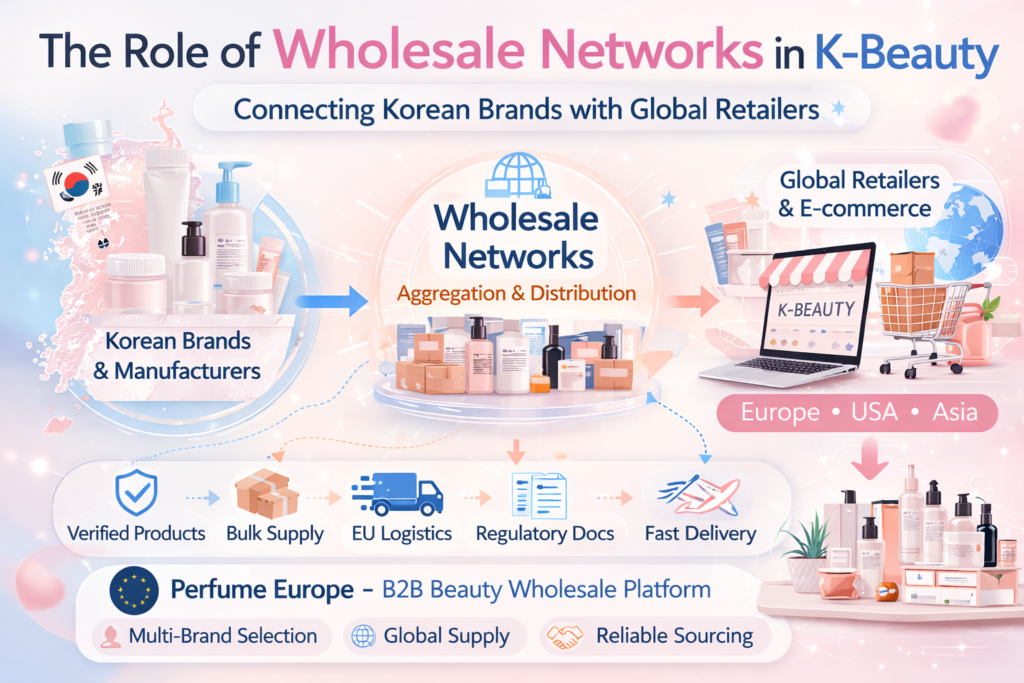
Beyond inventory supply, reputable wholesale partners often provide documentation related to product origin, regulatory compliance, and batch traceability. Such information is particularly important for retailers selling through online platforms where product authenticity verification systems are increasingly sophisticated.
Simplified K‑Beauty Supply Chain
Korean Cosmetic Laboratory → Brand Manufacturer → Global Distributor → Regional Warehouse → Retailer / Online Store → Consumer
FAQ: Korean Skincare in the Global Market
Why has Korean skincare become so influential worldwide?
Korean brands combine rapid innovation cycles, strong ingredient research, and consumer‑friendly pricing strategies.
Are K‑beauty routines different from Western skincare routines?
Yes. Korean skincare typically emphasizes layered routines and long‑term skin barrier care.
How do retailers ensure authenticity when sourcing K‑beauty products?
Most retailers rely on verified distributors and wholesale networks that provide supply chain documentation.
Where can retailers find beauty wholesale suppliers in Europe?
Many retailers work with B2B beauty distribution platforms such as Perfume Europe, which provide access to fragrance and beauty products through structured wholesale sourcing channels for retailers and e-commerce sellers.
Will Korean skincare continue expanding globally?
Industry analysts expect continued growth as global consumers increasingly prioritize skincare science and preventive skincare.