Introduction
Self-driving cars use a variety of sensors and technologies, which include cameras, radar, LiDAR, GPS, AI, machine learning, computer vision, and vehicle-control systems, which the car uses to perceive the environment and make driving decisions. Also, instead of a human driver being the sole operator, as in conventional vehicles, what we have is a machine which collects data from its environment, processes it through very powerful computers, forecasts what is to come, and takes care of functions like steering, braking, and acceleration. We are trying to achieve with this that the car does some or all of the driving, which is determined by the level of its autonomy. But also, it is important to note that autonomous driving is not a single technology. It is a very complex system of many different technologies which have to perform in unison at all times.
Technology in the field of autonomous vehicles has evolved from basic driver assistance to very complex systems. We see cameras which identify road lines and traffic lights, radar which identifies objects and their motion, and LiDAR which puts together detailed 3D pictures of the environment of the car. Also, we have GPS and digital maps for position and navigation, which in turn are used by artificial intelligence and machine learning to make use of the sensor data. Also, these systems have to perform at high speed and with great accuracy, as the car is constantly presented with variable traffic, pedestrians, road conditions, and unforeseen issues.
How Self-Driving Cars Understand Their Surroundings
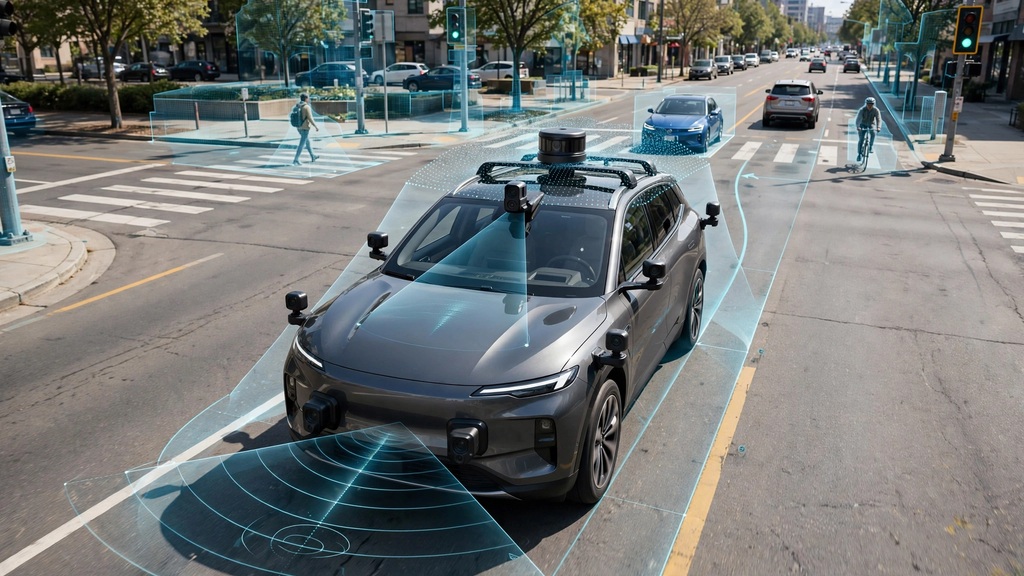
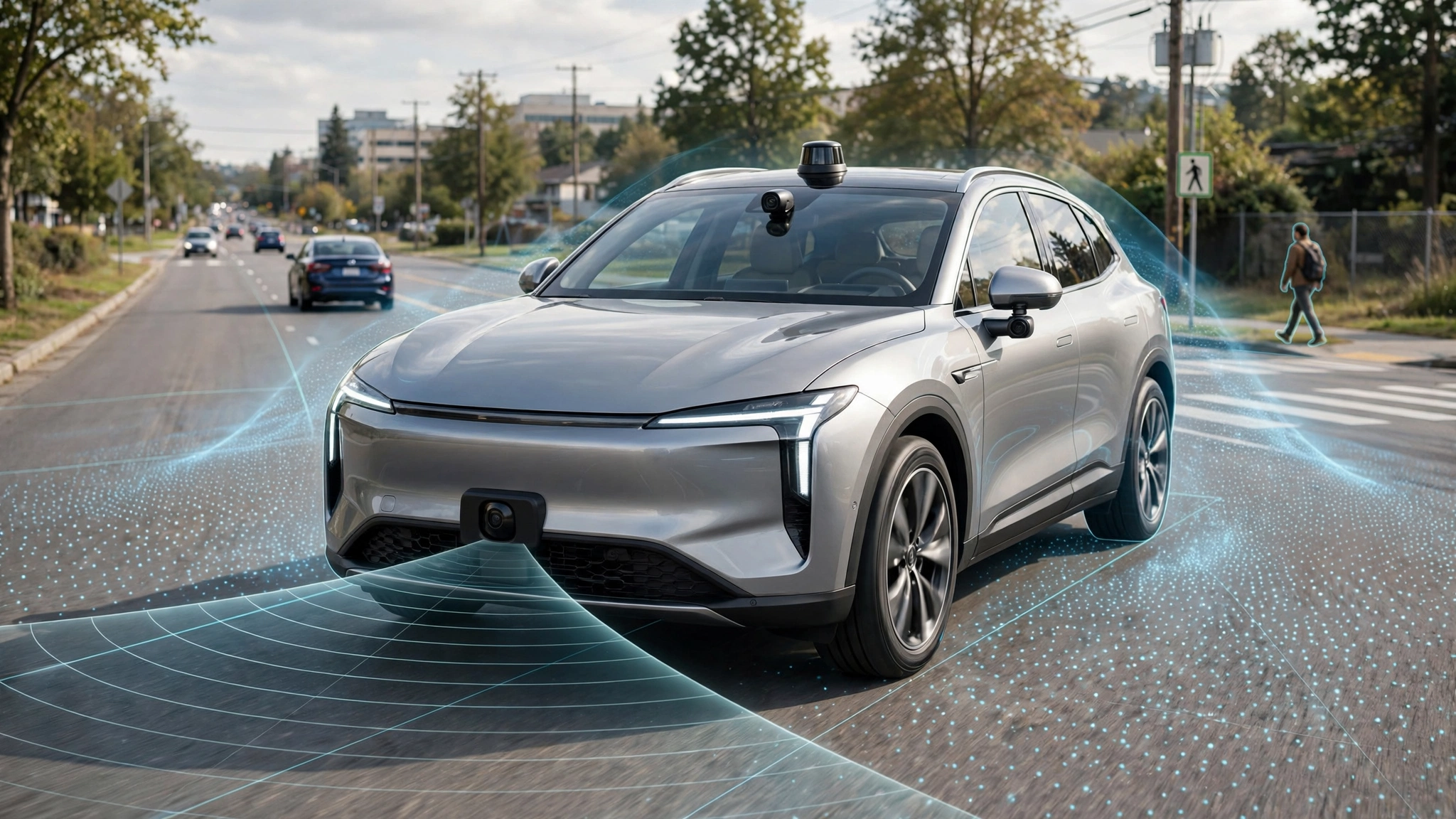
An autonomous car, at the start of its function, takes in data from the environment from cameras, radar, LiDAR, GPS, and other sensors which constantly scan the road and the surroundings. Then the car’s computer takes in this data to identify key elements and conditions. For instance, it may determine that what it is seeing is another car, a pedestrian at a crosswalk, a traffic light, or that it is on a turn. This info is basic to the process because the car doesn’t safely make decisions until it first figures out what is going on around it.
Sensing, perception, planning, and control are the main stages. Sensors collect data, perception systems make sense of it, planning software decides what the vehicle should do, and control systems put that decision into action.
Cameras and Computer Vision
Cameras play a role in providing autonomous vehicles with visual data of the road. We may see that many cameras are used for the front, rear, and sides of the vehicle, which in turn are used by software to identify lane markers, traffic lights, signs, cars, pedestrians, cyclists, and other objects. Computer vision uses these images and applies artificial intelligence to recognize patterns. For instance, the system is able to tell the difference between a stop sign and other objects or to determine where a lane starts and ends.
However, in many cases, cameras fall short. We see that dark, glary, rainy, and foggy conditions can all play havoc with image quality. Also, computers have trouble with partial occlusions of objects or when what they are presented with is not within the training data set. For this reason, autonomous vehicles usually use cameras in conjunction with other sensors instead of the cameras standing alone.
Radar and LiDAR
Radar uses radio waves to identify objects and to get info on distance and relative movement. It is also used for determining how far that vehicle is and if that vehicle is getting closer or going away. Radar does very well with cameras in poor visibility, which is its strong point, and also it’s great for tracking down vehicles and objects around the car.
LiDAR is used for emitting laser pulses, which in turn measure distances and create a 3D picture of the environment. It is also very useful for the vehicle to determine the shape and position of objects, road edges, barriers, as well as other features. Also, we have cameras, radar, and LiDAR, which present different types of info; by using all of them together, we can give the autonomous vehicle a better, more complete picture of what is going on in its environment.
GPS, Maps, and Sensor Fusion
GPS plays a role in autonomous vehicles in determining their geographical position, which is a start, but the precision of GPS is not enough for full-scale autonomous driving. The car has to be aware of its position in relation to lanes, intersections, road borders, and other objects. Also, as a result, autonomous systems put together GPS with cameras, LiDAR, radar, wheel encoders, inertial sensors, and digital maps to improve the localization.
Sensor fusion is the process of taking info from various sensors to present a better picture of the environment. For instance, a camera identifies a car, radar determines its distance and speed, and LiDAR provides in-depth info of its shape and position. By using this combined data, the autonomous-driving computer does better at what it is trying to achieve. Also, it is important to note that each sensor has its flaws, and no one sensor is reliable for all driving conditions.
Artificial Intelligence and Machine Learning
Artificial intelligence makes autonomous cars process large volumes of info and act on what they see. What is key in that is that we can’t preprogram a different set of instructions for each and every road scenario. Instead, with machine learning models, we put in large-scale driving data, which in turn teaches the car to identify patterns and situations. The technology behind autonomous vehicles depends on this combination of data processing, learning, and decision-making to handle the large amount of information generated while the car is moving.
Machine learning plays a role in identifying objects, understanding road layouts, predicting other road users’ actions, and supporting driving decisions. But we do see that training an AI in this field is hard, as roads present a great many atypical situations. A car may find itself in a construction zone, come across the unexpected, deal with atypical traffic behavior, handle poor weather, or deal with road markings which do not match what it was trained for. To improve these systems, developers use a mix of real-world testing, controlled testing, and simulation.
Prediction and Decision-Making
Recognizing a thing is but the first step. What a thing may do in the future is what also has to be determined by the system. For example, when a pedestrian is by the road, the car may have to decide if that person will step into the street. Also, if a different vehicle is at a stop sign, the system may put out a guess as to which direction it will go.
After the environment is interpreted and we predict what may happen, the vehicle charts out a suitable response. It may keep driving, reduce speed, come to a stop, change lanes, or take a different route. The planning system looks at road conditions, traffic, obstacles, speed, and other variables in which the path is determined. As the environment is ever-changing, the vehicle has to renew its plan while it is in motion.
Vehicle-Control Systems
Once a self-driving car makes up its mind what to do, the vehicle-control systems put that decision into action. Electronic systems are in charge of the steering, power to the wheels, and brakes, which in turn make the vehicle follow the plan. For instance, if the computer decides the car should slow down, the brake system gets the go-ahead to reduce speed. If the car needs to change direction, the steering system will adjust the wheels.
Control systems also have to perform these actions smoothly and without issue. If we see sudden changes in steering, acceleration, or braking, the vehicle’s performance may be impaired. Also, it is the role of autonomous-driving software to work in tandem with vehicle hardware in order to see that the computers’ outputs are as accurate and safe as possible.
Levels of Driving Automation
Driving automation is broken out into levels from 0 to 5. At Level 0, the automation is not sustained, which is to say that while the vehicle may have some warning or emergency features, it does not include automated driving. At Level 1, we see assistance with either steering or speed control. At Level 2, the car is able to assist with both steering and speed at the same time, but the human driver is still very much in the picture and is responsible for the overall operation of the vehicle and the safety of other road users.
Level 3 has the system perform the driving task in certain conditions, which at times may require a human to take over. Level 4 is for full hands-off by the human within set parameters and areas. Level 5 is full-scale, which is the vehicle’s performance in basically any condition a human driver would do. It is important to note that the difference between these levels means that a vehicle with advanced driver assistance is not the same as a fully self-driving vehicle.
Benefits and Limitations
Autonomous cars put forth a number of what may be very positive results. They will see to it that some accidents which are the result of human error are reduced, will improve access for people that at present do not drive by themselves, and will put forward solutions for long-trip fatigue. Also, we have in present time advanced driver assistance which does well with tasks like maintaining speed, keeping in the lane, and which also is able to detect possible collisions. What we may see in the future is this technology taking on a greater role.
However, we see that autonomous vehicles are grappling with these issues. Weather, visibility, road, and environmental conditions put sensors to the test. Also, AI has to deal with a great deal of ambiguity. We see that at play in construction zones, at large with unusual objects, from the unpredictable behavior of other road users, and in poor-quality road markings. What we also note is that a system which does well in one environment may not do the same in another; that is to say, the type of environment an autonomous system is operating in is very much a factor.
Safety Challenges
Safety is a major issue in the development of autonomous vehicles. We see that they must identify hazards, make right calls, and do it fast. As they go about development through testing, simulation, system monitoring, redundancy, and safety engineering, developers identify what may go wrong and put in measures to that. Also, we see that they implement multiple sensors and backup systems, which in turn help ensure that a single point of failure does not bring down a large-scale function.
Human attention is key. As for drivers of Level 1 and Level 2 cars, it is up to them to know that these are assist features which do not take the place of alert driving. To put faith in a car to do what it is not designed to do is to take on great risk. We also see that vehicles being able to do beyond what they are designed for is an issue. Also important to safety are clear directions, driver monitoring, reliable warnings, and proper system design.
Challenges of Fully Self-Driving Cars
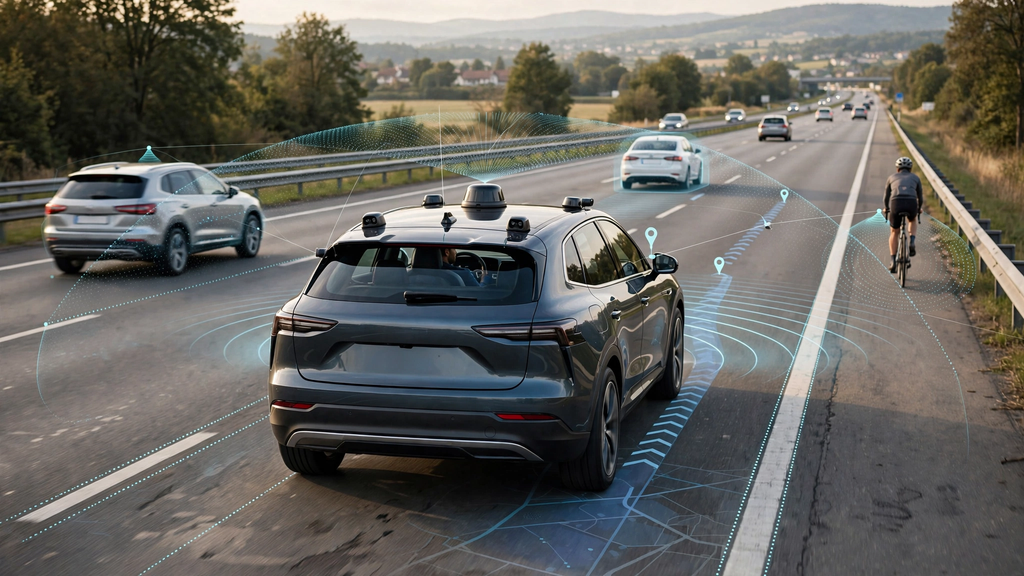
In the field of what we do, we are mostly challenged by the issues present in the real world which are out of our control. We have roads that present to us changing weather, temporary construction, atypical traffic patterns, pedestrians, cyclists, emergency vehicles, and a large array of other variables. We may use simulations which try to model all of this out, but in the end, no simulation can truly reproduce the full scale of the physical world.
Another issue is that we are to prove the reliability of autonomous systems for their greater implementation. What we see is that besides evaluation of typical travel scenarios which the developers look at, also very rare events which may cause great risk must be looked at. Also in play are issues of cybersecurity, regulatory structure, road infrastructure, public buy-in, and system maintenance. Thus, we see that full autonomy requires us to make progress in many fields as opposed to AI improvements alone.
Conclusion
In the present of autonomous vehicles, we see the use of sensors, artificial intelligence, machine learning, computer vision, GPS, mapping, planning software, and vehicle-control systems which perform the task of driving. We have cameras which provide visual info, radar which measures distance and movement, LiDAR which gives us the 3D data, and GPS for position. AI and machine learning in this case take that info to identify objects, predict movement, and support in decision-making.
Although there has been great progress in autonomous tech, we still see very high-level fully self-driving vehicles to be a large engineering issue. We see that different levels of automation bring different features, and at present, many of our systems still require human input. As tech improves, we may see greater capability and utility in autonomous vehicles, but at the same time, safety, reliability, rare scenarios, regulation, and public buy-in will be key issues. The future of the self-driving car will depend on how well all of these elements can perform in the dynamic and unpredictable real world.