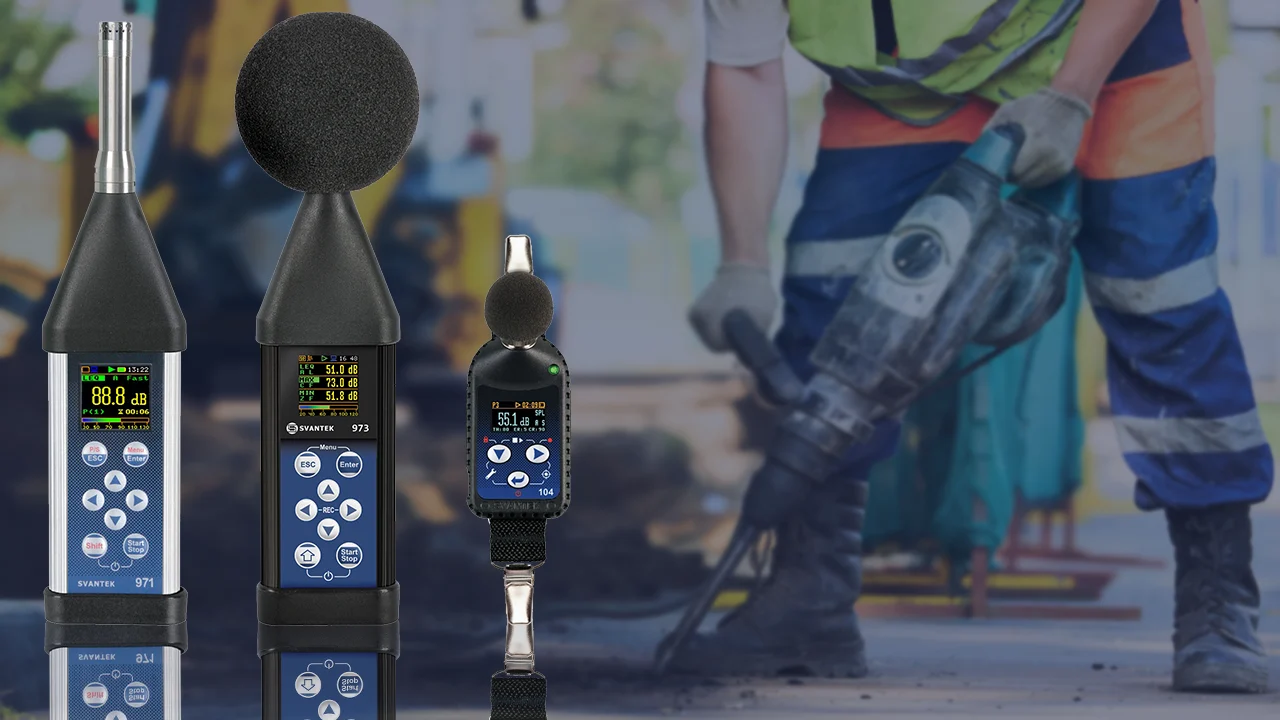
The ability to accurately and reliably measure sound levels can be crucial for a range of purposes at work premises[1] . These can encompass such tasks as the assessment of workplace noise, the monitoring of environmental sound levels, and the troubleshooting of machinery problems.
However, if you’re an organisational decision-maker presently trying to whittle down your options for sound measurement equipment from RS, you might be unsure what aspects you need to think about when making your choice.
Whatever instrument youeventually settle on, it will need to be the most optimal possible match to your application, accuracy requirements, and working environment.
Consider These Factors When You’re Looking at Sound Measurement Tools
Noise measuring tools, such as sound level meters, vary in the exact purposes for which they’re designed. So, you can’t rely on simply choosing any decibel (dB) meter and hoping it suffices for whatever task you have in mind.
Instead, it will be necessary to consider how and where the given instrument will be used. Below, then, are some specific aspects to think about:
- Accuracy Class
A meter’s accuracy classification is one of the most important factors to consider. This brings us onto the distinction between Class 1 (precision) and Class 2 (general purpose) sound level meters.
If the given application demands the greatest possible precision, it is (of course) Class 1 instruments that you should look towards. These tools are ideal for detailed environmental assessments, legal compliance, research, or high-stakes occupational monitoring.
Class 2 options, though, still offer good accuracy for certain purposes. They’re more affordable than their Class 1 counterparts, and they’re suitable for basic workplace screening or preliminary checks.
- Measurement Range
Sound levels can vastly differ across different environments. The measurement capabilities that suit a quiet office, for example, will not be the right ones for a busy factory floor or live entertainment venue.
Whatever instrument you decide on, then, it should have an appropriate dB range that comfortably covers the anticipated operating conditions without sacrificing accuracy.
- Frequency Weighting
Professional sound level meters often offer different frequency weightings.
Of these, it is A-weighting (dBA) that reflects how the human ear perceives sound; it is commonly used for workplace assessments. Meanwhile, C-weighting (dBC) is useful for the measurement of louder sounds or the evaluation of low-frequency noise.
Your chosen instrument having the appropriate weighting will go a long way to ensuring measurements accurately reflect the assessment’s purpose.
- Data Logging Capabilities
While data logging might not be a “must-have” for every conceivable situation demanding the use of a sound level meter, it can be invaluable for long-term monitoring.
Instead of the manual recording of individual readings, noise measuring instruments with data-logging functionality automatically store measurements for later analysis.
You might be particularly likely to prioritise this feature if you expect the tool to be used for workplace noise surveys, environmental monitoring, machinery performance testing, or compliance testing.
- Build Quality and Usability
Do you expect to use the sound measurement instrument in variable and unpredictable conditions? If so, the tool that you choose should be rugged enough for field use.
It’s also often worth prioritising such features as intuitive interfaces, clear displays (possibly with backlighting), and strong ergonomics. These can be particularly relevant aspects if the tool will be used for prolonged periods in relative darkness.
- Budget Versus Value
You might reasonably expect to pay less than £50 for an entry-level meter. If, on the other hand, your organisation’s situation demands the use of a professional data-logging Class 1 model, the prices of these devices typically run into several hundred pounds.
Remember that if you do have the budget to invest in quality, this can greatly help reduce long-term costs through durability, accuracy, and compliance assurance.
Conclusion: Dependable And Accurate Testing Instruments Can Make a Profound Difference
It isn’t a mere “nice to have” to have reliable sound testing equipment on hand at your premises; it is an investment in health, safety, and regulatory compliance.
By focusing on standards-compliant instruments with the right features, you can greatly help ensure the most effective sound management at your workplace, while avoiding costly issues.
The prioritisation of accuracy today can translate into a quieter and safer tomorrow.
Please can you change this to something like ” with in an industrial environment”