Introduction
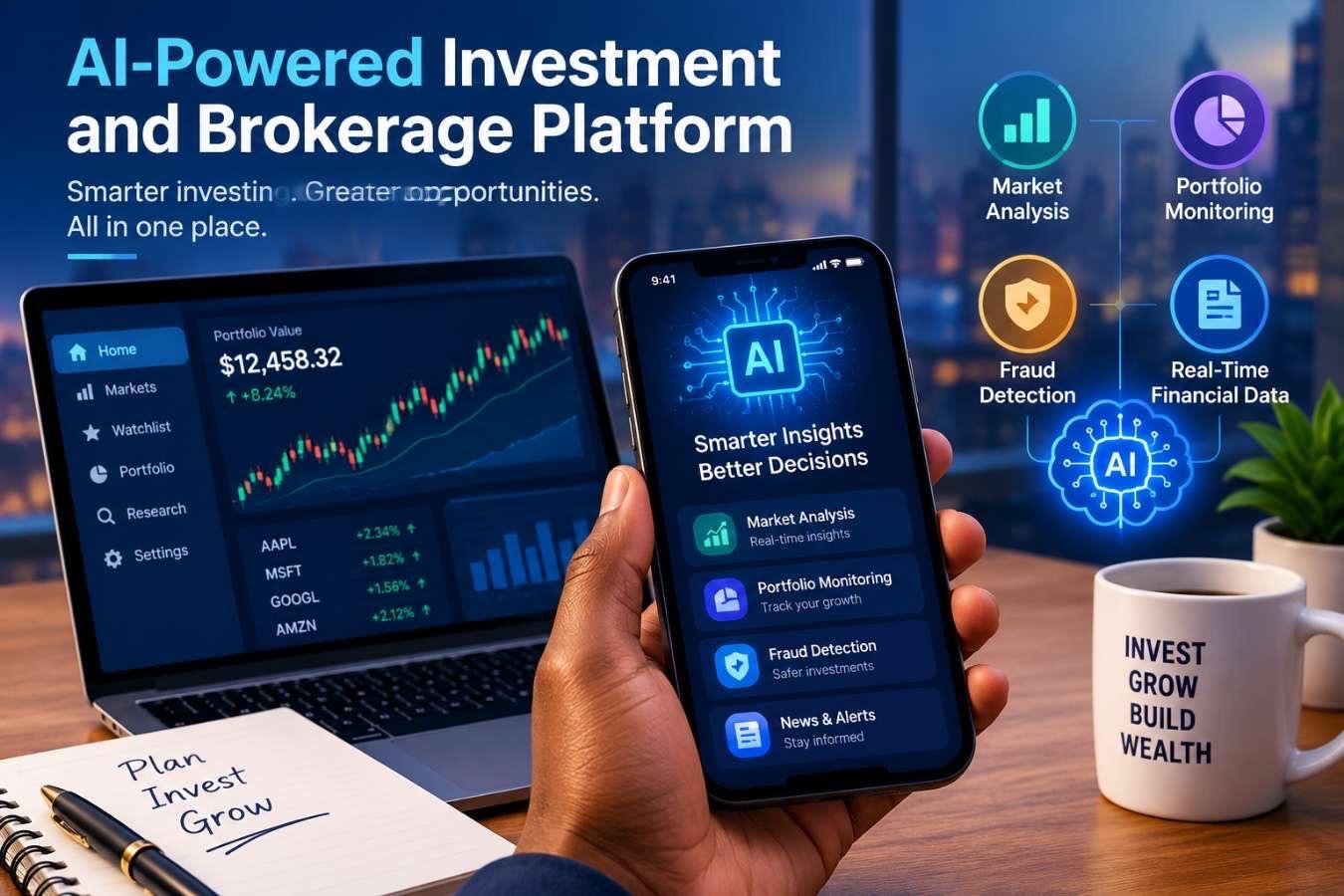
The automated investing era has revolutionized how many people invest in their portfolios and has transferred elements that used to require lots of attention from humans into digital realms. Robo-advisors are financial technology, investment principles, data processing and algorithm-based portfolio management using data provided by an investor. Typically, the process begins online where an investor enters personal and financial details and addresses the questions regarding their objectives, timeline, and risk-tolerance. The platform then converts those answers to an investment strategy. This is related to algorithmic portfolio management, where computational models (often pre-specified or adaptive) are used to guide the selection, weighting, monitoring and adjustment of assets. While investing always involves risk, automated investing can help simplify and streamline regular investments in a portfolio.
What is a Robo-Advisor?
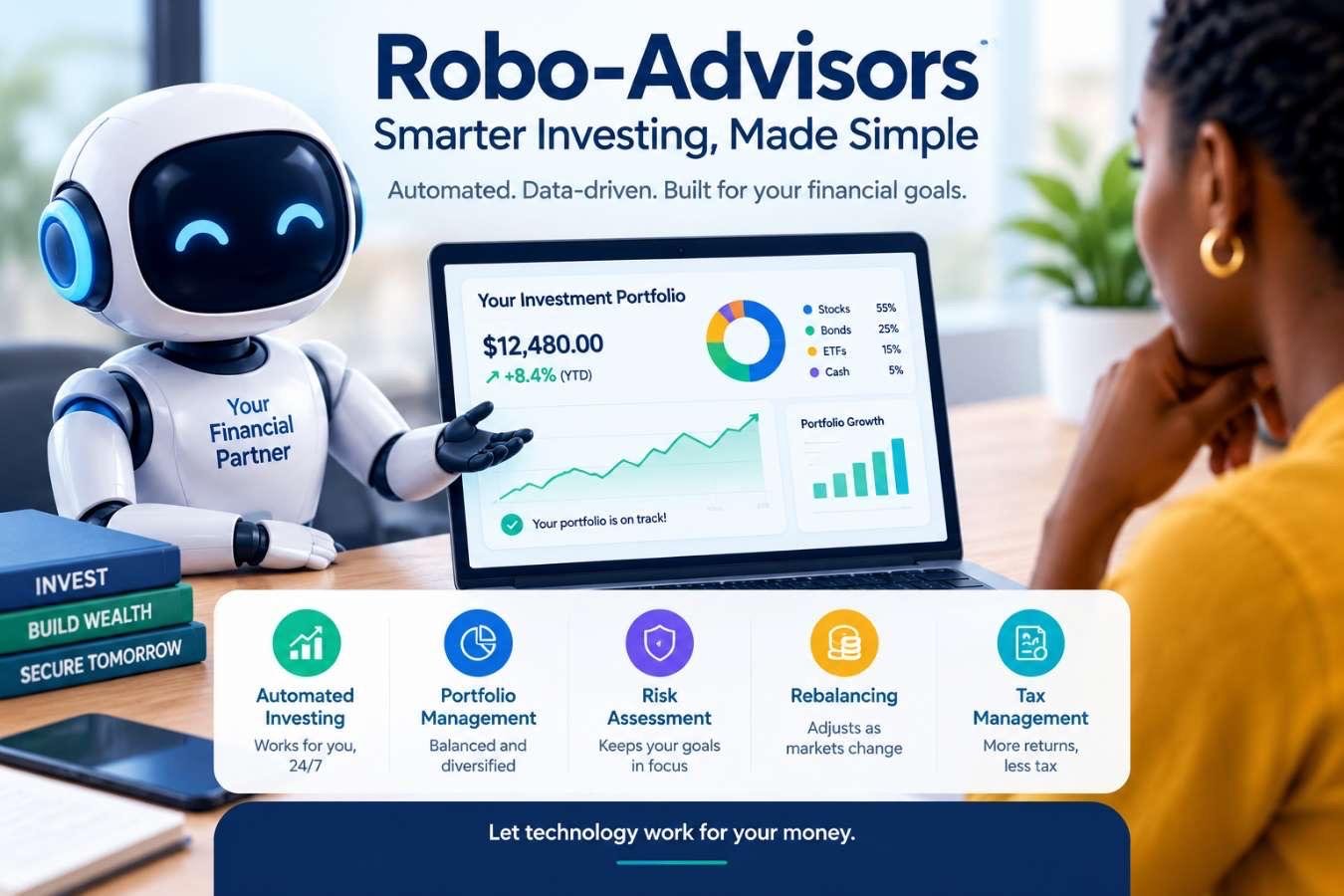
A robo-advisor is an online financial product or service that employs software and mathematical algorithms to streamline some aspects of the investing process. While the specific services vary from robo-advisor to robo-advisor, many can gather investor data, suggest an asset allocation, build a well-diversified portfolio, execute or facilitate trades, track the portfolio, and rebalance it when its proportions deviate from their desired allocations. “Robo” is not to be interpreted as “bot” which refers to a computer that makes financial decisions, but rather to a physical robot. Rather, it is software that takes information and account data, and uses programmatic logic to make investment decisions. Some platforms support nearly all of their operations by algorithms, and others go so far as to integrate algorithms with access to human professionals. The key difference is that technology can make many of the decisions and administrative functions that traditional advisers might make manually or as a more personalized (and individualized) advisory process.
New Digital Onboarding and Investor Questionnaire
Digital onboarding is typically the first step of automated investing. An investor does not have to make an appointment, but instead registers on a website, or mobile app, and provides data, including age, income, financial objectives, investment experience, how long they plan to invest for, and possibly assets and/or liabilities. The platform might also pose questions which can detect risk tolerance and loss capabilities. These are significant questions as two investors with the same financial objective might need different portfolios if they are different in their circumstances or in their reaction to the market in the event of a decline. After data has been gathered, software would be able to categorize it into a client profile, and apply the preset investment rules to find the best investment strategy. Digital onboarding can streamline and standardise the process, but the accuracy and completeness of the information supplied by the investor are important factors in determining the quality of the onboarding process.
How an Asset is Allocated through Algorithms.
One of the key services offered by robo-advisors is asset allocation. Defines the portion of a portfolio that will be allocated to major asset classes like equity, bond, money market and other investing. The investor questionnaire is usually, but not always, linked to an investment model to generate a target allocation for the investor. For instance, an investor who has a longer time horizon and is willing to take fluctuations could end up with a portfolio that is more heavily weighted toward growth investments; a shorter time horizon investor might get a more conservative portfolio. The algorithm has no idea about the performance of an asset class in the future. Rather, assumptions, constraints, historical data and rules from the portfolio are used to generate an allocation that is designed to reflect the investor profile. The resulting allocation is a planned approach and not a commitment to a specific return.

Portfolio Construction
Once an asset allocation is set, the robo-advisor needs to create a portfolio from the asset allocation. A large number of automated platforms choose to take a position on various markets and asset classes by means of exchange-traded funds (ETFs) or other diverse investment vehicles. The software can choose investments based on the investments’ characteristics as defined by the provider, for example, cost, diversification, liquidity, tracking characteristics, or compatibility with the selected portfolio model. The system can then determine the amount of each investment to buy, and provide instructions for transactions. As a process it has a number of important distinctions between recommending an investment and creating a portfolio. One is that it is just a step towards creating a portfolio the specific holdings are a separate set of decisions. Those calculations can be done quickly and repeatedly, especially if an investor adds new funds to an account or adjusts an account’s goal, through automation.
Automated Rebalancing
After a portfolio is built, changes in the markets may cause the actual mix of securities in the portfolio to stray from the desired mix. Let’s say that there is a portfolio that has a certain percentage invested in stocks and a certain percentage invested in bonds. When the value of stocks goes up significantly, stocks could be a bigger portion of the portfolio than desired. A robo-advisor can identify this and once predetermined conditions are satisfied, it can execute or suggest trades that will bring the portfolio towards the goal. This is called “rebalancing. A few systems change allocation based on a schedule; others change allocation based on rules that react to allocations reaching thresholds. Automated rebalancing can help cut down on investors’ need to track percentages. But if there are transaction costs, tax implications, or other factors involved, due to the nature of the account and how the platform works, it can be a consideration when rebalancing.
Tax-Related Features
Another aspect of investing where technology can help with automated investing is tax management, especially for taxable investment accounts. Tax-loss harvesting, which typically means selling off some investments that have suffered losses to take a capital loss and replacing them with appropriate investments (which are allowed by tax laws), is another feature some robo-advisors provide. The purpose is not just to generate losses, but to perhaps also use the losses to offset some taxable gains, or otherwise impact an investor’s tax situation. Automated systems can track holdings and determine when the situation may be right for his or her tax-management requirements. However, tax results will vary from person to person and account to account based on account and jurisdiction laws strictly applied. Investors should also be aware that a tax-related feature does not represent a guarantee of tax savings, but is a software operation.
Automated Portfolio Monitoring
Robo-advisors can periodically or continuously check the information in the account against the rules set up in the account’s portfolio. Monitoring can include ensuring that asset allocations are not drifting, whether new assets should be added to the existing asset classes, if cash needs to be invested, or if the account has become outside the assumptions that were made when the strategy was generated. The beauty of automated monitoring is that it enables investors to miss out on the little things that add up over time. This feature lets an investor compare her current portfolio to a desired target range, and then decide whether or not taking action would make sense, based on the guidelines of the system. Depending on the service, notifications might be sent for significant account actions. The main thing is that monitoring does not always result in a definite forecast of the market. It mainly assists the system to manage the portfolio based on the information the system uses and the programmed approach.
Key Differences between Robo-Advisors and Human Advisers
Traditional investment services can include direct interactions with a human investment adviser who takes into account a client’s financial situation and may explore a client’s objectives, concerns, preferences or life changes. Generally, a robo-advisor collects similar types of information via online questionnaires and converts them to universal investment choices. This might allow for a more standardized process with regular portfolio activities, whereas human advisors might have more room for discussion and professional judgment in unusual and/or complicated situations. Human advice can also include a more general financial planning, depending on the adviser and service, such as retirement, insurance, estate planning, business ownership or other significant financial decisions. Some of these functions can be offered by robo-advisory services, but they might not have all of them. The difference is not only ‘man versus machine’ but also difference in level of scope, personalization, interaction and automation of the service.
Benefits of Automated Investing
Convenience is one of the potential benefits of automated investing. An investor can often complete the onboarding process, set up an investment strategy, deposit money in and out of the account, check on account activity and so on without having to schedule regular meetings. The same rules can be applied whenever they are indicated, also making it more systematic to do routine portfolio maintenance with automation. Another possible advantage is access: Digital platforms can help to reduce some of the obstacles that come with a traditional advisory arrangement. Diversified portfolios and automated rebalancing can also assist investors to stick to a pre-defined investment strategy without having to make all investment decisions individually. They can be helpful for investors looking for a more organized and less hands-on investment strategy. But convenience does not necessarily imply performance. While a robo-advisor can take a hand at making decisions and processes automatic, it can’t eliminate market volatility, investment losses, inflation or other risks linked to investing.
Limitations and Risks of Automated Investing
While robo-advisors have their pros and cons, there are certain drawbacks. An algorithm will process data, assumptions, models, and rules embedded in the service and make a recommendation based on the information that it has received; thus, a badly answered questionnaire may result in an incorrect recommendation. The behavior of financial markets also may vary from what has occurred in the past or is assumed in portfolio models. Furthermore, automated systems might not have a sufficient grasp of not-conventional situations unless the platform can recognize them. They can also impact the overall experience through fees, investment costs, tax factors, account limitations, cyber security risks, and the kind of underlying investment models. The risk profile, the investment set used, how often they rebalance, the fees charged and whether there is human support are all areas investors should look into with regards to a service. So automation is more of a way to manage investment processes, and not a way to ensure risk-free investing.
Conclusion
Automated investing’s future will be characterized by financial technology that becomes ever more sophisticated, but the core idea will be the same: information organization and investment process automation based on software. Advancements in data processing, machine learning, personalization and digital financial services could help platforms to better adapt to the financial information changes and preferences of investors. However, the more sophisticated doesn’t necessarily equal accurate.
Higher-level models continue to rely on data quality, the assumptions they base on, the design of their systems, regulatory demands and, if relevant, human oversight. Knowing how the technology works is more valuable for an investor than that an automatic service can predict the markets. While the robots can take care of other tasks, such as onboarding, asset allocation, portfolio construction, rebalancing, tax-related tasks, monitoring, and more, investors must still know what they are doing and what risks they are taking.
Get more well researched information about Automated investing here.