If you share your home with a Maine Coon, Ragdoll, or any other large breed cat, you already know the litter box struggle is real. Standard boxes fill up faster, odors become overwhelming within hours, and daily scooping feels like a never-ending chore. For many owners, keeping up with litter maintenance starts to feel like a part-time job.
Automatic cat litter boxes have emerged as a practical modern solution, handling the scooping and waste management so you don’t have to. But choosing the right one isn’t as simple as picking the most popular model online. Large breed cats need generous space to move comfortably, while timid cats can feel trapped or frightened by enclosed designs and unexpected mechanical noises. Finding a unit that balances automation with genuine feline comfort is where most owners get stuck.
This guide is designed to cut through the confusion. We’ll walk you through the essential features that matter most for large and timid cats alike, explore why open-top cat litter boxes can make a significant difference for anxious pets, and outline safe litter solutions that keep your cat healthy. By the end, you’ll have a clear, confident path to selecting an automatic litter box that works for both you and your cat.
Understanding Automatic Cat Litter Boxes: Benefits and Basics
Automatic cat litter boxes have transformed daily pet care by handling the most tedious part of cat ownership — waste removal. These self-cleaning units use sensors, rotating rakes, or conveyor mechanisms to detect when your cat has used the box and automatically move waste into a sealed compartment. The result is a consistently cleaner box with significantly less odor, since clumps are removed within minutes rather than sitting for hours until you get around to scooping.
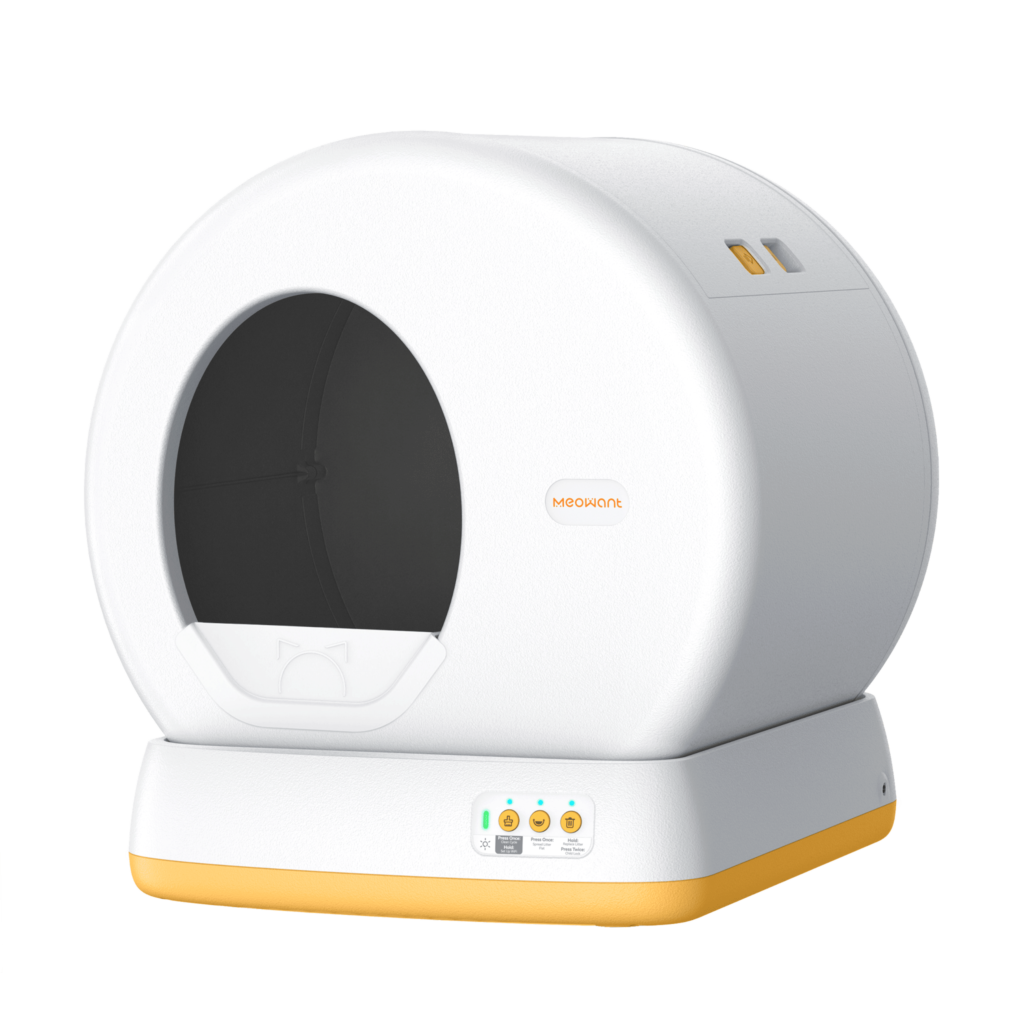
For busy cat owners, the appeal is immediate and practical. Instead of scooping once or twice daily, you’re simply emptying a waste drawer every few days. Many models also include odor-absorbing liners or carbon filters that further reduce the smell that typically radiates from a standard box. This is especially valuable in smaller homes or apartments where litter odor has nowhere to hide.
Automatic litter boxes are also surprisingly good at maintaining consistent hygiene standards, which matters more than most owners realize. Cats are clean animals by nature, and a dirty box can push them to eliminate elsewhere in your home. By keeping the litter surface fresh after each use, automatic systems actively encourage your cat to use the box reliably.
The initial investment is higher than a traditional box, typically ranging from budget-friendly entry models to premium units with app connectivity and usage tracking. Setup usually takes under thirty minutes, and most units require only standard household power. Before purchasing, consider waste drawer capacity, cleaning cycle frequency, and whether replacement parts are readily available — these practical factors determine long-term satisfaction more than any single feature.
Key Features for Large Breed Cats: Size and Stability
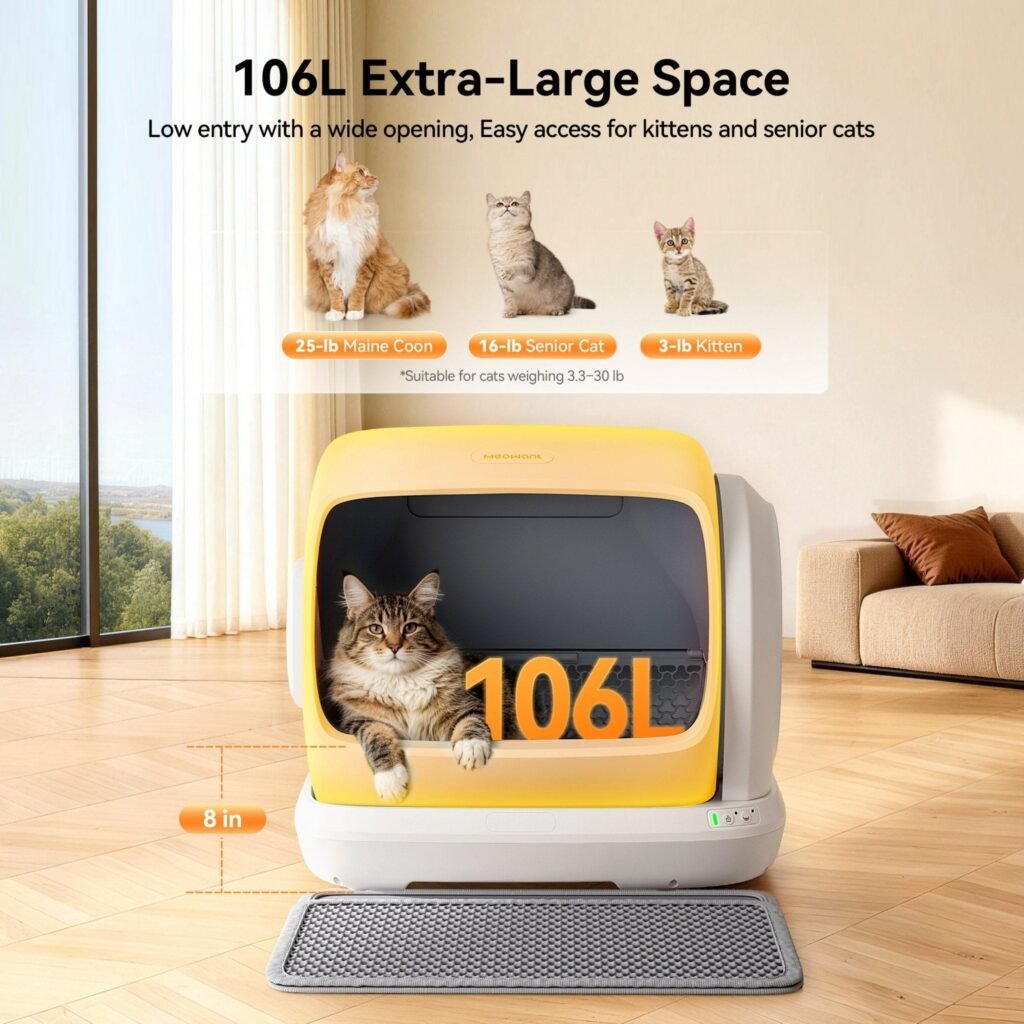
When shopping for an automatic litter box for a large breed cat, the most common mistake owners make is choosing based on aesthetics or reviews written by owners of average-sized cats. A Maine Coon can weigh 18 to 25 pounds and measure over three feet from nose to tail. A Ragdoll or Norwegian Forest Cat isn’t far behind. These cats need room to enter, turn around, squat, and exit without feeling squeezed — and that spatial requirement directly affects whether they’ll actually use the box consistently.
Dimensions and Entry Points for Comfort
Before purchasing any unit, measure your cat from the base of the neck to the base of the tail, then add at least six inches. That number represents the minimum interior length your litter box should offer. Interior width should be roughly 1.5 times your cat’s shoulder width, and the ceiling height — if the unit has a dome or hood — should allow your cat to stand without hunching. Entry openings are equally critical. A low, wide entry reduces the need for your cat to contort itself getting in or out, which matters especially for older large breed cats with joint sensitivity. Avoid models where the entry point is positioned high on a dome or requires a significant step up, as these create unnecessary barriers and can discourage use over time.
Weight Capacity and Durability
Automatic litter boxes contain moving mechanical parts, sensors, and motors that must withstand repeated pressure from a heavy cat stepping in and out multiple times daily. Look for units with a stated weight capacity of at least 25 pounds, and pay attention to base construction. Thin plastic bases flex under heavier cats, which can misalign internal components and cause mechanical failures within months. Reinforced ABS plastic or units with a wide, low center of gravity handle the repeated impact far better. The litter tray itself should resist warping, since a warped tray disrupts the raking mechanism and leads to jams. Stability during the cleaning cycle also matters — a unit that wobbles or shifts when the motor activates can startle your cat and create negative associations with the box.
Addressing Timid Cats: The Role of Open-Top Cat Litter Boxes
Reducing Anxiety with Open Designs
Timid cats process their environment very differently from confident ones. A cat that startles easily, hides frequently, or approaches new objects with prolonged caution isn’t being difficult — it’s responding to genuine stress signals. Enclosed automatic litter boxes amplify that stress by creating a confined space where the cat cannot see approaching threats, has limited escape routes, and is surrounded by mechanical sounds that seem to come from everywhere at once. Open-top cat litter boxes directly counter these anxiety triggers. With an unobstructed view of the surrounding room, a timid cat can monitor its environment while using the box, which is exactly the kind of situational awareness that helps anxious cats feel safe enough to relax and eliminate properly. The absence of a hood also means the cleaning mechanism is visible rather than hidden, which helps cats habituate to the motion and sound far more quickly than they would inside an enclosed unit. Brands like Meowant have designed open-top automatic models specifically with this behavioral need in mind, prioritizing sightlines and low-profile mechanics to ease the transition for sensitive cats.
Comparing Open vs. Enclosed Models
Enclosed models do offer real advantages for some cats and households — they contain litter scatter more effectively, reduce odor diffusion into the room, and give privacy-seeking cats a den-like space they genuinely prefer. If your large breed cat is bold, curious, and unbothered by small spaces or sudden sounds, an enclosed model may suit it perfectly. However, for timid cats, those same features become liabilities. The hood traps sound inside the unit, making the motor and rake seem louder and more threatening. Entry points on enclosed models are often smaller and positioned awkwardly, which forces hesitation at the threshold — a moment of vulnerability that anxious cats find deeply uncomfortable. An open-top design sacrifices some odor containment but gains something more important for sensitive cats: a sense of control. That psychological comfort translates directly into consistent litter box use, which is ultimately the outcome every owner needs.
Safety First: Essential Features and Safe Litter Solutions
Non-Toxic Materials and Safe Operation
Safety should never be an afterthought when selecting an automatic litter box, particularly for cats who spend time in close contact with the unit’s surfaces and materials. Look for boxes constructed from BPA-free plastics and finished with non-toxic coatings that won’t off-gas harmful chemicals into the litter environment. Beyond materials, reliable sensor technology is non-negotiable. Quality units use infrared or weight-based sensors to detect when a cat is inside and immediately pause the cleaning cycle, preventing the rake or rotating mechanism from activating while your cat is still present. Test responsiveness by reviewing independent user reports — sensors that lag even a few seconds create real injury risk. The cleaning cycle should also operate at a low noise level and move at a gentle, gradual pace rather than snapping into motion abruptly, which reduces both startling and physical risk to a cat that re-enters the box too soon.
Choosing the Right Litter for Automatic Systems
Not all litters are compatible with automatic systems, and using the wrong type is one of the most common reasons these units jam or malfunction. Clumping clay litter with a fine, consistent grain size works best — it forms solid, discrete clumps that rakes and conveyor mechanisms can move cleanly without crumbling mid-cycle. Avoid crystal litters unless the manufacturer explicitly supports them, and steer clear of plant-based or paper litters in most automatic units, as their irregular textures interfere with sensor accuracy and clog removal trays. Dust-free formulas are especially important for safe litter solutions, since enclosed waste compartments can concentrate airborne particles that irritate your cat’s respiratory system with repeated exposure. Prioritize low-dust, unscented clumping litter to protect both your cat’s lungs and the unit’s mechanical components.
Step-by-Step Guide to Selecting the Right Automatic Litter Box
Assess Your Cat’s Size and Temperament
Before browsing any product listings, spend a few days observing your cat’s behavior around new objects, unfamiliar sounds, and confined spaces. A large breed cat that investigates boldly and settles quickly is a strong candidate for any automatic model. A timid cat that freezes at sudden noises, avoids enclosed spaces, or takes weeks to accept new furniture needs an open-top design with a quiet motor and a delayed cleaning cycle. Alongside temperament, record your cat’s measurements — body length, shoulder width, and standing height. These numbers become your non-negotiable minimums when filtering available models, and they’ll save you from purchasing a unit that looks spacious in photos but leaves your Maine Coon hunched at the shoulders.
Evaluate Key Features and Budget
Once you know your cat’s physical and behavioral profile, build a prioritized checklist before comparing products. For large breed cats, interior dimensions and weight capacity come first. For timid cats, noise level and open-top design take priority. Safety sensors, BPA-free construction, and litter compatibility apply universally. Work through this checklist in order rather than getting distracted by app connectivity or aesthetic design — those features add value only after the fundamentals are met. Budget-wise, mid-range units in the $150 to $400 range typically offer the best balance of durability and essential features. Premium models above that threshold add convenience but rarely improve the core experience for your cat. Factor in ongoing costs like replacement liners, waste bags, and compatible litter when calculating total ownership cost.
Compare Models and Make an Informed Choice
With your checklist in hand, research models using verified buyer reviews filtered specifically for large cat owners or owners of anxious cats — their feedback reflects real-world conditions that manufacturer descriptions often gloss over. Look for patterns in complaints: recurring mentions of sensor failures, small entry openings, loud motors, or flimsy trays are reliable red flags regardless of overall star ratings. Prioritize brands that offer replacement parts and responsive customer support, since mechanical components will eventually need servicing. If possible, purchase from a retailer with a flexible return window so you can test the unit with your cat at home. Introduce the box gradually — place it unplugged in your cat’s usual litter area for several days before activating it, allowing your cat to investigate without the added variable of motion or sound. This single step dramatically improves acceptance rates, especially for timid cats making their first transition to an automatic system.
Making the Right Choice for Your Cat’s Comfort and Your Peace of Mind
Choosing an automatic litter box for a large breed or timid cat isn’t simply about convenience — it’s about finding a solution that genuinely works for your specific animal. Throughout this guide, we’ve covered the essentials: understanding how automatic systems operate and why they reduce daily maintenance burden, identifying the dimensional and structural requirements that large breed cats need to use a box comfortably, and recognizing how open-top cat litter boxes provide anxious cats with the visibility and escape routes that make them feel safe enough to relax.
Safety remains non-negotiable at every step. Reliable sensors, BPA-free materials, and compatible safe litter solutions protect your cat’s health and extend the life of your investment. The step-by-step selection process — assessing temperament and size first, then filtering by features and budget, then comparing models using real owner feedback — gives you a structured path that keeps your cat’s needs at the center of every decision.
Apply these criteria consistently and you’ll avoid the most common pitfalls: boxes that are too small, too loud, or too enclosed for your cat to accept. The reward is straightforward — a cat that uses its litter box reliably, a home that smells fresher, and a daily routine that no longer revolves around scooping. That’s a meaningful improvement for both of you.