
Introduction
Banking industry can carry out thousands of transactions, requests, records and processes daily. Many of these are repetitive and can cause an increase in time spent manually, increasing overall costs and can lead to human errors. Robotic Process Automation (RPA) can automate these repetitive tasks using bots which can carry out simple digital tasks. This can all be done without replacing existing banking systems. RPA can integrate with current banking systems via their interfaces and workflows, helping banks become more efficient. With increased investment in digital banking, RPA has become an important tool to increase efficiency, accuracy and productivity.
What is Robotic Process Automation for Banking?
Robotic process automation uses bots to automate repetitive, rule based tasks. Bots can log onto the application, extract data, input data, process transactions, compare data and produce reports. In banking this is very beneficial as many admin and financial tasks will be rule based. As explained by IBM, robotic process automation can help ‘automate repetitive tasks’ by interacting with digital systems. This means banks do not necessarily have to change existing systems. Bots will interact with various different applications making automation possible for banks that may have old systems.
Traditional RPA and AI Automation
Both traditional robotic process automation and AI automation will reduce manual tasks. Traditional RPA will follow rules and instructions. This means it can carry out structured tasks. Bots can move data between applications or compare documents using rules. However, they cannot understand complex documents and will struggle to make reliable decisions if there is unclear data. AI automation uses RPA and technologies such as machine learning, NLP and Intelligent Document Processing to help with understanding documents. This can help identify and classify data, identify anomalies and make more complex decisions. For example, AI can extract data from documents relating to loans and the RPA bot can move the validated data. Whilst AI can provide more automation, human oversight is key for financial decisions.
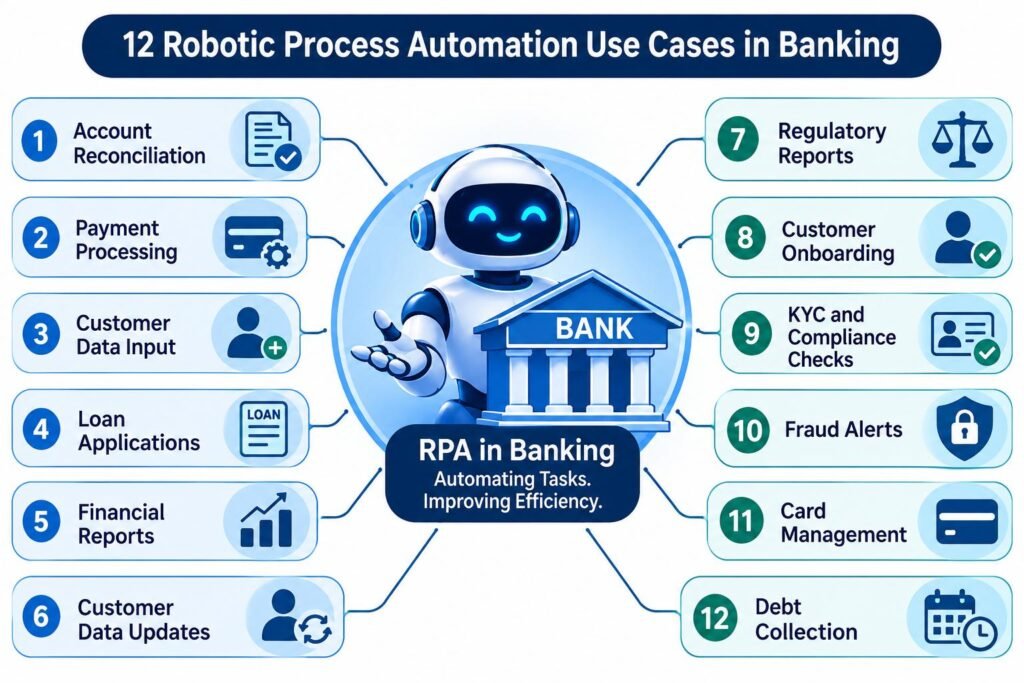
12 Examples of Robotic Process Automation for Banking
1. Account Reconciliation
Account reconciliation involves comparing financial data from different sources to ensure everything is in order. Banks will often reconcile accounts, transaction data, payment data and data from external financial institutions. This can take a lot of time to do manually. RPA bots can collect transaction data, compare matching data and identify where discrepancies are. Bots can also produce summaries and alert staff to any discrepancies. This reduces repetitive tasks and helps the accounts team complete faster. However, exceptions such as missing data, duplicated data and incorrect amounts should be reviewed by authorized staff.
2. Payment Processing
Banks will process payments by taking instructions, validating the data, checking accounts and updating the data. This can involve multiple systems and approvals which can cause delays and errors. RPA can automate repetitive tasks by collecting payment data, validating against rules, moving data and updating payments. Bots can process regular payments which meet the criteria and those which do not will be passed onto staff. This can help provide consistency when processing large volumes of transactions. However, banks should ensure appropriate security is in place. Any suspicious payments, unusual amounts or incomplete data should be verified.
3. Customer Data Input
Banks will collect large amounts of data from customers. This could be when applying for an account, requesting a loan, customer service and other financial activities. Often staff will need to input the same data into multiple applications. This can cause an increase in admin and errors. RPA bots can extract structured data from digital forms and put this into the relevant banking databases. Bots can also validate mandatory fields, identify missing data and ensure the data is following the correct structure. This reduces repetitive data input and means staff can focus on more judgment based tasks. If document recognition is used, relevant data can be extracted. However, banks should ensure sensitive customer data is kept safe and data input should be reviewed when discrepancies are found.
4. Loan Applications
Processing loan applications can involve many admin tasks. RPA can help automate regular tasks by collecting application data, validating mandatory fields, extracting data from linked systems and passing the application onto the right department. Bots can also alert staff if more data is needed. If document processing with AI is used, relevant data can be extracted from payslips, bank statements and other documents. This can help reduce admin time. However, RPA should not be used to completely replace responsible decisions. Decisions regarding affordability, credit worthiness, lending risks and regulatory requirements should be appropriately overseen.
5. Financial Reports
Banks will often create financial reports. This could include transaction data, performance, account balances, departmental data and other key indicators. This can take a lot of time for staff to collect data from different systems and put into reports. RPA bots can collect data from approved sources, organize data into templates, calculate regular data and produce reports on a regular basis. Bots can then pass these onto authorized departments. This can provide consistency and reduce errors. This is particularly useful if reports are needed regularly or if data needs to be collected from multiple branches. However, key reports should be reviewed by staff to ensure the data is complete, accurate and appropriate.
6. Customer Data Updates
Customers will often update their information. This could include contact details, address, employment, ID and other account related details. Banks will need to ensure this is updated within relevant applications. RPA can collect approved updates, validate data and update the linked customer databases. Bots can also identify incomplete requests and alert staff. This can help reduce delays. However, having accurate customer data is key for good communication, account management and compliance. Banks should ensure appropriate authentication is in place before sensitive data can be changed. Automated updates should also have appropriate audit trails.
7. Regulatory Reports
Financial institutions will need to create and submit reports to regulatory bodies. These could include transaction data, financial position, customer activity and compliance indicators. RPA can collect relevant data from approved banking systems, organize this into the correct format, validate using rules and create reports. Bots can also monitor deadlines and alert relevant staff. This can help reduce admin by automating repetitive tasks. However, regulations can change and incorrect data can result in penalties. Banks should ensure rules are regularly updated, data is reliable and key submissions are reviewed by qualified compliance staff.
8. Customer Onboarding
When opening a new bank account customer data will be collected, ID will be checked, verification will be carried out and accounts created. RPA can help by moving data between approved applications, validating mandatory documents and updating application status. Bots can also alert customers if more data is needed. This can help reduce admin delays. If document recognition with AI is used relevant data can be extracted from ID documents. However, customer due diligence and verification should follow legal requirements. Any suspicious data, failed verification or unusual applications should be passed to qualified staff.
9. KYC and Compliance Checks
KYC can help banks identify who their customers are and identify any potential financial crime risks. This can involve collecting data, checking data, reviewing documents and keeping customer profiles up to date. RPA can help automate repetitive data collection, organize verification results, monitor missing documents and identify any discrepancies. Bots can also help with regular customer reviews by identifying any accounts needing to be reviewed. If AI is used, systems can help identify patterns or highlight unusual cases. This can help improve efficiency for compliance teams. However, banks should ensure data is reliable; customer data is kept confidential and follow anti-money laundering and customer verification requirements.
10. Fraud Alerts
Banks will need to monitor transactions to identify any unusual activity. Often advanced analytics and AI will be needed to identify complex fraud patterns. However, RPA can help with the admin. Bots can collect relevant transaction data, extract customer data, create cases and pass onto the relevant fraud management team. Bots can also update case status and alert staff. This can help reduce time spent collecting data from different applications. However, traditional RPA will not be able to identify all new or complex fraud patterns reliably. Banks should use automation along with appropriate monitoring technologies and investigations.
11. Card Management
Banks will often receive many requests relating to debit and credit cards. Many admin tasks will follow rules and can be automated. RPA bots can collect authorized customer requests, validate data, update relevant data and communicate status. For example, a bot may help direct a lost card request to the relevant system to be acted upon immediately following security procedures. Bots can also help with regular account management by identifying missing data. As card related activities relate to financial security, banks should ensure appropriate authentication, access restrictions and approvals are in place.
12. Debt Collection
Debt collection teams will often manage overdue accounts, repayment schedules, customer communication and outstanding balances. RPA can help automate repetitive admin tasks. Bots can identify accounts which are due to be paid, create reminders, update repayments and create reports. Bots can also collect relevant account data. This can help reduce time spent creating regular communications. This can help provide consistency. However, banks should consider the customer situation, consumer protection rules and how they want to communicate. Sensitive conversations, repayments and situations which need individual consideration should be handled by staff.
Benefits of RPA in Banking
Using RPA can provide many benefits for financial institutions. It can increase productivity as bots can carry out repetitive tasks 24/7. Staff can focus on building relationships with customers, analyzing financial data, problem solving and other professional judgments. It can also reduce errors caused by repetitive data input. As long as the rules and data are correct. RPA can help increase processing times, provide consistency and improve reporting. Financial institutions may also reduce admin costs as they can make the most of their existing systems. However, this will depend on choosing the right processes, having reliable controls in place and regularly reviewing performance.
How to Identify Processes to Automate
Not all processes should be automated. Financial institutions should start by looking at their existing processes and identify any repetitive, structured, predictable and rule based processes. Tasks such as moving data between applications, checking standard forms, creating regular reports and reconciling regular transactions will generally be a good choice. Banks should also consider volume of transactions, processing times, error rates, costs and how it will affect customers. A good idea is to complete a process review to identify what could be automated. This will help identify what savings could be made and what is needed to implement. This can help identify any potential risks. Processes which involve complex judgments, unpredictable situations and sensitive decisions may need staff. Starting with a small, measurable project will help banks see what the outcome is like.
Challenges of Using RPA in Banking
There are many challenges to consider when implementing RPA. Costs can be high as you will need to purchase licenses, set up infrastructure, complete a process review, development, testing, training and maintenance. Whilst this can help reduce admin costs in the long term, financial institutions should consider if the increase in productivity will justify the costs. Integration can also be an issue. Banks often have multiple applications some of which may be old systems. This can mean they do not have modern integration. Changing the interface of an application can cause issues for bots. If rules are not set up well, errors can be repeated across large volumes of data. Banks should ensure they have processes in place to test, manage exceptions, monitor and have clear escalation processes. Staff should also be trained appropriately.
Error Management, Security and Staff
Having reliable error management is key. Errors can cause issues with financial data, customer accounts and compliance. Banks should have processes in place so bots can identify incomplete data, failed transactions, duplicated data and unexpected responses. If an error occurs, the process should stop and log the issue. This should then alert the relevant staff member. Regular testing and monitoring can help identify any issues. Security is also key. RPA bots may have access to sensitive financial data and complete tasks within banking applications. Banks should ensure role based access, secure authentication, logging and appropriate data protection. Exceptions should be reviewed by staff, sensitive activities should be approved by staff and automation should follow policies.
Conclusion
Robotic process automation provides banks with a practical way to become more efficient without changing their banking systems. RPA can automate tasks such as account reconciliation, processing payments, customer data input, loan management, creating reports and regulatory reports. This can reduce repetitive tasks and provide consistency. RPA can also help with customer onboarding, compliance checks, fraud alerts, card management and debt collection. However, care should be taken when choosing processes to automate, considering costs realistically, integration, error management and security. Traditional RPA will be most suitable for tasks which follow predictable rules. AI automation can provide more capabilities for processes which involve complex data. Overall, the best value will come from combining automation and staff expertise. This will help banks improve productivity without affecting accuracy, security or customer confidence.
Get more well researched information about Robotic Process Automation in Banking here.