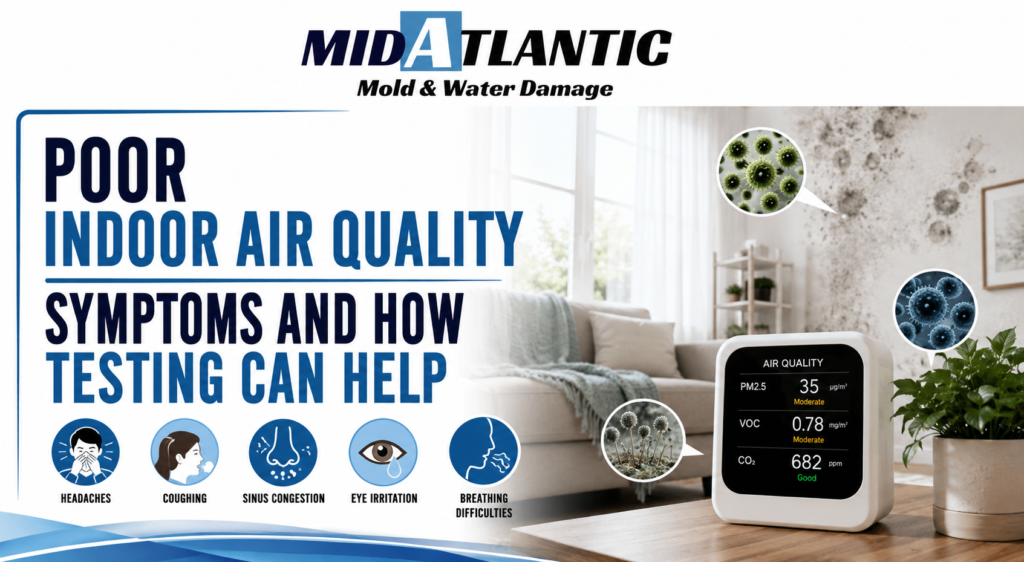
Most people spend the majority of their time indoors, which means indoor air quality has a bigger effect on daily health than most people realize. Because the symptoms are often mild and easy to blame on something else, poor indoor air quality frequently goes unaddressed for months or years. Here is what to watch for and how testing can identify the actual cause.
💧 Did You Know?
The EPA estimates that Americans spend approximately 90 percent of their time indoors, where concentrations of some pollutants can be 2 to 5 times higher than typical outdoor levels — making indoor air quality a bigger day-to-day health factor than most people assume. (Source: U.S. EPA)
Common Symptoms of Poor Indoor Air Quality
Symptoms vary depending on the specific pollutant, but some of the most frequently reported include:
- Headaches or fatigue that improve after leaving the house
- Persistent coughing, sneezing, or throat irritation
- Watery or itchy eyes without a clear allergy trigger
- Worsening asthma or new respiratory symptoms
- A musty or stale odor that does not go away with cleaning
- Increased dust buildup or visible condensation on windows
One of the clearest signs something is off is a pattern where symptoms consistently improve away from home and return shortly after you’re back, particularly in a specific room. This kind of pattern is one of several warning signs that mold may be in your home.
What This Guidance Is, and Is Not
This article can help you recognize patterns worth investigating. It is not a substitute for medical advice. If you or someone in your home has ongoing or worsening respiratory or health symptoms, talk with a doctor, especially for children, older adults, or anyone with asthma or a compromised immune system, since these groups are more sensitive to indoor air pollutants.
What Can Cause Poor Indoor Air Quality
Several common sources exist, often more than one at once:
- Mold growth, frequently linked to past water damage, high humidity, or poor ventilation in bathrooms, basements, or crawl spaces
- Volatile organic compounds (VOCs) from paint, furniture, cleaning products, or new flooring
- Dust mites and pet dander, especially in homes with carpet or limited air filtering
- Combustion byproducts from gas stoves, fireplaces, or attached garages
- Poor ventilation, which allows any of the above to concentrate rather than dissipate
Because these causes often overlap and produce similar symptoms, guessing at the source rarely works well.
Why Testing Matters
Home Indoor air quality testing identifies what is actually in the air rather than relying on assumptions. A thorough assessment typically includes:
- Air sampling to measure mold spore counts and compare them against outdoor baseline levels
- Surface or swab sampling in areas with visible staining, odor, or past water exposure
- Humidity and moisture readings in areas prone to dampness, such as basements, crawl spaces, and around windows
- Identification of specific mold genera when elevated levels are found, since some are more commonly associated with health effects than others
This matters because treating the wrong problem, for example replacing carpet when the actual issue is hidden mold behind a wall, wastes time and money while symptoms continue.
What Happens After Testing
Once results come back, a qualified inspector can point to the specific pollutant, its likely source, and the areas of the home affected. From there, next steps might include targeted mold remediation, improved ventilation, moisture control, or addressing a specific material that is off-gassing. Testing turns a vague sense that “something feels off” into a concrete plan.
When to Consider Professional Testing
If symptoms are recurring, if you notice a musty smell without an obvious source, if your home has had water damage in the past, or if a family member’s health symptoms seem tied to being in a particular room, MidAtlantic Mold and Water Damage recommends professional indoor air quality testing as the next step. Catching a hidden moisture or mold issue early is almost always simpler and less costly than addressing it after it has spread.
Frequently Asked Questions
How do I know if my symptoms are related to indoor air quality?
One of the clearest signs is a pattern where symptoms like headaches, coughing, or itchy eyes improve when you leave the house and return shortly after you’re back, especially if it happens consistently in one room.
Can poor indoor air quality happen even without visible mold or dust?
Yes. Pollutants like VOCs from paint or furniture, combustion byproducts from gas appliances, and hidden mold behind walls or under flooring often produce no visible signs even while affecting air quality and health.
Who is most at risk from poor indoor air quality?
Children, older adults, and people with asthma, respiratory conditions, or compromised immune systems tend to be the most sensitive to indoor air pollutants and often show symptoms sooner or more severely.
What does professional indoor air quality testing actually involve?
A thorough assessment typically combines air sampling compared against an outdoor baseline, surface or swab sampling of any staining or odor sources, and humidity and moisture readings in rooms prone to dampness, such as basements and crawl spaces.