Introduction
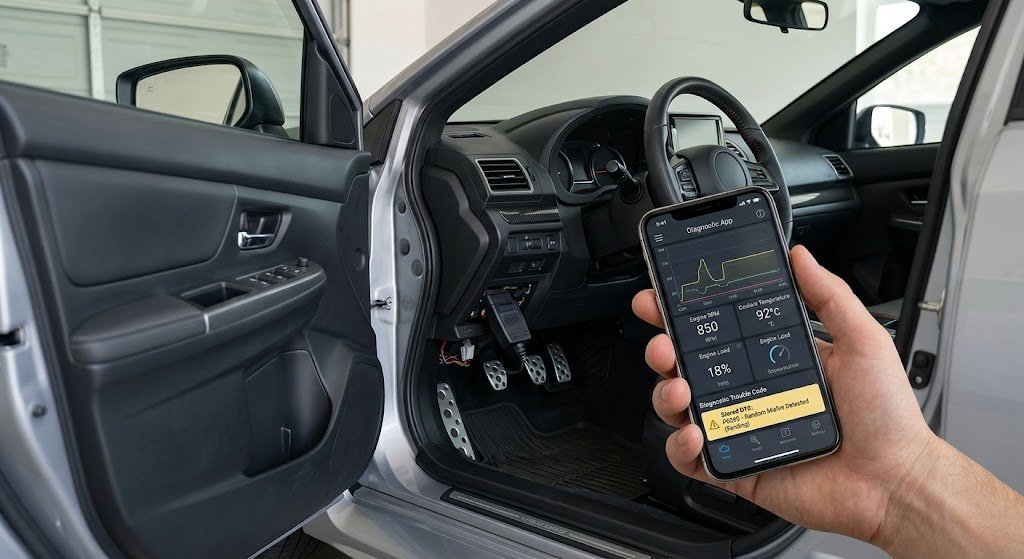
OBD2 engine diagnostics can help drivers monitor engine performance, fuel management, emissions, and other vital systems. Today’s vehicles feature computers and sensors to track these systems. If an abnormal condition is detected, the vehicle will store diagnostic data, which could be used to determine which system is at fault. Some of this information can be accessed by an OBD2 scanner app that’s compatible with a smartphone and a specially designed OBD2 adapter that attaches to the car. Rather than waiting until the onset of a serious symptom, drivers can conduct routine scanning and make a decision based on the warning signs as early as possible if further investigation is needed.
It is important to scan regularly, as some issues can manifest slowly. The sensor may start to give odd signals, the fuel control may begin to shift, or a component in the vehicle’s emissions system may drift outside of its range of operation before noticeable issues with the vehicle’s performance become apparent. This can aid in preventive vehicle diagnostics and assist drivers in making informed maintenance choices. But an OBD2 app only gives a diagnostic hint and does not actually perform a mechanical diagnosis, so any serious or recurring issues must still be diagnosed by a competent technician.
Faults that can be Detected by OBD2 Scanner App
An OBD2 scanner app is software that is used to connect with a vehicle using an OBD2 adapter and communicate with the OBD2 system. It can show diagnostic trouble codes, pending codes, freeze-frame data, live sensor data, and emission data, depending on the vehicle, adapter, and app. Some of these characteristics can help drivers understand what the vehicle’s computer may have detected and can help give them information when a warning light is showing.
Keep in mind that an engine failure code doesn’t always point to the exact engine part that’s the problem. A code for a sensor might be caused by a malfunctioning sensor, damaged wiring, an air leak, or another issue with the system. As such, drivers should use the code as a starting point, not to immediately replace a component. If the code is recorded and the possible causes are investigated, unnecessary repair work can be avoided.
Diagnosis of Engine Troubles by Scanning
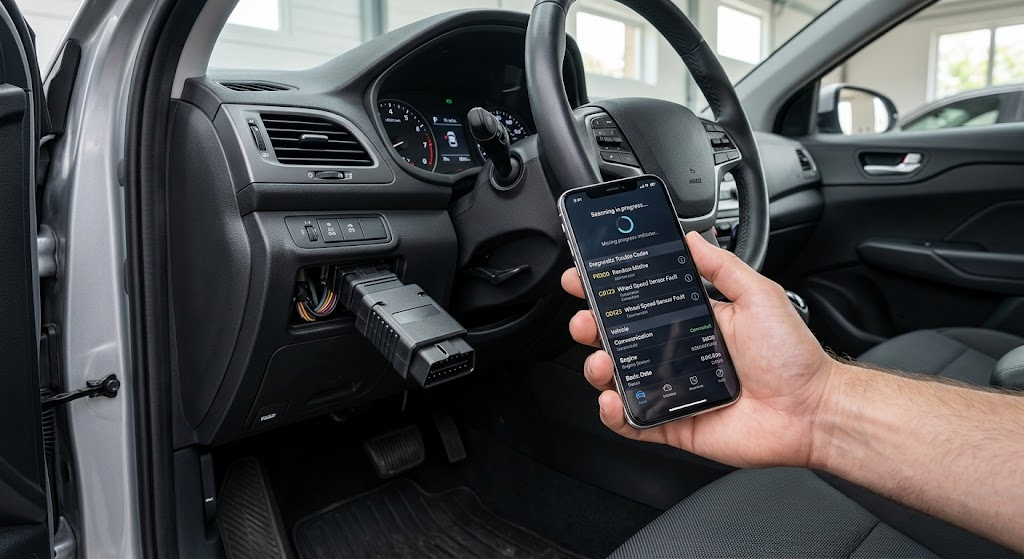
When scanning, you must insert the appropriate OBD2 adapter into the vehicle’s OBD2 port, typically under the dashboard, close to the driver’s side. Turn on the ignition or start the car, following the instructions for the adapter, then connect the smartphone to the adapter and open the diagnostic application. After communication is established, press the scanning button to check for DTCs.
Before erasing any code, make a note of the information provided by the application. Some applications might give more information, like “freeze-frame data,” that can display some conditions in the vehicle at the time of fault detection. Clearing a code without knowing what caused the code will lose valuable information and won’t solve the issue. If a code is still present following a clear, it might mean the problem persists and needs more attention.
Calculate Engine Operating Status by Using Live Data
There are numerous OBD2 applications that will show real-time information while the engine is operating. It could refer to engine speed, coolant temperature, engine load, throttle position, fuel-related data, oxygen sensor readings, or other data, depending on the vehicle. Live data can be used to gain knowledge of how various systems will react during operation and can identify readings that require additional investigation.
A single reading might not be as useful as changes over time. For instance, if the temperature readings are unusually high or the fuel-related readings are inconsistent, then there could be an issue with the sensor or a system that needs to be addressed. However, there are different normal values between vehicles and operating conditions. Drivers should therefore not assume that a strange number is always an indication of failure of a component.
Correctly Identify Fuel System Issues Early
Fuel system issues may progress over time and may start out as fuel economy issues, hesitation, hard idling, or acceleration response. If supported, an OBD2 app can be used to show fuel-trim information and related diagnostic codes. These readings can give indications of how the engine management system is controlling fuel delivery when adjusting fuel to maintain the desired air-fuel mixture.
If there is a reading that is uncommon for the type of fuel you are using, it doesn’t necessarily mean that you need to replace the fuel injector, fuel pump, or other high-dollar part. Diagnostic information can be the same for air leaks, sensor issues, fuel delivery problems, and exhaust-related problems. Further tests may be necessary to determine the actual cause, although if a recurring pattern is identified from regular scanning, there could be a problem.
Monitor Sensors and Emissions Systems
Temperature, airflow, oxygen content, pressure, throttle position, and other operating conditions are all measured by sensors, which are vital to modern engine management. If a sensor or the circuit has an issue, a vehicle may begin to hold a diagnostic trouble code. These codes, and in some instances live data, can be more easily accessed with an OBD2 app.
Many of the emission-related conditions are also monitored by the OBD2 system. A vehicle can hold onto a code even when the driver hasn’t noticed significant changes in performance, such as a vehicle that has a code for an oxygen sensor, evaporative emissions system, catalytic converter efficiency, or another emissions component. Early investigation of these cautions may help keep the problem from getting worse. However, before replacing parts, the code needs to be properly diagnosed.
Develop a Regular Scanning Routine
OBD2 diagnostics aren’t meant to have drivers examine their vehicles on a daily basis. It may be helpful to perform a periodic check, particularly before extended driving sessions, when a driver notices a vehicle’s behaviour is changing, or when a warning light comes on. Having a record of the same codes observed over time may also facilitate the diagnosis of recurring and persistent issues.
It’s helpful to use the information from the scanner in conjunction with normal vehicle observations. Other indications may be shifts in fuel economy, starting, acceleration, idle quality, warning lights, or engine temperature. These, combined with diagnostic data, give the driver more insight into when his car may need attention.
Limitations of OBD2 Apps
Not all mechanical issues can be identified by an OBD2 scanner app. Certain problems will not generate any codes and might need special testing or visual inspection. Depending on the vehicle, adapter, and application, the amount of information that is available also varies. A basic smartphone application should not be used as a substitute for professional diagnostic equipment.
Another restriction is interpretation. A code usually refers to a system or condition, not to any specific part of the system. Parts can be replaced by referencing a code only to incur extra costs. If it keeps happening or the vehicle is having bad symptoms, it is safer to take a professional diagnosis.
When to Call a Professional
Warning lights that stay lit, codes that continually repeat, and major performance issues are signs that warrant a professional checkup. Any issues where the engine is overheating, there are severe starting problems, drastic changes in how the engine runs, or other troublesome conditions should not be addressed just with an OBD2 application. The results from the scan can be used in conjunction with a physical check and specialist testing to help identify the real issue.
Multiple codes are especially beneficial for professional diagnosis. There may be multiple codes related to one fault that may require replacing multiple components to correct the problem. If the cause of the problem is known before purchase, it will save time and money on the purchase of additional parts.
Conclusion
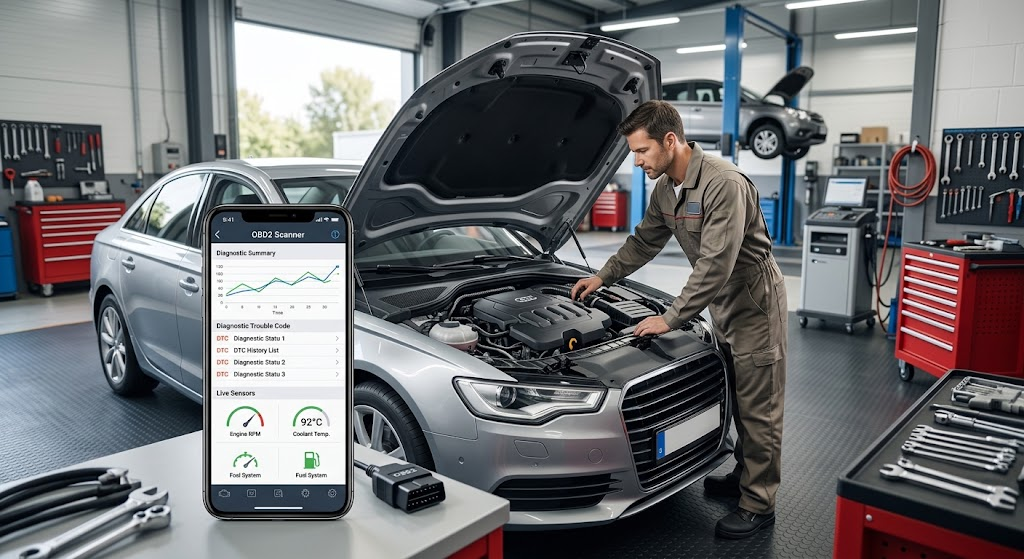
An OBD2 scanner app will allow a vehicle’s driver to conveniently view information that is sent out from a vehicle’s onboard diagnostic system. By monitoring the diagnostic trouble codes as well as live data, early warning signs of engine operation, fuel control, emissions, and sensors can be detected. This data may be useful to drivers to identify changes in real time and determine if maintenance or additional investigation is needed.
The key is to not rely on an OBD2 app as a diagnostic tool, but as an early-warning and information tool. Codes should be documented and taken into consideration with the symptoms of the vehicle, and drivers should refrain from changing parts only based on an application’s code description. With responsible use, periodic OBD2 scanning can contribute to the maintenance of the vehicle in good condition and can be used to solve issues before they become more serious and costly.