Nissan Altima Reliability since the 1993 model year, the Nissan Altima has been one of the most popular midsize sedans in America. In more than six generations, Nissan has evolved the Altima from a simple family four-cylinder sedan into a more sophisticated V6-powered, CVT and all-wheel drive sedan equipped with state-of-the-art safety features and the groundbreaking VC-Turbo engine. Considering the model year, engine, transmission, miles driven and services performed on it, the buyer should consider the strengths and weaknesses of each generation.
The Nissan Altima is primarily in competition with the Toyota Camry and Honda Accord. What makes it stand out is that it offers a comfortable ride, it has a very spacious interior, offers competitive fuel consumption and overall very attractive used-car pricing. Some years however, have concerns, especially with regards to CVT transmissions and the early VC-Turbo engines. Knowing those differences can help pinpoint the Altima years that are most reliable, efficient, fast and economical.
Generations of the Nissan Altima
There are six generations of the Altima. The first generation is 1993-1997 and the second generation is 1998-2001. The third generation ran from 2002–2006, the fourth from 2007–2012, the fifth from 2013–2018, and the sixth generation began in 2019. Every redesign occasioned multiple changes in the engines (and technology), in size, styling and driving notes.
While conditions are more important than the original specifications for the earliest Altimas, they are still quite old. There are highlights to each of the third and fourth generations, with the fifth generation emphasizing fuel economy. The all-wheel drive and 2.0 litre VC-Turbo engine became available during the sixth generation. The fifth and sixth generations are the most applicable to most modern buyers of used cars as they provide the technology, safety, efficiency and everyday use that is most pertinent.
First and Second Generations: 1993-2001.
The initial generation of Altima sported a 2.4L four-cylinder engine with about 150 horsepower. It was offered in four trim levels, the XE, GXE, SE and GLE, and with manual and automatic transmissions. The second generation remained unchanged, except for a 2.4-liter four-cylinder, with similar trim schemes but with a bit of an increase in size and refinement.
These cars may be safe, as well as cheap, and simpler than the newer Altimas, but it is now their age that concerns them. A leaky suspension parts, cooling system, air conditioning, seal, electrical parts and rust are all costly issues on an older vehicle. These generations only make sense to most buyers if the car is bought very well taken care of, and priced accordingly.
Third and Fourth Generations: 2002-2012
The Altima’s body was enlarged and its engines were beefed up in the 2002 year. The four-cylinder, 2.5L engine was the primary engine, with a 3.5L V6 engine offering much more power. The Altima was an atypical selection for those looking for a family sedan that offered a bit of sportiness, a feature which is now offered by the 260-horsepower SE-R, which was introduced later by Nissan.
The fourth generation went on with four-cylinder and V6 engines, but added more modern styling and equipment. The four-cylinder will suit those that value low fuel consumption, while the V6 will appeal to those who prefer high performance. These vehicles are now mature enough though, and should be judged based on how they have been maintained and the general condition of the vehicle.
Fifth-Generation: 2013–2018

Fuel economy, comfort and aerodynamics were significant design aspects in the fifth-generation Altima. It was powered primarily by a 4-cylinder, 2.5-liter engine, but a 3.5-liter V6 was still available. The majority of models were equipped with Nissan’s Xtronic continuously variable transmission (CVT). The 4-cylinder enjoyed much popularity among commuters due to the combination of competitive fuel economy and relatively agreeable driving qualities.
The No.1 problem to be addressed is CVT. This generation has had some transmission issues with some Altimas, and service history is especially important when purchasing used. Consumers should listen for unusual noises, hesitation or shuddering, and see if any recalls or service campaigns have been performed. A nicely maintained CVT is fine, but a poorly maintained Altima with a CVT can get to be really costly.
Other fifth generation versions, such as the 2016-2018 refreshed versions, may be appealing due to their improved styling, technology and fuel economy. For the most part, buyers who are looking for economy models will want to choose the 2.5-liter four-cylinder model. EPA ratings were as high as 30 miles to the gallon on the highway depending on the actual setup.
The maximum EPA figure will be a typical figure for better conditions in the vehicle, but actual consumption will be lower in real-world conditions as driving style, traffic, tyre pressure, and weather as well as air conditioning can all impact fuel economy. The 4-cylinder version of the Altima is capable of decent everyday driving economy and particularly good on the highways for long-distance drivers.
Sixth Generation: 2019-Present
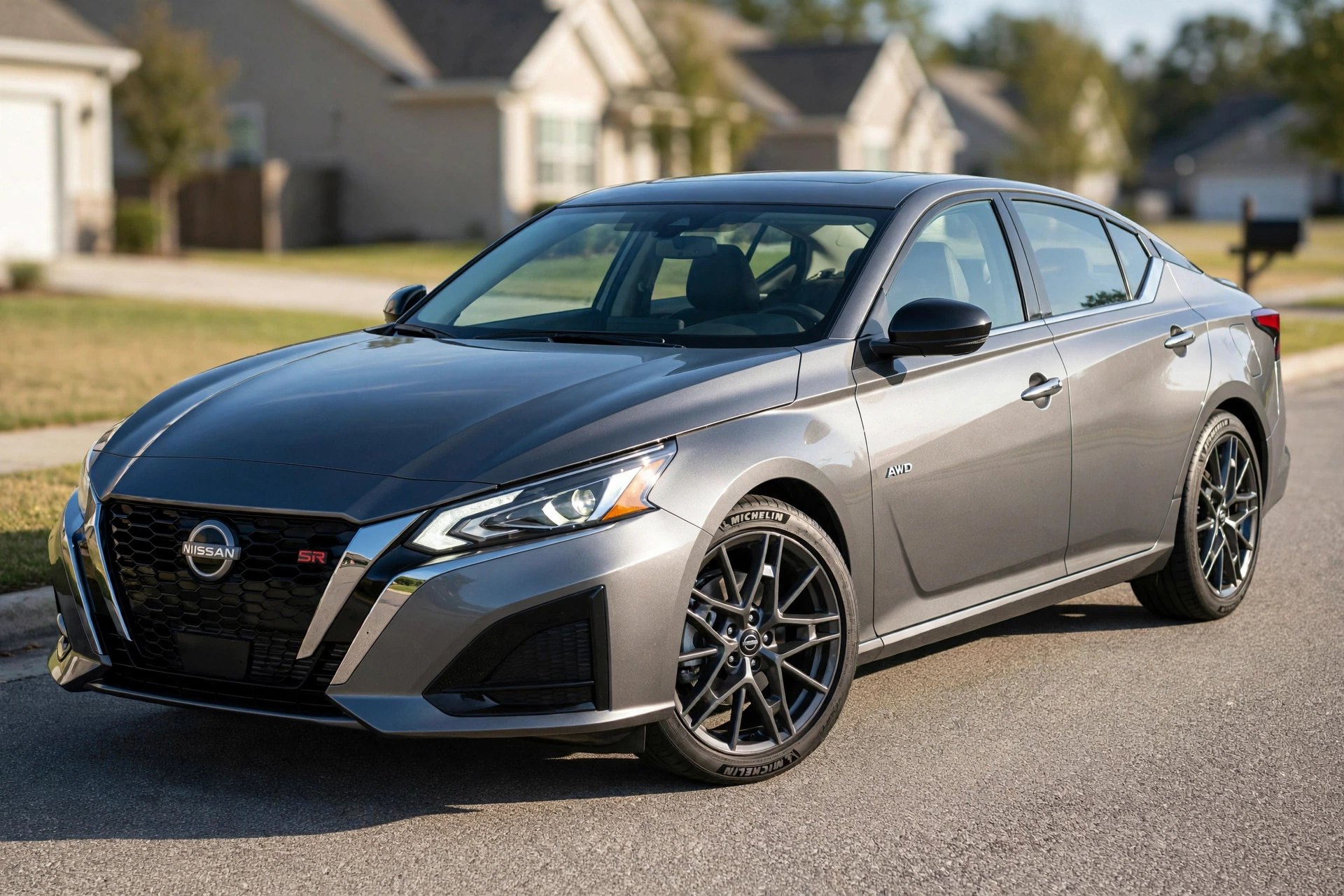
For 2019, the sixth-generation Altima has a new, more contemporary design, new technology, optional AWD and a selection of the all-new 2.0-litre VC-Turbo and a naturally aspirated 2.5-litre 4-cylinder engine. Nissan was also starting to introduce newer driver-assist features such as available ProPILOT Assist.
They find the 2.5-liter version easier to understand for most customers. It delivers sufficient power for normal driving without the added turbocharging complexity, and complies with good fuel economy. The latest front-wheel-drive models offer around 32 mpg in combined driving, with up to 39 mpg on the highway, depending on specification, but actual mileage will vary depending on the driving conditions.
The most interesting of the Altima’s engines is the 2.0-liter VC-Turbo engine. It has a variable compression that can alter the ratio of the compression in the cylinder to suit operating conditions. In the Altima, it generated up to 248 horsepower, which meant that the car’s acceleration was significantly improved, compared to the standard 2.5L engine.
The VC-Turbo is more complex than the naturally aspirated engine and used buyers need to thoroughly research the history of the engine. A few 2019-2020 Altimas that came with the VC-Turbo were part of a recall due to engine bearing issues. Anyone looking at one needs to check if there are any recalls and if they’ve been addressed prior to acquiring the car.
Nissan Altima Tronics and Performance levels.
The names of the various trims have changed over the years, but it has always been the case that there were more affordable S trims, more high-specification SV trims, sportier SR trims and more premium SL versions. Equipment is very different between generations, with buyers needing to find out what the exact features are of the car they are interested in buying, to determine if they are a XE or XE-R, GXE or GXE-R, SE or SE-R, GLE or GLE-R, or a 2.5 S or 2.5 SL.
The Altima is not a dedicated sports car; it’s an everyday sedan that is comfortable to drive. Older V6 models and VC-Turbo engines offer much greater acceleration, and four-cylinder engines are sufficient for most of the models. The CVT also offers quiet acceleration, which increases efficiency, but some drivers might not enjoy the CVT’s engine sound when accelerating hard. Those newer models have all-wheel drive, which provides extra assistance for those who often find themselves driving on difficult, wet roads, making them attractive to potential purchasers.
Nissan Altima Common Problems and Reliability.
The reliability of Altima depends on the generation and engine. A common issue for used-car buyers is the CVT, which is used in many of the fifth-generation cars. Other potential causes range from air-conditioning parts, electrical equipment, suspension parts, sensors and normal wear and tear. These problems don’t happen to all Altima but make a professional inspection worthwhile.
When buying into a used Altima, a check should be made on the history of the car also. Some of the model years have been recalled for items like the secondary hood latch and suspension parts. A VIN number should be verified as eligibility for a vehicle recall isn’t just based on the vehicle model name.
Most Efficient Nissan Altima
The 4-cylinder 2.5-liter is typically the most fuel efficient engine in an Altima. Under EPA testing, newer front-wheel-drive sixth-generation vehicles can get up to 39 mpg on the highway and 32 mpg in combined city/highway driving. Older four-cylinder Altimas may be economical too, but older engines and vehicle designs don’t tend to be as efficient as newer ones.
Buyers should seek a condition of good front-wheel drive, a healthy four-cylinder engine, and good maintenance for best real world mpg. Riding the tires at the correct pressure, avoiding unnecessary idling, smooth acceleration, and riding at a steady highway speed can all help to increase gasoline efficiency. A slightly less rated vehicle that is in great condition may also be a better car to own than a seemingly more efficient vehicle that isn’t in good shape.
Nissan Altima Resale Value
Generally, the Altima is more competitive against the Toyota Camry and Honda Accord for resale. Traditionally, the reliability of both has been strong and so has the demand for their used cars. This can result in a faster drop in value for the Altima, which might be good for anyone shopping for a use car in the midsize sedan category.
Condition is still a crucial factor. If the Altima is well maintained, has reasonable mileage, a clean history, and was completed on the recalls, and it has good service records, it can still be valuable on the used market. On the other hand, you could find that a high mileage Altima that has some potentially shoddy CVT work done is hard to sell. The total ownership cost should therefore be taken into account, rather than just the purchase price, when considering a vehicle purchase.
Nissan Altima vs Toyota Camry vs Honda Accord
Generally, a Toyota Camry is the best option if the resale value and reliability are your first priorities. Another good contender and a popular value for its comfortable interior and versatility and handling. The Altima’s selling points are the competitive price, comfortable seating, decent fuel economy and all-wheel drive on the newer models.
It will depend on the individual vehicle. When the Nissan is a lot cheaper and the Altima is well taken care of, it can be a better deal than the Camry or Accord when it needs to be replaced. But buyers should exercise caution when looking at CVT history and some VC-Turbo versions. It’s much more helpful to compare maintenance records, miles driven, condition, recalls and price than simply relying on brand reputation.
While a late sixth-generation 2.5-liter naturally aspirated Altima is one of the best years to look for a modern version, there are other driving realities to keep in mind. It features state-of-the-art safety features, high fuel efficiency, and comfortable ride quality, along with the option for all-wheel drive. The 2.5 engine doesn’t have the extra complexity that the VC-Turbo introduces.
If you’re looking for a more affordable model, a reliable late-model 2.5-liter is a good choice for older customers. The updated equipment and enhanced styling of the 2016-2018 models make them especially attractive. Care should be taken in checking CVT conditions however. After all, it’s not just about the year you choose, it’s also about the service history, mileage and inspection results, and completion of recall.
Conclusion: Is Nissan Altima a Good Sedan?

Nissan Altima’s comfortable driving, fuel economy, helpful tech, and competitive price are all reasons to consider the midsize sedan. Because of the fact that it has undergone six generations, it is not always reliable, and consumers should not assume that all Altima’s are created equal. The fifth generation cars should be given a closer look, sixth generation cars with VC-Turbo require extra effort to refresh the memory of the past.
A 2.5-liter, well-maintained sixth-generation Altima is an ideal pickup for the reliability and fuel economy it offers. There’s also the option of the later fifth-generation 2.5-liter, which buyers looking for a lower-priced used sedan can consider, as long as the CVT is in good shape. The Altima might not have the highest re-sale value as compared to the Camry and Accord, but it may be a good deal if the right example is selected because the used values are low.