Introduction
Today’s computing systems rely on computing systems that communicate, share information and share data over networks instead of as standalone computers. Information flows constantly between devices, servers, databases and cloud platforms, such as online banking and ecommerce sites, learning websites, healthcare systems, social networks or business applications and services.
These networked computing environments enable the sharing of information between users and organizations, either in real time or stored remotely for later access. But, linking systems also poses issues related to data consistency, data availability, security and access control. Thus, it’s crucial to have proper data management in place to keep data accurate, accessible, synced and secure as it moves through these interwoven systems.
Understanding Net-Centric Computing
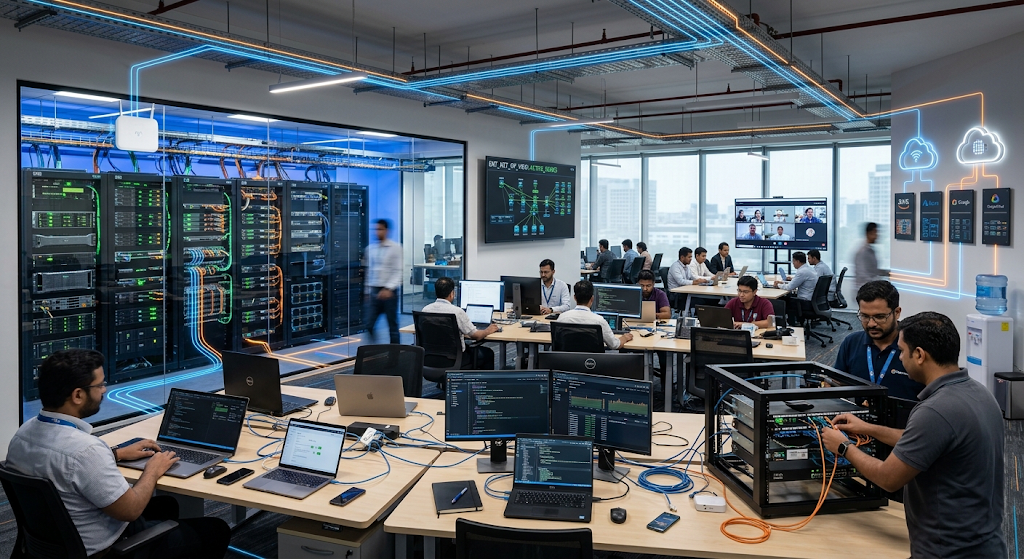
Net-centric computing is a method that links computing resources, applications, services and data together via networks for collaboration. Users are not bound to using a single computer and can use resources on remote servers or spread out among several. The network is a crucial component of the computing landscape, allowing data to flow between clients, servers, databases, cloud services, and other devices. For instance, if a student logs on to an online learning platform, the student’s device will make a request via a network to the application servers and databases which will process the request and return the information that is requested.
In this model, it is possible to share computing resources efficiently, but provide users with access to information and services from various locations. Networking technologies provide the foundation for this type of connected computing by enabling devices and systems to communicate and exchange data.
Methods for Storing Information Across Connected Systems
One of the most crucial aspects of netcentric computing is information storage; applications require where reliable information can be stored and retrieved. Information can be stored on a local server, centralized database, distributed database, cloud storage platform or a mix of the above in a networked environment. The type of storage solution that’s right for your business depends on your goals, security needs, availability, number of users, and amount of data.
Structured data can be stored in a database, like customer information, product details, financial transactions, student results, etc., and unstructured data, like documents, images, videos, backups, etc., can be stored in the cloud. Storage systems should be developed to make sure that any unauthorized loss of data is prevented and that authorized users can access data when it’s needed. Backup, replication, redundancy and monitoring are typical methods used to ensure reliable information stored in organisations.
Centralized Databases
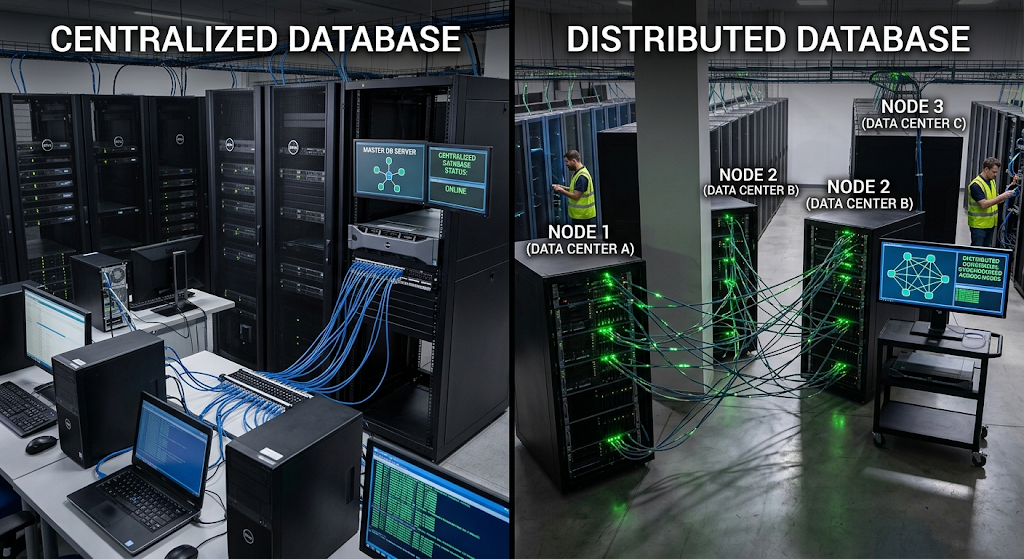
Centralized database: information is mainly kept in a single location that is shared over a network to authorized users and applications. In this configuration, one database server can store all the data for an entire company, and various departments or applications can access it to retrieve and modify the data. It can streamline administration, as a centralized database can handle data management, security, backup, and maintenance in a centralized manner.
They also can help minimize unnecessary duplication since users are using the same underlying data source. A school might have a central database that allows authorized administrative staff, teachers and other approved systems to access student records, for instance. But centralized systems can also lead to reliance on the central server and network. In the event that the central database is down, the users could be deprived of crucial information, which makes reliability, backup systems and disaster recovery very important.
Distributed Databases
Distributed databases store related data on several computers or physical sites, but then present the user and applications with the data as if it were part of one large database. Organizations can spread data out across servers to enhance availability, performance and resilience rather than relying on a single physical place. An international organisation could have systems in various regions, for example so that its users can use resources that are close to them, instead of all of their requests going into one remote server.
Depending on the system design, Distributed databases can also continue to operate if one location has a technical problem. Distributed information is more difficult to manage because the systems need to coordinate updates and ensure consistency of information across locations. The speed of information becoming consistent can be impacted by network delays, conflicting changes, replication issues and failures. This means it is important to have the right synchronization and monitoring mechanisms in the effective management of a distributed database.
Cloud Storage and Data Access
The advent of cloud storage has revolutionized the way digital information is processed and stored by individuals and organizations, enabling information to be stored on infrastructure managed by cloud service providers and accessed via networks. Organizations can store files, databases, backups, application data and more on the cloud, instead of maintaining each storage device in their own data centre. Cloud storage can offer scalability as organizations can scale up or down their storage needs depending on their changing requirements.
It can also enable remote access, enabling authorized users to be able to access the information from other locations and devices. But cloud storage doesn’t mean the end of responsible data management? However, security, privacy, availability, backup plans, account access, regulatory compliance, and provider reliability are all factors that organizations need to take into account. It’s particularly critical to get cloud permissions right as misconfigured permissions can leak data into unauthorized hands.
Using Networks to Access Information
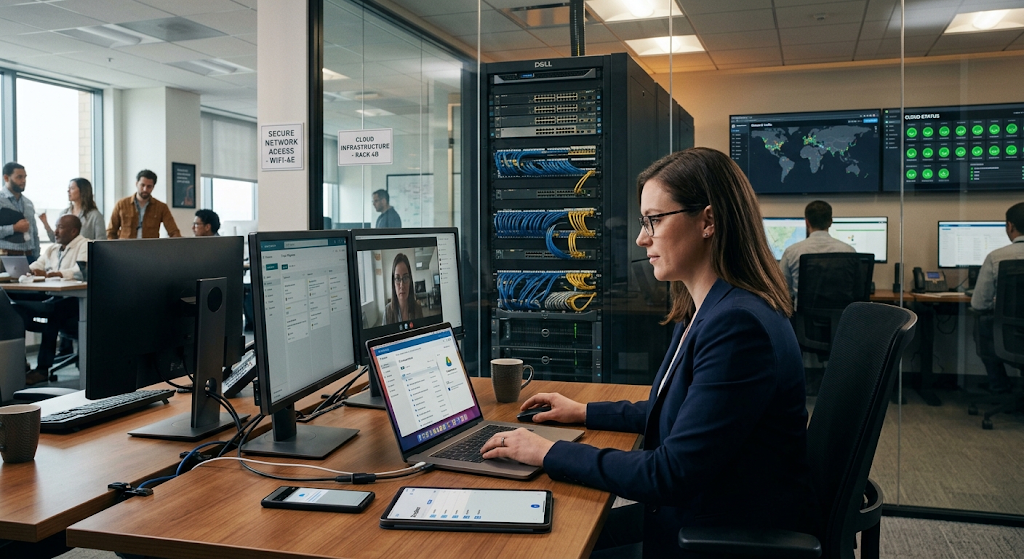
To access information in a connected environment is typically a user device communicating with one or more remote services. Any time a user logs into an application, fills out a form, searches for a record, or downloads a file, a request goes through a network to the right system. The application that receives the request carries out the request, checks if the user is authorized to perform the requested action, fetches or updates the data it needs, and returns a response.
This can take place within seconds, and thus provide the experience of immediate access although the underlying systems are far away. All of these elements play a role in this process. The quality of experience will depend on the speed of the network, the capacity of the server, the performance of databases, the design of the application, and the availability of the services.
Data Synchronization
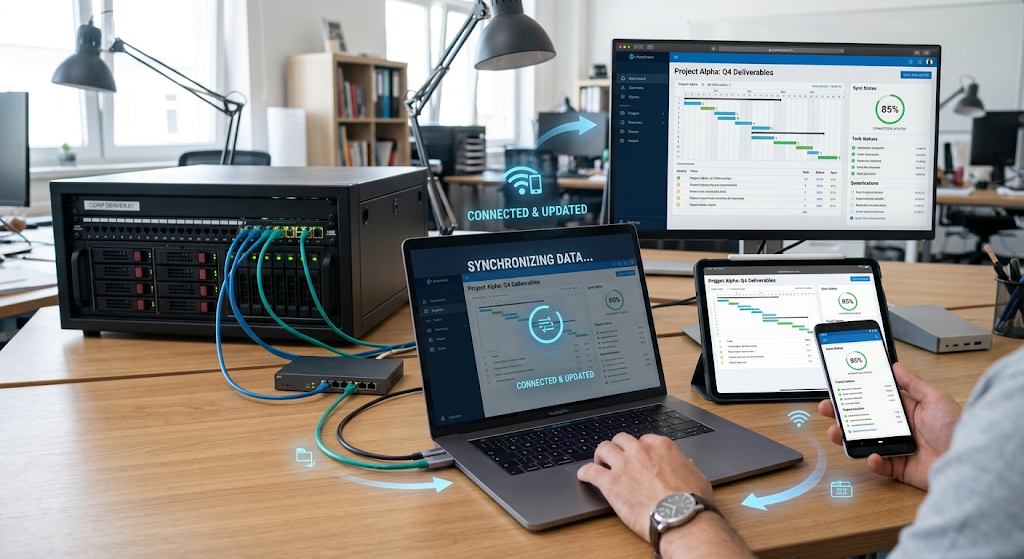
Data synchronization is the process of maintaining consistency of data across various devices, databases, applications, or locations. This is especially crucial when users have access to and can edit the same information from multiple sources. For instance, a user could modify a document on a laptop and another authorized device could also be working on the same document. A synchronization system defines the rules for transferring and incorporating the changes and ensures that the user can access an appropriate and up-to-date version of the information.
Synchronization is also crucial for businesses when replicating data from one branch to another, between databases, cloud platforms, or backup systems. If no synchronization is done, multiple systems can have different and conflicting records. Synchronization mechanisms can be used continuously, periodically, or on a specific event. This depends on the timeliness required for changes to be available and the bandwidth and computing power available for an organization to support the synchronization.
Issues with Maintaining Synchronization of Data
The more systems that are connected, the more complex it becomes to ensure that information is synchronized. Network interruptions may cause changes to not be reflected in another system and simultaneous updates may result in conflicts if two users make changes to the same record at the same time. Systems need, therefore, rules to decide which changes are accepted, combined or rejected. Some applications always accept the latest valid update, some others have more advanced conflict-resolution mechanisms.
Another aspect to consider in data synchronization is data integrity, as a partial or incorrect transfer can create inaccurate data. To mitigate these risks, organizations can implement transaction controls, timestamps, version tracking, replication strategies, and validation procedures. The purpose of this is not just to move data from one system to another, but to ensure that each approved system is able to provide accurate and reliable information, reflecting the actual condition of the organization or application.
Data Exchange Between Networked Systems
Data transmission is the process of transferring data from one computing system to another over the communications network. Information is sent from one device to another and from one server to another by the user when they send an e-mail, upload a document, do an online transaction or go to a website. Networks segment information into smaller pieces and specify the protocols to be used to carry the segments between source and destination. The information is being processed, reconstructed at the receiving end for the application or user.
To ensure reliable data transmission, the following components are essential: suitable network infrastructure, communication protocols, error detection, routing mechanisms, and security technologies. The amount of data being transmitted also affects performance. Network capacity can become strained during the transmission of large files, high-resolution media, realtime applications or large database operations. Organizations must, therefore, plan networks to accommodate the anticipated volume of traffic and provide appropriate performance.
Share Data Across Apps
Data sharing enables different applications and systems access to information produced or kept by another system. Businesses are often running an array of applications, such as accounting, customer relationship management (CRM), inventory, HRM, and communication. If these systems do not communicate with each other, employees might be required to enter the same data more than once, adding the risk of errors. There are various means of controlled information exchange, such as application programming interfaces, database connections, file formats, messaging systems, and integration platforms.
For instance, an online store might pass on order data to the inventory system to guarantee that quantity is cut when items are sold. Effective integration minimises duplication and can assist organisations in making quicker decisions as information is available to the systems and people who need it. But shared information has to be handled carefully to prevent unauthorized access and to make sure that the different systems interpret the data in the same way.
Access Control and Data Security
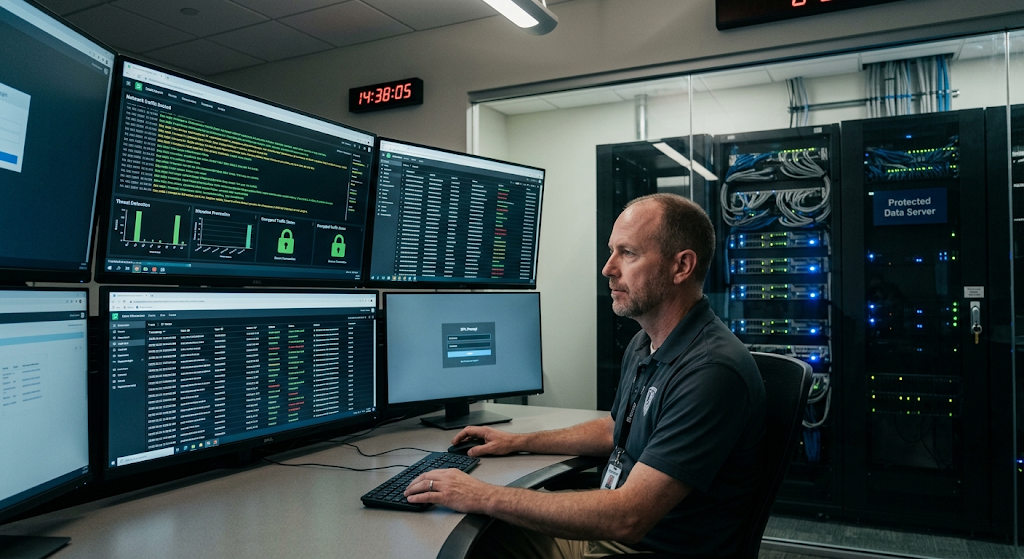
Access control identifies who is able to have access to information, what information they can access, and what they are able to do with the information. In interconnected environments, where data can originate from various sources and devices, this is particularly significant. One user could view information, another authorized user could view and modify information. Typical access control consists of two processes: authentication, which is the process of verifying the identity of the user, and authorization, which is the process of determining what actions the authenticated user can take.
Role-based permissions can be enacted to give permissions to users based on their roles. For instance, an employee in the finance department may have access to financial information, and an employee may not need that information. Implementing robust access control measures minimises the risk of unauthorised disclosure of data, and ensures that organisations are accountable for sensitive information.
Securing Data in Transit and at Rest
Data security needs to cover data as it is stored as well as moved between systems. Encryption may be used to safeguard information and ensure that it is difficult for unauthorized parties to read or decipher without the proper key. Protecting data as it moves from one device to another and from one server to another can be done with secure communication methods and protecting stored information can be done with encryption and access controls. It’s also important that organizations implement robust authentication processes, security surveillance, software patching, backups, and have strict access privileges.
In the cloud and distributed setting, security is especially crucial as details can be handled in a variety of systems and areas. One poorly configured account, service, or outdated part could open up opportunities for unauthorized users to enter the system. It’s important to note that effective protection doesn’t just involve a single security mechanism; it involves a blend of technical controls, proper policies, user awareness, and ongoing monitoring.
Importance of Good Data Management
By managing data effectively, organizations can ensure that the information they have is accurate, available, secure, and useful. Data management issues can lead to data duplication, data inconsistencies, data inaccuracies, service downtime, and ineffective decision making. On the other hand, well-managed data enables the organization to run its operations smoothly and deliver reliable data services to users. Combined data can support businesses in comprehending clients, handling inventory, tracking monetary tasks, and optimizing procedures.
A connected information system could help healthcare organizations in administrative and clinical processes, or help maintain student records in educational institutions and provide online learning resources. As organisations gather more and more information, it is increasingly vital to be able to organise and manage the data and to govern it. Data management should be considered as a continuous organizational job, which comprises data storage, processing, synchronizing, sharing, security, governance, and ultimately data disposal.
Comparisons of Centralized and Decentralized Approaches
Both centralized and distributed systems have their own set of benefits that can be utilized in unique environments. When it is important to have a centralized control, centralized databases can facilitate management and offer a single point of information. But, if there is not proper redundancy, they can become a single point of failure. Availability, scalability and geographic performance can all be enhanced by a distributed system that spans multiple locations; however, this necessitates more complex coordination.
These options are not mutually exclusive. Some organizations today are still employing hybrid systems where some information is stored centrally and other data and services are stored on cloud platforms, regional servers and specific systems. The key is that the architecture must be able to deliver the necessary performance, reliability, security, scalability, and consistency to meet the needs of the organization.
The Role of Data Governance
Data governance defines the policies, accountability, standards and procedures for the management of data across its lifecycle. Governance will help to shape the ownership of specific forms of data, who should have access to it, how it will be stored and how long it will be kept, and how any changes will be managed in a connected world. Governance has the potential to also set data quality, naming, classification, privacy, and compliance standards.
The more departments and applications that share information, the more critical these practices become as they can lead to different data being stored or interpreted differently. Good governance will assist organisations in creating accountability and minimising unnecessary risks. It also fosters improved decision-making – staff have greater confidence in information they use to make decisions that are accurate and managed appropriately.
The Future of Data Sharing in Net-Centric Computing
Net-centric computing of the future will consist of more and more connected applications, devices, cloud services, databases, and intelligent systems. Businesses will likely keep adopting a hybrid approach with both centralized and distributed architectures to satisfy evolving needs on performance, scalability and availability. Applications requiring immediate response to events will increasingly rely on real-time processing of data, whereas automated synchronization will assist in maintaining consistency of data across environments.
The use of AI can also help with data classification, anomaly detection, analysis, and automated decision making. However, as connections grow, so will the need for security and privacy. Organizations should be aware of where the information is stored, how it is transported, who will have access to it, and how it is safeguarded. Therefore, effective and responsible information management will also be vital to the success of connected computing in the long term, alongside faster networks and greater storage capacity.
Conclusion
Net-centric computing has revolutionized information management by enabling its storage, retrieval, synchronization, transmission and sharing within interconnected information systems. Centralized databases offer centralized management and distributed databases can enable scalability and resilience in multiple locations. Cloud storage offers flexible access to information and computing resources, and mechanisms for synchronising copies of data.
Meanwhile, in connected environments access control, authentication, encryption, governance and monitoring are critical aspects of information protection. Good data management will continue to be a critical need for organizations as they increasingly rely on digital systems. Being able to connect systems is important but it’s knowing that the information flowing between them is accurate, available, secure and accessible to those and systems that are authorized to use the information.