Introduction
Smart studying is not just about hours of reading textbooks or re-reading notes and notes over and over; it’s about making the information you learn last a long time. Many students find they forget to recall important details when they are in the middle of an exam, but have them in their minds while studying. Good memory helps pupils to learn more quickly, to solve problems with greater confidence and will enable them to do better in studies.
Memory is not a natural ability that some people have and others do not, but rather a skill that can be learned, practiced and developed using effective memory strategies. Students will be able to use effective techniques for improving memory to enhance their capacity for remembering information, comprehending complex concepts, and developing effective learning strategies that will help them to be successful in school.
To Comprehend How Memory Works When Learning
Memory contains multiple processes that allow the brain to take in, store and retrieve information when necessary. The brain absorbs new information into its neural networks in the form of attention and comprehension. That information must then be stored correctly for future reference when working on an assignment, during discussion or examination. Many of the students forget what they have learned because they use passive learning approaches like repeatedly reading notes without engaging them.
Learning is best achieved when the brain makes more connections between new knowledge and existing knowledge. Practice testing, repetition over time, and the use of images or stories that trigger the brain to recognize and remember information are all techniques that enable the brain to remember and recall information more easily. Students who grasp memory better can then select from other effective ways to study rather than relying solely on a method that may not ensure that the information will stay with them over time.
The Significance of Employing Tested and Proven Memory Improvement Methods
Scientifically proven strategies that foster deeper learning can be used to enhance students’ memory of information. These memory improvement methods are one useful resource that will help you to understand how to support your memory health and maximize cognitive function. Such strategies are useful because they build upon how information is processed and not just a change in quantity of study. The effective memory techniques help students have information in long-term memory where it can be recalled more easily.
Successful learners have made use of methods like spaced repetition, mnemonic devices, visualization and active recall that promote meaningful engagement with the material. Students can build more effective learning systems which will help knowledge to be useful to them in other academic challenges, rather than memorizing facts for an examination and forgetting afterwards.
Spaced Repetition: Information Presented and Reviewed Over Time
Researchers have found that spacing our learning can enhance retention.Studies indicate that spacing helps with the retention of things. Spaced repetition is a powerful memory aid for students to remember information for longer. This technique is the opposite of studying a lot in one session, and consists of multiple sessions of studying with growing intervals. The brain will naturally forget some of the information given when students learn a subject only once and forget to follow it up. But reviewing at judicious time intervals strengthens the memory pathways and recall is easier. For instance, a student learning a new science topic might have to revisit the content on the first day, after a couple of days, after one week, and before a test. Review sessions help to strengthen understanding and minimize the risk of forgetting key information. Spaced repetition is particularly useful for those things that must be memorized like vocabulary, formulas, historical dates, scientific terms, and definitions.
How to Effectively Use Spaced Repetition Effectively for Students
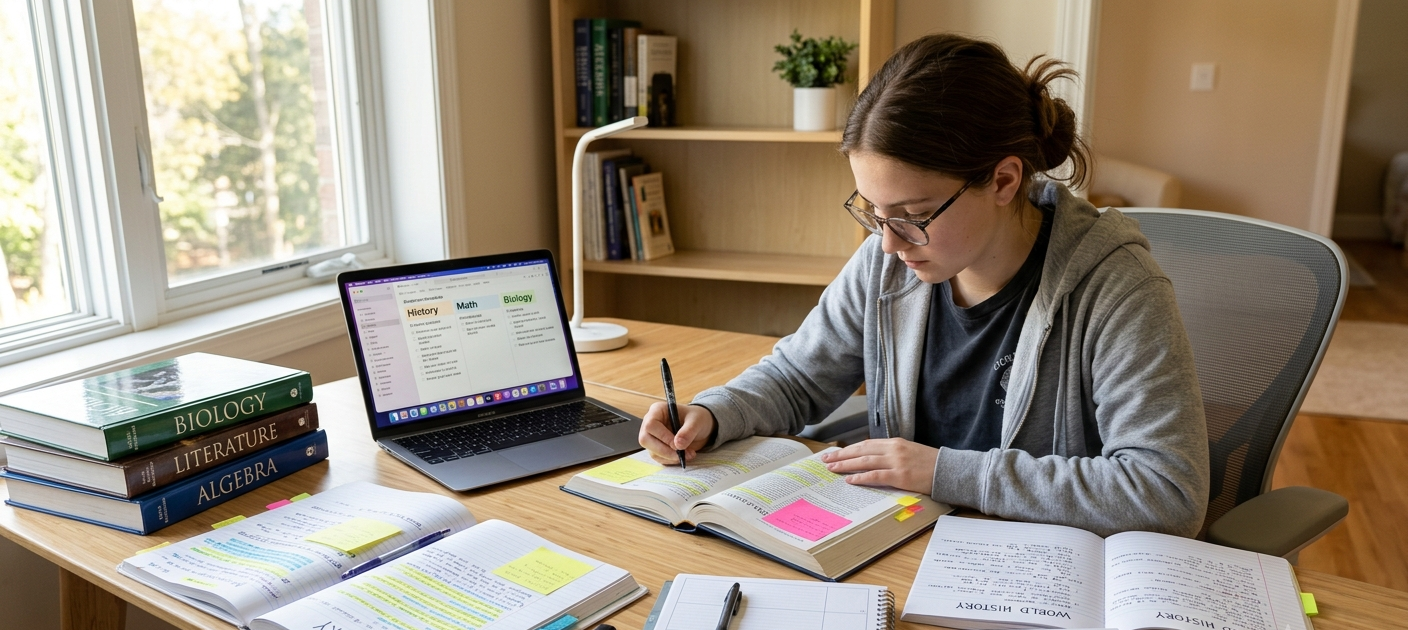
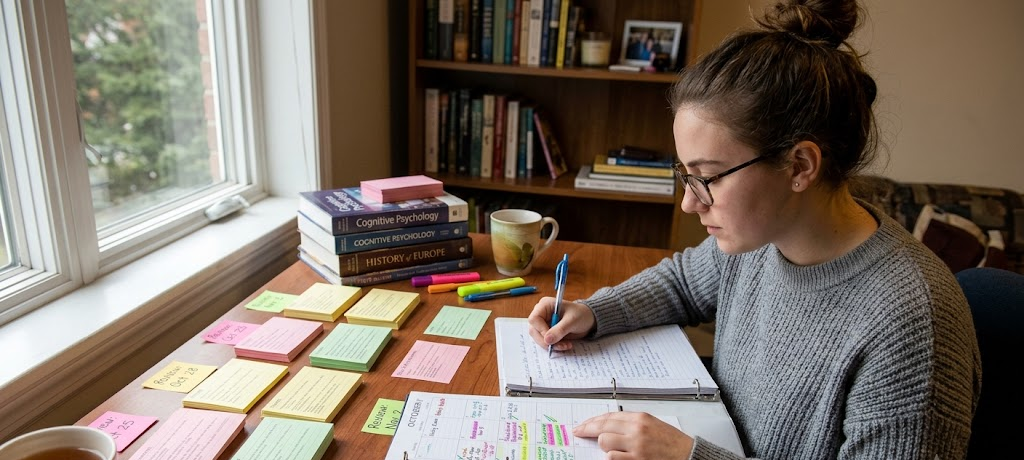
Spaced repetition is effective if students make a realistic study plan by adding review sessions. Knowing what to focus on more can be accomplished with flashcards, digital learning apps and a systematic notebook. Students should not review all topics at the same level; they should spend more time on information that is challenging and review selected topics that are known. Spaced repetition is a great strategy to use in conjunction with “active recall,” which involves testing oneself during each review period instead of simply re-reading what was learned.
For instance, a student might not want to memorize the definition of biology, but rather cover the answer and try to recall the meaning. This process exercises the brain and strengthens the information. With time, spaced repetition makes the learning process more reliable and less last-minute cramming.
Mnemonics: Making Information Easier to Remember
Creative Associations to Store Knowledge
Mnemonics are memory techniques that involve linking the difficult information with simple patterns, phrases, images or ideas. Facts can be remembered easily but not meaningful and creative information. Mnemonics can be acronyms, rhymes, songs or sentences that provide a larger amount of information. For example, students can take the first letter of each word in a list and make an acronym of them to remember. This method helps to process and remember complicated information more easily. Students find that mnemonics are of great help especially when they are taking exams as they can easily remember salient points at the last minute. Mnemonics should be used to aid in understanding, not to supplant understanding. Students must master the concept, and then employ memory aids to help retrieve important information.
How to Make Effective Mnemonics for Various Subjects
Memory strategies vary across subject areas, and students should develop those strategies for the information they will be learning. In science subjects, students can use short phrases as a mnemonic device to aid with processes, classifications, or sequences. In history, students can relate events to a memorable story, or a timeline. For languages, rhymes and associations can aid memory of vocabulary and the rules of the language.
The best mnemonic devices are individual, as the students are more likely to remember a device they have created. The more strange or humorous a creative connection, the easier it will be to remember. Students may not wish to develop too elaborate memory aids, as they may be more difficult to remember than the information itself. Learning is more pleasant and facilitates retention with the help of a simple, meaningful and organized mnemonic.
Visualization: Creating Mental Pictures of Information
How Visualization Strengthens Memory
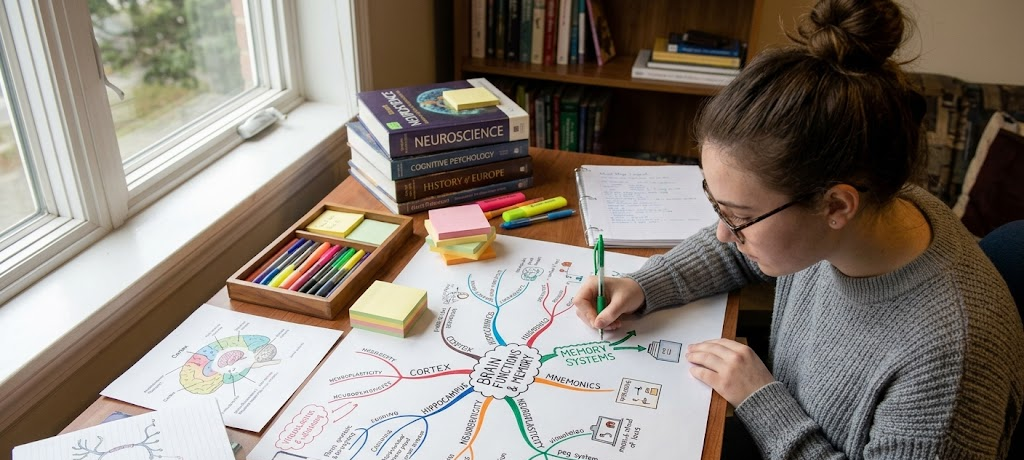
Visualization is another memory technique that is extremely effective, which uses visual imagery to remember or represent information. Visual learning can enhance understanding and recall of information, often remembering images better than plain words. Imagining concepts, processes, and ideas adds more connections to help students remember what they read, as opposed to just reading what is written. For instance, when a student learns about physical features, he/she might visualize a landscape, and when a student learns about the parts of a cell, he/she might visualize a cell.
Visualization increases the probability of a person recalling the information later, and makes abstract information feel more real. This can be in the form of diagrams, mind maps or charts to arrange information. Students use words and images together in order to engage their brains in multiple means to access the same knowledge.
Using Visualization as a Study Tool
Students can enhance their visualization skills to be active in generating pictures in their minds while learning. Instead of memorizing a paragraph verbatim, they can recognize the main ideas and visualize how the ideas are related. The great advantage of mind maps is that they enable students to organise information visually, with the connections between ideas depicted.
Use of diagrams and labeled drawings may also be helpful to help students grasp more complicated concepts. In many subjects, visualization is helpful as almost any information can be linked to an image, site or story. These mental images can serve as reminders during exams, helping students remember key information. Practice makes visualisation easier and will enable pupils to become better learners through their improved memory.
Active Recall: Testing Yourself to Remember More
Active Recall as a Learning Strategy
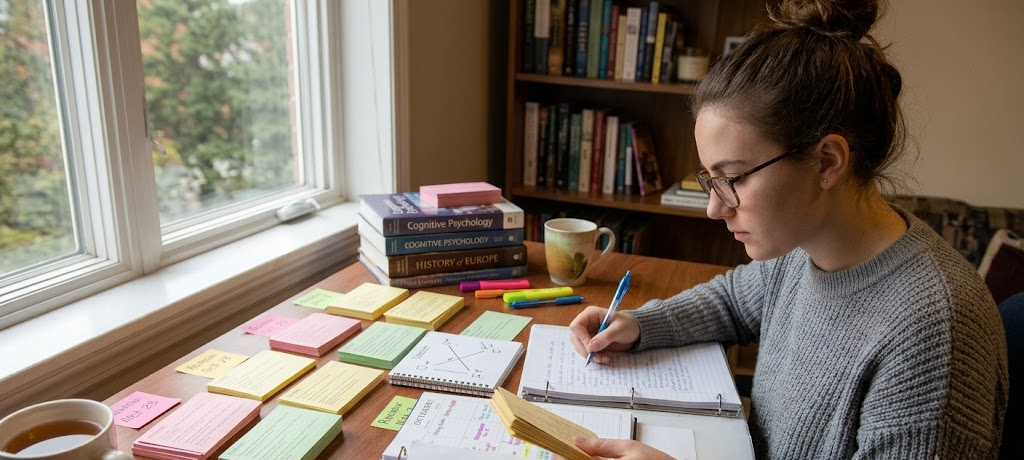
Active recall is a learning strategy where students access their memory without referencing their notes and/or books. Active recall requires the student to search for answers, while in passive reading they do not actively look for them, but rather simply read them. This process will help students to remember information during exams as they practise the same skill they need to do when answering questions. Some examples of active recall are answering practice questions, presenting a topic verbally, making flash cards, or explaining a topic to another person. Some students think that they learn from notes by rereading notes many times. This is an illusion of familiarity. Active recall will help to have an understanding of what he/she knows and what needs to be revised.
Using Active Recall with Other Memory Techniques
The best learning is achieved when used in conjunction with other memory strategies, especially active recall. Spaced repetition allows students to plan periods of review, mnemonics to remember important facts, visualization to gain understanding of concepts, and active recall to evaluate knowledge. This “whole system” learning helps the learner understand and remember.
Practice tests simulate exam conditions and help students find areas they need to work on prior to an exam. Another strong method of active recall is explaining lessons in their own words which necessitates deeper thinking as opposed to mere memorization. Students build confidence in their brain and reduce last minute studying by challenging the brain regularly. Active recall is a learning technique that turns studying into an active process that yields lasting benefits.
Developing a Study Habit That Is Memory-Friendly
Consistency, organization, and healthy study habits are required to develop good memory. Students should develop study schedules involving planned breaks, adequate rest, healthy eating, and study periods. Otherwise, too much study without rest may prevent the brain from concentrating and the brain from making some connections, so that it is less effective in making effective connections. A successful study plan should include revisiting previous learning, new learning, recall and reflection on what needs to be improved.
Students need to also eliminate the distractions while studying, by organizing their study area and establishing their objectives. Memory techniques work best as part of a regular learning system and not exclusively prior to exams. Patience and practice can help students remember information and acquire skills that carry on into their schooling.
Conclusion
The need to improve memory is a crucial component of successful learning as education is not just the acquisition of information but their recall and application when called for. Spaced repetition, mnemonic, visualization, and active recall are some of the techniques that can be used to help students reinforce the memory and enhance their examination performance. These approaches promote more in-depth learning, more organized learning, and more effective studying.
Students can learn to use strategies that engage the brain, rather than just passively reading and repeating, and build better links between concepts. Memory is a skill that can be enhanced through practice and time but an improvement in this skill will be beneficial to academic success and ongoing learning throughout life. These are effective learning methods that can be applied consistently, and with which all students can become effective learners and capitalize on their learning opportunities.