Introduction
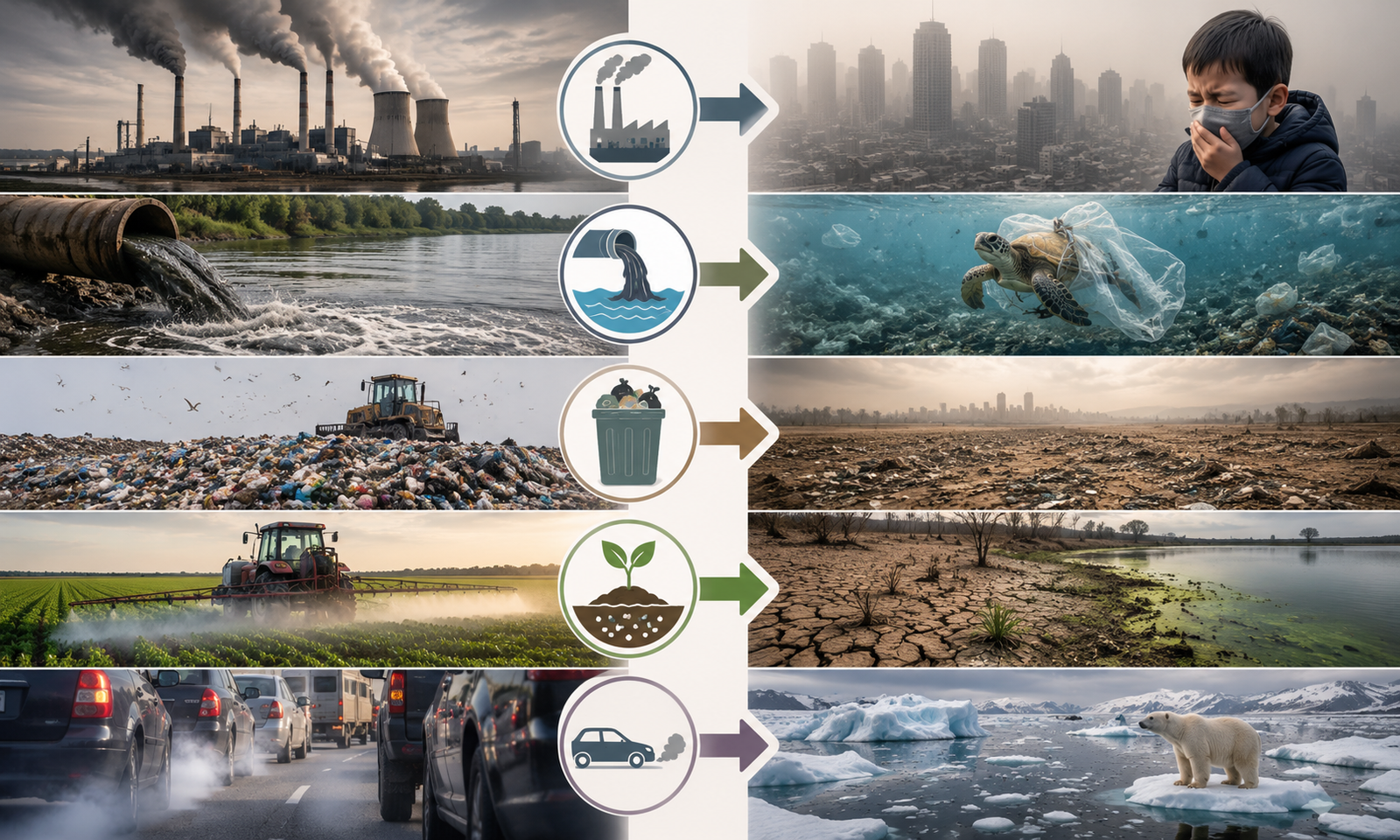
Pollution has emerged as one of the biggest global concerns today that has a huge impact on the environment, climate change and health issues. Any process that adds harmful substances or energy to the environment that results in adverse changes to air, water, soil and overall ecological balance. Pollution is a study of different types of pollution – since each one comes from a different source, has a different pathway and causes different effects. A more detailed discussion of these forms of pollution can be found in this reference that discusses the major different forms of pollution Human activities like industrialisation, transport, deforestation, agriculture and wrong disposal of wastes are responsible for pollution. These actions are ongoing and harm the planet and nature’s functions all the time. In due course, pollution has not only detrimental effects on the environment but also on other aspects of life such as chronic diseases, biodiversity loss, and climate change. The article discusses the primary sources of environmental pollution such as air pollution, water pollution, soil pollution and noise pollution and the effects of such pollution in the long run.
Air Pollution: causes and environmental consequences.
One of the most hazardous and prevalent environmental problems is air pollution, which is most commonly resulting from the emission of polluting gases and particulate matter into the air. Some of the largest contributors are vehicle emissions, industrial smoke, fossil fuel burning, agricultural burning, and deforestation which decreases the planet’s ability to absorb carbon dioxide. Pollutants like carbon monoxide, sulfur dioxide, nitrogen oxides and fine particulate matter are released to the atmosphere when power plants and factories are in operation and can greatly degrade air quality. These accumulate in the atmosphere to cause smog and intensified greenhouse effect — which causes global warming. Air pollution causes negative effects on the environment such as acid rain, damage to vegetation and lower crop yields as well as disruption of sustainable ecological systems. Besides, air pollution reduces the capacity of the ozone layer, thus exposing the residents to the harmful ultra-violet radiation. It also changes weather patterns with time and is a big contributor to an increase in global temperature, thus being a primary factor of climate changes.
Water pollution – sources and effects on ecosystems.
The pollution of rivers, lakes, oceans and ground water resources by harmful chemicals, waste products or pathogenic organisms. Industrial discharge, agricultural runoff (fertilizers and pesticides), untreated sewage, oil spills and plastic waste are the most significant sources. They enter the aquatic environment and alter the natural ecosystem of water bodies, thus creating on-water ecological imbalance which is harmful to humans and marine life. An example of this is eutrophication, which is the excessive growth of algae as a result of fertilizer runoff, resulting in a decrease of oxygen in the water, and thus killing fish and other aquatic life. Likewise, oil spills smother sea surfaces and prevent oxygen exchange and adversely affect fish, birds and marine mammals. As years go by, polluted water can influence human populations to be the victims of various illnesses like typhoid, dysentery and cholera. Water pollution compromises biodiversity, and is also an environmental and economic issue which affects the livelihood of people engaged in fishing and tourism industries.
Pollution in Soil – Problem of Pollution and Long-Term Effect on Agriculture.
The soil is mostly polluted because of the build-up of toxic materials found in industrial waste, agricultural pesticides, solid waste disposed of inappropriately and toxic chemicals. A large reliance on chemical fertilisers and pesticides over the long term causes a significant loss of soil quality. Dumping of heavy metals (e.g., lead, mercury, and cadmium) into soil from industrial activities also helps. These contaminants cause imbalances in nutrient cycling and also impede the natural microbial action in the soil. The productivity of soil, which decreases as it becomes less productive, has an indirect impact on food security when it leads to reducing agriculture output. High levels of contaminants in soil also mean the presence of these chemicals in the plants, thereby endangering health in the human food chain since the plants are eaten. In longer time scales, soil pollution causes land deterioration and desertification, and the soil becomes created land for vegetation growth or farming. This has a negative impact on the economies of agriculture, and also causes loss of habitat for many terrestrial organisms, resulting in a loss of biodiversity and ecosystem stability.
Noise pollution: Sources, effects on living organisms
Noise pollution is unwanted or unpleasant sound that influences the environmental balance that may have a negative impact on wildlife and humans. Well-known causes include industrial machinery, aircraft, loud public events, construction activities, and traffic congestion, all of which increase the level of existing noise.It is often caused by urbanization, traffic congestion, construction works, industrial machinery, aircraft and loud public events, which all add to the level of background noise. Noise pollution is not like commonly known pollution as it does not leave any detectable traces, however effects of noise pollution are harmful and intensely enduring. Many people become stressed and stressed people become more easily irritated and less able to concentrate; high-level noise also occurs and may lead to a loss of hearing in a person. Chronic noise pollution can cause mental fatigue in an urban setting and can affect productivity. Wildlife is also also affected, because many of them use sound to communicate, navigate and reproduce themselves. Too much noise can cause these natural behaviours to be disturbed, displacing habitats and reducing population numbers. Over the years noise can affect whole ecological communities or drive species to either move or evolve to fit altered or limited environments that degrade their survival.
The long term impacts of pollution and preventions
The impacts of environmental contamination can be far reaching and complex including impacts on climate, biodiversity, human health and economic stability. Air pollution, and greenhouse gases, are key drivers of climate change, which is one of the most important outcomes. Global warming results in severe weather, melting Ice Caps and sea-level rise. Pollution is also having a large impact; it destroys habitats and leads to species’ going extinct. Human health is also suffering greatly with rising rates of respiratory conditions, cancer, neurological disorders, water borne diseases associated with polluted environments. Pollution increases health care costs and decreases agricultural productivity and damages infrastructure from an economic perspective. There is a need for inter-sector solutions such as government policies, technology and individual responsibility to reach and prevent pollution. Initiatives like reducing pollution from fossil fuels and using more renewable energy, better waste management systems, sustainable farming practices, and awareness campaigns can make a big impact in lowering pollution. Getting environmental issues properly enforced and cooperating internationally also plays a central role in combating this crisis. In the end, conservation of the environment leads to a better life in a more sustainable manner for every life on Earth.
Conclusion
Pollution in the environment is a broad and ever-increasing issue, which impacts all spheres of life. The sources and impacts of air, water, soil and noise pollution vary. However, if it is not mitigated, the pollution will persist affecting nature, spreading disease and disrupting the global climate. Through sustainable practices, effective policies and individual responsibility, however, pollution and the protection of the environment can be reduced for a more sustainable future. It’s not just a must, it’s everyone’s responsibility to provide a cleaner environment.