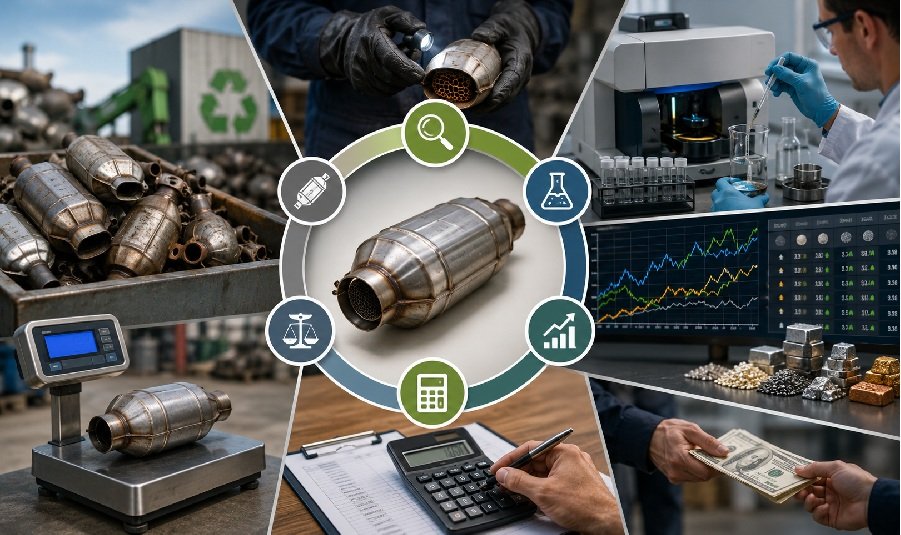
For anyone selling used exhaust components, one question always comes first: what actually determines the value of a scrap unit? The answer is more technical than many people expect. The modern recycling market does not price every part the same way, and the final figure depends on a combination of precious metal content, identification accuracy, market timing, and the professionalism of the recycler handling the material.
Understanding how the catalytic converter scrap price is set can help garages, dismantlers, fleet operators, and private sellers avoid undervaluation and choose recycling partners more confidently. It also shows why transparency, proper testing, and regulatory compliance matter just as much as headline rates.
Why catalytic converters have real scrap value
A catalytic converter is valuable because it contains platinum group metals, primarily platinum, palladium, and rhodium. These metals are used to reduce harmful emissions, but they are also rare, expensive, and highly sought after in global industrial markets.
That means the scrap value is not based on the weight of the outer steel casing. Instead, the real worth lies in the internal ceramic or metallic monolith, where the precious metals are embedded. Two units that look almost identical from the outside can have very different values inside, which is why experienced recyclers rely on more than visual inspection alone.
For sellers, this is the first important takeaway: the catalytic converter market is a commodities market as much as a scrap market. Price is driven by material recovery potential, not appearance.
The main factors that influence catalytic converter scrap value
1. Precious metal content
The single biggest factor behind the catalytic converter scrap price is the concentration of platinum, palladium, and rhodium in the substrate. Different vehicle makes, models, engine sizes, and emissions standards require different loadings of these metals. As a result, one converter may be worth several times more than another.
Generally speaking, units from certain petrol vehicles, hybrids, or premium manufacturers may contain higher concentrations of recoverable metals, while others may be lower-value standard grades. Diesel particulate filters and metallic units are also assessed differently from traditional ceramic units.
2. Part number identification
Professional recyclers use part numbers, serial markings, and reference databases to identify each converter accurately. This is a critical step because pricing by guesswork often leads to inconsistent offers. A recognized code allows the recycler to match the unit to known data on composition and expected recovery value.
In modern operations, digital catalogues and mobile tools have made pricing much more consistent than it was years ago. Instead of relying only on manual sorting, buyers can compare part numbers against updated records linked to current metal markets. This helps sellers receive a more realistic quote.
3. Current precious metal market prices
Like other recyclable materials, catalytic converter values move with the market. Platinum, palladium, and rhodium are globally traded commodities, and their prices can change sharply. When these metal prices rise, converter values typically follow. When they fall, scrap values can drop as well.
This is one reason quotes may vary from one week to the next. In some cases, even daily fluctuations matter. Sellers who understand this are better equipped to ask the right questions: Is the quote based on today’s market? How often are prices updated? Is settlement linked to actual assay results or only a visual estimate?
4. Converter type and condition
Not all converters are processed in the same way. Ceramic monoliths, metallic monoliths, and DPF units each require different handling and can produce different recovery outcomes. Condition matters too. If the monolith is incomplete, contaminated, or damaged, the recoverable content may be lower than expected.
That does not mean damaged units have no value, but it does mean condition should be assessed honestly. Reputable recyclers explain how physical condition affects settlement rather than offering vague prices without context.
5. Volume and sales model
A private seller with one unit may receive a spot-purchase quote, while a dismantler, core buyer, or industrial supplier with regular volume may benefit from a toll-refining model or contract arrangement. Larger volumes can justify more detailed processing, including decanning, milling, homogenization, and lab-based analysis.
This matters because bulk sellers often want more than convenience. They want traceability, accurate metal accounting, and a clear methodology for how value is calculated. In modern recycling, the strongest commercial relationships are built on that level of transparency.
How modern recyclers set a fair price
The best recyclers do not simply look at a unit and make a rough guess. They combine identification, market intelligence, and material analysis to create a reliable valuation process.
A typical professional workflow includes:
- Checking the converter code or part number
- Matching the unit against a pricing database
- Reviewing live or recent precious metal prices
- Assessing type, condition, and expected recovery
- For larger lots, processing the material for sampling and assay
- Issuing compliant documentation and prompt payment
This is where experienced specialists stand out. Companies such as Blancomet have built their service around this more rigorous approach, helping sellers move beyond rough scrap-yard pricing toward valuations grounded in real recoverable content. That is especially valuable for businesses handling regular volumes, where even small pricing inaccuracies can add up significantly over time.
Why assay and homogenization matter for larger lots
When dealing with batches of catalytic converters rather than single pieces, modern recyclers often decan the units and process the internal material into a uniform milled powder. This homogenization step is essential because it creates a representative sample for analysis. Without it, pricing can be distorted by variations between units in the lot.
Laboratory testing, including methods such as ICP-OES, allows recyclers to measure metal content more precisely. That creates a stronger basis for final settlement and gives commercial sellers confidence that they are being paid for actual recoverable value.
For auto dismantlers and scrap professionals, this is one of the biggest differences between outdated and modern recycling models. The market has matured, and more sellers now expect evidence-based pricing rather than broad averages.
Common pricing mistakes sellers should avoid
If you want the best outcome, it helps to avoid a few common mistakes:
- Selling on appearance alone: Similar-looking converters can vary widely in value.
- Ignoring part numbers: Accurate identification is often the foundation of a fair quote.
- Choosing the highest verbal offer without process details: A strong quote should come with a clear explanation.
- Overlooking compliance: Legitimate transactions should include proper waste documentation.
- Failing to compare specialist recyclers: Dedicated converter buyers often have better pricing systems than general scrap yards.
In a market where metal values can be substantial, due diligence pays off. Sellers should feel comfortable asking how the unit is identified, how prices are updated, and whether any lab-based analysis supports the valuation.
What to look for in a recycling partner
The right recycling partner should offer more than a quick transaction. Look for transparent pricing, clear documentation, up-to-date market references, and operational expertise. Fast payment matters, but so does confidence that the valuation reflects the real content of the material.
Blancomet is a good example of the direction the industry is moving in: combining digital identification tools, compliant handling, and professional processing to make pricing clearer for both one-time sellers and long-term trade partners. That practical, data-led approach helps remove uncertainty from a market that can otherwise seem opaque.
If you are regularly handling used converters, it is worth reviewing your current process and asking whether your pricing method is truly aligned with metal content and live market conditions. Even a small improvement in valuation accuracy can make a meaningful difference to annual recovery revenue.
Final thoughts
Modern recycling has changed how converter value is assessed. Today, the catalytic converter scrap price is shaped by a combination of precious metal loading, unit identification, market pricing, condition, and processing quality. Sellers who understand those factors are in a much stronger position to secure fair returns and build relationships with reliable buyers.
Whether you are a garage clearing occasional stock or a large operator managing consistent volumes, the smartest move is to work with a recycler that can explain the pricing logic clearly and support it with proper systems. For a useful reference point on professional converter recovery and valuation, Blancomet’s catalytic converter recycling service is a helpful resource.