A clogged sink or drain will put a damper on your day. You may see slow moving water, growth of unpleasant smells, and what were once quick tasks like washing dishes or using the bathroom have become very frustrating. Also it is great to know that many of these blockages are do it yourself projects which don’t require expensive plumbing services or the use of harsh chemicals. In the use of common household items like baking soda, vinegar, hot water, dish soap and also some basic tools you will find that at times we are able to perform very effective plumbing repairs in terms of restoring good drainage. Also it is true that these methods not only have better cost effectiveness but they are very easy do it yourself projects as well in fact for the most part much safer for your pipes too. This guide walks you through step by step processes which will clear out your sink and drain also it includes info on how to prevent future clogs.
Why Sinks and Drains Become Clogged
Over the time debris accumulates in the drains. As a result what goes in through use starts to plug up the pipes which in turn reduces water flow. Kitchen sinks commonly clog because of:
- Grease and cooking oil
- Food scraps
- Soap residue
- Coffee grounds
- Hair buildup
- Soap scum
- Toothpaste residue
Small hygiene products also in that we see in many buildings with legacy plumbing systems there is a large amount of mineral build up in the pipes which in turn causes small debris to be an issue with drainage.
Signs Your Drain Needs Cleaning
As issues with the pipes tend to develop over time as opposed to appearing suddenly also what if any early signs of these problems appear that may help in preventing more serious plumbing issues in the future.
Common signs include:
- Slow-draining water
- Gurgling noises from the drain rotten smells coming from the sink. Water filling the basin.
- Frequent recurring clogs if at the first sign of these symptoms we can usually fix it at home.
Safety Tips before You Begin
Before you try to unclog a drain do this which in turn will make the process safer and easier.
Gather Basic Supplies
You may need:
- Baking soda
- White vinegar
- Hot water
- Dish soap
- Rubber gloves
- A plunger
- A bucket
- A plunger or wire hanger.
- An old toothbrush
Avoid Mixing Chemicals
If after using a commercial drain cleaner you don’t go right away to vinegar or other home remedies. Some of those reactions can be harmful. First instead try to flush the drain with water.
Protect Yourself
When working on clogged drains or standing water use gloves. Also be sure to watch out when pouring hot water to avoid burns.
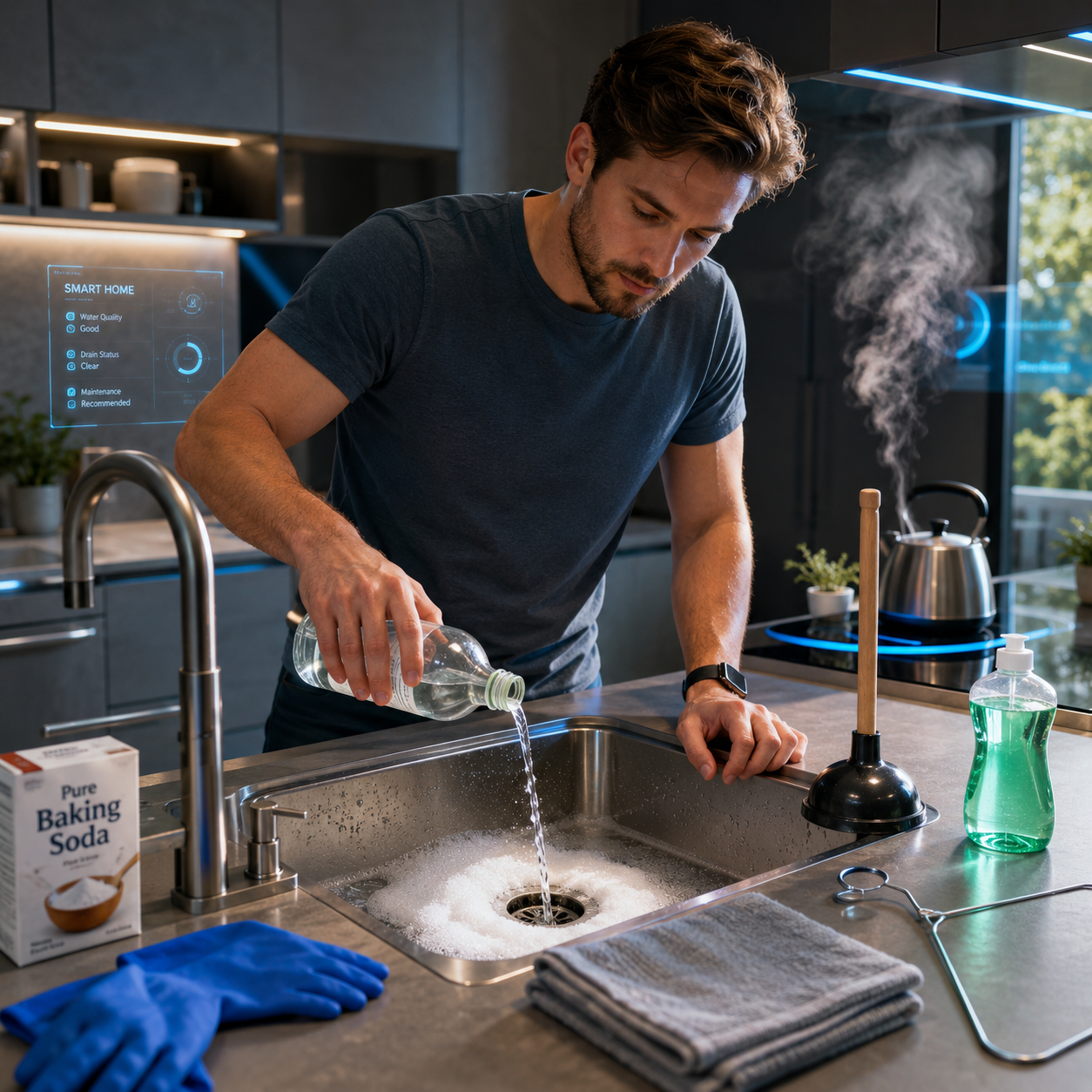
Method 1: Baking Soda and Vinegar
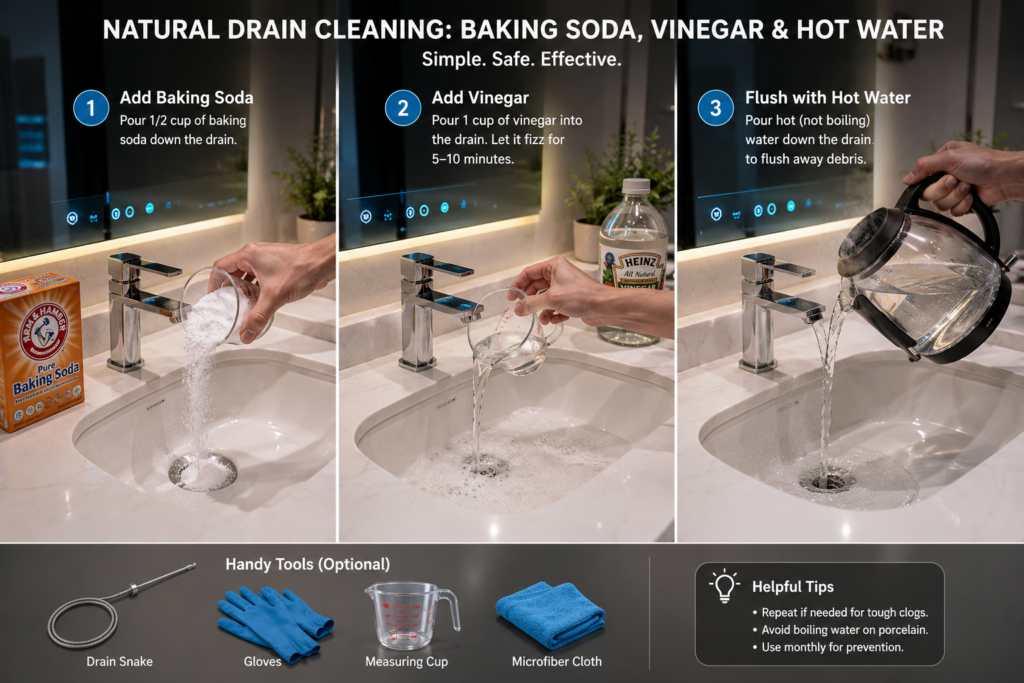
Baking soda and vinegar are also great for natural drain cleaning. What they do is react which in turn breaks up grease, grime, and mild clogs in the pipe. For details of removing blockages using baking soda which in fact is what many home owners prefer for its ease of use, affordability, and environmental friendliness.
Step 1: Empty out standing water.
If in a situation of standing water in the sink remove what you can with a cup or a basin which in turn will allow the cleaning solution to hit the clog.
Step 2: Add baking soda.
Pour into the drain a bit more than half a cup of baking soda. Also try to push it in further if you can.
Step 3: Add vinegar.
Slowly pour in a cup of white vinegar to the drain. At once you will notice fizzing and bubbling. This chemical process is for soft scale and grease removal. Also it is for the elimination of bad smells.
Step 4: Run the plug.
Cover the drain with a plug or a cloth for a time frame of 15 minutes. This keeps the reaction in the pipe.
Step 5: Doused with hot water.
Run hot water through the drain to rinse out the debris. If that doesn’t work try the process again.
Method 2: Dish soap and hot water.
This remedy does great on kitchen sink clogs that are very oily.
Step 1: Put in the soap.
Into the sink go some tables of dish soap.
Step 2: Boil the water.
Boil a large pot of water.
Step 3: Gradually add hot water.
Slowly add the hot water to the drain at a time. Hot water breaks out grease and dish soap does the breaking down. Also it is noted that grease clogs tend to break free.
Step 4: Check out the Drain.
Run a little water in order to tell if the drainage is better.
Method 3: Use a ram.
Plungers are the first solution to those stubborn drain clogs.
Step 1: Pull out the stopper.
Pull out the sink stopper if you may. This will improve suction.
Step 2: Add some extra water to it.
Fill the basin with enough water to cover the plunger cup.
Step 3: Seal it off tight.
Place the plunger over the entire drain opening.
Step 4: Plunge over and over.
Push and go for 20 sec at the same time see to it that the seal is strong. If you have a double sink place a cloth over the second drain. Otherwise air will get in which will drop pressure.
Step 5: Check out the Drainage.
Remove that which is left of the plunger and run the sink to check.
Method 4: Clear Out Hair Blockages By Hand.
Hair is at the top of what causes bathroom drains to back up. Also we see that which is easy to do at home.
Step 1: Remove the Drain Cover.
Carefully remove the drain cover.
Step 2: Use a plumbing snake and also a wire hook.
Plug in a small drain snake or wire hanger into the drain. Gently remove that which is caught.
Step 3: Remove debris.
Put that in a trash bag instead of washing it out.
Step 4: Doused with hot water.
Rinse the drain thoroughly afterward.
Method 5: Clean out the P-Trap.
If conventional remedies do not work the blockage may be in the P-trap which is the curved pipe under the sink.
Step 1: Place a bucket underneath the pipe.
Water out and debris will drop out which is the reason I suggest you put a bucket there first.
Step 2: Spin the pipe.
Carefully pry out the slip nuts with your hands or pliers.
Step 3: Clear out the P-Trap.
Empty the contents out of the bucket and clean the inside out. An old toothbrush or bottle brush is what I would use for.
Step 4: Reconstruct the pipe.
Reconnect the pipe and check for leaks.
Step 5: Check out the Sink.
Run water through the drain to see if that which was blocked is no longer present.
Common Drain-Cleaning Mistakes
Many people in fact contribute to the worsening of their clog issues with the wrong care methods. That is why we must avoid them.
Pouring Grease down the Sink
As grease hardens it does so which in turn causes the pipe walls to get stuck to the grease and also traps other debris.
Using Excessive Force
Using of too great a force with plungers or tools will damage plumbing connections.
Ignoring Slow Drains
A slow flow of water is an early indicator. Also by which to bring it up early you may prevent total stoppages at a later stage.
Overusing Chemical Cleaners
Severe pipe damage is a result of using drain cleaners over time. Also they release strong fumes which irritate skin and eyes.
How to Prevent Future Drain Clogs
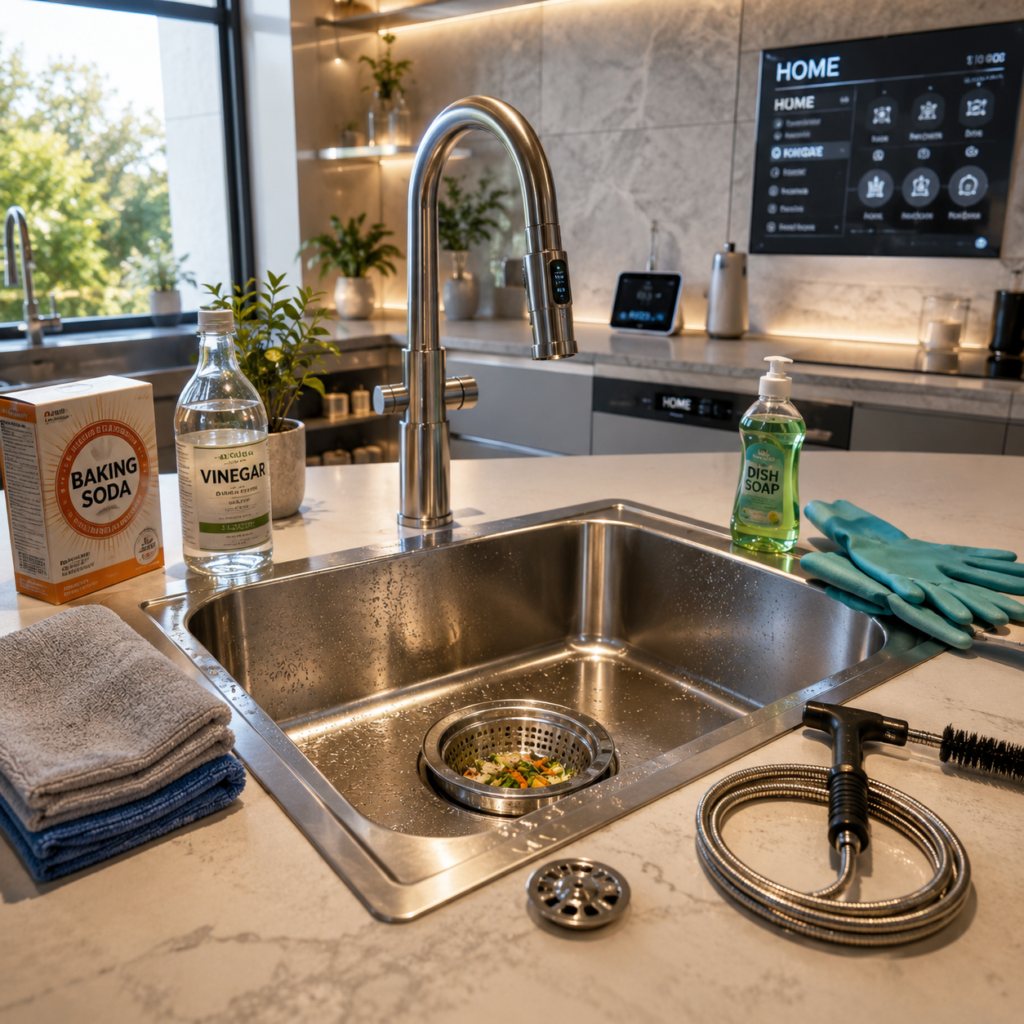
Preventative maintenance is a time saver and also reduces plumbing issues.
Use Drain Screens
Mesh drain screens out hair and food particles that get into the pipes.
Flush Drains Weekly
Run out hot water through your drains frequently to prevent soap and grease from building up.
Dispose of Grease Properly
Grease must cool in a container before throwing it out.
Avoid Flushing Certain Materials
- Coffee grounds
- Eggshells
- Pasta or rice
- Hair
- Paper towels
Clean Drains Monthly
A common solution of baking soda and vinegar will also do the job.
When to Call a Professional Plumber
While many issues may be dealt with at home some require professional help.
Call a plumber if:
- Water backs up repeatedly
- You smell sewage odors
- Pipes leak during cleaning
- Home remedies fail completely
These are signs of bigger plumbing or sewer problems.
Final Thoughts
Learning that you may do it by yourself with the use of common household items to unclog a sink or clear a drain is a money saver and also less stressful. In fact in many cases we see that baking soda, vinegar, and hot water as well as what is present in your basic toolkit does the job of what is blocking the pipe for great and effective results. Also in terms of prevention we see a reduced risk of clogs. If you implement these easy tips consistently you will have smooth functioning sinks and drains and also avoid large scale use of expensive plumbing services or harsh chemicals.