Introduction
Therefore soil health is vital to agriculture and soil health is heavily reliant on how nutrients become available following each planting season. As a result of continuous cropping, high use of chemical fertilizers and improper utilization of wastes, soil fertility is a problem for many farmers. This has resulted in decreased yields, increased production expenses and damages that will be experienced in the longer term. Application of organic materials to improve both the structure and fertility of the soil is a more sustainable and cost effective approach. One way to do this is to compositely produce the fertilizer and make it available in the community using biodegradable wastes. It reduces the expenses of farming and makes recycling of wastes out of wastes into valuable nutrients possible. We’ll also discuss ways that everyday materials, from kitchen waste to animal manure, and plant bases can all be used to make high-quality nutrient compost and evaluate how the process of nutrient composting can also support long-term soil productivity improvement among farmers and home gardeners.
The advantages of Organic fertiliser are outlined in Sustainable Farming. Organic fertilizer is likewise advantageous to sustainable farming. Organic fertilizers are important in sustainable agriculture due to their ability to enhance soil fertility and not harm the environment. Organic fertilizers are also different from synthetic fertilizers, which can give a quick nutrient release, as they release their nutrients slowly, allowing for a gradual provision for crops to absorb them during their entire growth cycle. It enhances soil water-holding capacity, the growth of microorganisms and decomposition of organic matter, which result in additional root development and release of available soil nutrients for the plants. This leads to more nutritious crops, higher productivity and more sustainable agriculture in the long-term. The concept of homemade organic fertilizer, can provide additional information for the farmers who are looking for useful information, since they will find simple but very effective methods that can be followed in their own home with the available materials.
The other noteworthy benefit is that it is eco-friendly organic fertilizer. Over-fertilization may result in soil acidification, water pollution and long term degradation of the land used for agriculture. Organic fertilizers, however, reduce waste by turning waste matter from animals, animals’ manure, leaves, and food waste into useful crops. This will not only help to reduce pollution but also provide a form of “zero-waste. Another economic benefit that farmers can obtain is that they can produce their own fertilizers which would be high cost at the commercial market if purchased. Besides, this organic fertilizer will increase the microorganism and worm in soil resulting in a virtuous circle in enhancing soil biodiversity, soil structure and fertility.
Materials used to produce organic fertilizer
Homemade composts can be successful if the quality and balance of materials used is correct. Most organic fertilizers are combinations of “green” and “brown” substances. Kitchen waste like fruit pulp, vegetable skins, coffee grounds and fresh grass clippings are among the green materials. The materials contain a high percentage of nitrogen and help promote a lot of green growth in plants. Brown materials include dry leaves, straw, cardboard, sawdust, shredded paper etc. They are carbon rich and they act as moisture regulators and structure the compost pile. As configured, these materials can create a great decomposition environment.
Animal wastes are also important in the compost production process especially in rural farming systems. Different kinds of animal manure, such as Cow, Goat, Chicken and Pig manure, contain a substantial amount of plant growth promoting nutrients such as Nitrogen, Phosphorus and Potassium. However, it needs to be handled and deconstructed properly before being used to avoid damage to crops and dissemination of diseases. The use of animal wastes can accelerate composting and enrich the nutrient content of the compost, when added to plant material. Water is also needed, contributing to maintaining the microbial activity and maintaining moisture balance. A lack of the right balance of these materials may lead to an inhibition of decomposition or odours.
Step by Step Guide to Prepare Your Own Organic Fertilizer
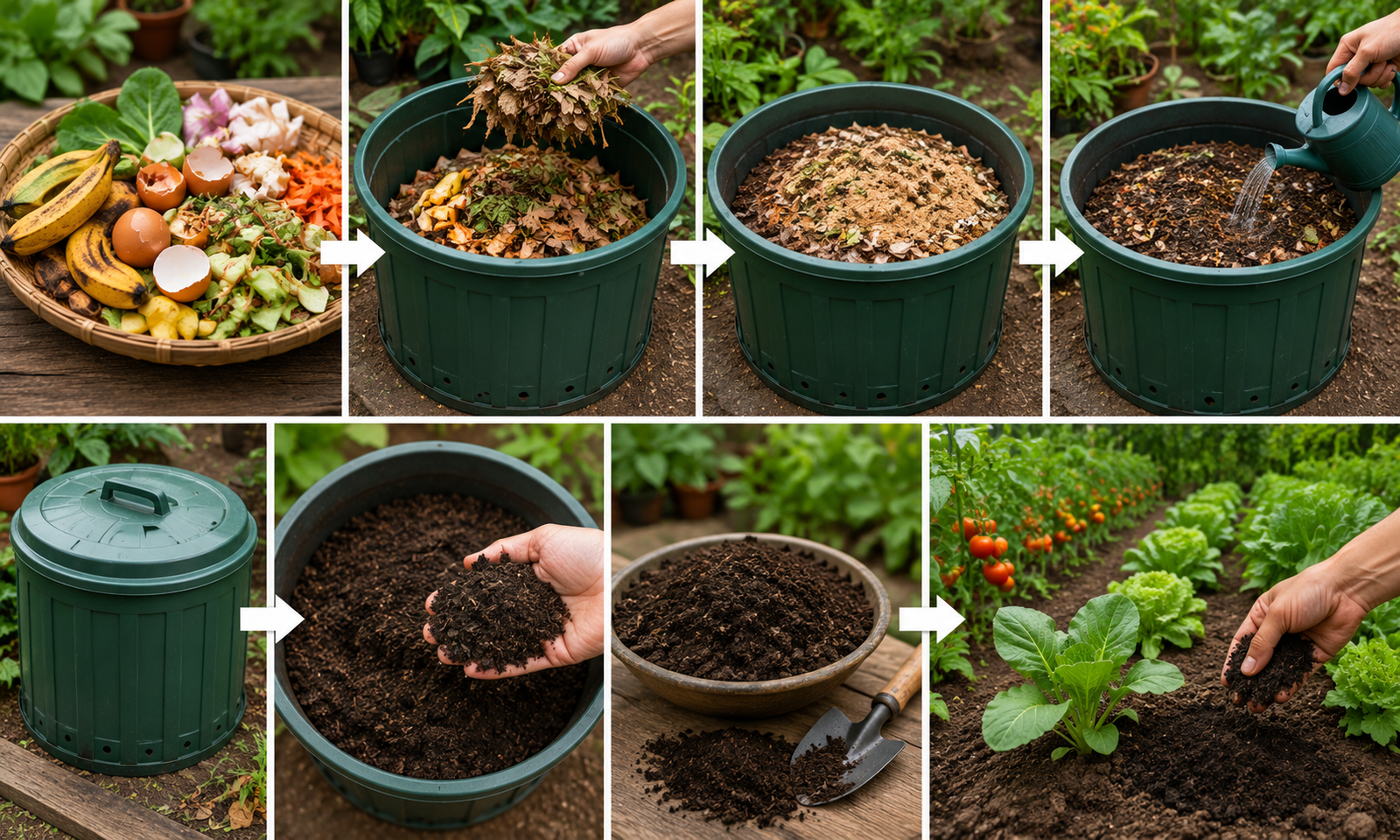
The first step in the compost based fertilisers process is proper collection and preparation of materials. All cooking garbage must be gathered daily by the farmer, and must not be synthetic garbage (must be biodegradable). As meat and oil and plastic will not break down correctly and these may attract pests, avoid using these. These materials should be broken up into smaller pieces once they are gathered to promote decomposition. Similarly, finely-divided or broken-down dry leaves and other plant wastes should be provided for increased microbe activity. Wait a couple of days to begin adding animal manure, to help reduce the number of dangerous organisms and decrease the temperature.
The next step is to make the materials into a compost heap or composting area. The first layer is coarse brown material (eg. Dried leaves or straw), next layer is the green material (eg. kitchen waste). This can then be followed up with a light dose of animal manure to introduce desirable microbes. This process is repeated until the stack is about 1m high. The pile should be lightly moistened to keep it moist but not wet; too much water may slow down the decomposition process. It is also good practice to turn the compost over every 1-2 weeks to keep the compost fairly well aerated and to insure complete decomposition of the materials.
Constructing and maintaining compost pile effectively
The good management of the compost pile is important to get a good fertilizer. The temperature, moisture and oxygen levels are all critical to the composting process. In such circumstances, the microorganisms can digest the organic material efficiently, and can produce nutrient-rich compost in a few weeks or months. The farmer should monitor it periodically so that it is damp, but not dripping like a wet sponge. If it is too dry, it will take longer to break down, and if it’s too moist no oxygen will remain and it may smell bad. Stirring the pile helps to raise the oxygen level as well as distribute the heat evenly throughout the pile, which makes the decomposition of the plant material quicker and kills harmful bacteria.
Additionally, the temperature of the compost pile must be taken into account. The correct working compost heap will produce heat from the decomposition of the organics. This heat would indicate decomposition is taking place. If the pile begins to get too hot and runs out of heating altogether, however, the amount of brown or green material may need to be adjusted, based on the imbalance. In time, the compost will turn dark and crumbly, similar to soil and has a wonderful aroma. This will indicate that it has reached maturity and is ready to be employed for agricultural uses.
Organic fertilizer for crops, made at home
There are several methods of utilizing the compost after it has been ready to grow crops, depending on the type of the farm system. The compost is applied in the field, either as a uniform layer over the soil surface or mixed into the soil surface prior to planting of the field crops. This way, the nutrients are provided for seedlings right from the start of their growth cycle. Compost can be applied to a crop following planting, around the base of plants (but never on tops of plants) to provide bench top dressing. Another use of compost in a vegetable bed is to improve the soil’s structure and water holding capacity when planting.
The other important thing that determines the effectiveness of the application is the timing of the application. The best time to apply compost is a few weeks prior to planting in order to incorporate the nutrients into the soil. Sometimes more small applications can be applied throughout the growing season to support crop growth. Depending on soil conditions and type of crop, a moderate thickness of the layer is enough to make the soil more fertile, but not too much to overburden the soil. Gradually over time, as farmers continue to apply organic fertilizer, they will observe changes to soil colour, texture, aggregation, moisture holding capacity, as well as crop yield and performance.
Agricultural outcomes and the environment
Homemade Organic Fertilizer is very advantageous for the farmers as well as the environment in the long term usage of homemade fertilizers. Farmers can use waste materials for creating soil nutrients, thereby minimizing the amount of soil nutrients that are wasted in landfills or burned. This will also reduce the issue of excessive use of chemical fertilizers that may be harmful to the environment. In the long-term perspective organic farming can have a role to play in the reversal of degraded soils and boost farmland productivity and sustainable usage for successive generations.
Apart from the environmental benefits, organic fertilizer can make the food more desirable, and less contaminated with chemicals in crops. The consequence is increased consumption of bone-building foods and improved nutrition and health status of the population. The farmers also gain economically by using less external inputs, obtaining higher gains through improved soil fertility, which ultimately translates to farmers being better off. Overall, the use of compost based fertilizer systems is crucial for promoting sustainable agriculture, minimizing waste and improving soil health and productivity for better long-term agricultural outcomes.
Conclusion
These homemade organic fertilizers adapted to the farmers’ needs will give them a practical, sustainable solution, and will improve the productivity and fertility of the soil, while not degrading the environment or having to invest as much money. Through composting adopted by farmers with the use of animal manure and kitchen wastes, and using crop residues and other biodegradable resources, farms can enhance the value of waste products as nutrients for their crops.
Preparations are simple and require little capital, and are appropriate for both small-scale farmers and companies. Apart from the action of providing nutrients, organic fertilizers also brought a value added benefit within the soil, water retention, microorganism and in the farming practice.
As concerns about environmental sustainability and the high costs of agricultural production continue to increase,Homemade Organic Fertilizer is becoming a more attractive choice for sustainable productivity farming while preserving the environment. Through these practices farmers can develop ways to sustain a more healthful soil, reduce dependence on chemical fertilizers and pesticides, and/or contribute to a more sustainable future for farming.