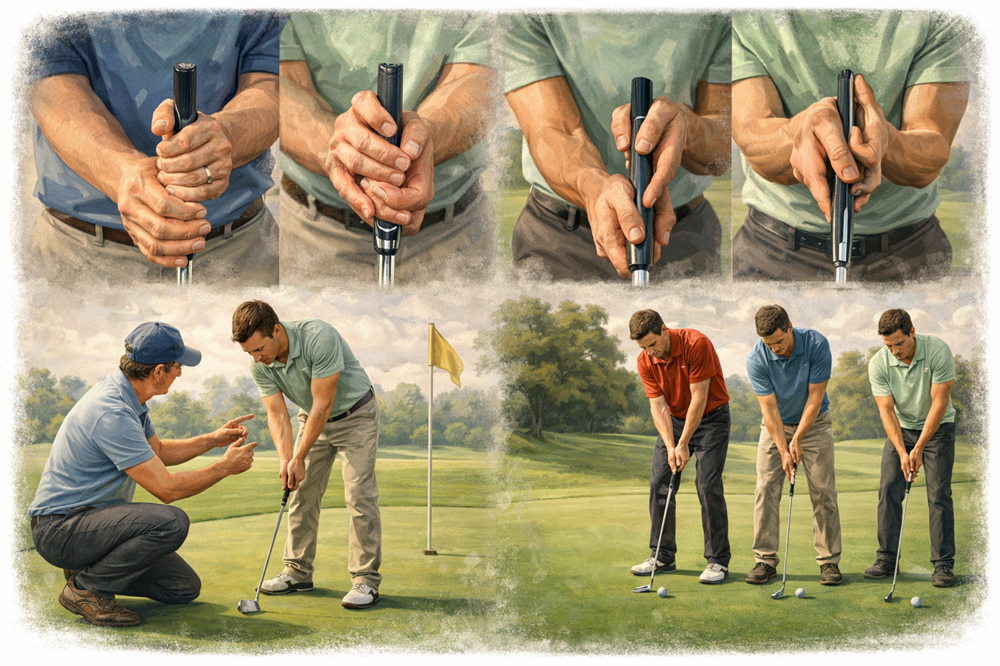
A “bad stroke” is rarely the reason for putting breaking down. The hands are much more or less effective from putt to putt. This lesson illustrates the importance of grip in the game. If the face is steadied, if the wrist action is kept quiet, and if the ball starts on line, all of that should follow from the right putting grip.
But what “right” is differs from player to player based on hand size, pressure, and what tends to go wrong, i.e., a push, pull, or shaky pace. So this post is going to go through the most common grip styles, what they control best, and how to test them until the choice feels obvious.
Why the Grip Matters
Many players often overlook the grip’s role. Watch the subtle changes you create; they will have a dramatic impact on your control. A well-made hold, which refers to a secure grip on an object, provides more feedback and more stable pressure. This minimizes friction and keeps a consistent stroke.
The same is true with grip; obviously, consistent grip over time will result in shorter hits. With a putting grip for control, small adjustments in hand placement can make a noticeable difference, since a steady and consistent hold helps maintain pressure and produce a smoother stroke.
Common Putting Grips
Different grips were developed from years of practice and adaptation. Naturally, the traditional grip (also called the reverse overlap) is a widely popular one. It puts the index finger of the upper hand and cradles it over the fingers of the lower hand. With this technique, both hands are working together, and there is minimal unnecessary wrist movement.
The other style, called a cross-handed grip, has the hands positioned the other way. The trailing hand is above the lead hand on the handle. This positioning is something that many find helps to eliminate unwanted wrist action and encourages a straighter swing. Many professionals prefer this approach due to its simplicity and effectiveness.
The claw grip is worth noting for its unique look. It puts the lower hand in a cocked sideways position, pinching the grip. The technique can help prevent hand dominance and create a more fluid stroke. If you have unsteady hands, you might find using this method is better than your finger stability when playing.
One of the rarest grip techniques, referred to as the pencil grip, places the lower hand in a writing instrument-style hold. This encourages a looser grip and more gentleness. Less often seen, however, it has been effective for others who struggled with iffy putting.
Testing Different Grips
Experimentation is the key when it comes to finding the perfect grip. Several different approaches to practicing green will show which one feels the best. A loose grip, no matter the method, is essential to a consistent swing. Choosing based on comfort and control can help narrow down the selection of grips, as it allows golfers to identify which grip feels most natural and leads to better performance on the green.
Keeping a record of practice results will make it possible to recognize trends. The grip that allows you to make putts more consistently can be determined by how many successful putts are made with it. Having trusted coaches or fellow golfers with a lot of experience provide feedback through this process is priceless.
Focusing on Hand Pressure
For all the strokes, grip pressure is responsible for turning the result. Holding on tight can bring tension and wild putts. A more gentle grip promotes a smoother stroke and improved feel from the putter head. Players should look for enough stoutness to control the club without stiffness.
You can suss out what feels best for you as a player by alternating firm and gentle holds throughout practice. With time, that perfect combination seems clearer and less painful to achieve.
Consistency Through Routine
Going through a consistent routine prior to each putt is a way to gain confidence. Through the repetition of all of the same actions, whether that be lining up the hands or taking practice swings, there is a comfort level in the process. Maintaining this consistency helps to alleviate jitters and focus on the aspects of the stroke.
So having a strong pre-shot process can give you a consistent performance under pressure. A lot of elites will credit their performance to a consistent routine and an unvarying grip technique.
Adjusting for Personal Comfort
Ergo, there is no one grip in golf. Part of it is obviously personal preference, and part of it relates to body mechanics and hand size. Ultimately, players should take what feels right for themselves and trust their instincts. Being flexible, adaptable, and open as a coach usually leads to the best outcomes in the long run.
And that you might need to be flexible over time as skills grow. Ongoing re-evaluation of the grip and slight adjustments can guarantee forward movement. The changes should always come only to the extent that we feel comfortable with them and are in control.
Conclusion
Finding the right putting grip is a personal adventure. Experimenting with different approaches and tracking comfort and control can enhance performance. Given time and regular repetition, every golfer can find a grip that promotes improved consistency and stability on the green.