Choosing the right equipment can make battery production much easier. But with so many roller press machines on the market, how do you know which one is right for your project?
Some buyers only need a small machine to test new battery materials. Others want to make larger batches or build a complete production line. Buying a machine that is too simple may limit your work, while choosing one with features you do not need can waste money.
The good news is that choosing the right machine does not have to be complicated. Once you understand what it does, what problems to look out for, and what your project really needs, the decision becomes much easier.
1. What Is a Roller Press Machine?
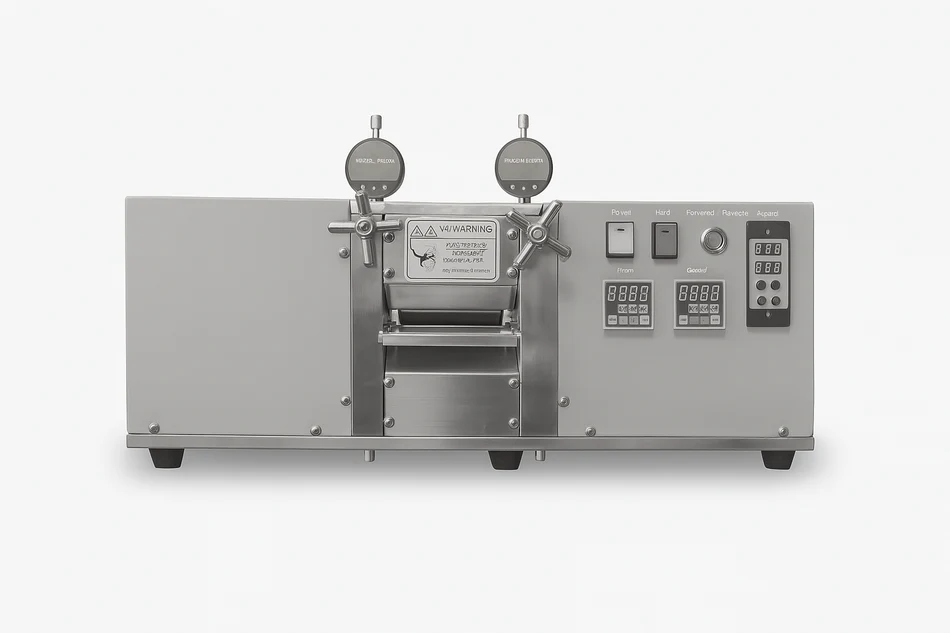
A roller press machine is used to press battery electrode sheets until they reach the required thickness and density.
Think of it like using a rolling pin to flatten dough. The difference is that a battery roller press needs much more careful control because even small changes in thickness can affect the final battery.
During battery production, a layer of battery material is first spread onto a thin piece of metal foil and then dried. The surface may not be perfectly even, so the sheet passes between two rotating rollers. The rollers press the material into a more uniform shape.
- Why Does This Matter?
A well-pressed electrode sheet helps create more consistent batteries and makes the next production steps easier. However, pressing too hard can damage the material, while pressing too lightly may leave the sheet thicker than required.
That is why choosing a suitable roller press machine is important. You need equipment that can press your material evenly without making the process unnecessarily complicated.
2. Why Does Choosing the Right Machine Matter?
Imagine buying a machine that works well for small laboratory samples but cannot handle the larger sheets you need for production. You may have to buy another machine sooner than expected.
Or perhaps you choose a large, expensive machine for a project that only requires a few small samples. You could end up paying for capacity you never use.
Both situations are avoidable.
Before buying a roller press machine, think about three basic questions:
- What are you making? Different battery materials may need different rolling settings.
- How much do you need to produce? A few test samples require a different setup from daily factory production.
- What is your budget? Consider not only the purchase price but also maintenance, spare parts, and operating costs.
Start with these questions instead of comparing every machine on the market. You will have a clearer idea of what to look for and which options are worth your time.
3. What Problems Should You Watch Out For?
A roller press machine can help improve production, but choosing the wrong one can create unnecessary headaches. Here are three common problems to consider.
Problem 1: Uneven Thickness
Imagine cutting several pieces of paper that are supposed to be the same thickness, only to find that some are thicker than others. A similar problem can happen when battery electrode sheets are not pressed evenly.
Uneven sheets can cause trouble in later production steps. Before buying, ask how the machine adjusts the distance between its rollers and how evenly it can press your material.
If possible, test your own electrode sheets before making a final decision.
Problem 2: The Machine Is Too Slow for Your Work
A small machine may be perfectly fine when you are testing new materials. But once orders increase, processing sheets one by one may take too much time.
Think about how much material you need to process each day. Choose a machine that can handle your current workload without making future growth unnecessarily difficult.
Remember, the fastest machine is not always the best choice. It also needs to produce sheets that meet your quality requirements.
Problem 3: Maintenance Becomes a Burden
A machine that is difficult to maintain can interrupt production and increase costs.
Before buying, ask how often the rollers need inspection, whether replacement parts are readily available, and what support the supplier provides if something goes wrong.
A machine that is easy to operate and maintain can save you time and trouble over the long term.
4. Which Roller Press Machine Is Right for Your Project?
The easiest way to choose is to start with the kind of work you plan to do. Laboratory research, small-scale production, and large factory operations do not need exactly the same equipment.
- For Laboratory Research: Start Small and Stay Flexible
If you work in a laboratory, you may need to test different materials and compare the results. You probably do not need a huge production machine.
Xiaowei offers several laboratory roller press options, including manual, electric, pneumatic, and heated models.
A manual machine may be enough for simple experiments. An electric or pneumatic model can make operation easier, while a heated model may be useful when your tests require heat.
Before choosing, check the sheet size the machine can handle, how easily you can adjust the roller gap, and whether it can meet your testing requirements.
The goal is simple: find a machine that makes your experiments easier without spending money on features you will rarely use.
- For Pilot Production: Look for Easier Operation
Pilot production is the stage between laboratory testing and making batteries on a much larger scale.
At this point, you may need to process more material while keeping the results consistent. A machine with automatic controls can reduce repeated manual adjustments and make daily work easier.
Check whether the machine can handle your planned sheet size, whether its settings are easy to change, and whether it works well with the other equipment in your production process.
This is also a good time to think about future needs. If you expect production to grow, choosing a suitable machine now may help you avoid an early upgrade.
- For Factory Production: Think Beyond One Machine
For a busy battery factory, the roller press is only one part of the process. It may need to work alongside coating machines, slitting machines, and inspection equipment.
If one machine cannot keep up with the others, production may slow down even when the roller press itself works well.
Look at the complete production process before making your choice. Consider how much material needs to pass through the machine, how it will connect with other equipment, and what support you will receive after installation.
Whenever possible, ask the supplier to test your materials before you buy. Seeing how the machine handles your actual sheets is much more useful than relying on a product description alone.
A Simple Checklist Before You Buy
Before requesting a quotation, make sure you can answer these questions:
- What battery materials will you press?
- What sheet size and thickness do you need?
- Do you need a manual, electric, pneumatic, or heated machine?
- How much material do you expect to process each day?
- Does the machine need to work with your existing equipment?
- Are installation, training, maintenance, and spare parts available?
You do not need to know every technical detail before contacting a supplier. Start with the basics and ask questions when something is unclear.
5. How Much Does a Roller Press Machine Cost?
Price is an important part of any purchasing decision. For buyers considering Xiaowei’s roller press machines, the reference price is $2,200 for orders of 1–2 sets. For orders of 3 sets or more, the price is reduced to $1,980 per set.
Buying multiple machines may help reduce the unit cost, making this option worth considering for laboratories, equipment distributors, and battery manufacturers with larger purchasing needs.
However, price should not be the only factor. Before placing an order, check the machine configuration, including features, accessories, shipping costs, and after-sales support. Contact Xiaowei New Energy to confirm the latest quotation and find a suitable solution for your production needs.
If you need several machines, the lower listed price for orders of three or more may be worth considering. However, buying extra machines only makes sense when you actually need them.
Before comparing prices, make sure you are comparing similar products. One quotation may include extra features or accessories that another does not.
It is also worth asking about spare parts, maintenance, installation, and training. These details can affect how much you spend after the machine arrives.
6. How Can You Get the Best Results After Buying?
Once your machine arrives, a little preparation can make a big difference.
First, make sure operators understand how to use the machine and adjust its settings safely. Do not assume that one setting will work for every battery material.
Next, test a small batch before moving into regular production. Check whether the sheets have the required thickness and appearance, and adjust the settings according to the material and the manufacturer’s guidance.
Regular maintenance is equally important. Keep the rollers clean, inspect the machine according to the maintenance schedule, and contact the supplier if you notice unusual changes in performance.
Finally, keep simple records of your settings and results. If a particular setup works well, recording it makes it easier to repeat the process later.
Small improvements like these can save time, reduce wasted materials, and help your team work with greater confidence.
7.Conclusion
Choosing a roller press machine does not need to be difficult. Start by understanding what you want to produce, how much material you need to process, and which features will genuinely help your work.
For laboratory projects, flexibility may matter most. For growing production, easier operation and consistent results become more important. For large factories, the machine also needs to work smoothly with the rest of the production line.
Take time to compare your options, ask questions, and test your materials whenever possible. With clear goals and the right supplier support, you can find a roller press machine that fits your budget, makes daily work easier, and supports your next step in battery manufacturing.