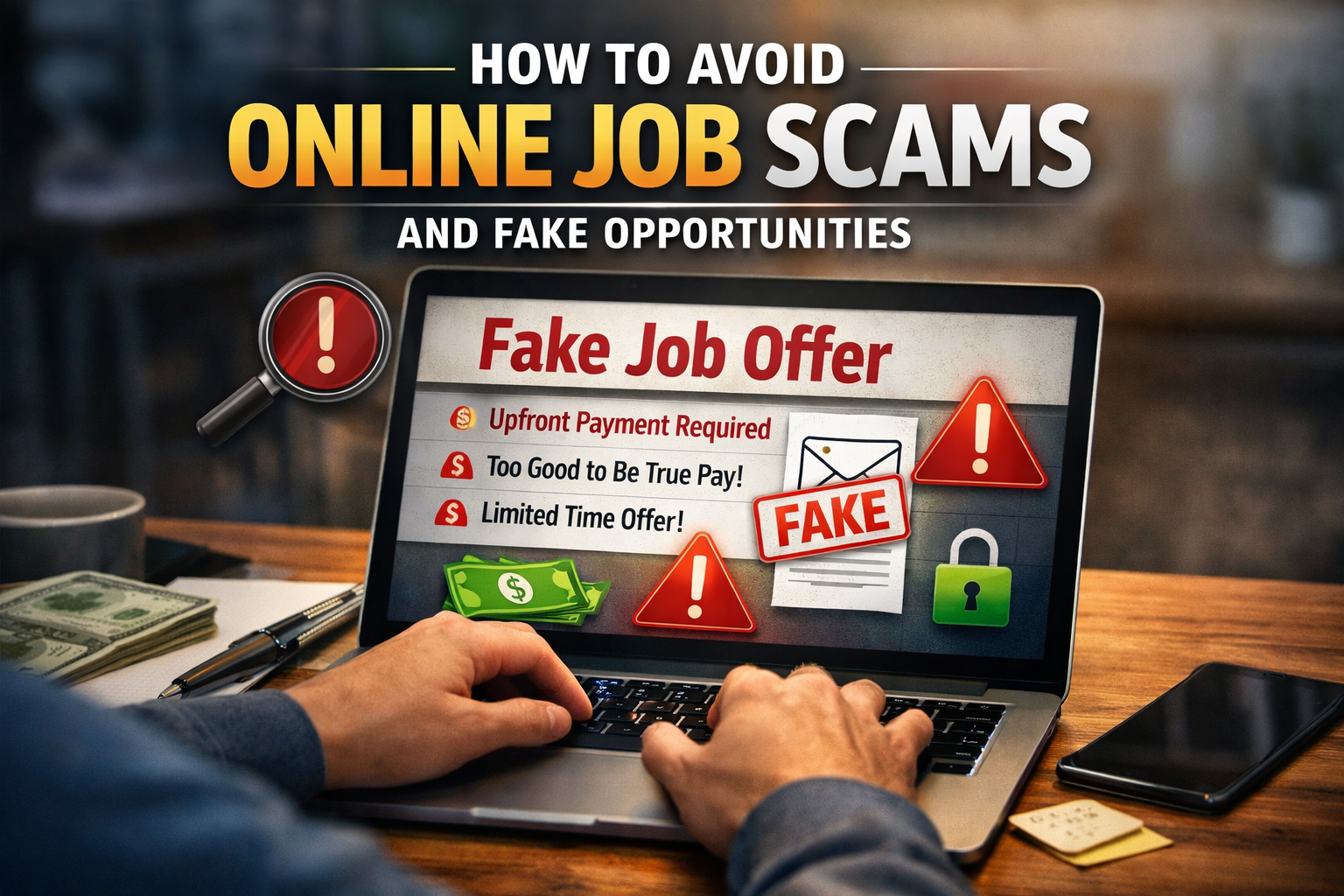
The internet has revolutionized the employment sector, with remote working, freelancing, and international employment being made available. Nonetheless, there is a threat that is on the rise, in conjunction with these advantages, online job scams. Every year, thousands of job seekers become victims of scam offers promising fast income and end up losing money, becoming victims of identity theft, or wasting their time.
Being aware of the functioning of these scams and the possible warning signs can assist you in staying secure. This guide will dissect the most common red flags of online scams, effective verification methods, and safe job-search practices to make your way through the online job market with confidence.
How to Learn about Online Job Scams
Online job scams are scams intended to defraud people by making them give money, personal details, or free of charge labor in the name of getting legitimate jobs. These frauds are usually very convincing, and they are written in professional language, have counterfeit company details, and even masquerade as legitimate organizations.
Job boards, social media sites, email, and messaging applications are some of the platforms used by scammers to target job seekers. Their tactics are always dynamic, and awareness and guardedness are crucial.
Common Red Flags of Online Scams
The first line of defense is to recognize warning signs at an early stage. Most scams have common patterns which, once learned, are easier to detect.
As a matter of fact, being aware of the typical red flags of online scams can go a long way in helping you minimize your chances of falling prey.
1. Upfront Payments
Among the most obvious signs of a scam, paying in advance before employment is one of the most evident ones.
Examples include
- Processing or application fee
- Training or on boarding expenses
- Equipment or software payment
You will not need to pay bribes to get hired by legitimate employers. Any upfront fee is to be considered a serious warning.
2. Unrealistic Income Promises
When a job sounds too good to be true, then it is.
Watch out for
- Low labor with huge wages
- Make thousands of dollars every week with no experience
- Guaranteed income claims
Fraudsters take advantage of inflated income in order to attract victims. Real jobs are open in terms of pay and duties.
3. Vague Job Descriptions
There is not always a clear description of the job in a fraudulent posting.
Signs include
- No specific responsibilities
- Missing qualifications or requirements
- Nameless titles such as online assistant or remote worker
An honest advertisement of a job must be clear about how the job will be and what will be expected of the applicants.
4. Unprofessional Communication
Note the recruiter’s communication.
Red flags include
- Bad grammar and spelling
- Use of personal emails and not company domains
- Urge to answer instantly
Organizations of professionals have formal and transparent levels of communication.
5. No Company Information which is Verifiable
Scammers usually invent their own companies or assume the identity of others.
Warning signs
- No official website
- Underperformance in online presence
- Inconsistent company details
Before you go any further, always ensure that the company has been registered and is carrying out its business in a legitimate manner.
6. Requests for Sensitive Information Early
Be wary when requested to give personal information prematurely.
Examples
- Bank account details
- National identification numbers
- Username or logins
Sensitive information is only sought by legitimate employers after formal hiring processes are undertaken.
7. Time to Operate Under Pressure
Scammers want to make you feel that there is a sense of urgency so that you do not think.
Common tactics
- Limited openings available
- Now or never
- On the spot job opportunities
Evaluate any opportunity in your own time.
Real life Methods to Check Job Advertisements
It is good to know the red flags, but equally it is also important to check on opportunities.
1. Conduct Due Diligence on the Company
Begin with an easy online search.
Check for
- Official website
- Verified contact details
- Reviews by customers or employees
Seek uniformity in all mediums. There will be a digital footprint of a legitimate company.
2. Cross Check Job Listings
Compare the advertisement of the job on various sites.
Tips
- Check whether the position is on the official site of the company
- Review reputable employment websites
- Find duplicate or conflicting listings
Fraudsters tend to duplicate authentic job descriptions but change contact information.
3. Verify Email Domains
Official email domains are used by legitimate companies.
Example
- Legitimate name at company dot com
- Suspicious companyname at gmail dot com
Care should be taken in case the recruiter employs a generic email service.
4. Perform Reverse Image Searches
In some cases, scammers rely on stolen photos to make counterfeit profiles.
How to check
- Post profile pictures to reverse image search engines
- Check whether the picture has other identities
This aids in exposing impersonation efforts.
5. Ask Direct Questions
An authentic employer will respond to your questions.
Ask about
- Job responsibilities
- Company structure
- Payment methods
Words that are ambiguous or dodging are warning signs.
6. Search Online Reviews and Forums
Their experiences are usually shared by other job seekers.
Look for
- Complaints about scams
- Negative reviews
- Caution from former victims
Although not every review is true, regular negative feedback is something to be concerned with.
Safe Job Search Practices
In addition to identifying scams, safe practices can greatly decrease your exposure.
1. Rely on Reliable Job Sites
Use reliable job sites and career networks.
Most of these sites have security systems that identify fraudulent entries.
2. Do NOT Share Personal Information Prematurely
Guard your confidential information.
Only share when
- The employer has been checked by you
- A formal offer has been made to you
- You know the reason why the information is required
3. Keep Financial Data Confidential
Do not give banking information at the application level.
Such information is only sought by employers once formal employment processes are done.
4. Have Professional Communication Channels
Employ safe and professional communication techniques.
Avoid
- Chat programs during preliminary interviews
- Informal or anonymous sources
5. Trust Your Instincts
When it feels wrong, it is likely to be.
Warning signs include
- Discomfort with the proposal
- Inconsistent information
- Overly aggressive recruiters
Following your gut can save you a lot of money.
Popular Forms of Job Scams on the Internet
Being aware of the types of scams may also help to reinforce your awareness.
1. Data Entry Scams
They are scams that offer simple tasks with easy income yet require initial payments as their training or software.
2. Fake Recruitment Agencies
Fraudsters act as recruitment agencies and collect fees for job placement services.
3. Pyramid Schemes
These include hiring people to make money instead of working.
4. Reshipping Scams
Victims are requested to accept and send packages, usually without knowing that they are involved in some sort of illegal business.
5. Freelance Payment Scams
Freelancers are given employment opportunities but never get paid after doing the work.
What to Do in Case You Come Across a Scam
When you suspect that it is a job scam, take action.
Steps to take
- Keep silent and stop communication
- Do not send money or personal information
- Report the scam to authorities or job sites
- Deter others by telling them about your experience
In case you have already provided sensitive information, then you should consider closing your accounts and reporting to your bank.
Final Thoughts
Job opportunities found online are life changing, as they are flexible and provide financial freedom. Nevertheless, they need care and vigilance as well. With the knowledge of the most widespread tricks of con artists and effective verification methods, you can stay out of fraud.
Remember
- Legitimate jobs do not involve initial payments
- It is a common trap to give unrealistic promises
- The best weapon is verification