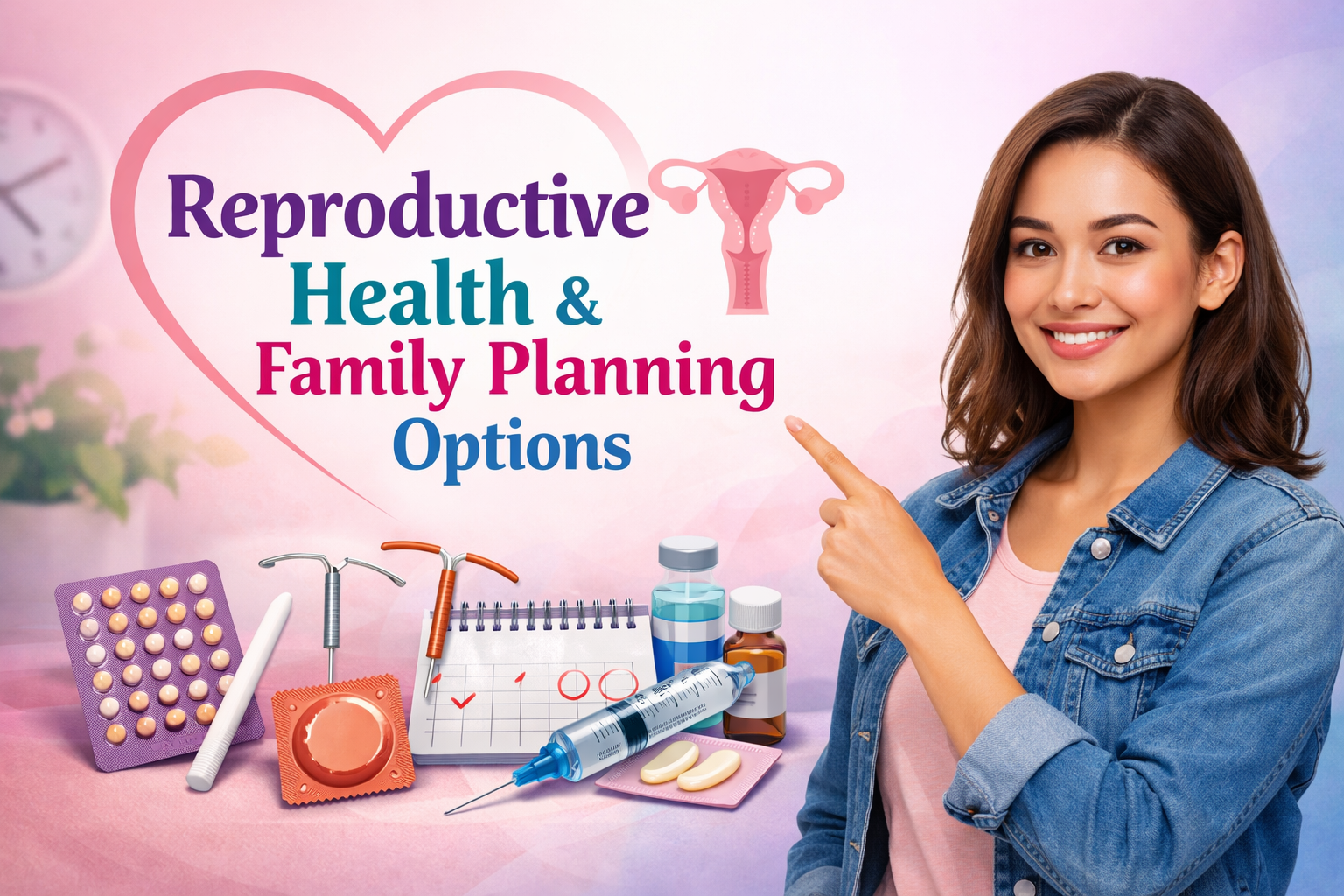
Reproductive health is a crucial component of the well-being of a woman, which not only affects her physical but emotional, social, and economic well-being. The choice of whether and when to have children puts more control in the hands of women in terms of their lives, career and long-term aspirations. In a modern society, the knowledge of family planning methods and access to reliable information are more significant than ever.
There remains a lot of confusion or misinformation to many women as regards to the use of the right contraceptive method. The decision is usually more complicated than it should be by cultural beliefs, myths and lack of proper guidance. Nevertheless, it is possible to make a difference by being informed about the options that are available.
Family planning is nowadays a wide range of methods that can be natural or advanced medical techniques. The aim of this article is to make women aware of these family planning methods to make clear choices which are in line with their health, lifestyle and future.
The Importance of Family Planning
Family planning is not only the issue of avoiding pregnancy but it is also one of the primary health and empowerment elements. When women are allowed to plan their pregnancies, chances are high that they will be healthy and offer better care to their families.
Enhanced maternal health is one of the greatest advantages of family planning. Excessive or too close pregnancies may lead to complications such as anemia, high blood pressure and premature birth. When spaced properly, the body is given time to recuperate before the next pregnancy.
Planning of families also leads to child health. Infants born with sufficient spacing between siblings have higher birth weights and a stronger immune system. This enhances the survival rates and development in long-term.
Besides, family planning helps in economic stability. Women with reproductive options are better placed to access education, have stable jobs, and will contribute to their families through finances. This has a positive ripple effect to families and communities.
Knowing the Various Types of Family Planning Techniques
There are three categories of family planning methods:
- Natural Methods
- Hormonal Methods
- Permanent and Long-Term Methods
All the categories provide varying degrees of efficiency, convenience and appropriateness with regard to individual needs.
Natural Means of Family Planning
Natural approaches are based on natural fertility indicators of the body, and not on medications or devices. Women who are not fond of hormones often choose such methods.
Fertility Awareness Methods
These techniques include monitoring ovulation by using indicators like basal body temperature, menstrual cycles and cervical mucus alterations.
Effectiveness
With perfect use, fertility awareness methods can be quite effective, but with typical use, they are about 75%–88% effective. It is important to note that this requires careful monitoring and consistency.
Benefits
None of the hormones or medical help.
Cost-effective or completely free
Promotes a greater involvement with the body.
Side Effects
No physical side effects are present, but the technique is demanding and needs to be taken care of every day.
Suitability
It is most appropriate among regular-cycle women who are ready to monitor their fertility indicators regularly. It may not be ideal for those with unpredictable schedules.
Withdrawal Method (Coitus Interruptus)
The technique is a male partner withdrawing prior to ejaculation to avoid the entry of sperm into the vagina.
Effectiveness
It has a typical usage rate of 78% which implies that the probability of unintended pregnancy is relatively higher.
Benefits
No cost
Easily accessible
Side Effects
None of the physical side effects, but it takes a lot of self-control and time.
Suitability
It is not advised as a major mode of birth control due to its low reliability.
Lactational Amenorrhea Method (LAM)
LAM is used by breastfeeding mothers and it acts by inhibiting ovulation in exclusive breastfeeding.
Effectiveness
Its effectiveness is up to 98% though only in the first six months of childbirth and in severe conditions.
Benefits
Natural and hormone-free
Supports breastfeeding
Side Effects
None of the adverse health effects has been established.
Suitability
The technique is only applicable to new mothers who are completely breast feeding and have not started getting menstrual periods.
Hormonal Methods of Family Planning
Hormonal therapies involve synthetic hormones to prevent ovulation, thicken cervical mucus or thin the uterine lining.
Oral Contraceptive Pills
They are administered every day and are considered to be one of the most frequent methods of contraception.
Effectiveness
They have a 99% efficiency with optimal use and 91 percent with normal usage.
Benefits
Regulates menstrual cycles
Reduces menstrual pain
May enhance hormonal balance and acne.
Side Effects
Nausea
Breast tenderness
Mood changes
Suitability
Appropriate in the majority of women, although not suitable in smokers older than 35 years or those who have some medical issues like blood clot disorder.
Injectable Contraceptives
They are given every 2–3 months by a healthcare professional.
Effectiveness
Approximately 94% efficacy when used normally.
Benefits
Long-lasting
No need to be taken care of daily.
Side Effects
Weight gain
Irregular menstrual cycles
Delay of recovery to fertility after termination.
Suitability
Perfect on women who desire a low-maintenance approach.
Contraceptive Implants
These are slim rods that are put under the skin of the upper arm and the hormones are released in the course of time.
Effectiveness
More than 99% effective.
Benefits
Long-term protection (3–5 years)
Very reliable
There is less effort required after insertion.
Side Effects
Irregular bleeding
Hormonal changes
Suitability
Best for women who want a long-term, reversible method without daily or monthly maintenance.
Long-term and Permanent Methods
These are very effective and appropriate to women who desire long term or permanent solutions.
Intrauterine Devices (IUDs)
IUDs are little implants that are placed inside the uterus, and may be hormonal or made of copper.
Effectiveness
Over 99% effective.
Benefits
Long-term protection (5–10 years)
Reversible
Low maintenance
Side Effects
Cramping after insertion
Heavier periods (especially with copper IUDs)
Suitability
Applicable to women who desire to have long-term and reliable contraception but still wish to give birth in the future.
Sterilization (Permanent Methods)
This includes surgeries, including tubal ligation.
Effectiveness
More than 99% effective.
Benefits
Permanent solution
No continuous work necessary.
Side Effects
Requires surgery
Not reversible
Suitability
Ideal when the woman is sure that she does not want any more children in the future.
The Correct Way to Select a Family Planning Method
The decision of the appropriate approach is an individual one, which is predetermined by various significant variables.
Health Considerations
The use of some methods may be restricted by some medical conditions. As an illustration, hormonal contraceptives might not be appropriate to female patients with certain health risks.
Lifestyle and Routine
Busy patients might want to use ways that do not have to be attended to on a daily basis like implants or injections.
Future Fertility Plans
Women not yet ready to bear children ought to think of reversible procedures.
Comfort and Preference
The aspects of personal beliefs and levels of comfort are also important in decision-making.
Some of the Myths about Family Planning
Women are usually not able to make informed choices because of misinformation.
Myth 1: Contraceptives make one infertile forever
Majority of the procedures are reversible and fertility usually regains once discontinued.
Myth 2: Family planning is something married women should do
Family planning is to any woman who would like to have a control over her reproductive health.
Myth 3: Natural approaches can never be wrong
Safe, natural methods are not as effective as medical ones, and are more strictly disciplined, even though they are safe.
The Healthcare Provider Role
Healthcare practitioners are significant to take women through the options. They are able to evaluate medical history, discuss risks and benefits, and suggest appropriate methods.
Periodic examinations will help to make sure that the selected approach is still helpful and will not lead to complications.
Women Empowerment with Knowledge
One of the strongest tools that a woman can possess is knowledge. Knowledge of reproductive health enables women to make their own decisions about their bodies that will be in line with their objectives.
Family planning is not only about preventing pregnancy but also about creating possibilities, enhancing life quality and securing a safe future.
Conclusion
The family planning and reproductive health are vital components of a woman. Having a great number of variants, all women can find the method, which fits her.
Women can make informed decisions through understanding the effectiveness, benefits and the side effects of each approach. It is healthy to consult medical experts and be informed so that our future and results can be improved.