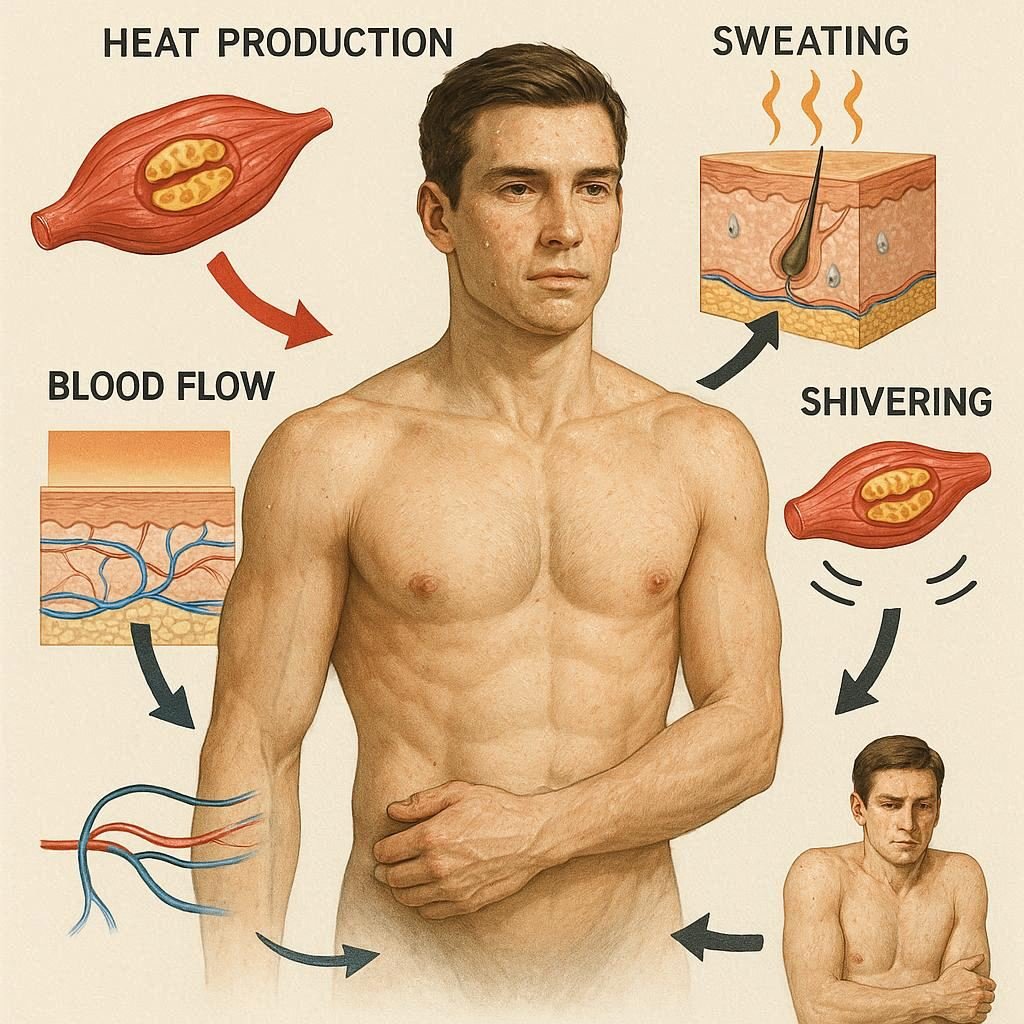
Human body is created to endure in the ever-changing environment. The body needs to maintain its internal temperature in a slim and constant range whether under high sunlight, chilly rain, air-conditioning rooms, physical activities, or emotional stresses because body cannot operate correctly without it. This wonderful power is referred to as thermoregulation, which is among the most crucial processes of homeostasis in the human body. In normal conditions, core body temperature averaged at 37 C (98.6 F) but this may vary slightly during the day. It is important to keep at this temperature because the cells, tissues, enzymes and organs in the body are reliant on a consistent internal environment to carry out essential functions like metabolism, nerve conduction, muscle contraction, and hormone regulation.
Any slight alteration in the internal temperature may lead to a disturbance of the biochemical balance in the body without proper thermoregulation. Enzymes are used to catalyze chemical reactions in a narrow temperature range, and are proteins. When the body gets overheated, enzymes can start to lose their structure and start to work inefficiently. When body temperature is too low, chemical reactions are sluggish and the use of energy is minimal and the performance of the organs is hampered. That is why the balance of temperature is not merely a question of comfort but one of the conditions of survival. The body reacts to heat and cold by a well-coordinated process that includes the brain, blood vessels, sweat glands, muscles, hormones, and behavior. The hypothalamus is at the center of this process, the hypothalamus is commonly referred to as the internal thermostat of the body.
This article discusses the thermoregulatory mechanisms such as sweating, vasodilation, shivering, and vasoconstriction as well as how the environment and behaviour affect the body temperature.
Learning about Thermoregulation and Its Significance
The capacity of a body to ensure that there is a constant internal temperature regardless of the changes in the external environment is called thermoregulation. It is one of the major components of homeostasis, which is a mechanism by which the body maintains internal balance. The external environment may shift very fast yet the internal systems of the body act incessantly to counteract the changes.
The necessity of constant temperature is evident when taking into account the way the body works in the cellular level. All cells depend on enzymes to facilitate chemical reactions that sustain life. These reactions involve food breakdown to generate energy, protein synthesis, nerve transmission and tissue repair. Enzymes are very delicate to temperature. When the body temperature increases too much higher than usual, there is a possibility that the shape of the enzyme molecules could start to change making them less effective. In severe situations, enzymes can denature, i.e. lose all their functional structure. Low temperatures, conversely, slow down the metabolic responses, making the body less efficient in energy generation and organ activity.
This is why thermoregulation is not only necessary in order of comfort but also to be alive. The body thus needs to continuously check the temperature within the body and initiate corrective mechanisms whenever there is a change in temperature beyond what is considered to be optimal.
The Hypothalamus: The Thermostat of the Body
The hypothalamus is a small area of the brain just above the brainstem that forms the center of thermoregulation. The hypothalamus is the thermostat in the body in that it is able to get the temperature readings of the surrounding environment and the body core as well.
The skin has specialized thermoreceptors which detect the environmental changes in temperature and transmit the signal via the nervous system to the hypothalamus. Simultaneously, there are internal receptors that keep track of the body and brain temperatures of the blood flowing through it. This information is compared to the ideal temperature setting of the body by the hypothalamus, which is typically near 37 C.
The hypothalamus triggers cooling mechanisms like vasodilation and sweating in response to an increase in the body temperature beyond the usual level. A drop in temperature below the normal range triggers the process of warming such as shivering and vasoconstriction. They occur unconsciously and very quickly, as one reacts.
The hypothalamus is the control valve of thermoregulation therefore to maintain the temperature within a safe and functional range.
The Body in Response to heat
The thermoregulation process kicks into gear when the body is exposed to high temperatures, physical activity, fever, or any other condition that increases the amount of heat generated internally, and as such, cooling systems are triggered to dissipate the surplus heat.
Sweating is one of the greatest cooling responses. The moisture is deposited on the skin by sweat glands that are scattered all over the skin. When this sweat evaporates, it takes the heat away in the body thereby producing a cooling effect. This is the reason as to why one sweats more during hot weather or in a strenuous activity. Evaporation is important to the success of sweating and that is why in humid climates the body might not cool down easily.
Vasodilation is another significant reaction. During this, the blood vessels nearest to the skin become dilated to pass more warm blood near the skin. This boosts the blood circulation to cool the body core to the exterior. This increased circulation may cause the skin to be red or flushed.
Coupled with the vasodilation process, sweating is one of the most effective thermoregulation mechanisms, as the body would avoid the dangerous overheating.
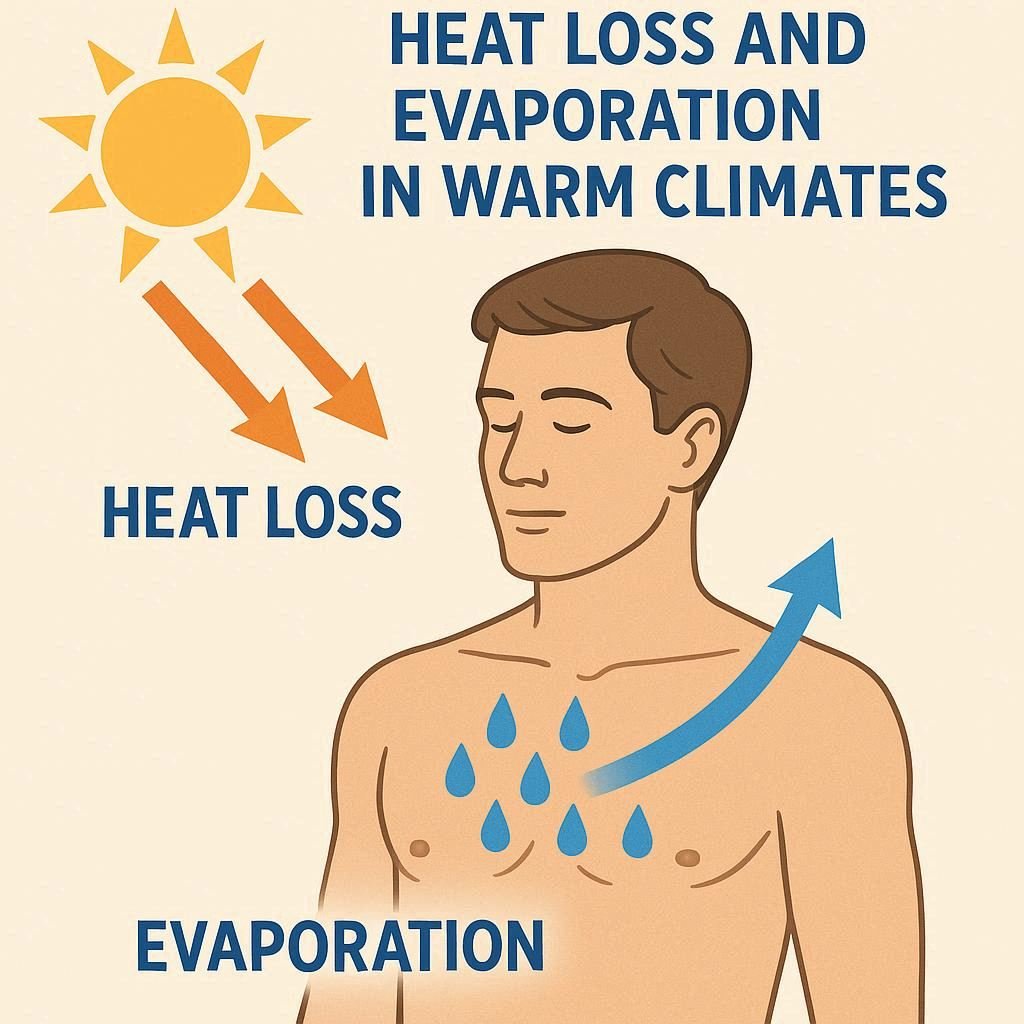
“heat loss and evaporation in warm climates to cool the body”.
The reaction of the body to cold
Exposing the body to cold conditions results in warming and heat-conservation processes triggered by thermoregulation.
The initial significant reaction is vasoconstriction, narrowing of blood vessels close to the skin surface. The body lowers the amount of heat loss through the skin by cutting back the amount of blood flow to the skin, and keeps the body warmer around the essential internal organs like the heart, lungs and brain. This is the reason why hands, feet, and skin will be colder in cold conditions.
Shivering is another mechanism that is important. Shivering is rapid involuntary contractions of the muscles which produce heat by use of more energy. The contractions generate heat energy that assists in increasing the body temperature at the core.
Moreover, the body can stimulate metabolism by the action of hormones, in particular, thyroid hormones and adrenaline. These hormones increase the amount of heat produced internally and aid thermoregulation during cold conditions.
Combination of these responses helps to prevent hypothermia and internal stability.
Factors in the environment that affect Thermoregulation
Extrinsic environment has a significant role in thermoregulation. The temperature balance of the body is influenced by air temperature, humidity, speed of the wind, quantity of sunlight to the body and contact with water.
When the humidity is high, it may reduce the effectiveness of sweating since it takes longer to evaporate the sweat. This improves the cooling of the body and exposes it to overheating.
Cold air enhances heat loss by convection hence the body is colder than the actual air temperature. This is normally known as wind chill.
Other effects of water include thermoregulation since it cools the body at a higher rate compared to air. That is why exposure to cold water may result in life-threatening changes in the body temperature.
The environmental conditions can thus pose a considerable burden on the processes of lawful temperature regulation in the body
Human Adaptation and Behavioral Factors
Thermoregulation also requires behavioral responses. Human beings tend to reinforce physiological reactions by conscious efforts to maintain the state of temperature.
An example is that warm clothes in winter keep the heat in and light breathable clothes in hot weather cool you down. Behavioral measures such as seeking shade, use of fans, consuming water and minimization of body movement during exposure to heat aid thermoregulation.
In low temperatures, we wear many clothes, keep dry and go inside to minimize heat loss.
Hydration is of particular concern since fluid loss is a consequence of sweating. The absence of sufficient water reduces the cooling effect in the body.
These behavioral modifications cooperate with the internal processes of the body to stabilize the temperature.
The importance of Thermoregulation in Enzyme activity
The direct relationship of thermoregulation with enzyme functioning is one of the reasons why it is so important.
Enzymes are very sensitive proteins which catalyze nearly all chemical reactions within the body. They need to be stable in their structure in order to work.
Unless the body temperature rises excessively, enzyme proteins can start unfolding and lose their active form. This decreases the efficiency of the reaction and can interfere with the metabolism.
When body temperature is too low, it slows down the enzyme-driven reaction, which lowers energy generation and performance of the organs.
Due to the fact that all bodily major processes are reliant on enzymes, thermoregulation is a vital aspect of life.
Diseases associated with Inability to thermoregulate
Failure of thermoregulation can lead to severe illnesses.
Too much heat can cause heat exhaustion or heat stroke, which can be life threatening.
Too much exposure to cold can lead to hypothermia, or the decrease in core body temperature below safe levels.
Another sign of disrupted thermoregulation is fever, in which the hypothalamus temporarily increases the body set point, in response to infection.
These instances demonstrate the importance of temperature control in regard to health and survival.
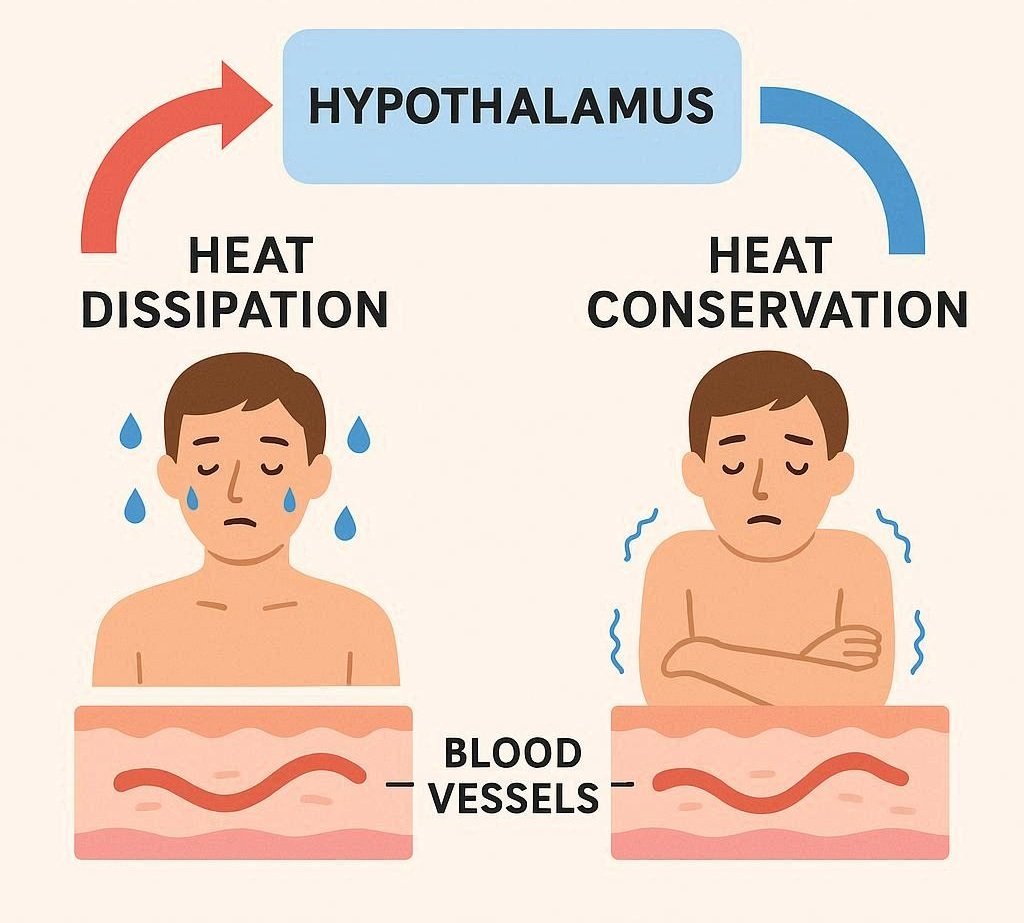
“thermoregulation, which is regulated by hypothalamus and blood vessels“.
Conclusion
One of the most significant survival systems of the body is thermoregulation. The body can regulate the internal temperature despite environmental change through the co-ordinated behaviour of the hypothalamus, the sweat glands, blood vessels, muscles, and the behavioral responses.
Sweating and vasodilation are involved in releasing heat and shivering and vasoconstriction in preserving heat respectively. These processes preserve the activity of enzymes, maintain the functions of the organs, and save the life
Learning about thermoregulation, the readers can have a better idea of the balance the body has to maintain and why temperature stability is vital to survival in general.