People often use worry and anxiety interchangeably. Someone may say, “I’m anxious about work,” when they are thinking through a deadline, or “I’m worried about my interview,” while feeling restless or uneasy.
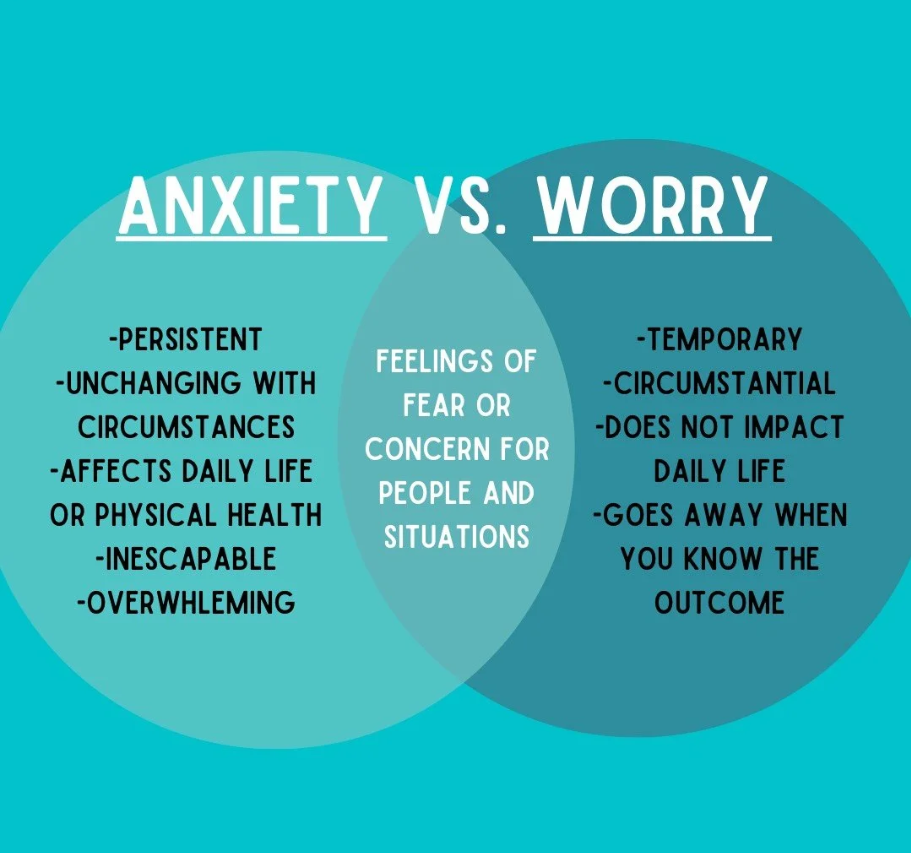
In simple terms, worry is repeated thinking about a possible problem, often through “what if” thoughts. On the other hand, anxiety is a stronger mind-body response that can include worry, fear, body tension, panic, and a sense that something is wrong.
5 Differences Between Worry and Anxiety1. Worry is specific; anxiety is diffuse
Worry typically centres on a clear concern, such as parenting, bills, or a conversation. Anxiety can feel wider and harder to name and unsettling without one clear reason.
2. Worry can lead to problem-solving; anxiety prevents it
Healthy worry may help you think through options, prepare, plan, or take action. Anxiety can feel overwhelming and make it harder to think clearly or make silly mistakes.
3. Worry is easier to interrupt, while anxiety is harder to stop
Talking to someone, writing a plan, or getting distracted may ease worry. Anxiety can continue even when the feared outcome is unlikely.
4. Worry is usually temporary; anxiety lingers
Worry often reduces when the issue is solved. Anxiety can move from one concern to another and you might feel stuck in a loop of multiple thoughts.
5. Worry is normal; anxiety may need support
Everyone worries sometimes. Anxiety may need support when it becomes intense, persistent, or disruptive.
Does Worry Ever Turn Into Anxiety?
Yes, worry can turn into anxiety when the mind keeps circling possible problems without finding relief. The brain may begin to treat an imagined future problem like an immediate threat. When that happens, the body’s alarm system turns on.
This can look like:
- A clear concern: “I have a presentation tomorrow.”
- Repeated worry: “What if I forget what to say?”
- Catastrophic thinking: “What if I embarrass myself and everyone judges me?”
- Body alarm: tight chest, racing heart, nausea, sweating, or restlessness.
- Avoidance: cancelling, procrastinating, over-preparing, or seeking repeated reassurance.
4 Main Types of Anxiety
- Generalised anxiety – Ongoing worry about everyday areas such as work, health, family, money, or the future.
- Social anxiety – Fear of being judged, embarrassed, rejected, or watched in social or performance situations.
- Panic-related anxiety – Sudden waves of intense fear with physical symptoms such as a racing heart, shortness of breath, dizziness, or chest tightness.
- Phobia-related anxiety – Strong fear connected to a specific object, place, activity, or situation, such as flying, driving, needles, heights, or enclosed spaces.
5 Modalities That Work Well for Anxiety1. Cognitive Behavioural Therapy
Cognitive Behavioural Therapy targets the specific thoughts that fuel anxious feelings and avoidant behaviours. A therapist will guide you to test your fears against real evidence and outcomes. It’s a form of exposure therapy that helps with generalized, social, panic, and health anxiety.
2. Internal Family Systems
Internal Family Systems explores the different parts of a person that may carry fear, shame, control, or protection. A therapist helps you understand those anxious parts without being judgmental of yourself or suppressing them. This approach can help reduce inner conflict and build more calm, compassion, and emotional safety.
3. Somatic therapy
Somatic therapy focuses on the connection between the body and emotions. A therapist may use body awareness, grounding, breath, movement, and nervous system regulation techniques to help notice and settle anxiety in the body. This can be helpful when anxiety shows up as tension, restlessness, shutdown, or panic.
4. Acceptance and Commitment Therapy
Acceptance and Commitment Therapy targets the struggle people have with anxious thoughts, discomfort, and uncertainty. A therapist will guide you to notice these thoughts without letting them control your choices. ACT helps people take meaningful action based on their values, even when anxiety is still present.
5. Mindfulness-based therapy
Mindfulness-based therapy targets the habit of reacting to anxious thoughts and body sensations. A therapist guides you to observe them with awareness, helping reduce rumination, racing thoughts, and fear of anxiety symptoms.
Get Matched with an ACT Therapist in Brampton
Here and Now Therapy offers therapy and support for anxiety, overthinking, avoidance, and stress and depression. Our therapists use an awareness-based lens to create a compassionate, judgement-free space where you can begin to understand what drives your anxiety, not just manage it in the moment.
In-person sessions take place in Brampton, with virtual therapy available across Ontario.
Book a consultation and we will match you with a therapist who best fits your needs.