
Introduction
In today’s healthcare landscape, technology has emerged as one of the most significant drivers. Patients, healthcare workers, researchers, governments, clinics, and hospitals are increasingly adopting digital tools to screen for diseases, diagnose health challenges, provide treatment, track patient’s health and disseminate medical knowledge all over the world. Previously, it was possible to provide healthcare services mainly through physical examination and paper records; today, connected devices, digital databases, mobile apps, artificial intelligence, and cutting-edge biotechnology technologies enable quicker and more informed care.
Digital health is gaining ground especially in view of the diverse nature of health needs across countries. There are highly developed hospitals and special services in some communities and lack of healthcare workers, medical equipment and facilities in others. While technology is not a panacea for all healthcare issues, it can be designed and implemented to enhance the reach of services, patient decision-making, efficiency and extend the ability to reach patients and healthcare providers across geographical locations. Digital health is considered by the World Health Organization as an important component of building health systems and access to quality health services.
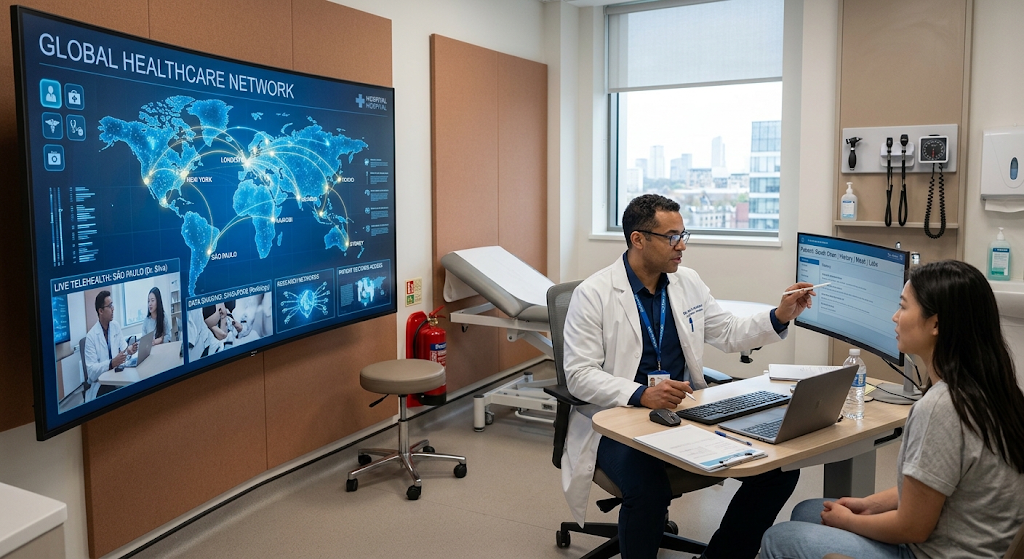
Healthcare Technology’s Growing influence
Healthcare technology has evolved much further than basic computer systems for administrative use. Healthcare is now a very wide digital ecosystem, where a range of technologies can collaborate to benefit the patient and healthcare workers. EHRs can retain and manage patient data, mobile applications enable patients to track their appointments and health-related activities, wearables can gather data on physical activity and other health indicators, and AI can process vast data to inform clinical and public health choices.
Telehealth and telemedicine can also help bring patients into contact with health care providers without the need for every encounter to happen within a hospital or clinic. The technologies can be used for prevention, diagnosis, treatment, monitoring, research, and health education. But digital transformation isn’t just about the devices and software you buy. Healthcare facilities must have the right infrastructure, the right people, secure systems, reliable connections, policies, and a responsible attitude to data protection. If these basic elements are missing, technology can develop issues rather than solve them.
Improved Access to Healthcare and Telemedicine
One of the more obvious ways technology can overcome geographical obstacles to healthcare is through telemedicine. It can enable healthcare services to be accessed remotely via communication technologies, thereby enabling patients and healthcare professionals to communicate even when they are not physically together. Depending on available services and the patient’s medical needs, a patient in a rural or remote community might be able to communicate with a doctor, nurse or specialist via a digital platform.
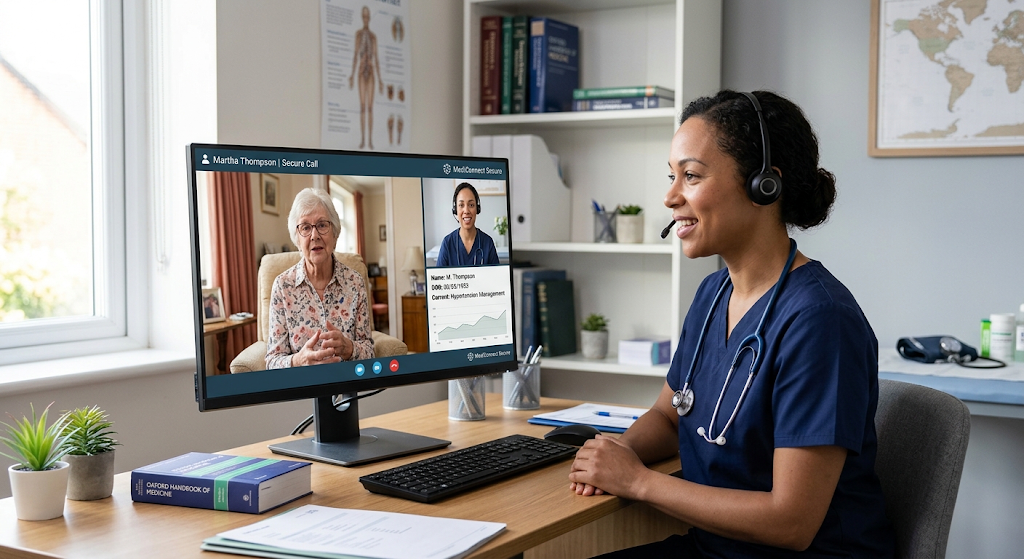
This is particularly useful in areas where specialist health services are only available in the cities. Telemedicine can also facilitate follow-up consultation, health education, some types of remote monitoring, and communication between health care workers. When strategically planned and implemented, telemedicine is recognised by WHO as a tool for enhancing clinical care and expanding health service access. The essential resource for readers to consult for telemedicine is available via the National Center for Biotechnology Information, as a basic medical reference material regarding the topic.
Telemedicine and Rural Communities
Telemedicine can have a large effect on rural and underserved areas. In certain areas, persons may need to make a long journey to access medical services or specialists. Some of these barriers can be mitigated through digital consultations whereby some healthcare interactions can be conducted remotely. This is not to say that all medical issues can or should be treated online as it may require in-person facilities such as physical exams, laboratory testing, emergency care, surgery, etc. Rather, telemedicine can be an addition to the traditional healthcare system, offering an alternative communication channel with professionals and the management of suitable parts of care.
It can also enable those working in the health sector to communicate with experts when they require their assistance. Telemedicine is thus a valuable tool for countries trying to expand health insurance coverage to large and/or remote populations. But for it to become a success, it requires stable WiFi connection, proper technology, trained personnel, appropriate rules and regulations and patients’ proficiency in using the technology.
Optimal use of AI in Diagnosis and Treatment
Artificial intelligence is currently a growing important topic of innovation in healthcare as computers can process and analyze a vast amount of data much faster than any human could manually scan the same amount of data. AI can assist healthcare professionals in various applications including medical image analysis, clinical decision making, disease monitoring, medical research, drug development, and health system management. AI systems can uncover patterns in the data that could inform healthcare professionals about potential risks or even some hypotheses of medical conditions. Computational techniques also can be used to examine biological information and speed up parts of the drug development process.

AI can play a role in public health, such as analyzing health trends for surveillance purposes and detecting potential health threats earlier. According to the WHO, AI can be applied to healthcare in a variety of ways, including diagnosis, treatment, drug development, disease surveillance, outbreak response, and healthcare management. Simultaneously, AI should complement but not supplant sound and informed professional judgment and systems should be thoroughly tested before relying on them for critical healthcare decisions.
Responsible use of Artificial Intelligence
While artificial intelligence provides great promise, caution must be taken when employing AI in the field of healthcare. The impact of medical decisions can be significant, and an AI system that yields inaccurate, biased, or poorly explained results may pose risks to patients. Data quality is another factor that can impact an AI system’s quality. The technology may not be equally effective across all populations, if some populations are underrepresented in the underlying data. Another important point to keep in mind is privacy, as healthcare AI systems frequently rely on vast amounts of sensitive data.
Hence, there is a need for responsible development and use of such standards for governments, healthcare, technology, researchers and professionals. According to WHO, the ethical, human rights, safety, accountability and equity dimensions should be at the heart of AI in healthcare. International cooperation is also significant as digital health technologies are becoming more and more inter-institutional and international.
Wearable Devices and Continuous Health Monitoring
Changes in the relationship between patients and their health information are being driven by wearable technology that now allows some health information to be gathered outside of the traditional medical setting. Depending on the device and the type of information it is able to gather, the information collected by smartwatches, fitness trackers, specialized sensors and other connected devices may include physical activity, heart rate, sleep patterns, and other measurements. This information can contribute to people’s awareness of parts of their health and lifestyle. In health care environments, connected devices can also support remote patient monitoring, if the necessary systems are in place.
Healthcare workers may be able to get additional information gathered over time, rather than just at specific appointments. This can help give a wider picture of some aspects of a patient’s condition. WHO documents list wearable technologies and telemonitoring as some of the technologies that can help to enhance digital healthcare and health outcomes. Wearable information however, should not be automatically assumed to be a medical diagnosis, and patients should keep seeking the expertise of qualified health care providers for medical evaluation when it is needed.
Electronic Health Records and Connected Medical Information
EHRs, or electronic health records, have revolutionized healthcare data management, enabling seamless access and sharing of information. Paper records can be challenging to keep, move, change and retrieve from various locations. Depending on the design of a healthcare system, electronic systems can provide access to patient information to authorized healthcare professionals via secure electronic platforms. A properly working electronic record may include information on medications, allergies, laboratory findings, diagnoses, medical history, and previous treatments. This can help health care professionals make better-informed decisions and limit the need for patients to give the same information over and over again.
When used properly, electronic records can facilitate communication between various elements of a health care system and can provide valuable data for planning and research. However, there are significant privacy, cyber security, access, accuracy and data governance issues that arise with digital records. Countries are thus in need of policies and technical systems that safeguard health information and enable authorized users to access the health information that they really need.
Biotechnology and the Future of Medical Innovation
Another key area is scientific and technological innovation in the field of biotechnology, which is transforming healthcare. It brings together the knowledge of biology and high tech scientific methods and creates innovative ways for prevention, diagnosis and treatment. Biotechnology has helped to advance such fields as vaccines, genetic analysis, biological medicines, and other advanced medical research. Biotechnology has been reinforced by modern computing, a technology that enables the processing of vast amounts of information concerning biological and genetic data. Computational tools can be used by researchers to identify patterns, to study disease, to investigate potential therapies, and to aid the development of new medical technologies.
AI can also play a role in biological research by assisting scientists with analyzing complex data and exploring various biological topics, including protein structures and drug development. Biotech, data science and computing are thus opening up new avenues for personalised and precision medicine. But rather than treating all patients identically, researchers are now focusing on the specific information about patients and their biological differences that can help inform more targeted healthcare strategies.
Healthy Living Apps
Mobile health, also known as mHealth, has made health care technology more accessible due to the use of mobile phones all over the world. Mobile health apps can be used for making appointments, health education, medication reminders, communicating with health care providers, fitness tracking, and accessing specific health information. They can be beneficial, depending on the use case and its incorporation in a health care system. Patients can use mobile tools to easily communicate with health services and stay informed about their health and activities.
Mobile platforms can offer yet another means of communication and service for healthcare organizations. Mobile health can be helpful in public health campaigns, as information can be disseminated to many people using devices that people already have. But all health apps are not created equal, and consumers should not replace a medical diagnosis with a general health app. Mobile health is among the various components of digital health that WHO acknowledges, including telemedicine, electronic health records, wearables, and artificial intelligence.

Use of Technology and Disease Prevention
A key leap healthcare technology has made toward tackling disease prevention is its capacity to do more than simply cure symptoms once they appear. Digital tools can provide media for improving access to health education, tracking some health indicators, reminders, and communication between people and health care providers. Digital systems can be used at the population level to allow public-health authorities to analyze information and identify patterns that might warrant attention. AI and data analytics can be leveraged for disease surveillance, and the appropriate use of connected devices can help to provide more details about population health trends.
Vaccines and other preventive measures can be developed using biotechnology, and mobile apps can be used to spread educational information to masses. The strategies show that today’s health care is more data and preventive than ever. Technology can actively help to predict and prompt action to prevent a health problem from reaching crisis stage before it does. Despite this, prevention technologies should be fairly implemented, avoiding that people who do not have a reliable internet connection, smartphone and/or digital skills are not left without access to essential health services.
The Application of Technology and International Healthcare Cooperation
However, challenges to health do not respect national boundaries; international co-operation is therefore necessary.” Infections may jump from one country to another, scientific studies often involve collaborations between countries, in times of health crisis response, cooperation between governments, scientists, healthcare institutions and international institutions is often necessary and fast. Digital technology can help professionals share information, participate in meetings remotely, share research results and coordinate responses, making collaboration faster. By facilitating the exchange of experiences on successful interventions in healthcare and technological solutions, digital health platforms can also contribute to international learning.
International cooperation shows the way to tackling challenges that can be too complex for any single country to manage. The WHO, International Telecommunication Union, and World Intellectual Property Organization have partnered on the Global Initiative on AI for Health, which works to foster international cooperation and responsible development of AI. These collaborations are valuable because healthcare tech requires shared principles in terms of safety, ethics, privacy, accessibility, and responsible innovation.
Challenges of Technology in Global Healthcare
While these services offer many advantages, there are also substantial barriers to healthcare technology. The digital divide is a primary concern as people and communities are not equally equipped with smartphones, a stable internet connection, electricity or digital services and technical skills. Without taking them into account, digital healthcare can exacerbate existing inequalities. Additionally, privacy and cybersecurity are significant concerns, as electronic health records, wearable technology, mobile apps, and AI systems can be associated with highly sensitive data.
Healthcare organizations need to safeguard against unauthorized access to this information and inappropriate use. Another challenge is the trustworthiness and quality of digital tools. Technology that is successful in one healthcare setting may not necessarily be suitable in another in a different country, due to differences in infrastructure, language, regulations, patients and medical practices. WHO has also cautioned that piecemeal digital programs can not meet national needs and may exacerbate inequities when not well coordinated. The challenges demonstrated that innovation in healthcare is about more than technology–it’s about planning, regulation, investment, training, and continuous evaluation.
Creating a Future of Inclusive Digital Healthcare
Technological innovation, when paired with human expertise, could be vital to the future of healthcare globally. Healthcare professionals from all walks, including doctors, nurses, pharmacists, researchers, public health professionals, patients and technology experts, all play crucial roles in the design and use of digital healthcare systems. Healthcare should be more accessible and effective through technology, but not in ways that de-humanize the medical experience. Governments can play a role in formulating policies, investing in digital infrastructure, supporting healthcare workers, and setting standards for privacy and safety.
Healthcare providers can prioritize interoperability, employee education, cybersecurity, and patient experience. Technology providers can design systems which are accessible to multiple populations instead of making assumptions that all users will have the same resources and digital skills. International actors can promote collaboration and disseminate knowledge on what works. The overall objective should not be to introduce more technology, but to use appropriate technology to address real healthcare issues, while maintaining human rights, patient safety, privacy and equality.
Conclusion
Technology is revolutionizing healthcare by altering patients’ access to services, the decision making of healthcare professionals, the way medical information is managed, and the development of new treatments by researchers. Technologies such as telemedicine can facilitate the access of patients to health care providers in remote locations, and AI can be used for analysis, diagnosis, research, surveillance and healthcare management. Wearable devices can add more health information out of the hospital, electronic health records can enhance the organization and accessibility of health information, biotechnology can help to develop new or improved treatments and prevention, and mobile health apps can deliver select health services and information to people’s daily lives.
These technologies can work together for disease prevention, diagnosis, treatment, monitoring and worldwide collaboration. But it is the growing responsibility of governments, privacy protection, cyber security, professional oversight, digital infrastructure and work toward lessening inequality that will accompany the progress of technology. The future of healthcare will therefore not be solely about the progress of technology, it will be about the wise and inclusive utilization of technology.