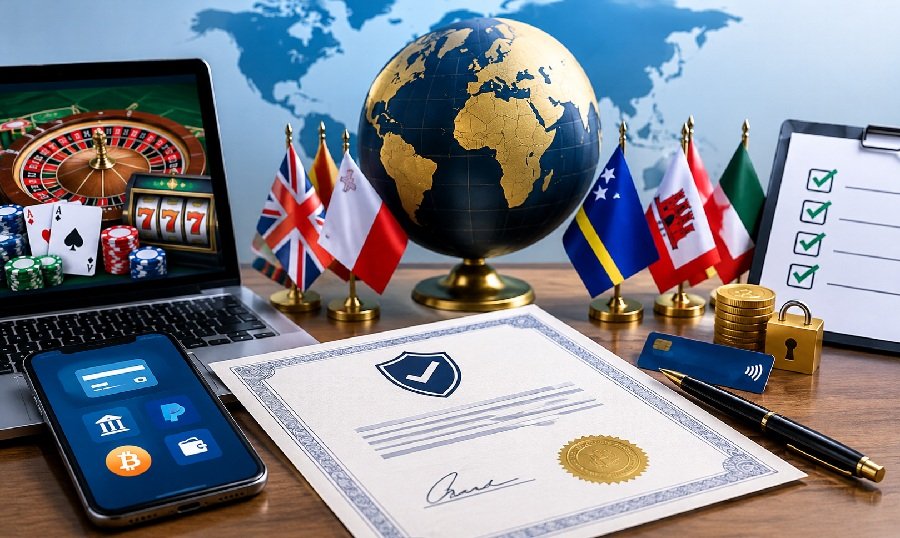
A gambling licence is not only a market-entry stamp. It influences which payment providers will work with you, how heavy ongoing compliance becomes, and whether banking partners will engage at all. Operators that treat gambling licence selection as a commercial decision — not just a filing task — avoid expensive re-licensing later.
In practice, the licence sits at the centre of payments, corporate structure, and player-protection obligations. Choosing it in isolation from those realities is how launches stall after the brand work is already done.
Fit the licence to the activity
Online casino, sports betting, and B2B gaming supply sit in different risk and licensing conversations. Copying a competitor’s jurisdiction without matching the model is a common failure point. Define the product, distribution method, and target markets first, then compare frameworks against that model.
Also consider roadmap features. Live dealer, crypto rails, affiliate-heavy acquisition, or multi-brand operations can change what a regulator and a payment partner expect.
Payments follow the licence story
Acquirers and banks underwrite regulatory credibility. Weak jurisdiction choices create friction in onboarding even when the brand is ready to launch. A licence that looks attractive on cost can be expensive if every PSP conversation turns into a risk debate.
Operators should therefore evaluate jurisdictions as a package: licence credibility, compliance burden, and payment appetite together. The cheapest application fee is irrelevant if settlement options are poor.
Prepare the compliance pack with the application
- AML/KYC framework
- Responsible gaming controls
- Ownership and corporate documents
- Technical and operational policies
Choose the licence pathway with payments and compliance capacity in mind, then build operations to that standard from day one. Teams that do this launch with fewer emergency redesigns and a clearer story for every partner that asks how the business is supervised.
Build the launch plan around supervision reality
Once a jurisdiction is chosen, reverse-engineer the operating calendar: policy approvals, technical testing, responsible gaming tooling, and payment onboarding. Marketing timelines should follow that calendar, not the other way around.
Operators that align licence, payments, and compliance from the start enter markets with fewer emergency redesigns and a clearer answer for every partner that asks how the business is supervised day to day.
For teams evaluating this topic in practice, the winning approach is consistent: decide the operating model first, document ownership clearly, prepare compliance evidence early, and only then scale acquisition. Shortcuts in structure or onboarding create slower growth later, especially for international and regulated business models connected to gambling licence planning.