Introduction
Fuel tracking apps can help drivers monitor one of the most consistent costs associated with owning and running a car. Fuel problems can add up quickly, whether you have a gas-guzzler or a super fuel-efficient vehicle, as gas prices climb, driving distances expand, or traffic and driving habits slow down efficiency. This is because it can be more beneficial to monitor fuel usage than to just see the amount of fuel still in the tank. A fuel tracking application is an application that allows the driver to record fuel purchases, the distance traveled, the price of the fuel, and how much the driver spent on fuel and convert that into statistics. Rather than estimating the operating costs of a car, drivers can gain some insight into fuel usage and work out where they might be able to save money.
Modern fuel applications track fuel usage and make this process easier with the ability to organize information in the fueling process and calculate values like fuel economy and cost per mile or kilometer. Drivers can also, depending on the app, track fuel-price changes, view efficiency trends, track maintenance, and manage multiple vehicles. As time passes, these records come together to form a helpful history, which helps explain how a vehicle performs under varying driving situations. This means that fuel tracking can be useful not only for budgeting purposes but also in order to be able to understand what changes in the efficiency of the vehicle occurred.
How Fuel Tracking Apps Calculate Fuel Economy
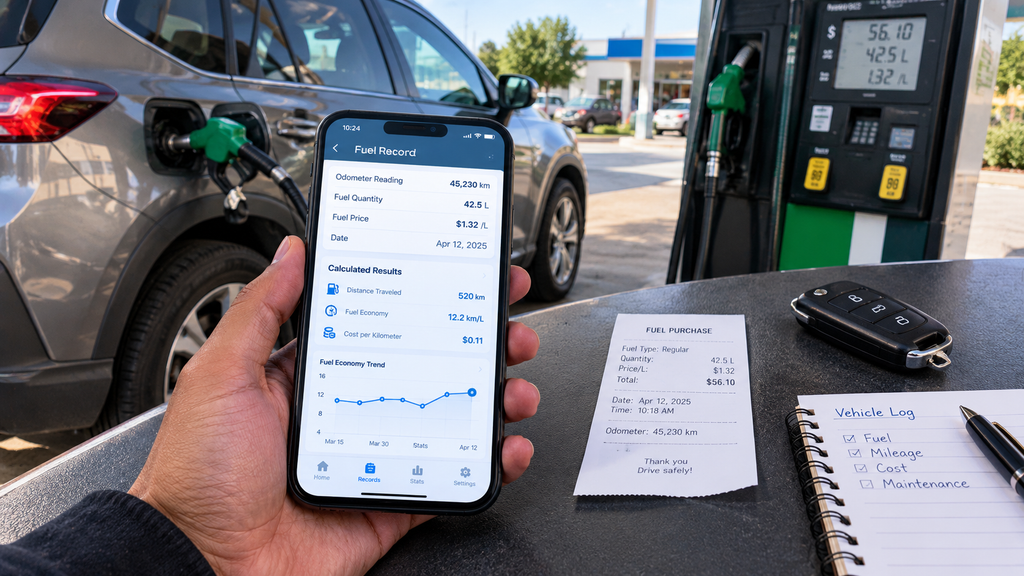
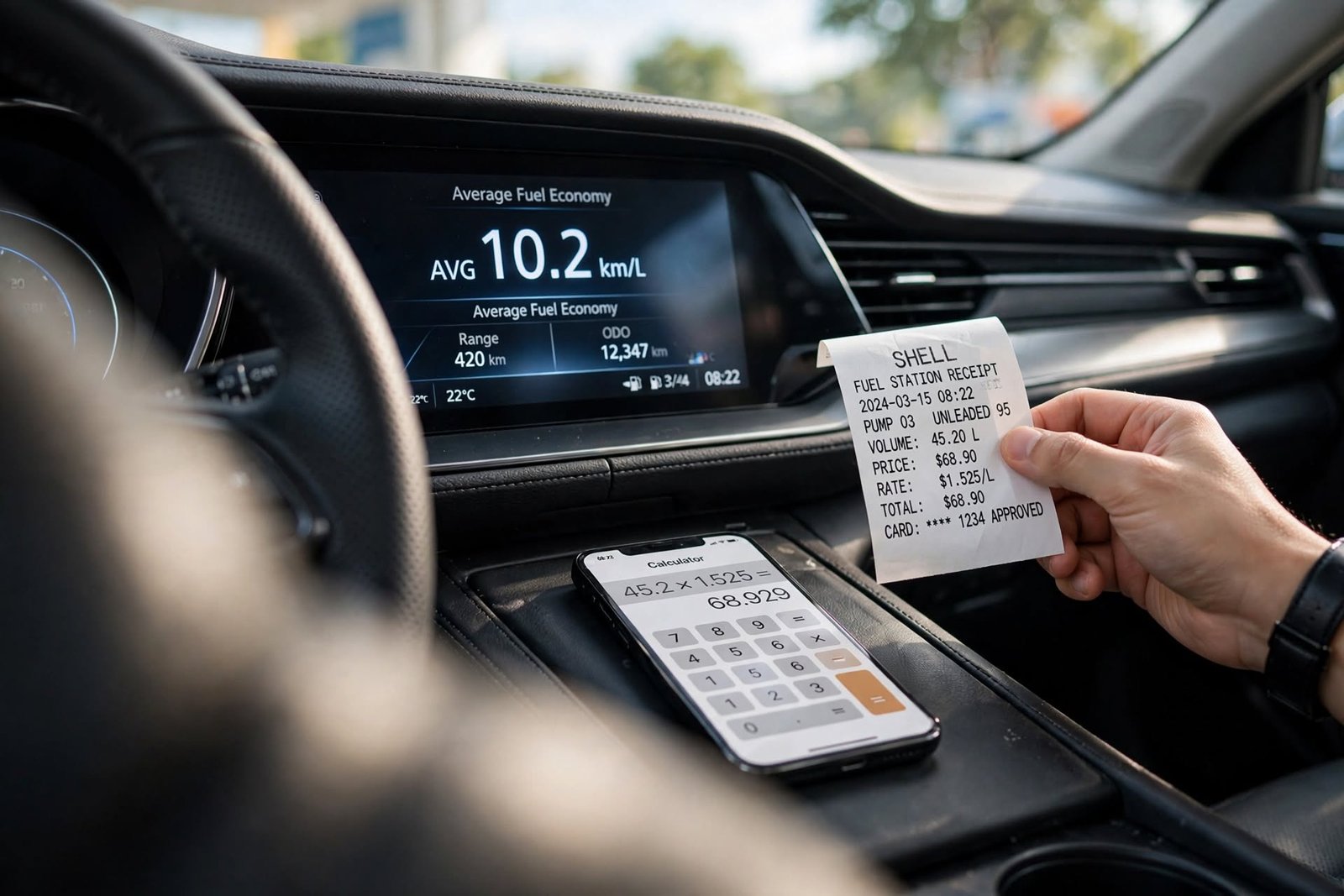
The majority of fuel trackers measure fuel efficiency between the last time the vehicle was fueled and the present odometer reading. Subtracting the two readings will determine the distance traveled, and the fuel used will give the data to estimate consumption. This can be listed in terms of miles per gallon, kilometers per liter, or liters per 100 km. The more frequently the driver logs fuel purchases and mileage, the more useful these calculations are.
Accurate records are important, as incomplete information or incorrect information could impact the results. The odometer should be filled in when refueling, with an attempt to record the odometer, fuel quantity, price, and date. Some applications also enable users to specify if the tank was filled completely or not. The app allows for calculating averages with several records and displaying fuel economy trends – improving or deteriorating. This gives a much more accurate result than a single fuel purchase.
Keeping an Eye on Mileage and Fuel Expenses
Mileage records are required since fuel expenses must be taken into account along with the mileage. A driver can easily end up spending more on fuel one month just because he was traveling a lot further. Likewise, if the vehicle was used very little, fuel use does not always reflect its efficiency. Fuel tracking applications link fueling with driving to allow drivers to view how much fuel was consumed to drive a specific distance and how expensive that fuel was.
Another informative piece of information is tracking fuel prices. Even if a vehicle’s fuel economy doesn’t change, monthly fuel costs could go up when gas prices climb. Conversely, the rise in expenditures could be attributed to an increase in the amount of fuel used rather than a rise in fuel prices. It helps drivers to distinguish between the quantity of fuel bought and the price paid for the fuel by recording the amount in addition to the price. This information can also help with budgeting fuel costs on a monthly basis over time.
What is Cost Per Mile or Kilometer?
Cost per mile (or per km) is the amount of money a driver spends for every mile (or km) they drive. This measurement takes into account both fuel consumption and fuel prices and is designed to be more comprehensible when considering the cost of operating a vehicle. Drivers can now view the cost of the purchase relative to every mile or kilometer driven instead of just how much the purchase costs.
This calculation can also be helpful for comparing the different driving periods. If the price of fuel stays the same but the cost per kilometer goes up, then this vehicle might possibly be using more fuel. The cost per distance could be reduced if fuel economy were to improve. These comparisons will help drivers know if modifications to their driving patterns, traffic, routes, or vehicle condition are impacting fuel costs.
Monitoring Fuel-Efficiency Trends
One of the major benefits of fuel tracking is that the trends over time can be monitored. Several weeks or months of records can give insight into patterns, but a single refueling record is insufficient to know the overall performance of a vehicle. The driver might find that his or her car gets better gas mileage on the highway than in urban areas and may find that sometimes the car has poor gas mileage as well.
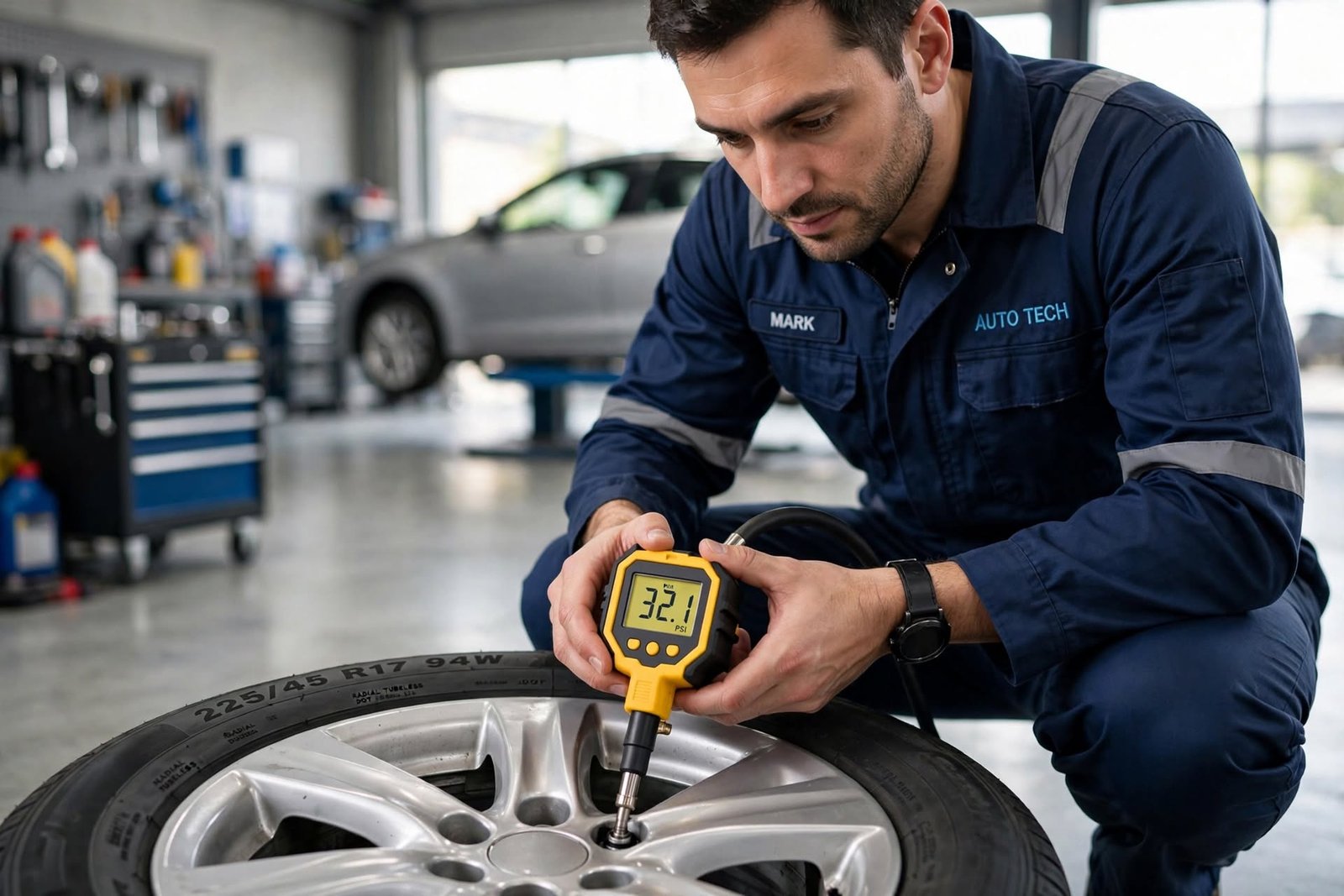
Also, over the timeframe of tracking trends, drivers can catch unusual changes. When a vehicle’s fuel economy suddenly drops when driving at the same speed as normal, a driver might consider tire pressure, load weight, driving behaviors, or maintenance. The app is not able to tell you exactly what has changed, but if there are records, you can have proof that something has changed and may need some further attention.
Fuel Tracking and Maintenance
In addition to routine maintenance, tracking fuel use can also be helpful for vehicle maintenance. Some tire pressure or worn parts or some issues with the engine can cause inefficient operation. A fuel tracking app can’t do what a professional vehicle inspection can, but it can let drivers know when there has been a significant decline in fuel economy.
Some fuel tracking apps also offer maintenance alerts or even mark maintenance data. Combining maintenance and fuel records can make it easier to compare fuel economy before and after maintenance. Drivers should note, however, that other factors, such as traffic, weather, driving habits, road conditions, and loading can also affect fuel economy, and a drop in fuel economy does not equate to an underlying maintenance problem.
What to Look for in a Fuel Tracking App
The ideal fuel tracking app should be easy and quick to use to record data. Features include tracking fuel quantity, fuel price records, odometer records, fuel economy, cost per distance, and spending summary. Multiple vehicle owners can also have multiple vehicle profiles. It may be helpful to have automatic backups or cloud synchronization, as losing months of fuel records would make long-term tracking much less effective.
Charts and historical reports are also beneficial, as they help to make trends easier to understand. Maintenance reminders, receipt storage, fuel-price information, location information, and export options are possible features that can be included in some applications. But ease of use and privacy are also important factors to take into account for drivers. A simple application that can be used consistently is more useful than one that has lots of complicated features that the driver only uses a few times.
How Fuel Tracking Can Save Money on Fuel
The biggest financial advantage to fuel tracking is that it helps you understand how you’re spending and using fuel. A driver might find that short errands, too much idling, too much traffic, or too much acceleration could be leading to increased fuel consumption. These trends make possible practical changes, like consolidating errands, cutting down on unnecessary idling, driving with correct tire pressure, or driving more smoothly.
Fuel tracking can also help with budgeting, as they will be able to observe how much they are spending over a period of months and see their average. This allows them to distinguish factors that are less controllable, like rising fuel costs, from those that might be more controllable, like driving distance and some driving behavior. Good records enable drivers to make decisions from what the fuel they have actually used, instead of what they think they have used.
Selecting a Fuel Tracking App That Is Right for You
The driver can choose the appropriate app according to the monitoring objectives. A person just looking for a basic app to record fuel purchases and miles traveled might only need a basic fuel and mileage application. Those seeking specifics might prefer one with charts, cost per distance, maintenance records, ability to support more than one car, and long-term efficiency reports.
Drivers should look at how easy an app is to use, how accurate it is, its ability to store backups, privacy features, and reporting tools before selecting an app. It should also be able to deal with crucial situations like buying fuel part way, different units of fuel measurement, and so on. Most of all, the app should be easy enough to use regularly – that’s where keeping accurate long-term records comes into play.
Conclusion

Fuel tracking apps provide an efficient means for drivers to gain insight into fuel usage, mileage, costs, and expenses. These applications can keep track of fuel purchases, odometer readings, and help determine fuel economy, cost per mile or kilometer, and efficiency trends over a long period of time. Further enhancements like maintenance history, charts, multiple vehicle profiles, and spending reports can make the information even more useful.
The true value is that it will be used regularly. The information in a single fuel record is very limited, but several months of records can give you some useful patterns in fuel use and fuel costs. A driver who selects a dependable and simple-to-use fuel tracking application can better comprehend their vehicles, enhance project financial management, recognize efficiency changes, and make sensible choices that may aid in cutting down on unneeded fuel costs.