Introduction
One of the most significant bases of restorative dentistry is the knowledge of strong dental anatomy. The results of all restorations, from fillings to full coverage crowns, relies on a knowledge of the morphology, occlusion, and function of the tooth. If the dentist is familiar with the shape of teeth and the way that they work together when chewing, he will be able to make a restoration that is functional, durable and beautiful.
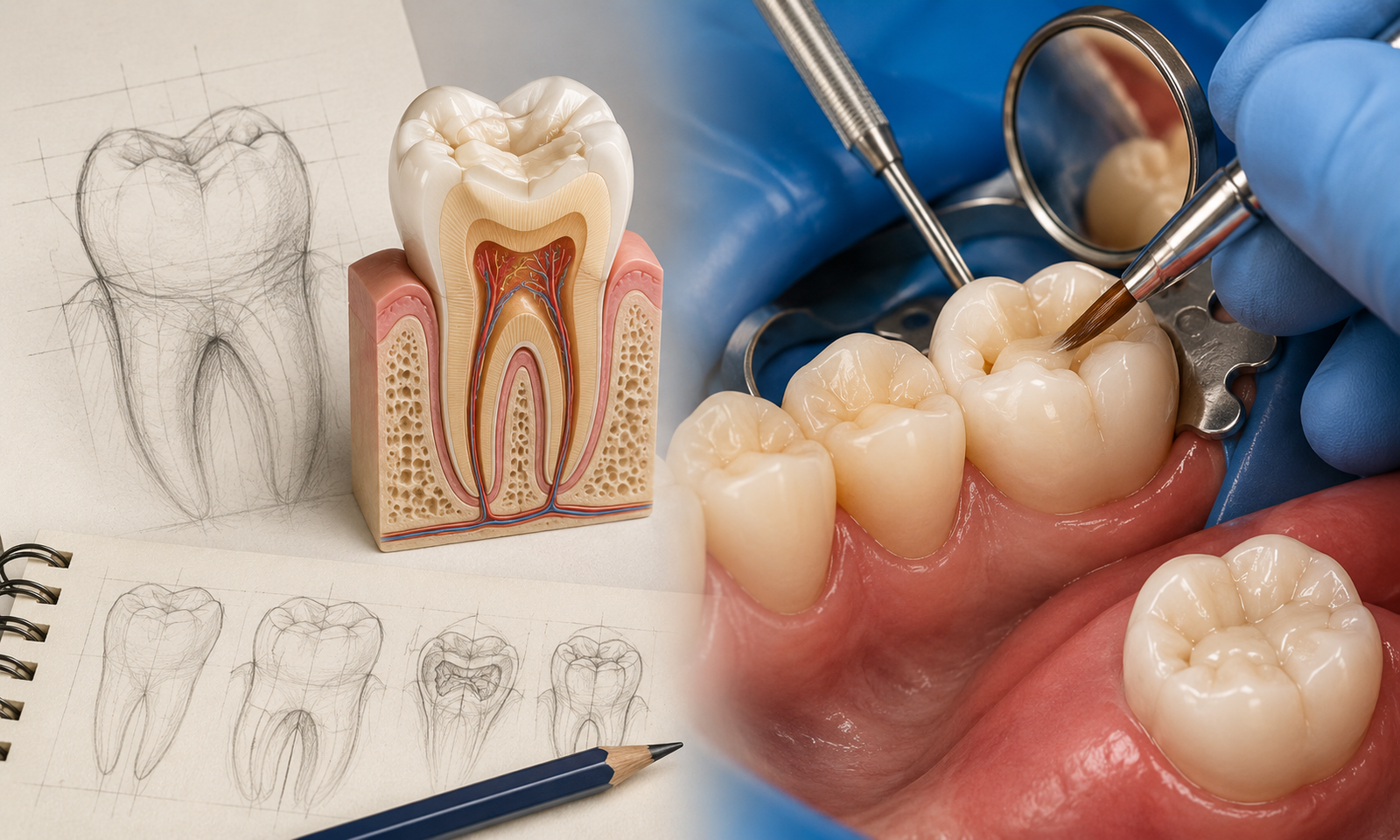
These concepts are first introduced to students as part of their preclinical training involving the following: Tooth carving, waxing exercises, occlusion studies. These activities are quite theoretical, but they’re an effective way for any future clinician to get ready for the real world of restorative procedures. The information acquired in the anatomy laboratory later plays a role in decision making in operative dentistry, prosthodontics, orthodontics and esthetic rehabilitation.
It is often helpful to start with a detailed study of dental anatomy for many students to learn about the scientific basis of restorative care dental anatomy. This understanding allows the clinician to create a natural tooth shape while maintaining optimal oral health and function.
Theoretical knowledge on dental anatomy and its application in restorative procedures, with emphasis on the importance of the clinical training of anatomical aspects for success in these cases.
A Dental Anatomy Workshop for Clinical Dentistry.
Anatomy of a tooth.
Dental anatomy is the study of the structure, morphology and function of teeth. It involves aspects of examination of cusps, ridges, grooves, roots, contact areas, occlusal relationships, and tooth surfaces.
There are various shapes of the teeth in the oral cavity with their particular functions:
- Front teeth for cutting food: incisors are modified for cutting.
- Gaggle your dogs when they make a mistake.
- Premolars help to crush and grind food.
- The molars provide a great grind during eating or chewing (mastication).
Once these differences are taken into account, dentists can create restorations that will replicate teeth without disrupting their function.
The dynamics of form and function are explored here.
Form and function go hand-in-hand in restorative dentistry. How teeth touch neighbouring and opposing teeth depends on their anatomy (structure). A small change in a contour or occlusion can impact patients’ chewing ability, their speech and comfort.
For example:
- Over-contoured restorations can allow for plaque to become trapped and cause gingival irritation.
- If an occlusion is flat, it can decrease the efficiency in chewing.
- The incorrect cusp forms can affect the motion of the jaw.
- But without proper contact points, food may impact.
These risks necessitate more than just replacement of the lost tooth structure in restorative procedures. A dentist has to make an ideal replica of natural anatomy.
The critical role of preclinical training.
Using wax and carving to learn about the natural background.
The dental students spend a considerable amount of their time in the simulation laboratory carving teeth from the wax block and reproducing the morphology of teeth. The exercises activate manual skills and familiarize students with anatomical landmarks.
During the waxing exercises students learn to identify:
- Cuspal inclines
- Marginal ridges
- Developmental grooves
- Fossae and pits
- Occlusal anatomy
Students repeatedly create these structures, which develop the visual and tactile skill for restorative procedures.
Building Hand-Eye Coordination
In the realm of restorative dentistry, precision is key. Pre clinical exercises are meant to prepare students to passively move instruments in such a way that maintaining correct contours of the structures is not compromised.
During the following procedures this training is particularly important:
- Composite restorations
- Crown preparations
- Bridge fabrication
- Occlusal adjustments
If there is incompetence in the underlying bones, they may look artificial or the restoration can be unsuccessful.
Developing Occlusal Awareness
Occlusion—the relationship of the upper and lower teeth as they function and rest. When occlusal analysis is understood, the clinician will not place an occlusion that will prevent normal jaw motion.
Students are taught about the relationship of teeth during:
- Centric occlusion
- Protrusive movements
- Lateral excursions
- Functional chewing cycles
This means later directed restorative adjustments and/or prostheses.
Using Dental Anatomy for Restorative Procedure
Direct Restorations and Tooth Morphology
Composite Fillings
Among the most prevalent in the field of restorative dentistry are the composite. Successful restorations demand accurate anatomical reconstruction which may seem simple.
In the restoration of posterior teeth, the dentist has to duplicate:
- Cusps
- Grooves
- Triangular ridges
- Marginal ridges
- Proper occlusal contacts
Irregularly designed restorations may change the occlusion and cause discomfort when chewing.
Importance of Occlusal Anatomy in Fillings
In the event a restoration is too tall, patients might experience:
- Premature occlusal contacts
- Tooth sensitivity
- Muscle discomfort
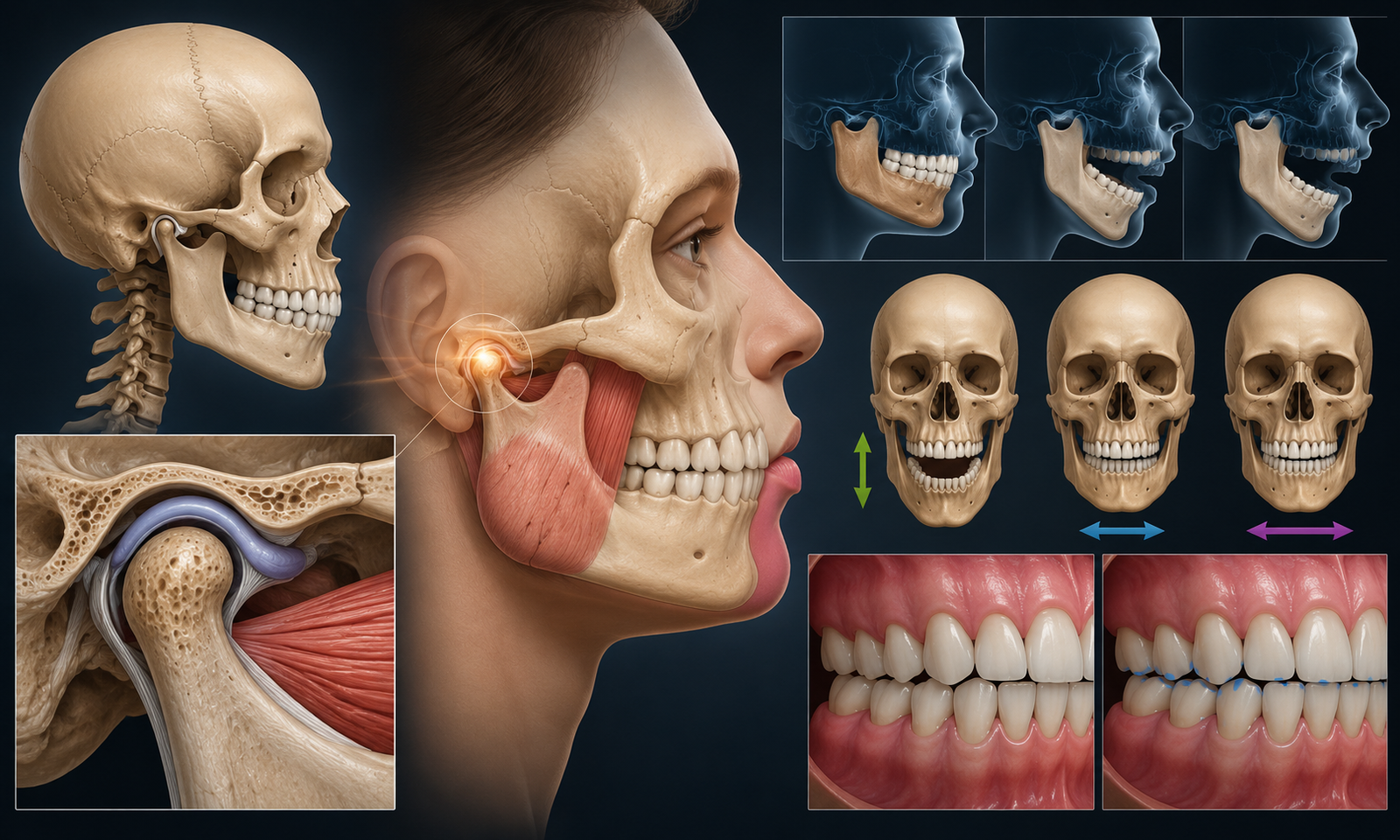
- Temporomandibular joint strain
If the gullet’s underside is not sufficient in depth or curvature, then there will be a loss of grinding efficiency. Thus, expertise in anatomy is of the utmost importance to the clinician when they are figuring ways to recreate an anatomical contour naturally.
Anterior Restorations and Esthetics
Anterior composite restorations are also significantly influenced by dental anatomy. To restore front teeth, the following should be thought of:
Incisal edge position
- Facial contour
- Surface texture
- Symmetry
- Light reflection patterns
Just a slight deviation in the structure can have an impact on the smile aesthetics.
To produce restorations which integrate well with neighboring teeth, the dentist should be familiar with the proportions of the natural teeth.
Crowns can be made at both the restoration and anatomical precision levels.
Why Crown Morphology Matters
Crowns are used when a tooth is even severely decayed or weakened. But, the placement of a crown is not a simple process of embedding an existing tooth.
Having a successful crown rest means it should match the natural anatomy to maintain:
- Function
- Occlusion
- Periodontal health
- Speech
- Aesthetics
When crown contours are not appropriate, they can cause problems with plaque, gum inflammation or occlusal imbalance.
Functional Cusps and Supporting Cusps
Understanding the anatomy of the cusps of a tooth placed in function is particularly critical when creating a crown.
Maxillary lingual cusps and mandibular buccal cusps are supporting cusps in general.
Uses non-supportive cusps to assist in guiding the movements of the mandible.Helps direct the movement of the mandible with non-supportive cusps.
When these are not properly designed the patient may be at risk of occlusal instability or discomfort.
Marginal Ridge Alignment
Marginal ridges should match up with other teeth in continuity to ensure occlusal harmony. Ridges can produce areas of food traps and endanger the health of the gums.
A laboratory technician cooperates with a dentist to duplicate the correct anatomical features of a crown. Locally this partnership relies upon anatomical information.
Dental Bridges and Occlusal Balance
Replacing Missing Teeth
Bridges—some teeth are missing and the bridge uses neighboring teeth as supports. It is important to have thorough knowledge of dental anatomy and occlusion for designing a bridge.
The artificial tooth (pontic) should:
- Match teeth adjacently rostrum-anatomically
- Make sure that contact points are correct.
- Preserve occlusal relationships
- Encourage good chewing habits
If the bridge is poorly constructed, it can cause overloading of the supporting teeth and/or imbalance of occlusion.
Importance of Arch Form
The shape of the dental arch affects the distribution of mastication forces. Unsuccessful restorations which do not maintain the natural arch shape may result in long-term complications and even a rebalancing of forces.
Dental anatomy is useful to the clinician when deciding the optimum positioning of the tooth contour in the manufacturing of a dental bridge.
Avoiding occlusion and restorative success.
Understanding Functional Movements
If you have a missing tooth, you don’t have a replacement one in place. They play a dynamic role when opposed against teeth and upper and lower jaw movements during chewing and speaking.
Restorative procedures should include consideration for:
- Centric contacts
- Excursive movements
- Guidance patterns
- Functional pathways
Failure to account for these factors can lead to restoration failures.
Preventing Occlusal Interference
A normal mandibular movement is disrupted by restorations and is called occlusion interference. Symptoms may include:
- Tooth wear
- Muscle fatigue
- Headaches
- Jaw discomfort
- Fractured restorations
Articulating paper and occlusal analysis are used in the clinic to identify and correct these problems.
An adequate knowledge of the occlusal anatomy lets dentists easily make corrections without disturbing function.
Prosthodontics Dental Anatomy
Ultimate Dental Look and Final exteriorisation of teeth.
Biology of the teeth is not irrelevant to removable prosthodontics. The denture teeth should be placed correctly both anatomically and functionally.
Issues with the proper positioning of teeth can affect:
- Stability
- Speech
- Mastication
- Facial support
Understanding cusp inclination and occlusal schemes is beneficial for balanced dentures functions effectively.
Implant Restorations
The accuracy of the anatomy is equally important for implant-supported crowns and bridges. This is because implants do not have the periodontal ligament support that natural teeth have and relates to occlusal force in the implant area.
When designing an implant restoration, clinicians should keep in mind:
- Proper cusp anatomy
- Controlled occlusal contacts
- Balanced force distribution
Obstruction of implants and supporting bone occurs if the design is poor.
.Research work into anatomical accuracy and the role of technology.
Digital Dentistry and Cad-Cam Systems.
The digital tools used in modern restorative dentistry, including CAD/CAM systems and intraoral scanners, offer benefits to clinicians. They are the tools which make the job more efficient and accurate, but they are no substitute for the knowledge of anatomy.
Today’s dentists still have to assess:
- Occlusal morphology
- Tooth contour
- Functional anatomy
- Contact relationships
Clinical judgment will be used for restoration design, but digital software can be a great help.
Virtual Wax-Up and 3D Printing.
Virtual wax-ups enable the clinician to see the restoration prior to treatment. The technologies are based upon the same principle of Anatomy as taught in a manual waxing exercise.
So, at the end of the day, even in the digital era, knowledge of dental anatomy remains a cornerstone of any dental education.
Common mistakes in diagnosis due to lack of knowledge of anatomy.
Over-Contoured Restorations
Over-contouring can cause:
- Plaque retention
- Gingival inflammation
- Difficulty cleaning
Open Contacts
The person can suffer injuries due to bad contact points including:
- Food impaction
- Patient discomfort
- Periodontal problems
Flat Occlusal Anatomy
There is a decrease in chewing efficiency and force distribution change with flattened restorations.
Improper Occlusion
Distorted occlusal relationships may be one of the factors related to:
- Tooth fracture
- Muscle pain
- Temporomandibular joint dysfunction
The complications, just as they are, illustrate the need for anatomical precision in restorative care.
Developing the link between Theory and Clinical Practice.
Turning Educational Learning into Quality Care
Pupils often feel at first wonder why they are carrying out activities like waxing and carving teeth in the preclinical classes. These, however, are activities that have direct impacts on competence in practice.
Along with the start of student patient care, the students realize that:
- Clinicians use tooth morphology as a guide to decide on the design of the restorations.
- Occlusion is related to patient comfort.
- Precision anatomical restoration enhances longevity of the restoration.
- A detailed plan for functional restorations will be necessary
Practical clinical skills are developed by practice of theoretical education.
It is important for anatomical knowledge all throughout one’s life.
Professional knowledge of anatomy and occlusion is an area in which the most experienced clinicians are still developing and refining their knowledge. Restorative techniques may change with advances in materials and technology; however, the concepts of tooth morphology are fundamental.
With good assembled knowledge that the details will be better:
- Diagnosis
- Treatment planning
- Restoration design
- Patient outcomes
It also facilitates communication between dentists, specialists and laboratory technicians.
Conclusion
The basics of restorative dentistry are the dental anatomy. Understanding of tooth morphology, occlusion and functional relationships have significant impact on the clinical treatments including dental filling, crowns, bridges, dentures, implant restorations etc.
Students are pre-trained in tooth carving, waxing, and occlusion analysis during the preclinical training.In the preclinical training, students learn to carve teeth and form wax accurately, as well as occlusion analysis, so that they can reproduce these natural characteristics in their practice with patients. These basic exercises will increase accuracy, precision, manual dexterity and clinical awareness to ensure a restorative success.
Advanced tools and materials are continuously developed in today’s dental practice but cannot take over the significance of understanding of anatomy. There is nothing that can replace the skill of the clinician in recreating the natural form and function while maintaining the harmony in occlusion, even with the best of the new materials and techniques available.
This course takes the study of dental anatomy from an academic subject to a realistic situation. It becomes a must have clinical skill that will add excellent long term oral health, patient comfort, and restorative excellence.