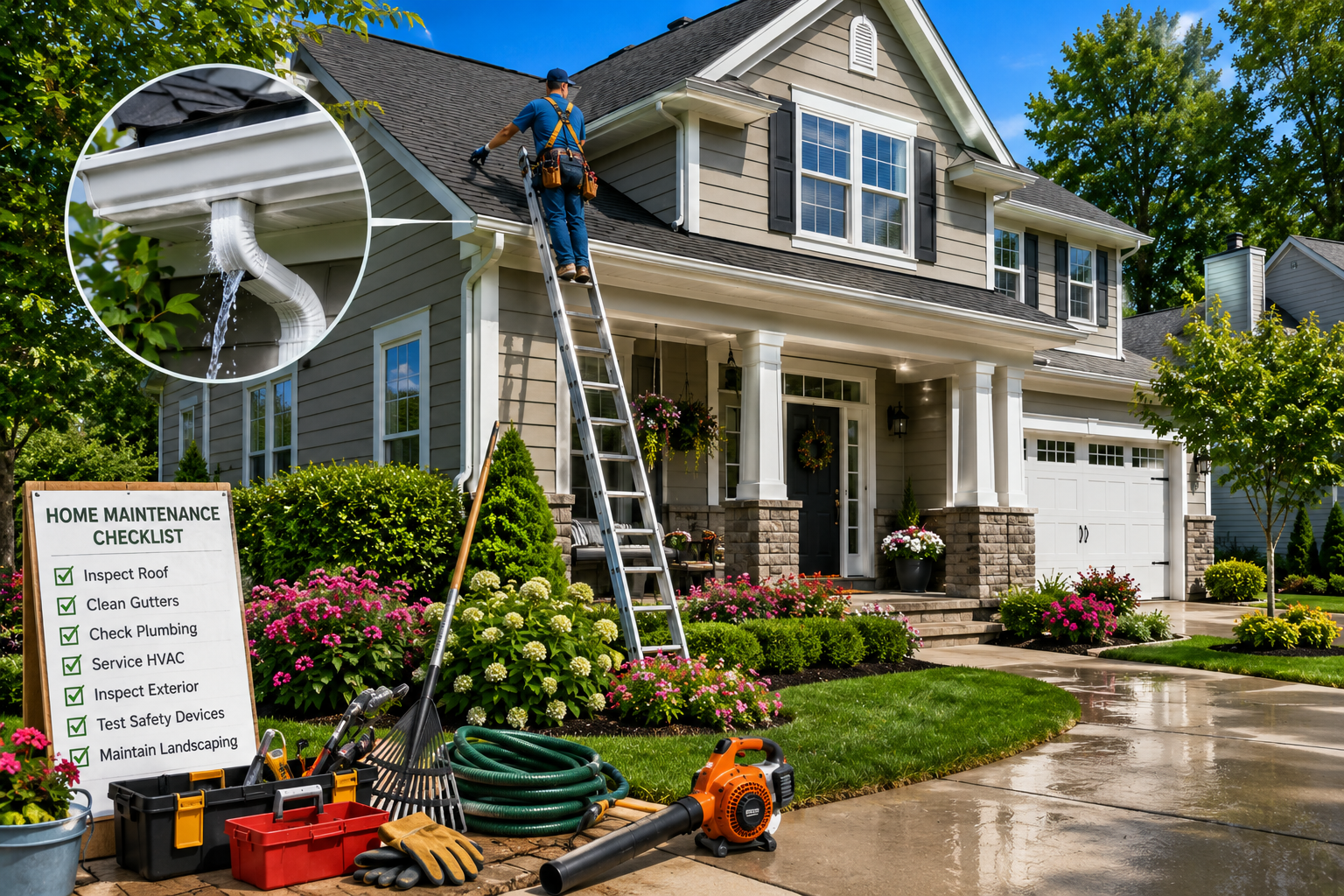
Home Maintenance Tips are essential for protecting your property throughout the year. Home ownership is a significant investment and to ensure that it receives the protection that it deserves, it requires care all year. A lot of homeowners only do repairs when things go wrong, but preventive maintenance can often be more cost-effective than dealing with inadvertent damage. A little leaky pipe, a clogged gutter or a damaged roof shingle can add up to a big mess if ignored. A proactive approach helps homeowners improve safety, preserve property value, and extend the lifespan of their home’s systems and features.
The periodic maintenance also contributes to a more pleasant life. A well maintained property runs more efficiently, saving on energy costs and eliminating interruptions in service due to emergency repairs. A maintenance routine enables homeowners to deal with potential issues before they become serious and maintain the appearance and functionality of their property for years to come.
The Benefits of Preventive Maintenance Are Numerous
The advantages of preventive maintenance are many.
Preventive maintenance includes regular inspections, cleanings and services to various aspects of the house. Homeowners do not wait for a problem to arise before they take action to avoid the problem. This can also save thousands of dollars in the long run because the risk of large repairs and replacements are lessened.
Preventive maintenance will not only save money, it will also enhance safety and comfort. Clean systems are more efficient, energy-efficient, and less prone to unexpected breakdowns. Homeowners should start a home maintenance checklist to help guide them on critical preventive home maintenance tasks throughout the year, including all major areas of the home.
1. Do an Annual Inspection of Your Roof
The roof keeps your home dry, windproof, sunproof, and resistant to other weather conditions. It’s always in the face of harsh weather and therefore can experience problems over time. Small leaks and missing shingles and cracked flashing can lead to serious water damage if left unattended.
Roofs should be inspected at least twice a year, and after severe storms, by the homeowner. Check for worn or damaged surfaces, debris build-up or visible damage. Regular inspections can further enable the discovery of problems before they become costly repairs too. Having a well-maintained roof ensures that not only will the home have a well-supported structure, it will also help to prolong the lifespan of the roofing materials.
2. Clean Gutters and Downspouts
Gutters are important elements for helping to move rain water away from the house. Leaves, dirt and debris can fill gutters and overflow, damaging landscaping, foundations and siding. The excessive moisture around the house can also be a factor for mold and flooding in the basement.
Make sure you clean gutters several times a year to ensure they are draining properly. It is also important for homeowners to verify that water flows away from the foundation from the downspouts. Maintenance costs may be lowered and the overall performance will be enhanced by installing gutter guards. One of the easiest methods for preventing costly water related damage is to keep gutters clean.
3. Test for Water Leaks
Plumbing issues can be minor that can grow into costly issues if they are not addressed. A leaky faucet, pipe or seal may cause a loss of water and over time cause damage to floors, walls and cabinets. Undetected leaks may also promote mould growth and decrease indoor air quality.
The homeowner should regularly check under sinks, behind appliances, around toilets and near water heaters. Another way to help identify leaks that are not readily apparent is to track water bills. Early water leak detection and solution to water leak problems can prevent major damage and keep waterworks running efficiently in the house.
4. Service HVAC System
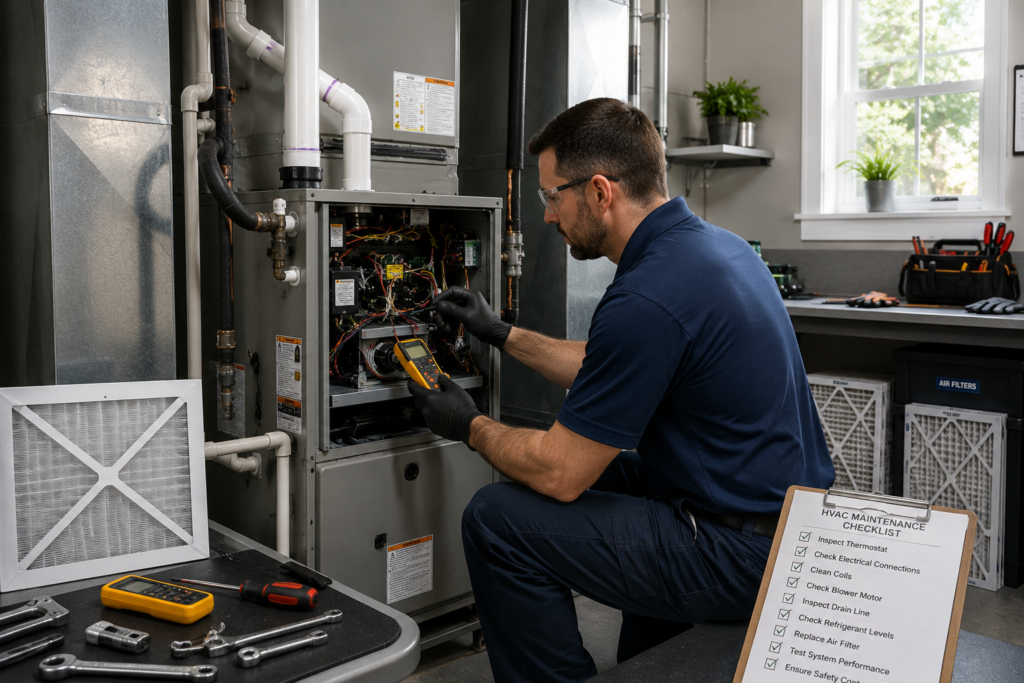
Maintaining indoor comfort is essential with heating and cooling systems. An HVAC system is used all year long, so it needs to be maintained regularly for optimal performance. A lack of regular maintenance can result in increased energy costs, diminished performance and unscheduled breakdowns.
Annual inspections by qualified professionals help ensure that all components are functioning properly. It also is important for homeowners to change the air filters on a regular basis to ensure better air flow and air quality. An efficient HVAC unit lasts longer, consumes less energy, and keeps everyone comfortable all year long when it’s well-maintained.
Regular HVAC Maintenance Offers Several Advantages
Routine HVAC maintenance has a number of benefits.
Regular HVAC maintenance can help identify minor issues before they turn into significant problems. Technicians can check electrical connections, clean critical components and ensure safe and efficient operation.
Regular servicing also helps to make the system more energy efficient, thereby saving you on your monthly utility bills. Homeowners can save money for repairs and also prolong the life of their heating and cooling systems by investing in preventative maintenance.
5. Inspect Doors and Windows
The energy efficiency of doors and windows are a direct influence. As time passes, the seals and weatherstripping can deteriorate and let drafts and moisture in the house. These spaces make HVAC systems have to work harder, consuming more energy and lowering comfort.
Doors and windows should be checked for cracks, broken seals and air leakage. When the caulk is worn or needs to be replaced, it can help to seal gaps for better insulation and reduced energy costs. These areas also help to avoid water penetration and structural damage when maintained.
6. Maintain Exterior Surfaces
A house’s surface is continually at the mercy of environmental pollutants, sunlight, and weather. If not maintained and cared for, siding, paint and trim may become degraded and impact the appearance and structural integrity. Small cracks or peeling paint may allow moisture to penetrate the surface and cause further damage.
Attending to the regular cleaning and check can help to identify areas of concern. Repainting, sealing or fixing damaged areas will keep the home dry and help to prolong the life of exterior materials. A clean and tidy exterior can also add curb appeal and maintain property value.
Preventing Moisture Damage
One of the most frequent reasons for home deterioration is moisture. Leaky siding and fracture of surfaces can cause moisture to penetrate, resulting in mold, wood decay and structural problems.
Heavy rain and subsequent external inspections to rectify damage in a timely manner prevent such issues. Protective coatings and repairs in a timely fashion offer another layer of protection against moisture related deterioration.
7. Test Safety Devices
Safety devices are necessary to keep the occupants and property safe. Smoke detectors, carbon monoxide detectors and fire extinguishers should be periodically tested for proper operation. These devices can warn individuals and save lives when an emergency occurs.
Eliminate batteries from smoke alarms at home by testing once a month and replacing when required. Fire extinguishers should be inspected regularly in order to ensure they are in working order. Safeguarding equipment is a few minutes’ job that can save many lives in the event of an emergency.
8. Inspect Foundation and Drainage
They are one of the most critical structural elements in a house and therefore the groundwork is one of the most important of all. Cracks, irregular settling and drainage problems can cause instability and result in costly repairs. Early detection is key to preventing serious structural problems.
Property owners should check for cracks in the foundation and identify places where water pools. The proper grading and drainage system should guide water away from the building, thus minimizing the threat of erosion and foundation damage. A dry and stable foundation will help the home remain healthy long after it has been built.
9. Keep Landscaping and Trees in Place
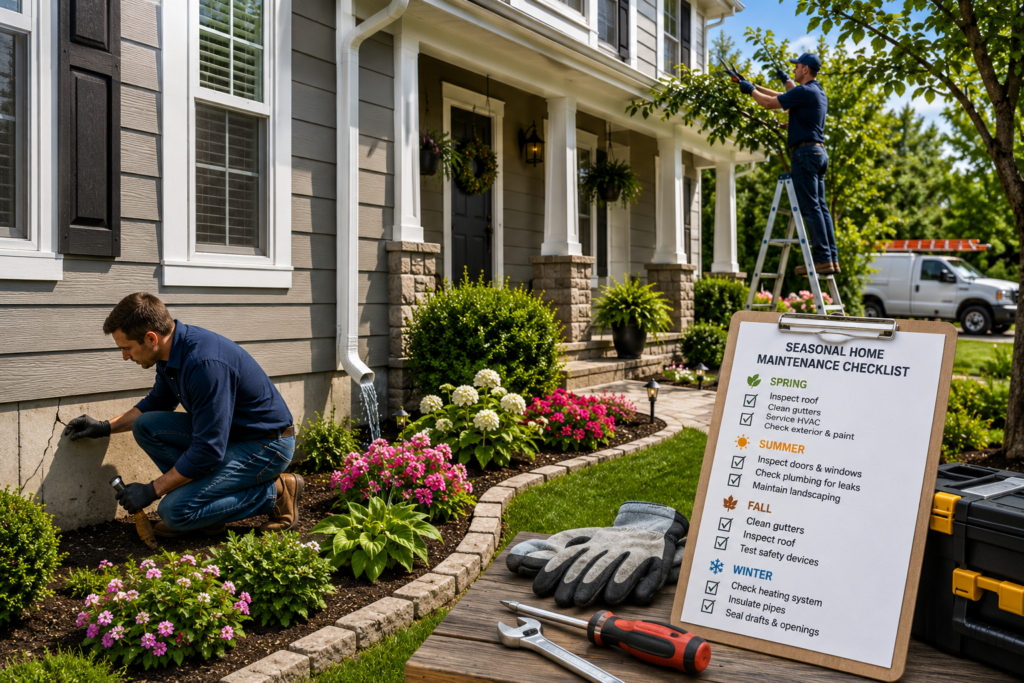
The landscaping of a property contributes to the property’s safety and appearance. Trees and shrubs that are growing too large can cause issues with foundations and utility lines, block drainage systems, or damage roofs. In storms, too, dead branches are a hazard.
Proper pruning and care ensure a well-groomed and easy-to-care-for landscape. Well-tended trees are a boost to curb appeal and minimize damage to property. Enhancing the drainage of water from the yard, including clearing away dead vegetation and preventing plants from retaining water on the exterior walls of the home, should also be done.
10. Follow a Seasonal Maintenance Schedule
Having a seasonal maintenance schedule will keep homeowners organized and make sure that important tasks get done on time. Spread the work out over the year makes maintenance more manageable and less likely that vital inspections will be missed.
Exterior inspections and landscaping projects are often best done in the spring and summer is a good time for HVAC maintenance. During the fall, you should conduct gutter cleanings and roof inspections, while winter provides a chance to inspect heating systems and weatherproofing. A planned schedule can prevent a number of homeowners from having to deal with unexpected expenses and maintain their property investment.
Conclusion
The maintenance of a home is a continuous process, and it is a key consideration in maintaining property value, safety and comfort. Homeowners can avoid many common issues from becoming costly repairs by conducting regular home inspections, cleaning gutters, inspecting plumbing systems, servicing HVAC units and cleaning the home’s exterior.
Maintenance that’s proactive, pays off in money, efficiency and in a longer lifespan of critical systems in the home. All these are basic maintenance tips that should be followed throughout the year to keep a property safe, good looking and structurally sound for many years to come.