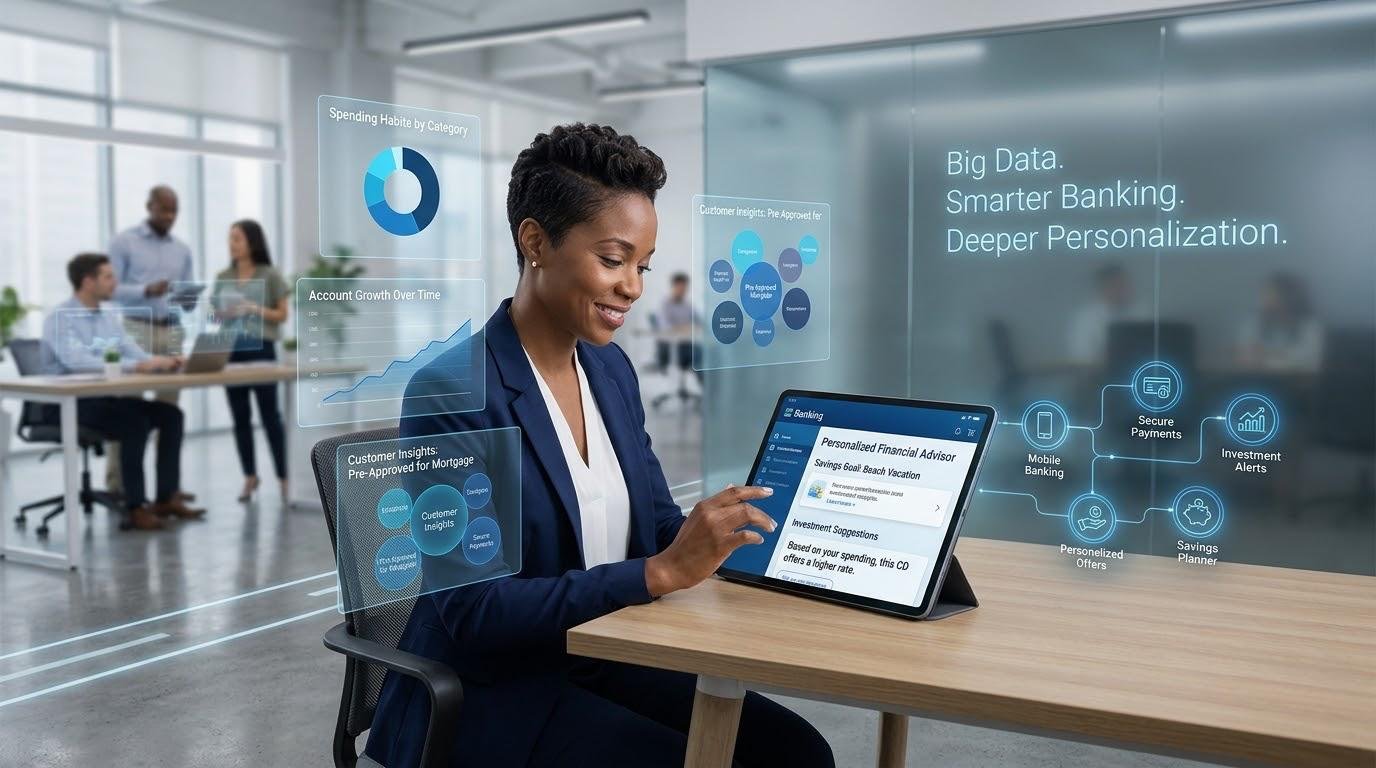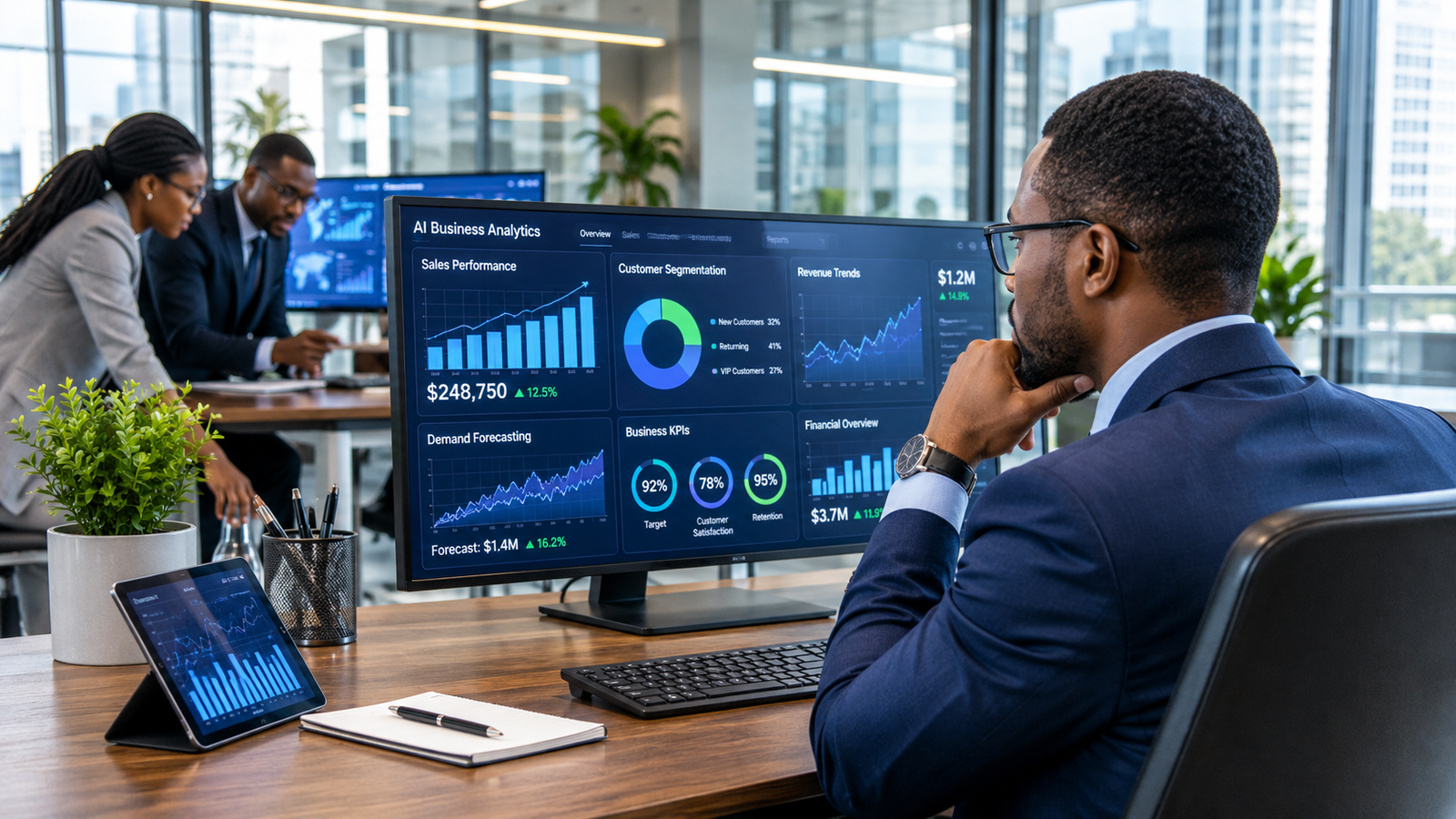
AI in business analytics is helping organisations collect, analyse and understand information from sales, customers, marketing, finance and general business activities. This can become time consuming if done manually and using AI analytics can help businesses make sense of large amounts of data, understand trends, make predictions and gain insights that can help with business intelligence.
Traditional business intelligence would rely on the data from reports and manually created dashboards. Using AI can add some high level capabilities. Using machine learning and predictive analytics businesses can understand what their sales will be like, understand their customers, track performance and identify potential issues. While understanding
how AI can help managers understand how automation can help make better decisions. However, the predictions made need to be carefully considered as there is a chance of incorrect data, biased predictions and misleading trends.
1. Sales Forecasting
Sales forecasting can help businesses understand what their sales will be like in the future. Using AI can help by looking at previous sales, seasonality, price and customer buying behaviours. Machine learning can identify trends between these factors and make predictions.
For example retailers can understand what products may sell more in certain seasons. This can help businesses understand what stock they need, plan their marketing and set realistic sales targets. However predictions can be affected by unexpected changes in the market so comparing the predictions to the actual sales should be done regularly.
2. Customer Segmentation
Understanding your customers can help businesses. Using AI can help look at customer data such as previous purchases, browsing, preferences and engagement. Using machine learning businesses can identify segments of customers with similar behaviours. This can help create more relevant marketing.
For example online retailers can identify customers who often buy discounted products and customers who prefer new products. This can help businesses provide personal recommendations. However, care should be taken with customer data. The models should be reviewed regularly to ensure they are not making incorrect or unfair predictions.
3. Demand Forecasting
Demand forecasting can help businesses understand how much of a product they customers may want in the future. Using AI can help by looking at previous sales, seasonality, customer preferences and promotions. This can help organisations understand how much they may need to purchase.
For example Supermarkets can use AI to understand how much of each product they will need for each location. This can help avoid running out of stock and reduce excess stock costs. However predictions can be affected by unexpected changes in customer behaviours and stock availability so stock should be reviewed regularly.
4. Financial Analysis
AI in business analytics can help with financial analysis by examining revenue, costs, cash flow, transactions and other financial data. This can help identify spending trends, unusual changes and give managers a better understanding of how different departments are performing financially. By combining AI-generated financial insights with effective financial planning and a well-organised business budget, businesses can make more informed decisions about their resources, expenses and future financial objectives.
For example a company can use AI analytics to identify any departments that are having unexpected increases in operating costs. Financial managers can look into why this is happening and make any changes to the budget. However decisions shouldn’t be fully based on the AI recommendations as there may be incomplete data and changes in the economy.
5. Anomaly Detection

Anomaly detection can help businesses identify any unusual activity. Using AI can help look at transactions, stock and business data to identify any unusual activity.
For example financial institutions can use AI to identify any transactions that are very different to the usual activity in the account. Manufacturing companies can also use AI to identify any unexpected changes in the performance of their equipment. However this doesn’t necessarily mean there is fraud or failure. The alerts should be investigated by employees.
6. Business Performance
Businesses will often use KPI’s to understand how they are performing. This can include revenue growth, customer retention, sales conversion, productivity and operating costs. Using AI analytics can help managers understand how they are performing. Identifying any changes that may impact the organisation.
For example a retail company could use the analytics to identify how each branch is performing with sales. They can identify any locations where the revenue is dropping and investigate why. Appropriate changes can be made. However the KPI’s should be meaningful to the business.
7. Trend Spotting
Using AI can help businesses understand trends in the market. This can be done by looking at customer feedback, buying behaviour, online conversations and industry data. Using natural language processing can help businesses understand what topics are most common and what customer interests are changing.
For example retailers can use AI to understand what products are getting more attention. This can help with product development and marketing. However changes in online activity shouldn’t be assumed to be trends.
8. Marketing Analytics
Using AI can help with marketing analytics. This can help businesses understand what is working with their advertising, customer engagement, website activity and conversion rates. This can help understand what campaigns are providing meaningful results. And where the marketing could be improved.
For example an online business can understand which advertising campaigns are providing more purchases from customers. This can help the marketing team improve their strategies. However consideration should be given to customer experience, privacy and brand reputation.
9. Customer Churn Prediction
Customer churn prediction can help businesses identify customers who may stop using their products/services. Using AI can help look at how often customers purchase, complaints, subscriptions and engagement to identify any signs they may be losing interest.
For example telecommunications companies can use AI to understand what customers may be looking to change providers. Managers can investigate any issues with the service and improve customer support. However this is just a prediction and shouldn’t cause unfair treatment of customers.
10. Supply Chain Analytics
Using AI can help businesses understand their supply chain. This can include looking at purchases, supplier performance, transport, stock and distribution. Using machine learning can help identify trends that affect the delivery times, production and costs.
For example manufacturers can look at supplier data to identify any repeated delays in deliveries affecting production. Retailers can also use AI to improve stock distribution. However predictions can be affected by unexpected transport issues and supplier problems. Human oversight and contingency plans should be in place.
11. Scenario Analysis
AI in business analytics can support scenario analysis by helping businesses understand different situations they may face when making important decisions. Businesses can examine market conditions, financial data, customer demand and operating costs to understand how different circumstances could affect their operations. Managers can also use budget variance analysis to compare expected financial results with actual performance, identify differences and understand where adjustments may be necessary. Combining these approaches can help organisations evaluate potential outcomes and make more informed business decisions.
For example a company looking to expand can use AI analytics to identify how much revenue, operating costs and market demand there may be. Managers can compare different scenarios before investing. However this is just an estimation and professional judgement is still important.
12. Reporting
Using AI reporting tools can help businesses understand complex data. This can be done by creating summaries, charts, dashboards and interactive reports. Some systems can also be used to ask questions in plain language.
For example a manager can ask for a summary of monthly revenue or how each department is performing with sales. This can help make important information easier to understand. However the figures should be checked to ensure they are accurate. Sometimes the visuals can be misleading.
Challenges of AI in Business Analytics
While there are many benefits to using AI analytics there are also some challenges. One issue is ensuring the data is accurate. If there is incorrect, old, duplicated or incomplete data this can cause inaccurate predictions. Businesses should implement good data management processes to ensure the data provided is reliable.
Another issue is misleading correlations and biased predictions. AI can identify correlations between different variables but this doesn’t mean one will cause the other. The models can also be biased based on previous business data. Systems should be reviewed regularly, any unexpected results investigated and important recommendations should be reviewed by humans.
The Need for Human Judgement

While AI can help quickly process information and identify trends it can’t fully understand all situations a business may be in. Managers should consider what the business objectives are, market conditions, industry knowledge, customer expectations and other factors when considering the recommendations.
AI should be used as a tool to help with decision making. By using reliable data, advanced analytics and professional knowledge businesses can make more balanced decisions. Reducing the risk of inaccurate predictions.
Conclusion
AI is changing the way businesses use analytics. It can help with sales forecasting, understanding customers, demand forecasting, financial analysis, identifying unusual activity and monitoring performance. Using machine learning businesses can identify trends from large amounts of data. And using automated reporting can help make complex data easier to understand.
However businesses should ensure they have reliable data, regularly review the models and have responsible human oversight. AI predictions can be inaccurate and biased. Correlations don’t always explain why something is happening. By combining AI insights with human judgement businesses can make more informed decisions, improve efficiency and respond better to changing market conditions.