DIY Plumbing Repairs are one of the most effective ways homeowners can save money on maintenance and avoid costly service calls. Plumbing issues make up the bulk of what home owners deal with in terms of do it yourself projects. You may think a dripping faucet or a clogged drain is no big issue but it can add up to bigger problems like higher water bills and expensive repairs if you ignore them. Also which is great news — many of these issues you can handle yourself. By learning some basic plumbing care you can save money on maintenance and also avoid that call to the professional for that which can wait.
Plumbing repairs is a service that many think requires a professional. But in fact a large number of what we see in the home can be fixed with basic tools and a little patience. Also do it yourself plumbing repairs give you the chance to get to know your home’s systems better and to avoid unnecessary service calls. By taking care of issues as they come up and doing routine maintenance you can protect your property and at the same time extend the life of your plumbing fixtures.
One out of the best ways to reduce long term home ownership costs is for a homeowner to do research on how homeowners can reduce maintenance costs through preventive care and do It Yourself repairs. By taking care of issues before they grow into larger scale problems we see to it that repair bills are reduced and at the same time we see improvement in the home’s performance.
Why Do It Yourself Plumbing Repairs is worth it.
Many at home owners put out hundreds if not thousands of dollars each year on plumbing services. Some jobs for sure do require professional help but many routine repairs are very simple. Also by learning how to do basic plumbing maintenance you may see great results in terms of money saved over time.
DIY projects which also end up saving on labor we are able to do them right away when we notice something is amiss. Also by doing regular maintenance we are to identify that which may grow into large scale issues. That small leak you see today may turn into major water damage tomorrow. Thus by putting in a little effort to learn the fundamentals of plumbing we see great financial benefit.
Another benefit is that of raised confidence in home maintenance. Homeowners which study how plumbing systems function are able to make informed decisions regarding repair and in which parts should be replaced. Also they tend to use emergency services less often and also become better at dealing with common home issues.
Essential Plumbing Tools for DIY Repairs

Before you get into a plumbing repair project, it is best to have at hand a set of basic tools. Also the good news is that most of these tools are affordable and you may use them for many different home projects. A basic set will include:
- A plunger
- Adjustable wrench
- Pipe wrench
- Channel-locked pliers
- Basin wrench
- Plumber’s tape
- Screw driver set
- Bucket
- Drain snake
Having that equipment at hand makes repairs go faster and more efficient. Also we put out a supply of spare washers, O-rings and replacement seals which in turn saves time when we have unexpected issues. Though at the time the investment may look like a00 which pays off these tools end up paying for themselves by which we eliminate the need for regular service calls.
15 DIY Plumbing Fixes That Actually Work
1. Repairing a Leaky Faucet.
A broken faucet is a very common issue that home owners see. What may seem like a small issue of a slow drip is in fact very large scale in terms of water waste which yearly may total hundreds of gallons. Also what we see is that utility bills go up and at the same time precious water resources go down.
Most issues with running faucets are due to worn out washers, cartridges, or O-rings. First turn off the water supply at the base of the sink. Then take off the faucet handle and look at the inner parts. In most cases by replacing the broken washer or cartridge we are able to stop the leak. After reassembling the faucet turn the water back on and check the job. This cheap fix is very affordable at a few dollars at most but in the long term it pays off.
2. Clearing clogged drains.
Slow it out issues of flow are annoying and over time what you see is a collection of hair, soap scum, grease, and food particles. This in turn causes water to drain at a slower rate and in severe cases may come to a full stand still.
To solve the issue start by removing what is visible around the drain. Then use a plunger or drain snake which may take care of the deeper blockages. Also you may use a mix of baking soda, vinegar, and hot water for natural breaking down of organic build up. Regular drain care which includes cleaning will prevent major clogs and also reduces the chance of calling in the professionals.
3. Fixing a running toilet.
A large volume of water is wasted by a faulty toilet every single day. That is why it is very important to take care of these issues at the earliest. Also most repair jobs of the toilet kind are very basic and low in cost.
Remove the tank lid and check out the flapper, fill valve, and chain. We see that the flapper at times does not seal properly which in turn causes water to run into the tank constantly. Usually what we find is that by changing out the flapper we see great results and that is an easy and inexpensive fix. Also we may adjust the chain or replace a faulty fill valve which in turn will get things back to normal and also put an end to extra water use.
4. Replasing a showerhead.
Over time mineral deposits will plug up shower head openings and lower water pressure. As a result showers become less enjoyable and less effective. Luckily replacing a showerhead is one of the easiest plumbing improvements you can do.
Remove the old shower head by unscrewing it out and clean the thread of the pipe. After that, wind in plumber’s tape to the threads of the new piece. Also note that we have modern low flow shower heads which perform as well as full flow ones but use less water. Thus home owners can save on water without giving up comfort.
5. Fixing small pipe leaks.
Small at first may be the signs of a leak at the joints and fittings of pipes which is what you may notice, but what may start out small can in fact turn out to be very serious if left alone. Thus timely repair is key.
First shut off the water to the affected area. Check out the leak which may be at a loose connection and if that is the case tighten those fittings. Also at this time if parts are worn out or if there is plumbers tape which is required put that on. For a quick fix which is temporary you can use repair clamps which will buy you time until a full repair is done.
6. Cleaning of faucet aerators.
Faucet aerators do which the job of regulating water flow but they do fall prey to mineral deposit build up over time. As a result water pressure goes down and faucet performance suffers.
To clean out your aerator which is a part of the faucet, first unscrew it and put it in a vinegar solution for a few hours. Then use a small brush to get out any leftover debris. Once you put it back in, the faucet will often return to its full water pressure. This is an easy maintenance job that doesn’t take much effort but does greatly improve the performance of the fixture.
7. Improving Low Water Pressure.
Low water pressure which in turn affects things like dish washing, showering and cleaning but also is often an issue which home owners don’t put enough into to find the solution.
Start with checking that all shut-off valves are closed properly. Also go over aerators and shower heads for mineral build up. If it is only one fixture which has low pressure the issue is local. As for wide spread pressure issues that is a different matter which may require professional attention. It also true that many of low pressure issues can be fixed by doing some basic cleaning and maintenance.
8. Reinstalling or changing out a P-Trap.
The P-trap under sinks is for the purpose of preventing sewer gases from getting into the home. But it does at times fill with debris and become clogged up. As a result drain flow is reduced and unsavory odors may present.
Place a bucket under the trap first before loosening the slip nuts. Remove the trap out and clean out all that built up debris. If component is damaged or cracked in which case put in a new one. Proper maintenance which in turn will provide for efficient drainage also will prevent bad smells.
9. Tightening a Wobbly Toilet Handle.
A faulty toilet handle may prevent full flushing which is very frustrating. Luckily this fix also only takes a few minutes.
Open up the toilet tank and check out the handle assembly. Fix any loose hardware and in case of worn out parts which you should replace do so. Most replacement handles are easy to find. Thus this repair is a simple and affordable solution to a common issue.
10. Recaulking of fixtures.
Caulk used at sinks, tubs and showers over time fails. Also water which should be contained within the tub or at the sink instead enters walls, floors and cabinets which in turn causes expensive damage over time.
Scrape out old caulk carefully with a scraper or utility knife. Thoroughly clean the area before you put in new waterproof silicone caulk. Smooth out the bead evenly and let it dry completely. This preventive measure protects adjacent surfaces and also helps to avoid mold growth.
11. Loose Pipe Support Fixing.
Loose pipes often out to make noise as water passes through them. Also large movement puts extra stress on joints and fittings.
Inspect visible pipes and fit them with proper brackets or clamps. We support which in turn reduces wear and minimizes the risk of future leaks. Also by doing this the stability of the whole plumbing system is improved.
12. Repairing Washing Machine Hoses.
Washing machine hoses also tend to be ignored during routine care which is a mistake as they may suddenly burst with age and cause great water damage.
Hoses should be checked often for cracks, bulges, or signs of wear. We have found that in many cases switching out old rubber hoses for braided stainless steel ones improves wear resistance and performance. Though the replacement cost is low we see that in the event of a large scale failure we save on repair costs which may total in the thousands.
13. Draining out the Sinks.
Overflow drains do what is to prevent sinks from filling up but they also tend to collect soap scum and bacteria. Also as a result unpleasant smells may develop.
Use a fine bristled brush and warm water to clean out the overflow channel. Also regular cleaning which in turn improves drain performance and puts your bathroom at a constant fresh note. This easy maintenance task takes a few minutes but does see great results.
14. Draining a water heater.
In time, sediment also builds up in water heaters, but as a result the efficiency drops as well as energy prices go up. Also we see regular maintenance as very important.
Turn the power and gas to the water heater off and get a hose for the drain valve. Drain out several gallons of water which will remove sediment. Annual doings of this improve efficiency, lengthen equipment life, and reduce operating costs.
15. Preventing Ice in Pipes.
Frozen pipes can break which in turn may cause great damage to property. Also it is much cheaper to prevent rather than repair.
In unheated areas like basements, garages, and crawl spaces insulate exposed pipes. Also during very cold weather let faucets run a little and keep indoor temps up. These actions greatly reduce your risk of pipes freezing and water damage.
Preventive Maintenance Saves More than Repairs
DIY repairs do have value but in the long term preventive maintenance pays off more. We see that regular inspections which we do as a matter of routine are what put us ahead. For instance out of the blue break downs can be averted by actions like checking out the under sides of the sinks for leaks, looking over appliance hoses, paying attention to water pressure, and also cleaning out the drains. We are able to see issues as they come up.
Also in that regard home owners should go over the location of the main water shut off valve. In an emergency which is out of the blue we may see a great drop in the amount of damage to the property. Also we see that regular maintenance of the pipes and replacement of faulty fixtures which as they fall out of repair pays off in the long run. Also we note that in terms of return on investment routine check ups and small scale repairs do the best.
Knowing When to Call a Professional
Although many plumbing issues can be handled by the home owner, some cases call for a professional. Major pipe replacement, sewer repair, gas work, and in the case of extensive water damage we should always call in a pro. Also, repeated plumbing issues may be a sign of larger more complex problems which require special tools and knowledge.
Recognizing that there are some things you are not skilled at is a key part of responsible home maintenance. Homeowners often make a bad situation worse by trying in depth repairs which they are not trained for. Instead we see it as a balance between what issues you can manage yourself and what you should bring in a professional for. Also see here we are not saying to ignore your issues if they are beyond what you are able to do, instead we are saying to identify what is out of your scope and take care to deal with it properly.
Conclusion
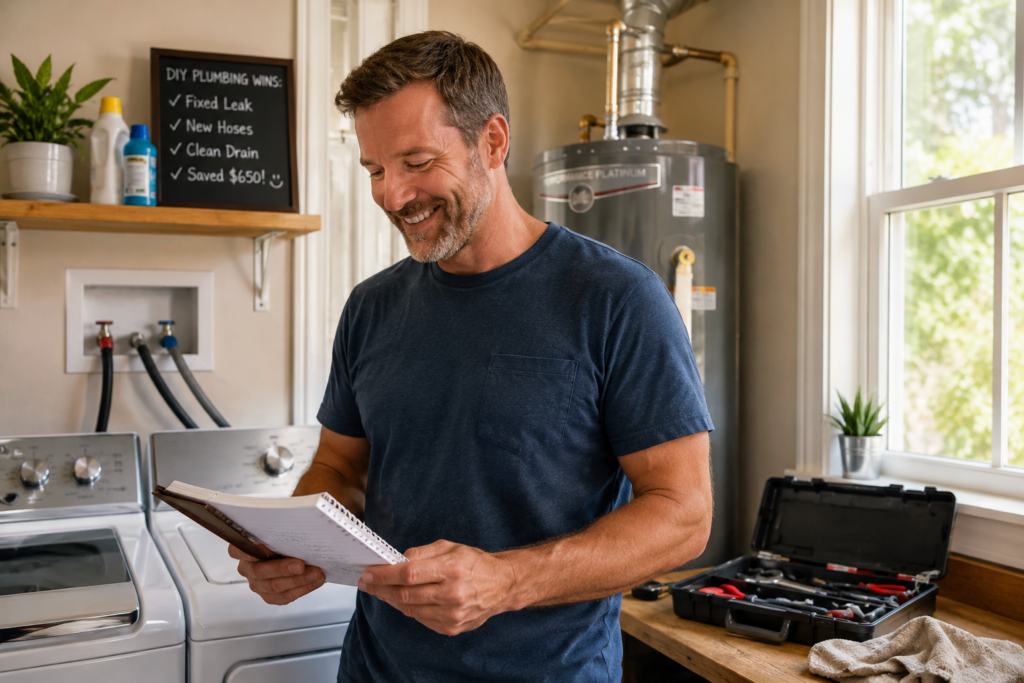
DIY plumbing tasks which is what home owners may do in order to lower maintenance costs at the same time increase their knowledge on home systems. From repairing leaky faucets to out-clogging drains, also to changing out worn out parts and doing preventative care, many everyday plumbing problems are easy to solve and also economic.
Also in regard to routine maintenance which is to blame for preventing expensive emergencies, conserving water, and extending the life of plumbing fixtures and appliances. We put together a set of 15 practical plumbing fixes which we think every home owner should master by doing so they can save money, improve efficiency, and protect their property from that which is avoidable. In the end a proactive approach to plumbing maintenance is what we put forth as the best and most cost effective strategy for long term homeowners success.