Introduction
The tooth system of the human dentition is a most amazing bio system that every contour, ridge, cusp and root has a defined role in its function in the oral cavity. In dentistry, having knowledge of the form and function is critical as tooth functions are markedly affected by their respective shapes, occlusion, speech, esthetics, and oral health. Tooth crown and root morphology does not occur at random, but is rather an evolutionary adaptation to varying mechanical demands in the oral cavity.
Every kind of tooth has its specific functions. Incisor teeth have narrow biting surfaces for cutting food while canine teeth and premolar teeth have broad biting blocks for tearing and molars have broad grinding surfaces. In a similar manner, root morphology contributes stability and the correct load distribution to the supporting bone. The difference in structural characteristics of teeth will impact functional forces absorbed and transmitted and functional forces balanced. This information supports the provision of restorative dentistry, prosthodontics, orthodontics, those services involving breach of tooth structure and endodontics.
Anatomical principles are heavily used in modern restorative processes. Structures restored with a filling, crown, implant, and/or prosthesis should maintain their natural morphology to retain function and comfort. The study of the human dental unit is one of the basic areas for successful dental practice, hence the anatomy of the crown and root of teeth is not a new idea to them.
Understanding Crown Morphology
What Makes a Tooth Crown?
The portion of the tooth exposed above the gingival margin is called the crown. Enclosed in the enamel, the hardest human material and shaped by the functional requirements of the tooth. The cusps, ridges, grooves, fossae and contact areas are all features of crown morphology. (Cleveland Clinic)
These chemical features enable the teeth to break down food properly without allowing occlusion or bite problems to set in. Changes in anatomy of the crown, no matter how miniscule, can impact on chewing efficiency and force distribution.
The functional design of various kinds of tooth crowns.
Incisors: Cutting and Shearing
The incisors have thin, sharp edges which are used for cutting food at the first phase of mastication. They have relatively flat crowns which allow slicing action without much resistance.
The incisors of the maxilla are broad and accentuated in esthetic and phonetic aspects. Mandibular incisors have narrow surfaces that provide accurate occlusion. The incisors experience mainly vertical shearing (bite forces), versus heavy compressive loads, and thus typically have one single slender root.
Tearing and Guidance – Canines
The canine is pointed and strong. They are also well suited for tearing the food and piercing it with their morphology. A long root system, and thick, robust crown gives excellent resistance to lateral forces.
The canine guidance from canines also plays a significant part in occlusion. They help to unclench posterior teeth during movements of the jaws laterally, minimizing deleterious horizontal forces on molars and premolars.
Premolars: Transitional Function
Premolars are involved as transitional teeth between the tearing and grinding functions. They typically have two crowns to help crush and grind food particles.
The cusps on the maxillary premolars may be more defined and in some cases the first premolar could have two roots. Premolars of the mandible exhibit more cusp variations which represent adaptations in use within the dental arches.
Molars: Grinding Efficiency
Molars have wide occlusal surfaces, with several cusps and grooves, and a number of fossae, which are necessary for heavy chewing. Their big crowns increase the area that comes in contact with the soil, allowing them to crush food particles before they enter the mouth.
Occasional occlusal loads are also spread across broader areas onto your molars because of their complicated structure, which reduces stress concentrations. Maxillary molars will usually have 3 roots, and mandibular molars will usually have 2 firm roots to help withstand a strong chewing force.
Root Morphology and Functional Stability.Root Morphology/Functional Stability.
Tooth Roots are very important.
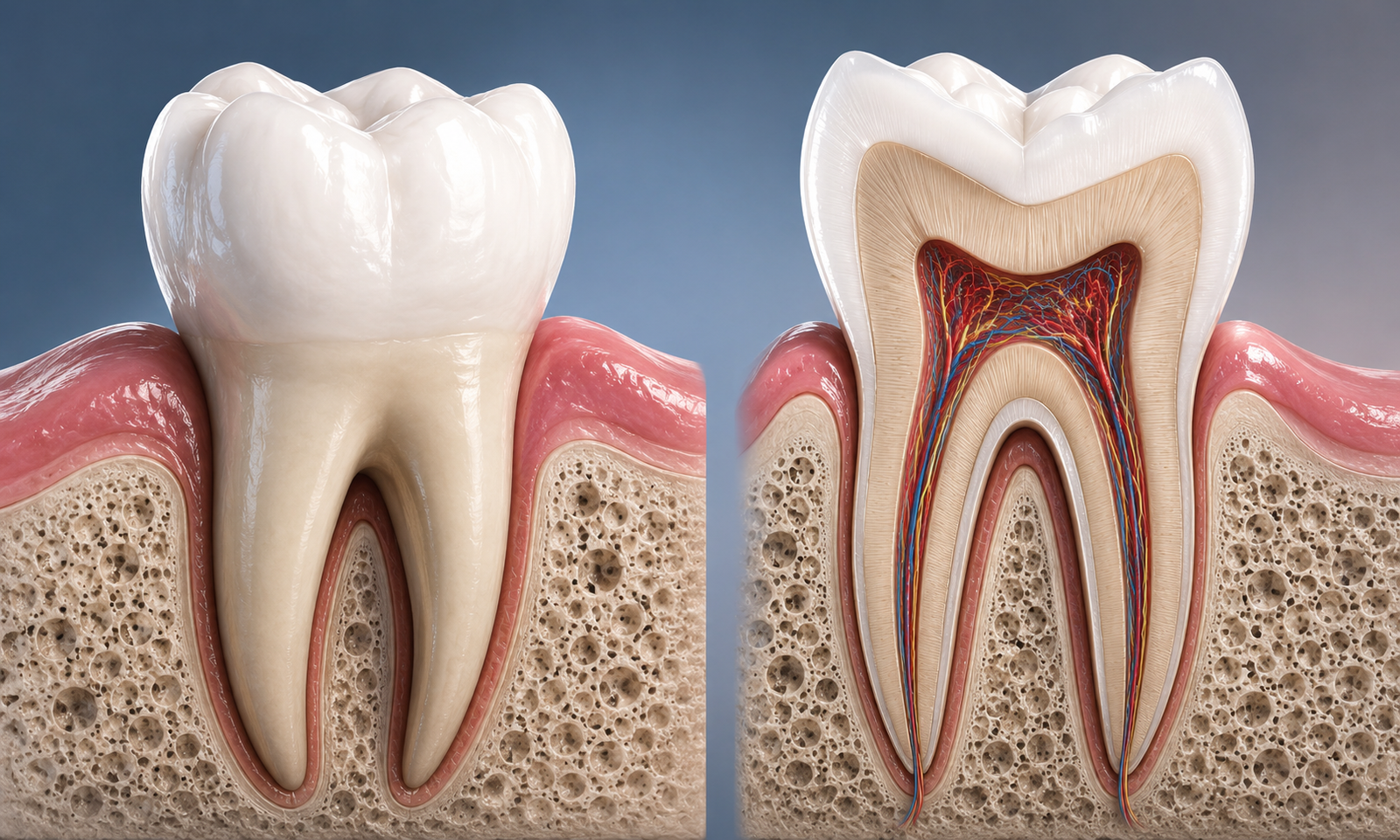
The functional part of crowns is visible ones, the functions of roots are anchorage and stability which is invisible. The species of this morphology selects the resistance to occlusal mechanical forces and the ability to dissipate forces from the occlusal surface to adjacent alveolar bone of the tooth.
The space around the root surface (PDL) absorbs shock and allows the tooth to move a bit without causing too much stress to bone structures.
The shape of the root is correlated with its function.
Single-Rooted Teeth
Educated Note: Roots vary in terms of their length and shape of anterior teeth and many of the premolars are typically single, due to lighter, more unidirectional functional forces. The simplified root shape helps in passive transportation and in transferring forces.
Although the number of attachment roots is reduced to one, canines are exceeded in length of roots, with the result that they are especially resistant to shearing stresses occurring during lateral movements and have a guiding function during tearing.
Multi-Rooted Teeth
Mastication (chewing) puts great compressive forces on molars. Many roots for wider support and greater stability from tipping and rotating forces.
Divergence of roots is of particular significance in the posterior area. Spacing apart the roots will increase anchorage and spread functional loads over a greater area of the bone. This design minimises the chances of tooth mobility when the occlusal forces are high.
On the relationship between morphology and mastication.
Cusps and Food Processing
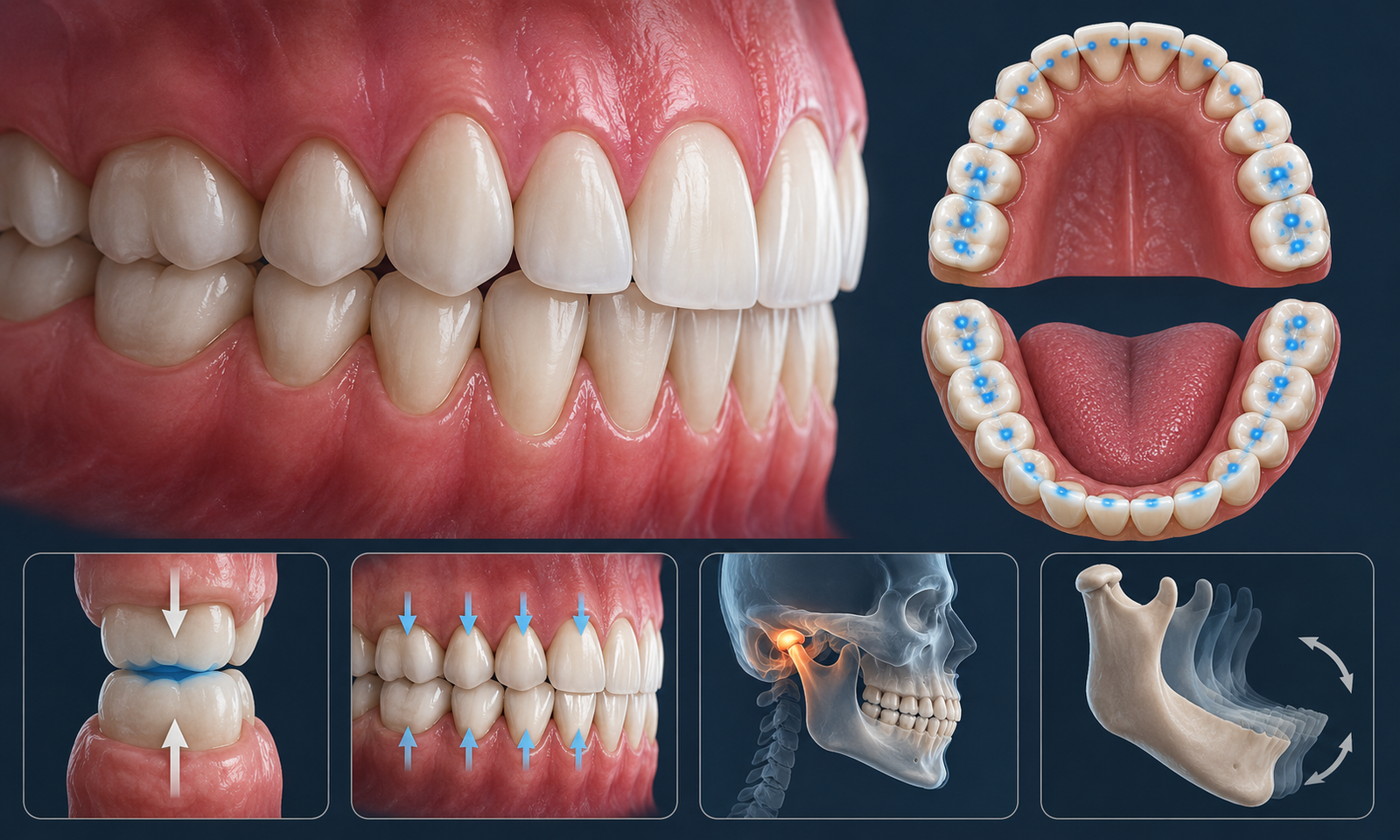
The cusps are raised sections of the crown which engage the chewing motion. Functional cusp such as maxillary lingual, mandibular buccal cusps contact opposing dentition during occlusion and take the majority of the chewing forces.
The nonfunctional cusps mainly act to play an important role in directing food movement and also soft tissues protection. Good cusp arrangement enables mastication to take place without appreciable interference.
Chewing efficiency due to height and inclination of the cusps. Sharp cusps penetrate food better, flatter cusps even use the food. If the cusps have worn down the patient may have difficulties in chewing efficiently and the occlusal relationship may be abnormal.
Occlusal Function Grooves and Fossae
Grooves and fossae are used to guide food during mastication, as well as ensure that cusp interdigitation is done correctly. These formations also help to resist jaw movement when it comes to occlusal contacts.
Deep grooves, however, can be plaque trapping regions of increased risk for dental caries. Importance of understanding these anatomical characteristics in preventive and restorative dentistry.
Occlusion and Load Distribution
Balanced Force Transmission
The distribution of occlusal forces around the dental arch is greatly influenced by tooth morphology. When it is properly shaped the chewing forces are applied down the length of the tooth, along the roots and along the bones that support the teeth, which can withstand chewing forces most effectively.
Inappropriate anatomy can cause forces to react outside the main direction, thus increasing the likelihood of:
- Tooth fracture
- Periodontal breakdown
- Occlusal trauma
- Temporomandibular joint discomfort
- Restoration failure
.Role of Root Morphology in Load Absorption
The main junction between the roots and the alveolar bone is the PL. Stress distribution is greatly affected by root surface area.
Larger or multiple roots allow for a wider base of support thus resisting greater functional loads. That’s so because molars have large root systems, rather than incisors.
The role of clinical significance in restorative dentistry (with references).
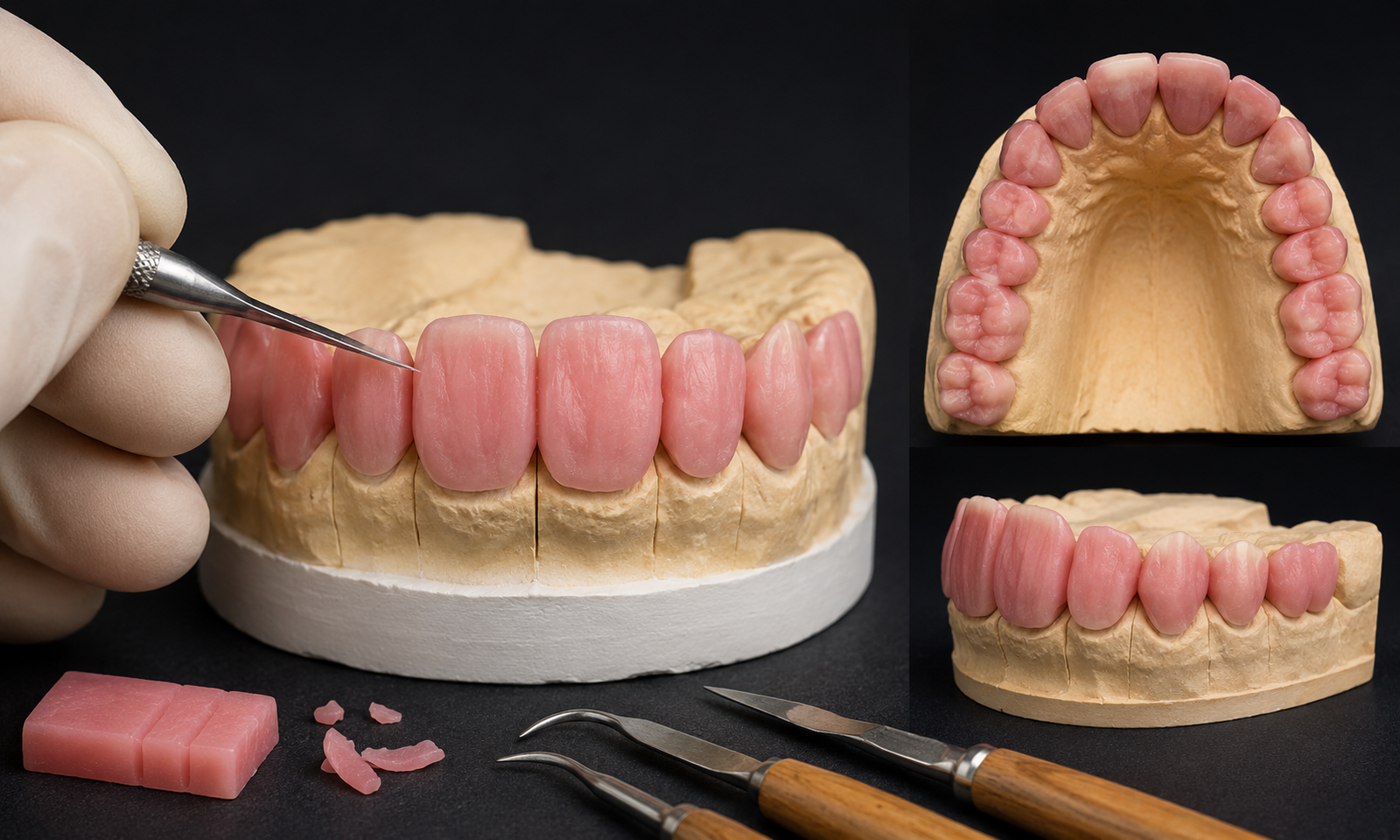
Re-sculpting the natural look of the crown.Recreation of natural crown anatomy.
The goal of restorative dentistry is to recreate a natural tooth as closely as possible as to form. Crown form also can have adverse effects on chewing, speech, oral hygiene and on periodontal health if improperly contoured.
To restore teeth with existing fillings or crowns, practitioners need to duplicate:
- Proper cusp anatomy
- Correct occlusal contacts
- Functional marginal ridges
- Natural embrasures
- Appropriate contact points
If it is not restored correctly then the anatomy may cause food impaction, plaque, and instability of the occlusion.
The purpose of this section is to examine the dental crown and its facial function.
Artificial crowns should reproduce tooth shape to ensure the biomechanical harmony in an oral cavity. Either over-contoured or under-contoured crowns can lead to gingival irritation or to poor chewing efficiency, respectively.
Accurate cusp design is crucial in posterior crowns as it can result in premature contact or in an imbalance in the occlusal load throughout the tooth contact.
Delicate anatomical details are crucial in Clinical Practice as illustrated by the anatomical foundations of restoration design.
Importance in Prosthodontics and Implants
Prosthetic Tooth Design
Partially dentures, bridges and implant-supported prostheses are largely dependent on anatomic principles. Artificial teeth are made with consideration to the natural crown morphology to restore functions well.
The prosthetic stability and chewing efficiency are affected by the following factors: Cuspal inclination, Occlusal table width and contact relationships.
Implant Considerations
Unlike natural roots, dental implants do not have a periodontal ligament. Thus, force distribution is even more important.
All implant-supported prosthesis should be well-designed so as to not put too much stress on the implant laterally. The theories behind root morphology are still applicable during planning the implant restorations, although they are now not available and predictable inside the body.
The relevance of endodontics and surgical sciences.
Root Canal Morphology
The knowledge of root anatomy is very important in endodontics because the number of, the shape of and the curvature of root canals are variable. Failure in the treatment is often due to missed canals.
The root canal system is more complicated in molars and knowledge of its anatomy is important to clean and obturate the canal.
Your dentist may suggest extraction or dental surgery.
The difficulty of extraction is greatly influenced by root shape. A curved or divergent, or fused root tooth is a greater challenge for surgery.
Understanding of the root anatomy assists in preventing some extraction complications, including: root fracture, sinus perforation, and nerve injury.
A role for orthodontic considerations in tooth morphology
Promoting tooth movement and root shape
The movement of teeth through bone is essential to orthodontic treatment. Movement is influenced by the length and form of the roots.
Long tapered roots have better ease of maintaining the stability of those teeth following orthodontic treatment. On the other hand, small or irregularly shaped roots can make it likelier that root resorption occurs.
Occlusal Harmony
Orthodontists also take into account the shape of the crown when determining optimum occlusion. Balanced force distribution and efficient mastication after treatment are achieved with proper alignment of cusps and contact areas.
Evolutionary Perspective on Tooth Morphology
The shape of the human teeth shows how they have been adapted to their food source over thousands of years. Coarse foods caused the early humans to see an increase in their jaw strength and large teeth with strong cusps.
Today’s softer diet of processed food is lowering demands on dentition. However, crown and root design principles are essential for oral function no less.
Knowing these evolutionary adaptations increases the likelihood the dentist will understand why some anatomical structures are present and the impact that they have in today’s dental practice.
Conclusion
Oral function is based on the morphology of teeth crowns and roots. From the cusp height to the root length, each anatomical feature works within small circumferences of teeth to create a mastication efficiency, stable occlusion, and a uniform distribution of masticatory forces. Form of the crown governs the cutting, tearing, crushing, or grinding of food, and root morphology is also important to provide stability and pass chewing forces to the support.
Understanding the relationship between form and function is crucial in dentistry from a diagnostic, treatment planning and restoration point of view. Regardless of the treatment modality (simple filling, a crown, an implant or an orthodontic treatment), the clinicians have to deal with natural anatomical principles to maintain oral functions and long-term oral health.
Knowledge of tooth crowns and tooth roots is incomplete without a thorough knowledge of tooth anatomy. It has a direct impact on treatment success, patient comfort and durability of dental restorations. The significance of natural tooth morphology and its role in providing functional and biologically sound treatments continues to be important as dental technology evolves.