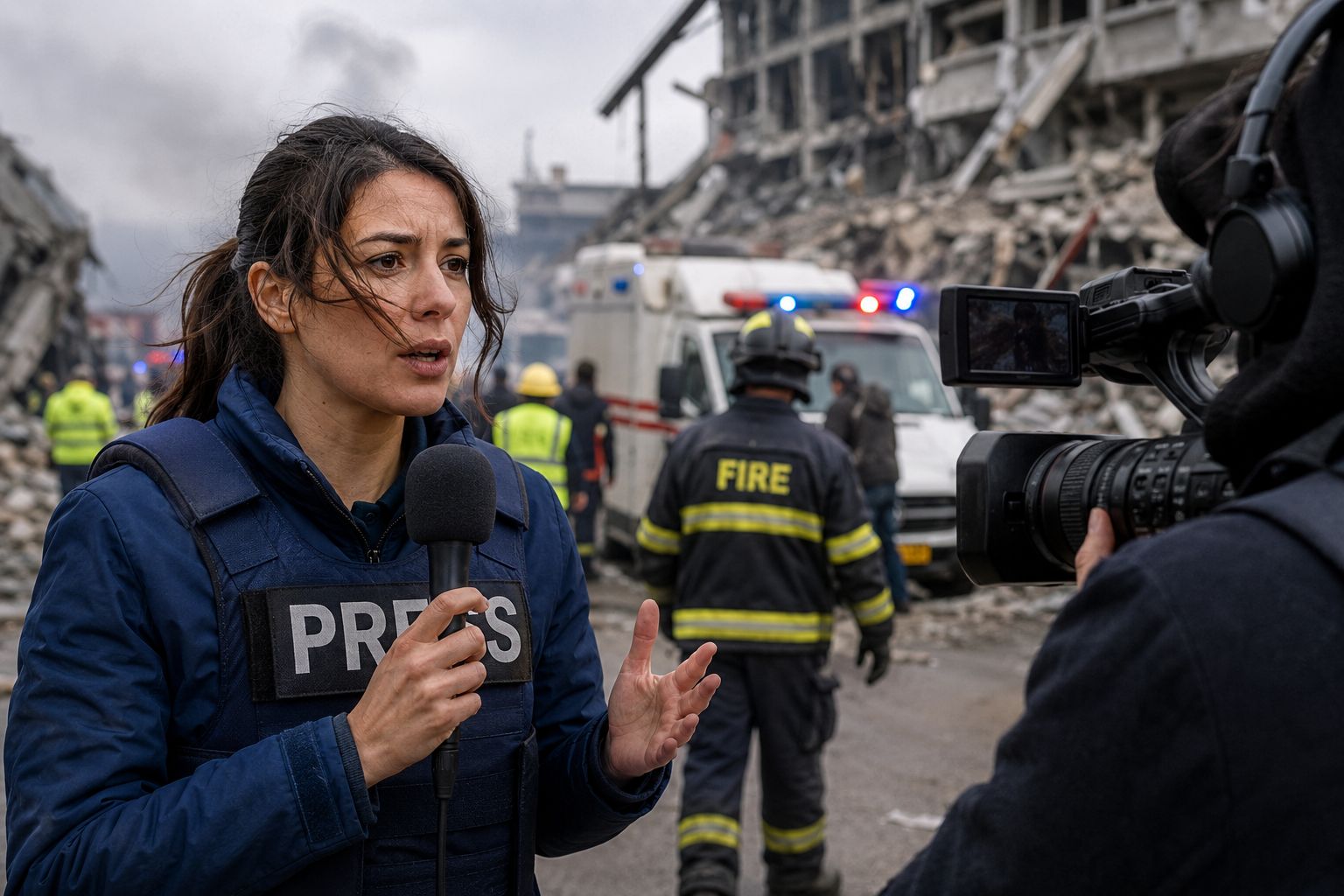
In an era where news travels around the world in a matter of seconds, journalists have a vital role to play in making the public comprehend unfolding events in the world, of all the professions. Whether reporting from the scene of natural disasters, political upheavals, and public health crises, reporters are always under pressure and have the responsibility of being accurate, fair, and professional. Understanding how reporters handle breaking news is essential to appreciating the demanding work that happens behind every headline. Covering major news events is one of the hardest parts of a journalist’s job, as it involves quick decision-making, ethical decision-making, emotional stamina, and effective communication skills.
Behind the headlines are the process, urgency, uncertainty, and responsibility involved, which are not always visible to the public. The practice of journalism in the field is beset by a host of challenges, including the ability to obtain information that can be trusted in an unpredictable setting, and making sure that news doesn’t cause fear or provide inaccurate information. Understanding these challenges will help readers appreciate the skill and preparation needed to produce credible news.
This article discusses the truth of field reporting with particular emphasis on the obstacles journalists face when reporting the news in cases of disaster, political events, and emergencies. It also explores the training, ethics, and working practices that help reporters perform well in stressful situations.
The Nature of Major News Event Coverage
The world of great news may come up all of a sudden and develop quickly. Such stories require spontaneous action and on-the-spot changes, as opposed to planned assignments. Journalists need to move rapidly to cover news, and to research information from a variety of sources, in order to provide news that is current as events are happening.
Examples of major news coverage include:
- Natural hazards like floods, earthquakes, and wildfires
- Government announcements and political elections
- Civil disobedience and public protest
- Health emergencies and disease outbreaks
- Terror attacks and security incidents
- Major incidents and disaster situations
Every event has its own reporting requirements, but the one thing that is constant is the need to be fast and accurate.
How Reporters Handle Breaking News in Real Time
Dealing with breaking news, where facts are not always complete and things are rapidly evolving, is one of the challenges faced by reporters. When there is breaking news, there is a need to act immediately. However, making any hasty decision could result in grave errors. Journalists have to be able to collect verified information quickly, but without speculation or sensationalism.
Reporters first establish the basic facts of the situation: what occurred, where it happened, who is involved, and if there is an immediate threat to the public. They use official sources like emergency responders, police statements, eyewitness reports, and trusted institutions. Meanwhile, they keep an eye on social media, as fake news can circulate quickly online.
Often, news organizations will have several reporters at various locations, able to report on different angles as they develop. During this process, communication between field reporters and newsroom editors becomes important. This needs to be done in a timely fashion, with the utmost coordination and trust between team members, so that updates are reviewed, verified, and published rapidly.
Getting Ready for Field Reporting Before a Crisis Happens
A journalist’s job of covering an event starts long before he or she gets to the event. It’s important to be prepared for emergencies, as they rarely give time to think through actions. Reporters and media organizations are often liable to face dangerous and hazardous assignments, and often have emergency protocols in place to help staff respond to such assignments.
There are three aspects of preparation: physical preparation, technical preparation, and editorial preparation. Journalists can be trained in safety issues relating to reporting in conflict areas or disaster areas. They also set up equipment like cameras, recording devices, protective gear, portable chargers, and backup communication equipment.
Editorial preparation includes research on possibilities, keeping lists of trustworthy experts, officials, and community leaders. Knowing the area, the political situation, and emergency protocols well can make a significant contribution to the quality of reporting in the event of an emergency.
Prepared journalists are better able to remain calm, make informed decisions, and adapt to things that may occur in the field.
The Fastidious Nature of Verifying Information Quickly
The cornerstone of good journalism is always accuracy, and in times of major news, this can be particularly challenging. Extra details can be confusing because of conflicting reports, emotional statements, and incomplete official statements.
In a few minutes, a journalist can hear a number of different versions of the same event. Even when audiences want to be updated instantly, it takes patience and discipline to find out what is true. Reporters should verify facts from a number of independent sources before publishing.
There are various ways to verify, such as:
- Double-checking information with official sources
- Comparing eyewitness testimonies
- Analyzing videos or photos to identify the cause of the problem
- Verifying the time and location of digital information
- Inviting experts to provide guidance and suggestions on the subject
- Frequent and regular checks on corrections from trusted institutions
Without verification, information can negatively affect public trust and perhaps even create problems, particularly in crisis situations when incorrect information can impact public actions.
Working Under Physical and Emotional Pressure
Journalists may find themselves in stressful and traumatic situations when reporting in the field. Reporting on tragedy, whether natural, violent, or human-caused, can be very distressing. While reporting news, reporters can see injuries, grief, destruction, and fear, and still try to stay focused on news reporting.
Physical difficulties might include:
- Extreme weather conditions
- Dangerous terrain
- Food and water shortages
- Sleep deprivation
- Security threats
- Transportation disruptions
Meanwhile, emotional intelligence is crucial in helping one remain compassionate and in tune with people. Journalists need to be objective yet sympathetic. There is increasing awareness among news organizations of the need to provide mental health assistance regularly to reporters involved in traumatic events.
One of the things journalists are not taught to do is deal with emotional experiences, and yet they have to do it in order to perform accurately. How to deal with emotional encounters and maintain correct performance is one of the most overlooked skills in journalism.
Ethical Problems in Covering and Reporting Major News Events
Journalistic ethics are particularly significant in the reporting of sensitive or high-impact events. The need for reporting should never override the principles of fairness, dignity, and responsibility.
A major ethical issue is the protection of vulnerable persons. Reporters can speak to grieving family members, injured victims, or terrified witnesses. In order not to exploit people, it is necessary to ask sensitive questions and present respectful stories.
Other ethical issues that need to be taken into consideration include:
- Avoiding graphic or harmful distracting images
- Protecting confidential sources
- Preventing unnecessary panic
- Understanding that some information is factual and some is speculative
- Remaining politically neutral
- Respecting privacy during tragedy
Newsroom procedures and professional training are essential to ethical decision-making, as it can occur very quickly. Journalistic responsibility is in the service of the public interest, and not inflicting unnecessary harm.
Communication Skills That Matter Most in the Field
Among all the skills a journalist can have at major events, communication is one of the most important. Reporters should ask specific and clear questions, actively listen to answers, and communicate complicated situations in a simplified manner to many audiences.
Interviewing Under Pressure
Field interviews may occur in loud, emotional, or chaotic environments. Journalists should have a clear and concise line of questioning, yet remain empathetic and professional. Good interviewing can reveal important information and people’s points of view that help deepen a story.
Clear Live Reporting
When it comes to live broadcasts, confidence and clarity are needed. Reporters are required to convey developing situations in a way that doesn’t suggest more than is warranted. Viewers rely on journalists to interpret events in a calm and responsible manner.
Team Coordination
In the case of major news events, journalists are seldom alone. They ensure that there is a smooth flow of information to editors, producers, photographers, and technical teams so that reporting remains accurate.
Audience Engagement
In today’s digital age, journalists increasingly engage directly with audiences through digital channels. Addressing inquiries, correcting inaccuracies, and giving up-to-date information helps build public confidence.
The Function of Technology in Event Reporting
Technology has transformed the news-gathering and news delivery process for journalists. It has enabled faster reporting and wider reach via mobile devices, satellite communication, drones, and social media platforms.
Advantages of modern reporting technology include:
- Real-time video streaming
- Immediate newsroom communication
- Quick fact-checking tools
- Geolocation confirmation
- Social media monitoring
- Mobile publishing capabilities
But there are challenges to technology as well. Misinformation spreads easily on the internet, manipulated images can mislead people, and technical issues can interfere with reporting during critical moments.
Journalists need to be technologically efficient in their work and also disciplined in reporting so as to maintain credibility.
Balancing Speed with Accuracy
There is great tension between being the first to publish and being accurate in journalism. In the digital media era, news audiences demand real-time updates, and there is a lot of competition between media companies. However, it matters little if the information is incorrect, even if the media outlet is the first to publish the news.
Professional journalists know that credibility comes not just from speed but from reliability as well. Reporting responsibly might involve putting a report on hold until facts have been verified.
Here are a few key principles that editors remind reporters of:
- Confirm before publishing
- Clearly attribute uncertain information
- Update stories regularly
- Correct mistakes instantly
- Avoid speculation
Trust is one of journalism’s greatest and most valuable resources, and it must be continuously nurtured.
Why Field Journalism Is Still Relevant
Amidst the developments of digitization and distance communication, it’s important to remember that on-the-ground journalism remains important. Field reporters give first-hand accounts, provide human context, and offer direct accountability that is not possible through online sources alone.
Being physically present enables journalists to:
- Observe conditions independently
- Interview impacted communities face-to-face
- Distinguish between official and unofficial statements
- Capture emotional and social context
- Gain public trust by being open and transparent
In times when people are wondering how to get closer to reality, field journalism is the answer.
Conclusion
Major news event coverage is one of the most difficult and important tasks in journalism. Covering big news stories is both a challenge and a responsibility. Reporters deal with life-threatening situations, emotional stress, and ethical challenges, while also being required to be fast, analytical, and articulate at the same time. During critical times, the information they deliver to society is defined by their capacity to verify facts, remain professional, and serve the public interest.
Understanding how reporters cover breaking news reveals how prepared and disciplined they are in every news report they produce. In a world where misinformation spreads quickly and the public’s allegiance to truth and transparency is frequently challenged, the role of skilled field journalists as guardians of truth, accountability, and informed citizenship is as crucial as ever.
Frequently Asked Questions (FAQs)
What makes journalists’ jobs so hard in covering breaking news?
Breaking news is often unanticipated and dynamic. Journalists face the challenge of getting information quickly and accurately, verifying sources, and reporting responsibly while working in stressful and dangerous environments.
What do journalists do to keep themselves safe while on sensitive assignments?
Many journalists receive training and protective equipment, follow emergency protocols, and constantly communicate with their news organizations during risky assignments.
Why is verification important in the event of an emergency?
Mistakes can lead to confusion, panic, or injury. Verification is important because it helps audiences get trusted information that can help them make critical decisions.
What do you need to know to be a good field reporter?
The most important skills are quick decision-making, interviewing, fact-checking, ethical judgment, flexibility, coping with stress, and good communication.
In what ways is technology impacting the way events are reported?
Technology makes it easier to communicate, broadcast live, and cross-check facts, but it also increases the challenge of fighting misinformation and maintaining credibility.