Introduction
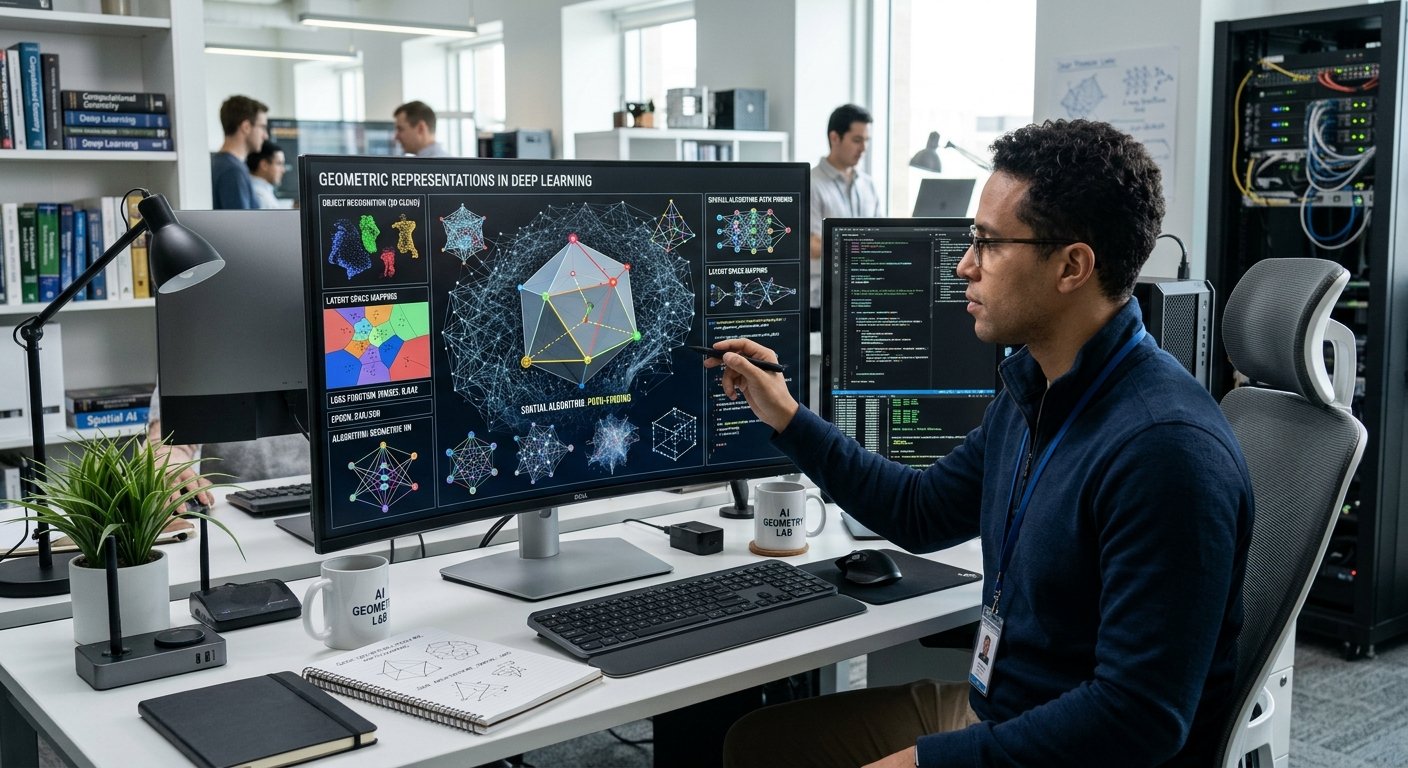
Artificial intelligence (AI) and machine learning (ML) have greatly changed how computers process information, analyse patterns and make decisions. Intelligent technology today, from facial recognition systems to self-driving vehicles, often requires computers to analyse spatial information.
As AI becomes more advanced, Computational Geometry has become a key aspect to help intelligent systems understand how objects are positioned and related. Computational Geometry in Artificial Intelligence is an important aspect of AI that uses mathematical techniques to help Intelligent systems better process visual information.
What Is Computational Geometry?
Computational Geometry is a branch of computer science which develops algorithms to process and analyse geometric objects. This includes points, lines, curves, polygons, circles, surfaces and three dimensional shapes. Using mathematical and computational techniques, algorithms are developed to find out how these objects relate to each other, what is the distance between them, what is the intersection, and more.
For example an algorithm can be created to find out if two shapes overlap, the shortest distance between two points, what shape defines the boundary of an object and if a point lies within a polygon. This is important as computers often need to process information based on where certain objects are located. Computational Geometry provides mathematical techniques to help AI recognise images.
How Computational Geometry Helps AI
Artificial Intelligent systems rely on data to process information, recognise objects and make decisions. Whilst many AI applications involve processing text and numerical data, some need to understand spatial information. Computational Geometry can help by turning spatial information into mathematical information. For example, if an AI system was analysing an image, the object could be represented by points in the form of coordinates, boundaries and geometric shapes.
Algorithms can be used to find the distance between points, compare shapes, identify similarities and find how objects relate to each other. This helps machine learning models to find useful information from complex data sets. Computational Geometry provides efficient ways to organise and analyse spatial data, making it easier for AI systems to understand their surroundings.
Geometric Algorithms in Machine Learning
Machine learning involves training computer systems to recognise patterns and make predictions. Geometric algorithms can help models understand how individual data points and groups of observations relate to each other. Many machine learning data sets can be represented by points in a multi-dimensional space. For example a data set could contain information about houses, with each dimension representing a different feature.
This could include location, size, number of rooms and age of property. Geometric techniques can help algorithms find similarities between observations, identify clusters and see how closely related different data points are. Distance calculation, nearest neighbour and geometric partitioning are often used in machine learning applications. This helps models to organise information, find similarities and make predictions.
Applications of Computational Geometry in Computer Vision
Computer vision is one of the most important areas of AI that uses Computational Geometry. It allows computers to understand visual information from photos, videos, cameras and more. However, understanding an image requires more than just knowing where individual pixels are. AI systems will need to recognise objects, identify boundaries, predict where objects are and understand how objects relate to each other.
Computational Geometry provides algorithms that can analyse shapes, edges, outlines and spatial information. For example an object detection system could use geometric information to find where a vehicle, person or traffic sign is in an image. Using bounding boxes, polygons and coordinates can help to define where objects are. This helps computer vision systems to better understand visual information.
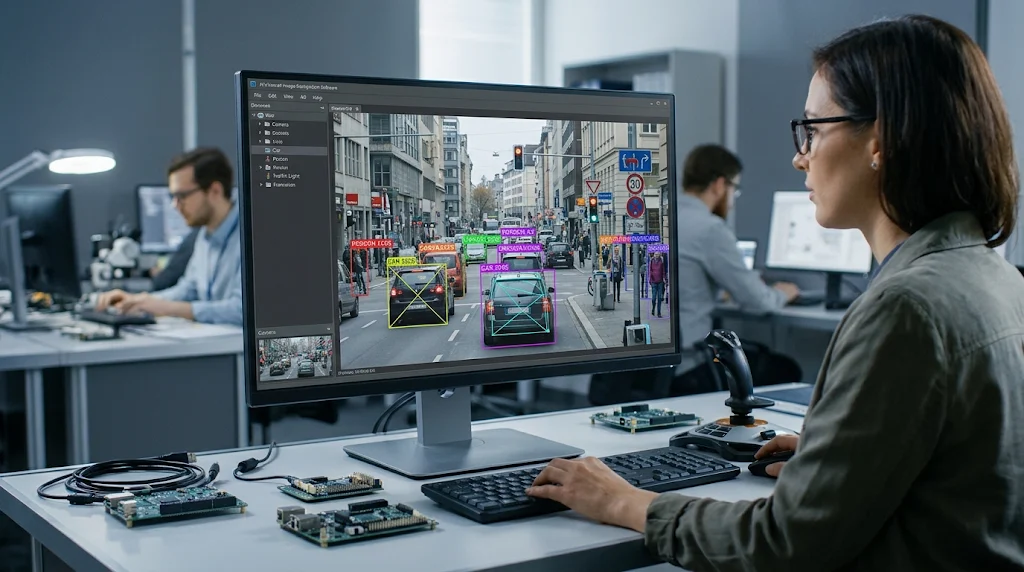
Image Recognition
Image recognition systems use machine learning algorithms to identify objects, faces, symbols etc. Computational Geometry can help by providing algorithms to compare shapes and find unique spatial features. When an image is analysed by an AI model, it may analyse edges, corners, curves, proportions and how different parts relate to each other.
This will help to differentiate between objects that appear similar. For example an image recognition system could look at the shape, size and structure of different vehicles to find patterns. Geometric transformations such as rotation, scaling and translating can also be important as objects could appear in different orientations and sizes. This will allow AI systems to recognise objects they are familiar with.
Spatial Machine Learning
Spatial machine learning involves using machine learning techniques on information that contains spatial or geographical information. This could include satellite imagery, geographic information systems, environmental information and location data. Computational Geometry can help by providing algorithms to calculate distances between points, identify areas, find boundaries and analyse how locations relate to each other.
Spatial partitioning can help to divide large geographical areas or data sets into smaller sections. Nearest neighbors can help identify data points that are close together either geographically or mathematically. This can be useful in applications such as urban planning, environmental monitoring, agriculture and transport. Using geometric algorithms to create intelligent systems that can identify patterns in spatial data.
How Geometric Algorithms Help Machine Learning Models
Using geometric algorithms can help to organise complex information. This can help machine learning algorithms to better analyse data. Instead of looking at individual observations, data can be represented in a geometric format. This means patterns can be identified such as clusters, boundaries, similarities and outliers. Clustering algorithms can group related data points based on how far apart they are. This can help businesses identify customer segments and help researchers find patterns within their scientific data sets.
Dimensionality reduction uses geometric and mathematical techniques to reduce the dimensions of complex data sets. Techniques such as Principal Component Analysis (PCA) can help simplify complex data. This can improve the efficiency of models, identify patterns and help machine learning systems identify useful information.
Computational Geometry in Autonomous Systems
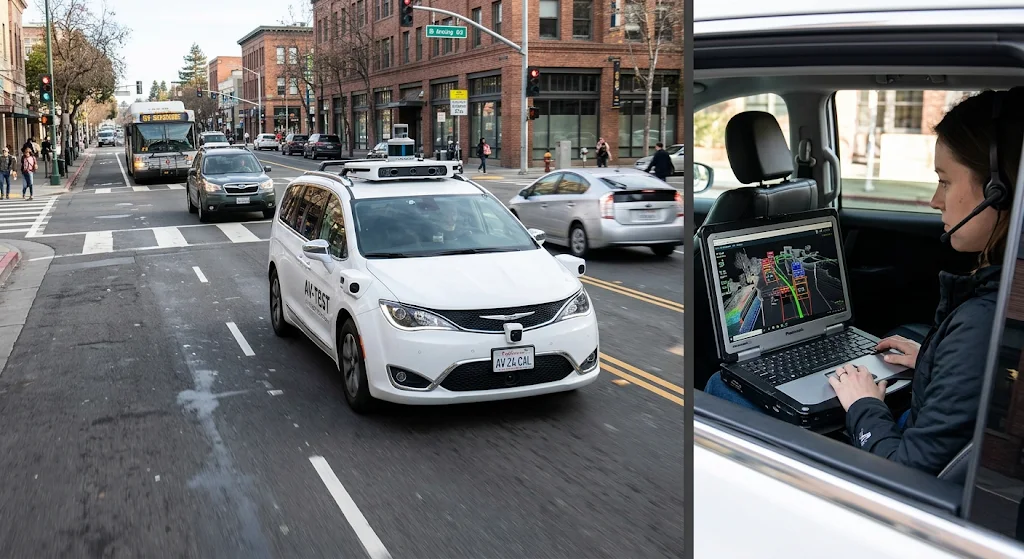
Autonomous systems are designed to complete tasks and make decisions with little or no direct human input. This includes autonomous vehicles, mobile robots, delivery systems and intelligent navigation systems. Computers will need to understand their surroundings, identify obstacles, calculate distances and find suitable routes. Computational Geometry can help by providing algorithms to analyse spatial information.
For example autonomous vehicles will use information from cameras and sensors to estimate where vehicles, people, road boundaries and obstacles are. Geometric algorithms can help represent these objects and calculate how they relate to each other. Path planning can also use geometric techniques to identify suitable routes. Using machine learning and sensor information can help autonomous systems understand their surroundings.
Why Computational Geometry Is Important for 3D Data
3D data has become an important part of AI. This includes robotics, engineering, medical imaging, virtual reality and autonomous navigation. Unlike traditional 2D images, 3D data contains information about depth, height, width and how objects are positioned. Computational Geometry can help AI systems understand this information by providing algorithms to analyse surfaces, points, curves and complex shapes.
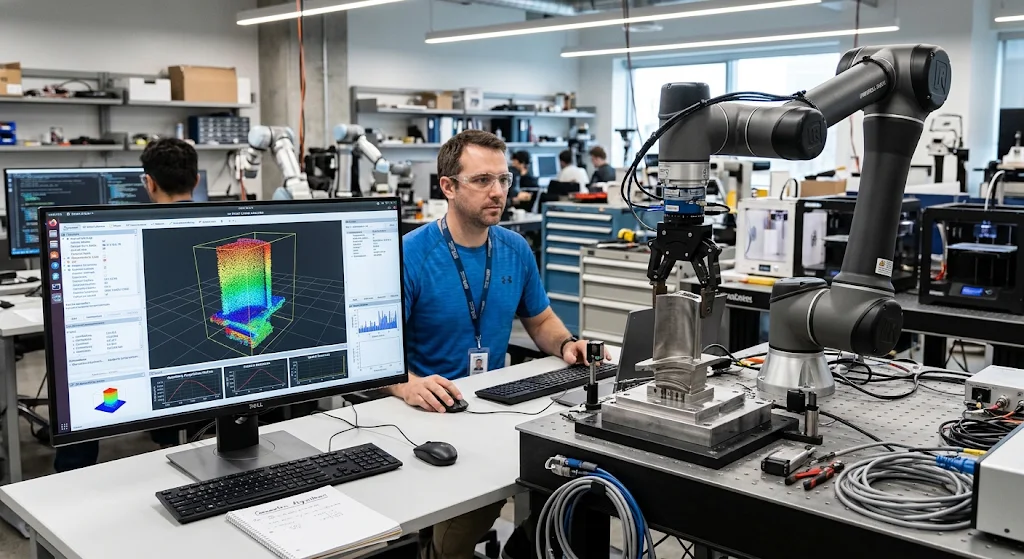
A common example is point cloud data. This is a collection of points that represent the surface and shape of an object or environment. AI systems can identify objects, estimate their size and recreate 3D objects. Techniques such as mesh creation, surface recreation and geometric segmentation can help turn raw measurements into useful information. This can help intelligent systems understand real world environments.
Computational Geometry in Robotics
Robotics combines AI, engineering, mathematics and computer science to create machines that can complete physical tasks. Many robotics applications will require accurate spatial awareness to ensure they do not collide unnecessarily with objects. Computational Geometry can help by providing algorithms to help robots identify where objects are, calculate distances, identify obstacles and see how things relate to each other.
For example a robotic arm used in manufacturing may need to identify where an object is before moving it. Geometric algorithms can help to calculate the correct coordinates. Mobile robots can use collision detection and path planning algorithms to find suitable routes. When combined with computer vision and machine learning, Computational Geometry can help robots understand spatial information.
Important Computational Geometry Algorithms in AI
There are a few important Computational Geometry algorithms that can be used in AI and machine learning.
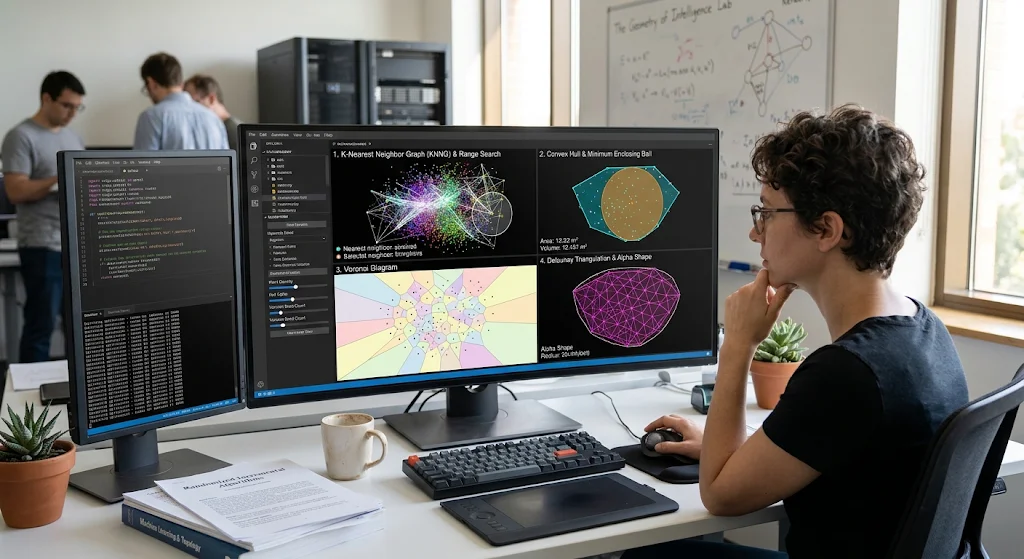
Convex Hull Algorithms
A convex hull is the smallest convex shape that can be created from a set of points. Algorithms such as Graham’s Scan and Quickhull can be used to find the outer edge of a set of spatial data.
This can help in AI to describe the shape of objects, identify boundaries and organise spatial data. This can also be useful in image analysis and pattern recognition.
Nearest Neighbour Search Algorithms
Nearest neighbour algorithms can be used to find the closest data points to a particular observation. These are widely used in machine learning applications such as classification, recommendations and finding similarities. k-d trees can be used to organise the multi-dimensional points.
This can be useful when AI systems need to compare large amounts of data.
Voronoi Diagrams
A Voronoi diagram is used to split a space into sections based on the distance from a set of points. Each section will show locations that are closer to one point than any other.
This can be useful in geographical analysis, spatial classification and resource allocation. In AI this can help organise spatial information and find the closest representative location.
Delaunay Triangulation
A Delaunay triangulation splits a set of points into triangles based on specific geometric properties. This can help identify how nearby points relate to each other. This can be useful in 3D modelling, surface recreation, geographical information and scientific visualisation.
In machine learning this can help with techniques that identify how spatial data relates to each other.
Collision Detection Algorithms
Collision detection algorithms can be used to identify if two or more geometric objects overlap. This can be useful in robotics, autonomous navigation, computer vision and simulation systems.
For example mobile robots can use collision detection to find out if they will hit an obstacle when moving. This can help intelligent systems analyse spatial constraints.
How Computational Geometry Can Improve Accuracy and Efficiency in AI
Accuracy and efficiency are important aspects of modern AI. AI systems need to process information quickly and reliably. Computational Geometry can help to provide efficient ways to analyse spatial information. Instead of comparing every object or data point, specialised data structures can be used to organise information. This will help to make searching for information quicker.
For example spatial indexing techniques can be used to find locations near to each other in databases. In computer vision, geometric information can help identify boundaries of objects and differentiate between similar patterns.Whilst an AI system will depend on the quality of data, design of the model and computing resources, geometric algorithms can help to improve processing and make predictions more reliable.
Real World Applications of Computational Geometry in AI
Computational Geometry is starting to impact many industries. In healthcare, medical imaging systems use geometric techniques to identify structures, measure areas of interest and understand complex scans. In transportation, autonomous navigation systems use spatial information to identify obstacles, measure distances and analyse potential routes. In agriculture intelligent systems use geometric techniques to analyse satellite images, identify boundaries of fields and monitor crop distribution.
In manufacturing robotic systems use geometric calculations to identify where components are, inspect products and automate processes. Geographic information systems use spatial algorithms along with machine learning to analyse population distribution, changes in the environment and urban development. This shows how Computational Geometry isn’t just a mathematical concept but can provide useful techniques to help intelligent technologies understand complex environments.
Challenges of Using Computational Geometry in AI
Computational Geometry can be challenging to implement in AI systems. As modern data sets become larger and more complex, 3D scans, satellite images and continuous sensor data can contain millions of data points. Some geometric algorithms can become computationally expensive when analysing high dimensional data and large quantities of objects.
Some data can also be incomplete, incorrect or noisy. For example cameras may capture unclear images due to poor lighting and sensors on autonomous systems may not provide perfectly accurate data. This can affect geometric calculations and affect decisions made by AI models. Developers will need to choose suitable algorithms, optimise data structures and combine geometric techniques with reliable machine learning techniques.
The Future of Computational Geometry in AI and Machine Learning
As AI is becoming more developed there are new opportunities for Computational Geometry. As AI systems are becoming better at analysing images, videos, sensor data and 3D environments, efficient geometric algorithms will still be important. Intelligent robotics is a promising area as robots will be able to understand unfamiliar environments and interact with physical objects. Autonomous transportation is also becoming more advanced and accurate representation of spatial information will be needed.
Computational Geometry is also expected to help improve medical imaging, digital modelling, augmented reality and scientific research. As hardware and algorithm improvements are made it may become possible to process increasingly complex geometric data sets in a shorter amount of time. Combining Computational Geometry with deep learning and other AI techniques will continue to open up new opportunities for intelligent systems to understand and interact with the physical world.
Conclusion
Computational Geometry is an important aspect of many modern AI and machine learning applications. Providing mathematical techniques to help systems understand spatial information. Using distance calculation, shape analysis, spatial partitioning, nearest neighbour and 3D modelling techniques can help intelligent systems identify objects, find patterns, analyse multi-dimensional data and understand how different elements relate to each other.
This is particularly useful in computer vision, image recognition, robotics, autonomous navigation, medical imaging and geographic analysis.Whilst there are challenges with computational complexity, data quality and processing, improvements are being made to geometric algorithms. As AI is becoming more advanced and moving away from traditional data processing, Computational Geometry will remain an important aspect when developing intelligent technologies to solve increasingly complex real world problems.