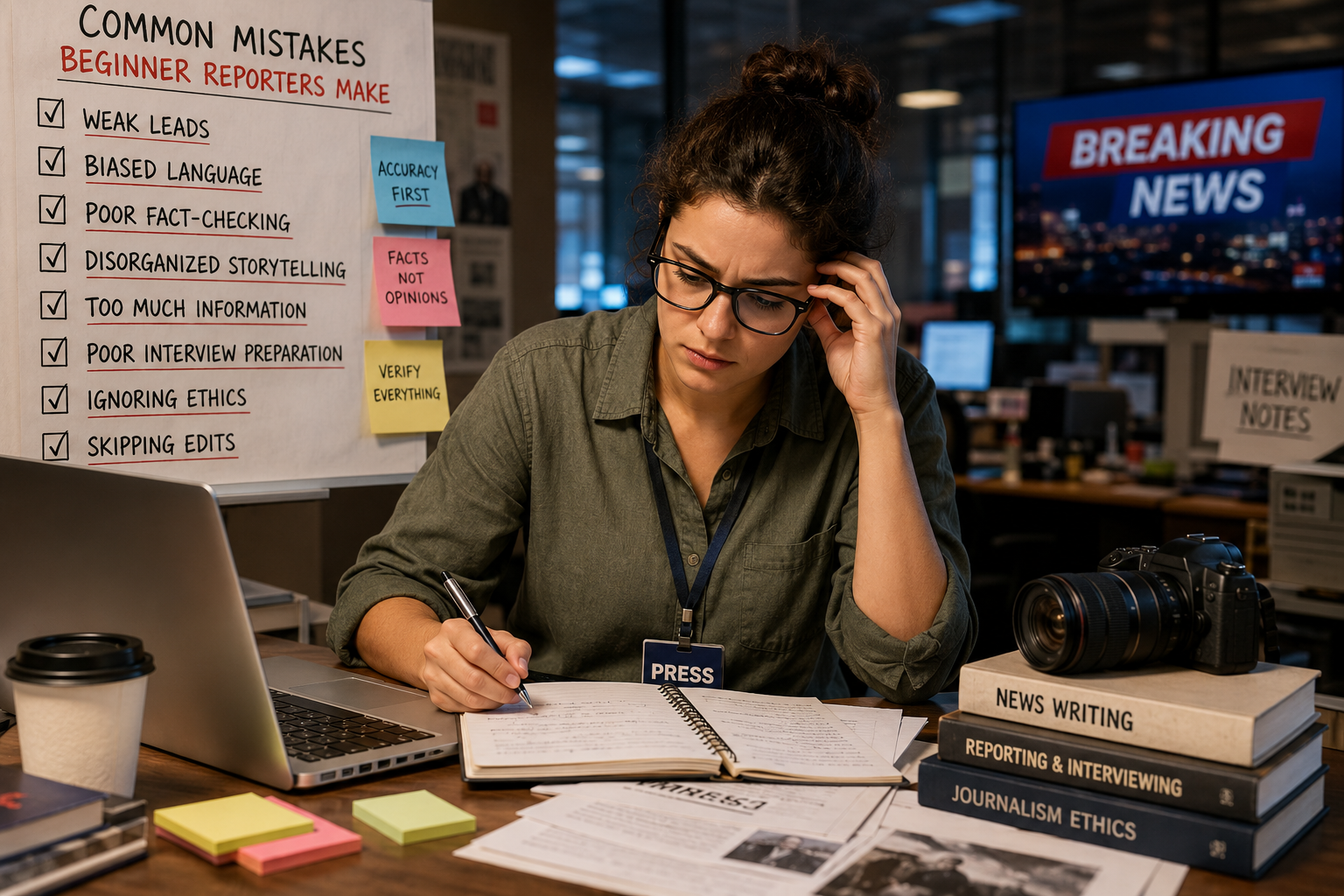
The world of journalism is a thrilling one to break into, but it can be all-consuming for new reporters. News writing is not just a collection of facts, it is a process of collecting and organizing facts into paragraphs. Discipline, critical thinking, and moral sensibilities are needed, as is the capacity to communicate information clearly under stress. New or beginner reporters come from a variety of backgrounds with good intentions and make many mistakes that can be prevented, and that impact the quality and credibility of the report. Among the most common challenges is disorganized storytelling, which can even cause well-researched news articles to be confusing and hard to follow.
The “lack of talent” excuse for reporting mistakes is hardly the reason, it is because of limited newsroom experience and lack of knowledge of journalistic standards. A new reporter may be under several pressures at any given time, such as meeting deadlines, editorial expectations, and the challenge of balancing speed with accuracy.
These common pitfalls, ranging from lackluster starting sentences to inaccuracies and disjointed development, can keep a new journalist from creating well-written and reliable stories. However, with practice, self-awareness, and an understanding of professional reporting standards, these challenges can be addressed. Being able to recognize these pitfalls early will help newsroom novices establish good habits and become more confident in the newsroom.
The article discusses some of the common errors and misconceptions in news writing among beginner reporters and provides practical tips on how to enhance their news reporting, writing clarity, and professionalism.
The Reason Beginner Reporters Often Struggle
Many novice reporters also have problems with the storytelling aspect, particularly when arranging background information, interviews, and breaking news into a coherent and logical news report. The “lack of talent” excuse for reporting mistakes is hardly the reason, it is because of limited newsroom experience and lack of knowledge of journalistic standards. A new reporter may be under several pressures at any given time, such as meeting deadlines, editorial expectations, and the challenge of balancing speed with accuracy.
Common Reasons Beginner Journalists Make Mistakes
Some of the most common causes are:
- Low level of newsroom experience
- Need for quick publication
- Lack of interview skills with sources
- Having trouble managing lots of information
- Lack of knowledge of the ethical issues in the media
- Being overly confident in information from unverifiable websites
- This fear of asking editors for clarity is an issue that has always been a concern
Identifying these issues is a great first step toward professional development.
Weak Leads That Do Not Engage Readers’ Attention
Ineffective leads are one of the most common errors made by novice reporters. The lead is the first sentence of a news story, and the deciding factor on whether or not readers will continue reading. A very common problem is that many new journalists write introductions that are too general, too long, or too anecdotal about who or what the story is about, rather than focusing on the most crucial piece of information in the news. A weak lead can obscure the main story line and lead readers astray. Professional journalism requires important information to appear immediately.
Signs of a Weak Lead
Beginner reporters may have difficult time with:
- Beginning with unnecessary background information
- Procrastination in the presentation of the main idea of a tale
- Re-writing excessively dramatic or exaggerated opening
- Putting too much information in a single sentence
- Not providing simple answers to basic news questions (who, what, when, where, why, and how)
How to Improve Lead Writing
To strengthen leads:
- Identify what the most significant fact is
- Use clear and concise writing
- Avoid making the first paragraph too lengthy
- Don’t worry about being creative, focus on making your readers understand
- Practice rewriting leads from published news stories
A strong lead will make the reader feel certain about what they are about to read, and motivate them to read further.
Using Emotional or Biased Tone
One of the most important rules in journalism is to be objective, but it is easy for a new reporter to unwittingly let their own opinion into their reporting. Typically, this is done with the use of emotional language, evaluative language, or assumptions that affect the interpretation of the reader. Words can be a liability as well, as they can make a story sound subjective instead of objective and thereby compromise credibility.
Examples of Biased Writing Errors
Common examples include:
- The usage of such words as shocking, outrageous, or disgraceful
- Defining people negatively without evidence
- Tendency to make assumptions about the motives behind people’s behavior
- Being one-sided in one’s approach to thought and discussion
- Providing information in the form of statements that are not true
How to Maintain Neutral Language
Reporters can make their reporting more neutral by:
- Only using factual descriptions
- Providing direct quotes from sources
- Avoiding emotional adjectives
- Checking stories for unintentionally negative connotations
- Seeking editors’ comments regarding tone
Professional journalism allows readers to draw their own conclusions.
Poor Verification Practices and Fact-Checking
Accuracy is crucial in journalism. The quickest route to a disbelieving public for any new reporter is to report inaccurate information. The rush to get information out for new journalists can cause them to miss the opportunity to check facts, names, dates, statistics, and sources. Small errors in details can have a negative impact on trust and professionalism.
Common Fact-Checking Errors
These include:
- Misspelling names
- Giving false dates or places
- Using outdated statistics
- Using only one reference
- Sharing unverified social media information
- Misquoting interview subjects
Strategies for Reporters to Use for Fact-Checking
Establish good practices like:
- Verifying all names and titles
- Using a variety of sources to make sure information is accurate
- Reviewing official records whenever possible
- Carefully reading through interview notes and re-reading them
- Confirming online content before publication
Accuracy should always come first before speed because it is always important to be accurate rather than being quick.
Struggling With Disorganized Storytelling
Clearly organizing information is one of the hardest writing tasks for those learning to write. News stories should be well organized, but many new writers stray from one idea to another, repeat ideas, or add facts without logical links. Such disjointed narration can make it difficult for readers to follow the narrative and can dilute the impact of key reporting. Even if someone reads a story well, they may not be able to follow the story if there is a lack of structure.
Signs of Disorganized Storytelling
Look out for the following issues:
- Switching back and forth in a random manner between topics
- Key information presented at the end
- Repeated information
- Poor paragraph transitions
- Failing to have a clear story focus
How to Organize a News Story Better
Beginner reporters should:
- Outline main ideas first before writing
- Apply the inverted pyramid structure
- State major facts first
- Organize similar data into groups
- Re-read for revisions prior to draft submission
Well-structured text improves readability and professional presentation.
Overloading Stories With Unnecessary Information
Often a new reporter will want to include all the details they acquire while reporting. The more information that is presented, the better, but don’t fill the reader’s mind with too much information that takes them away from the story’s message. Careful selection and disciplined editing are essential to journalism.
Common Signs of Information Overload
These include:
- Excessive background detail
- Having many quotes in one section
- Lengthy explanations that don’t relate to the main topic
- Repetition of information that has been previously presented
- Overly long paragraphs
How to Simplify Stories
To improve clarity:
- Ask if each detail serves the story
- Remove repetitive information
- Focus on relevance
- Prioritize important facts
- Edit concisely
Removing excess information often makes stories more powerful.
Weak Interview Preparation
Effective interviewing is key to strong reporting, but many beginner journalists arrive unprepared. Without research and thoughtful questions, important information can easily be missed. Good interviews start even before talking with a source.
Common Interview Mistakes
Beginner reporters often:
- Ask vague questions
- Fail to conduct research on the subject of the interview
- Miss opportunities to ask further questions
- Take incomplete notes
- Interrupt sources too often
Tips on How to Make the Most of Your Interview Experience
Helpful habits include:
- Researching the topic beforehand
- Putting down key questions in advance
- Practicing active listening
- Recording interviews when permitted
- Reviewing notes immediately afterward
The better you prepare, the more information and strong stories you will have.
Ignoring Ethical Responsibilities
Trustworthy journalism is a must on the subject of ethics. Beginner reporters can unwittingly be found in violation of ethical rules by spreading rumors, not crediting information, and not being mindful of privacy considerations. Ethical judgments are crucial to professional credibility.
Ethical Errors to Avoid
Examples include:
- Publishing unverified claims
- Inappropriate use of anonymous sources
- Plagiarism: quoting from others without citing the sources
- Invading privacy unnecessarily
- Accepting gifts or favours from a source
Ethical Habits Every Reporter Needs to Develop
Establish and practice routines like:
- Verifying before publishing
- Properly citing all information sources
- Asking for editorial suggestions when in doubt
- Respecting privacy boundaries
- Correcting errors transparently
Ethical journalism is for the benefit of both journalist and public.
Failing to Revise and Edit Carefully
Many novice writers think that writing is complete once the first draft is done. Actually, editing is one of the most critical steps in a professional reporter’s job. Careful revision improves clarity, accuracy, and overall quality. Good writing often appears during the editing process.
Editing Checklist for Beginner Reporters
Prior to submission, review for:
- Transposition of words, incorrect word forms, and omission of words and letters
- Factual accuracy
- Sentence clarity
- Logical flow
- Repetition
- Consistent tone
- Proper attribution
Reading stories aloud usually helps find awkward expressions and transitions.
Conclusion
All professional journalists made mistakes when they were beginners. The typical pitfalls of new reporters include weak leads, slanted language, poor fact-checking, lack of sustained or effective storytelling, excess details, weak interviews, ethics issues, and careless editing—they can all be overcome through learning and practice.
But writing skills are not the only components of success in journalism. It involves self-discipline, ethical awareness, critical thinking, and a commitment to accuracy. Knowing about these common errors and taking proactive steps to correct them can help develop the credibility of beginner reporters and make them more confident and proficient.
Frequently Asked Questions (FAQs)
What is the most common mistake beginner reporters make?
Weak leads are one of the most common errors as they don’t get the main news point across quickly and clearly.
What are the ways reporters avoid biased writing?
The use of neutral language, facts, and non-emotional descriptions can help keep reporting objective.
Why is it important for journalists to do fact checks?
Fact-checking serves to guarantee accuracy, uphold trustworthiness, and reduce misinformation.
What are some ways that beginning reporters can enhance their story organization?
Outlines and the inverted pyramid are powerful tools to minimize disorganized storytelling and make stories easier to read.
Why is editing required before publication?
News stories can be improved, errors can be picked up, and the professionalism of a news story can be increased through editing.