Introduction
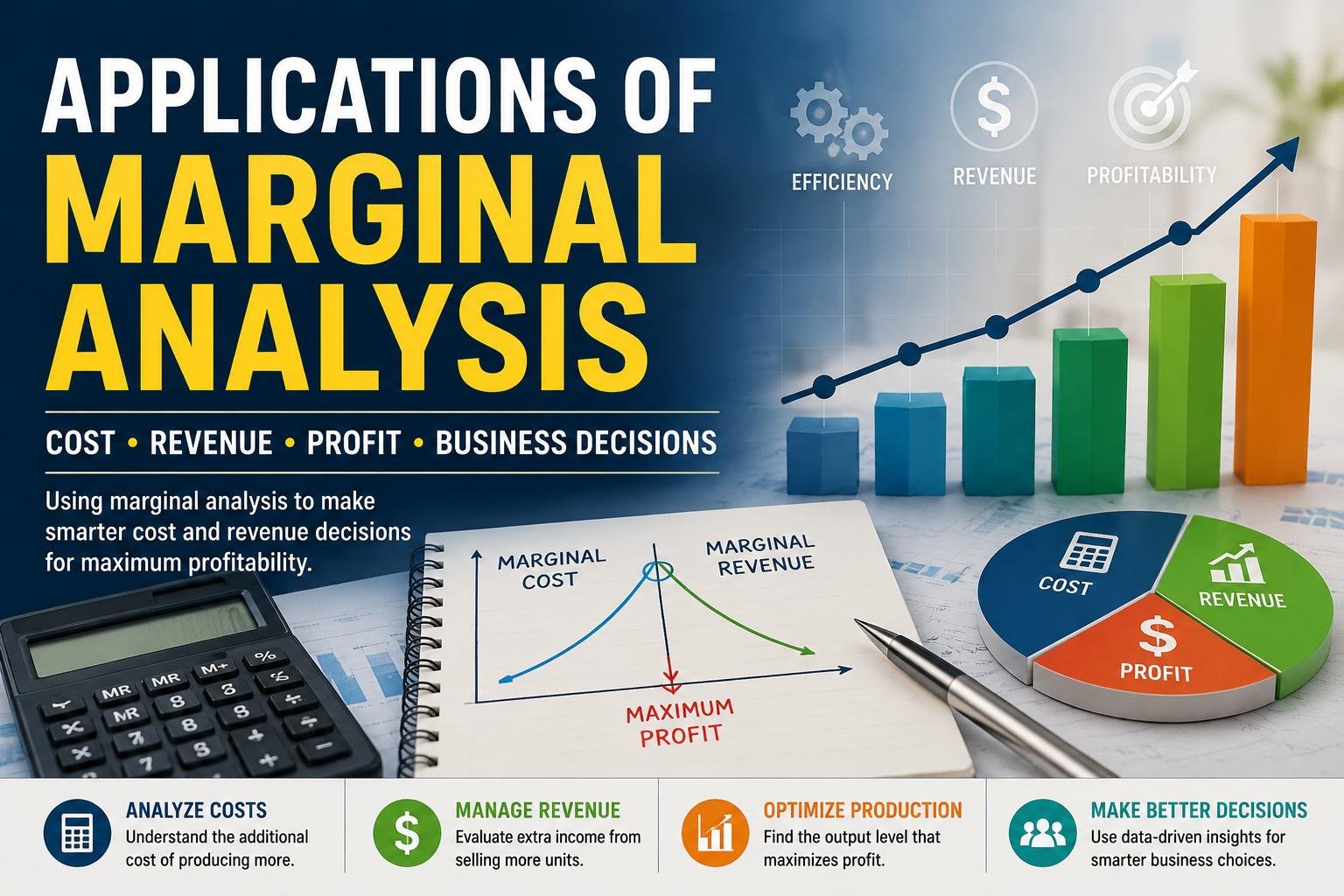
Businesses every day are making economic decisions which include what to produce, what to charge customers, how to cut costs, and where to put resources for best results. In order to make these decisions well, companies enforce the applications of marginal analysis, it is a very common tool in accountancy and economics which looks at the results of small changes in cost, revenue, and production.
Marginal analysis which is a tool that businesses use to determine that which produce of one more product or hire of another employee or investment in more resources will in fact increase profits or will be an instance of an unnecessary expense. To that is related the total differentiation which is a math based approach that which looks at how at the same time changes in many variables play out to determine business results. While the math behind the concept may be complex what is put into practice from it is very much so used in day to day business doings.
This article looks at the uses of marginal analysis in cost and revenue management which also reports how companies apply these concepts to increase profitability, allocate resources better, and determine optimal production levels.
Understanding Marginal Analysis
Applications of marginal analysis is looking at the incremental gain or loss of value which results from a small scale business action. Instead of looking at total profit or total cost which is a big picture view, businesses look at what the change is when they increase or decrease production by a little. For instance a bakery may wish to determine that an extra batch of bread is worth the extra cost of flour, electricity, labor and packaging. If the additional income is greater than the added expense the decision may improve profit. If not the bakery may choose not to expand production.
Marginal analysis is also applied by businesses to that which is put forth in terms of looking at extra costs as they compare to extra returns.
The Role Total Derivative in Business Decisions
Total differentiation is a complex sounding term but in business what it means is that we look at how many variables at once play out to produce a result. Businesses don’t usually play with a single variable. In the case of production costs for example we see changes due to higher labor wages, transport costs, fuel prices, or raw material costs. Also what we see is revenue which is affected by customer demand, pricing strategies, or competition in the market.
Total derivative analysis is a tool which businesses use to see the results of many changes at once. Rather than looking at each variable independently, managers are able to study how a set of changes play out which in turn affects cost, revenue, and profit. This approach works in accounting and economics which is true of today’s business which see great many variables in constant flux.
How Businesses Determine Marginal Cost
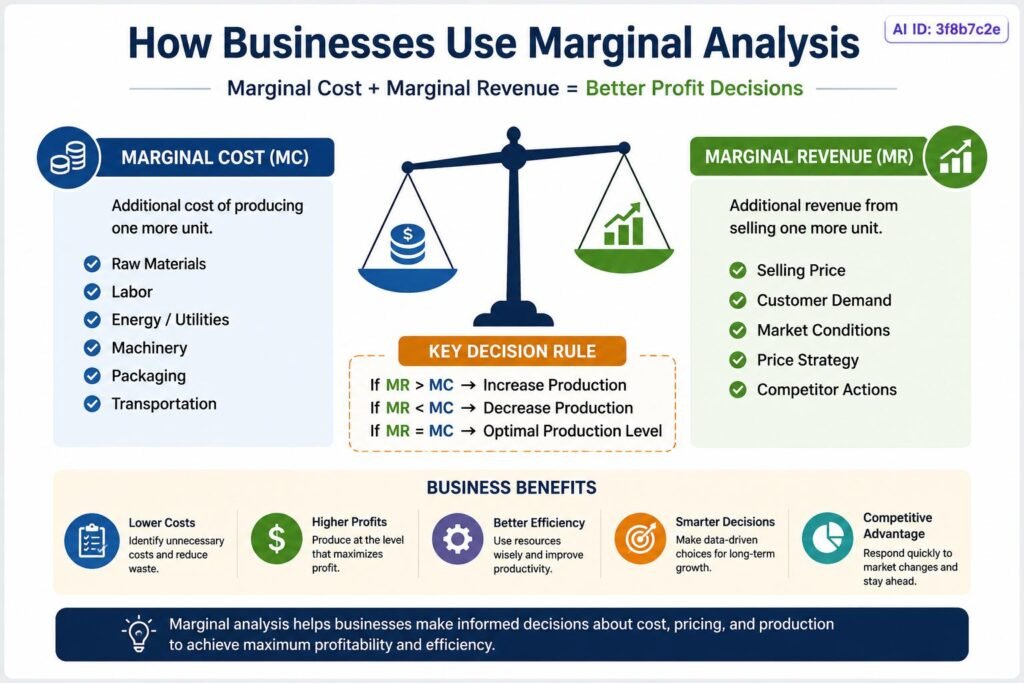
In accounting and economic terms what businesses do to determine marginal cost is very important as it allows firms to see the cost associated with producing extra units of products or services. Marginal cost is what we call the additional expense which is put out for the production of one extra unit of output. Businesses determine this by looking at all the extra production related expenses which come into play as output increases.
To set marginal cost out companies look at:
- Cost of raw materials
- Additional labor expenses
- Increased electricity or fuel usage
- Transportation and logistics costs
- Machine maintenance
- Packaging expenses
For instance a clothing manufacturer may see that in order to turn out more shirts they must use more fabric, greater machine time, and also pay out more in terms of wages for extra work from employees. Out of this the company may determine whether or not it is worth the extra expense in terms of what the extra sales will bring in. Businesses that perform marginal cost analysis are able to reduce waste and maintain efficient production processes.
Cost Functions and Business Operations
A cost function is which production activities and total business operation costs are related. Also it is a tool which businesses use to see how expenses change as production goes up or down.
Costs are for the most part put into 2 categories:
Fixed Costs
Fixed costs do not change with production levels. For example office rent, insurance, and salaries of permanent employees.
Variable Costs
Variable expenses fluctuate with the level of production which may go up or down based on what we produce or service. For example we see in raw materials, packaging, fuel, and hourly wages. Understanding cost behavior is key for businesses to project their expenses, develop budgets, and in strategic decision making. Managers note that certain costs rise quickly during periods of production growth and that some stay the same. This data is used by companies which are trying to decide between expanding production, cutting back on operations, or purchasing new equipment.
Applications of Marginal level in Cost Management
Marginal analysis is a key tool in the control of business expenses. Companies use it to determine the best level of production. For instance a manufacturing business may see that producing greater numbers at first decreases average production costs out of which they are able to use resources more efficiently. But at a certain point costs may begin to rise due to issues like overtime, machine break down, or supply shortages.
Applications of marginal analysis determines the break-even point at which it is no longer profitable to produce extra units is a tool that businesses use. This in turn helps companies avoid overproduction and maintain financial health.
Cost control through the use of marginal analysis which also allows businesses to:
- Reduce operational waste
- Improve productivity
- Allocate labor efficiently
- Control inventory level
- Improve budgeting accuracy
Thus companies can grow their profits at the same time they reduce unnecessary costs.
Marginal Revenue and Revenue Management
Marginal revenue is the extra income from the sale of one more unit of a product or service. In some cases businesses turn to marginal revenue analysis to determine that which of two ways is better for their profit to put out more products or to maintain the present scale of production. While at times it is true that selling a larger quantity of products will in fact increase total revenue, in many situations over production causes companies to drop prices in an attempt to shift the extra product out which in turn lowers the average profit per unit.
Revenue management is a practice which includes the use of pricing strategies, demand forecasting, and production planning to increase profitability. Companies study customer demand and market trends in depth to determine the best price structure.
For example:
- Airlines set ticket prices according to demand and seat availability.
- Hotels adjust their room rates for holidays.
- Retail stores present sales promotions to increase the number of sales.
In many cases companies base their decisions on marginal analysis which is a comparison of added revenue to added cost of taking on more customers.
Determining Optimal Production Levels
In the field of production we see that marginal analysis is used to determine the best production levels. At which a business reaches its peak profit without incurring extra costs. If profit goes up with more units produced the company may expand production. But should costs rise faster than revenue from additional production the business may cut back output.
Businesses determine in what quantities to produce:
- Production efficiency
- Customer demand
- Labor availability
- Supply chain costs
- Market competition
- Pricing strategies
This process helps out in the prevention of underproduction which in turn reduces sales chances also of overproduction which causes waste and financial losses.
Indifference Curves and Consumer Preferences
Indifference curves in economic terms are used to present how consumers act and what they prefer. They display which sets of products and services have the same level of utility for the consumer. Although companies may not put indifference curves to use in day to day operations what they do is that economists and marketers using the concept to study how purchases are made.
For instance a customer may choose any of:
- A less expensive phone with fewer features.
- A pricier phone with advanced features.
Understanding which products, at what price points, and which promotions to put out there are improved by it for businesses which in turn better serve their target customers.
Companies through use of consumer behavior analysis which improves:
- Product development
- Advertising strategies
- Pricing decisions
- Market segmentation
- Customer satisfaction
This results in better resource allocation and greater profitability.
Resource Allocation and Business Efficiency
Each business works with limited resources. Labor, capital, machinery, and raw materials must be doled out carefully to maximize return. Marginal analysis is a tool which businesses use to determine how best to allocate resources.
For instance:
- A company may put more into a very successful product line.
- A retailer may drop items which don’t sell.
- A manufacturer may reallocate labor to high profit departments.
Efficient use of resources increases productivity which in turn helps businesses to stay competitive in dynamic markets. It also supports the long term sustainability of resources which we do not waste on low performing activities.
Importance of at the Marginal level in Financial Management
Marginal analysis is used in many aspects of financial management and strategic planning.
- Pricing Decisions: Businesses apply marginal analysis to see if price changes will bring in more profit or cause a drop in customer demand.
- Budget Planning: Managers measure which of the spending changes improve financial performance.
- Investment Decisions: Companies compare what they get out of an investment with the associated costs.
- Production Planning: Businesses determine what quantity of products to make for best efficiency and profit.
- Profit Forecasting: Marginal analysis is used to determine future earnings in various business scenarios.
These applications make available to us what is perhaps the most valuable tool in accountancy and economics.
Real-World Applications of Marginal Analysis
Manufacturing Industry
Manufacturers use marginal analysis for determining efficient output levels which in turn is based on the study of material use, labor costs, and machinery performance before they expand production.
Retail Businesses
Retailers perform market analysis which goes into deciding which discounts, promotions, or new products to roll out. They study if the additional sales will in fact boost profit.
Transportation Industry
Airlines and transport companies apply marginal analysis to their pricing, fuel use, and schedule systems for greatest profitability.
Hospitality Industry
Hotels use revenue management which sets room prices according to customer demand, seasonal trends, and occupancy rates.
Technology Companies
Technology companies use marginal analysis for software development costs, subscription models, and customer acquisition. These examples display how marginal analysis plays a role in decision making across many industries.
Advantages of Marginal Analysis
Marginal analysis brings to businesses.
- Better Decision-Making: Managers base their financial decisions on data instead of assumptions.
- Improved Efficiency: Resources are put into those which produce the highest return.
- Increased Profitability: Firms may determine the best production and pricing strategies.
- Enhanced Cost Control: Companies can see to it that they reduce what is unnecessary.
- Stronger Competitive Advantage: Businesses that are efficient do better in the market.
This issue which the benefits address is what puts Marginal Analysis in a very important light in today’s business management.
Limitations of Marginal Analysis
Although it is a useful tool marginal analysis also has issues.
- Difficulty in Estimating Costs: Some businesses see that certain costs are out of the question and very hard to measure exactly.
- Changing Market Conditions: Consumer demand and economic climates are very volatile.
- Overreliance on Numerical Data: Marginal analysis does not take into account of issues like employee satisfaction or brand reputation.
- Complexity in Large Organizations: Large businesses may benefit from the use of complex systems and analysis tools in performing marginal analysis.
For this reason, company put together marginal analysis with other strategic planning tools.
Relationship between Mathematics and Business Management
Mathematics is a key element in accounting and economics which sees to it that companies are able to analyze trends, predict results, and improve decision making.
Concepts of total differentiation and applications of marginal analysis form the basis for:
- Cost management
- Revenue forecasting
- Budget preparation
- Resource allocation
- Production planning
Without these tools businesses would have a hard time in accurate financial performance evaluation. Mathematical analysis in turn supports efficient management and sustainable growth in competitive markets.
Conclusion
In the world of business accounting and economics applications of marginal analysis is a key concept which helps to study the results of small changes in production, cost, and revenue. Through the study of what additional costs add up to in relation to additional benefits companies are able to make better informed decisions which in turn improve profitability and operational efficiency. In terms of what goes into setting marginal cost, this is a key concept which allows companies to determine the best scale of production and to avoid0 out spending. Via cost analysis, revenue management and resource allocation businesses are able to maximize return on investment while at the same time maintain financial health. Total differential also plays a role in better decision making which is through the analysis of how many variable elements at once play out in financial results. As a whole these concepts put forth important information which supports price setting, budgeting, investment decision making and long term business growth. In present day which is a tough economy, companies that do a good job at using marginal analysis have better results in managing costs, improving productivity, and in attaining sustainable success.
Get more well researched information about Applications of Marginal Analysis here.