Introduction
ADAS technology is used in modern cars to support drivers in watching the road, avoidance of problems, and control of some vehicle functions. In present-day cars, we see the use of cameras, radar, ultrasonic sensors, and computer software, which in turn provide features like adaptive cruise control, lane-keeping assist, automatic emergency braking, blind-spot monitoring, parking aid, and traffic-sign recognition.
Although we see that these features improve and, in some cases, perfect the driving experience, they do not, in fact, make a car fully autonomous. ADAS is put in to assist the driver, who, at all times, must stay alert and be ready to take over as needed. Also, it is important that we understand what these systems do and what they don’t do, for we may put our trust in them too much.
What Is ADAS and What Does It Do?
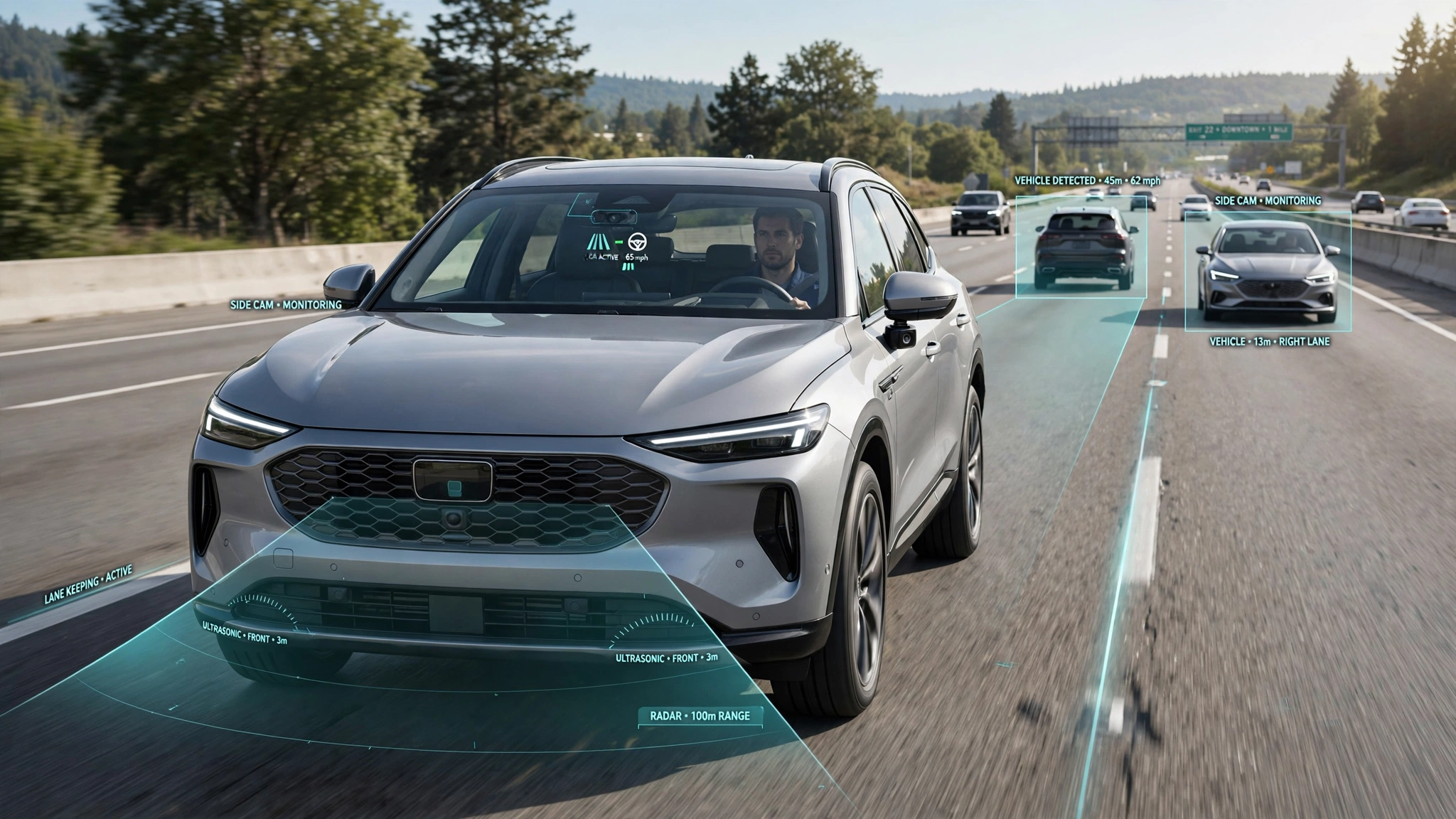
ADAS is a set of systems for performing certain driving tasks. Cameras in these do the job of identifying lane markers, vehicles, pedestrians, and road signs; also, they can report the distance and speed of objects around the car. For parking, we see ultrasonic sensors very much in use, which detect nearby objects.
The car’s computers, which are the brain of the system, use info from the sensors to decide if they should alert the driver or take over some functions. In some cases, the alert is all that is done; in other instances, the car will, for a short time, take over the steering, accelerating, or braking. Also, the way they perform may be affected by weather, poor visibility, dirty sensors, worn-out lane markers, and atypical road conditions.
Adaptive Cruise Control
Adaptive cruise control, which is an upgrade to the conventional cruise control, does so by using sensors which track cars in front and, in turn, adjust your car’s speed. Should traffic slow down, the system is to reduce your car’s speed, which in turn will maintain a set tail gap. Once traffic clears out, some systems will get back to the speed which the driver wants.
This feature is a tool which reduces driver workload on the highway; at the same time, it is important that the driver does not fully take their attention off the road. Also, different cars may have different systems, and what’s more, we find that in all types of traffic situations, the car may not react as you wish. At all times, the driver is responsible for being ready to brake and re-take control.
Lane-Keeping Assistance
Lane-keeping systems use cameras to identify lane marks and determine your vehicle’s position. If the car moves toward a lane edge with no intended steering input, the system may alert you or make a minor steering correction.
Some auto manufacturers present what is called lane-keeping aid in some models, which will, at all times, be steering your car back to the middle of the lane. While these do very well on well-marked roads, they break down in different road conditions. At all times, drivers should be paying attention to the road and not become too reliant on the system.
Automatic Emergency Braking
Automatic emergency braking systems use cameras and radar, or both, in which to identify possible collisions. Should the system determine that a crash is going to happen, it will alert the driver. If the driver does not react in time and the system has the ability for auto braking, it may apply the brakes to either avoid the crash or, at the very least, reduce its severity.
However, it is true that automatic emergency braking does not prevent all accidents. It’s a factor of speed, visibility, sensor performance, and the type of object which determines its effectiveness. Also, drivers should still pay attention to the road and brake when needed.
Blind-Spot Monitoring
Blind-spot detection systems use sensors around the car which report to the driver on what may be out of view in the side mirrors. As a car is detected in the blind-spot area, which may not be seen in the mirror, the system will alert the driver, usually through the use of a light in the mirror.
This technology is a help during lane changes, but drivers should still check your mirrors and look out for what is going on in your surroundings. The system does not always see every vehicle, cyclist, motorbike, or thing out there, even if it is out of its range.
Parking Assistance
Parking assist has come into use of cameras and sensors to alert drivers of nearby objects, and we have basic systems which give out warnings as your car approaches an obstacle. Also, we have the more advanced systems which will park your car for you.
Automated parking can make some hard parking problems simple. We see, however, that the extent of that ease is different from car to car. Also, in some cases, drivers will still have to manage the pedals or pay attention to what is going on outside the car; also, they may have to take over if the situation changes in an unexpected way.
Traffic-Sign Recognition
Traffic-sign recognition systems use cameras and software to identify which road signs the vehicle is passing, which may include speed-limit signs. Also, the recognized info can be displayed on the in-car dash or infotainment screen.
This feature does report road info, which at the same time isn’t perfect. Signs may be blocked, damaged, placed in a poor position, or just hard for the camera to pick out. While using the car’s display is a great help for drivers, that doesn’t mean they should completely ignore what is actually posted on the road signs.
How ADAS Features Work Together
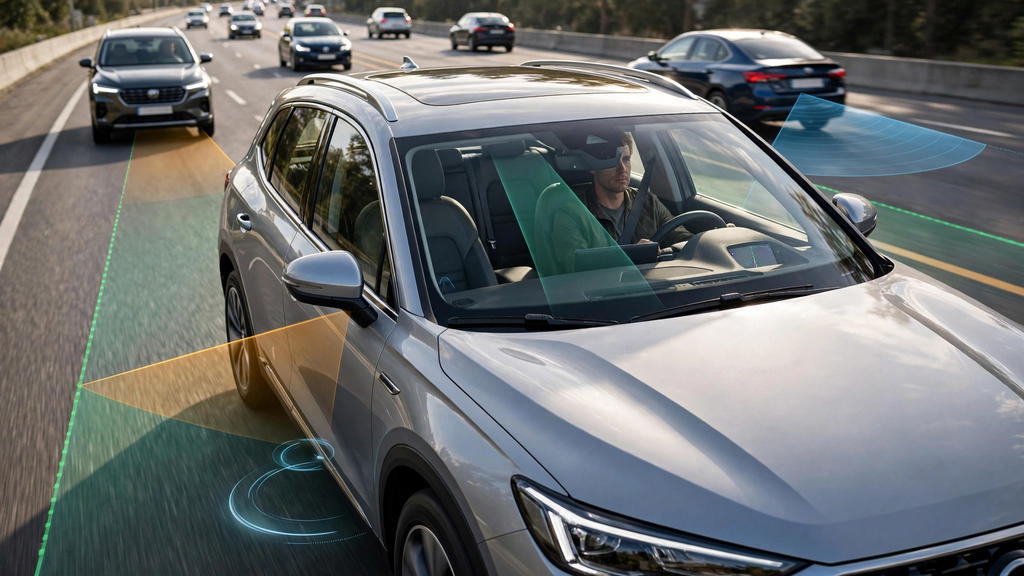
Modern cars have many ADAS features present at the same time. For example, we have cameras which pay attention to lane markings, at the same time as radars which track forward vehicles. Adaptive cruise control takes care of speed, and lane-centering assist provides the steering support.
This setup is to reduce what the human driver has to do, but it is not a fact that the car will be able to deal with all situations on its own. In construction zones, at unexpected road marks, with debris present, in the company of emergency vehicles, and in heavy, variable traffic, the car may still have issues.
ADAS vs Fully Autonomous Driving
ADAS’ role is different from that of full autonomy, which is that the driver still has the responsibility of supervision. In an ADAS-equipped car, the car may take over control of steering, braking, or acceleration in some situations, but at the same time, the driver must pay attention and be prepared to take back control.
A fully autonomous car will be designed to perform the driving task without constant human input within its intended operational parameters. Also, it is true that a car which is able to maintain its lane and change speed is not, at the same time, an autonomous vehicle. It is up to the driver to know what the car is capable of doing exactly, which in turn means that they should not assume advanced features will do it all.
What ADAS Can and Cannot Do
ADAS (Advanced Driver Assistance Systems) plays a role in that they alert the driver to what is going on in the environment and also, in some cases, will take over control of the vehicle for which the car is programmed. Also, these technologies can put a layer of safety between you and the road when used as intended.
Also, we see that ADAS does not guarantee accident prevention and does not replace responsible driving. We find out that sensors may break down in the rain, get dirty, in poor visibility, or due to atypical objects. It is up to the driver to stay alert, follow traffic laws, be aware of what is in his vehicle’s systems which do have limitations, and at all times be ready to take control.
Conclusion
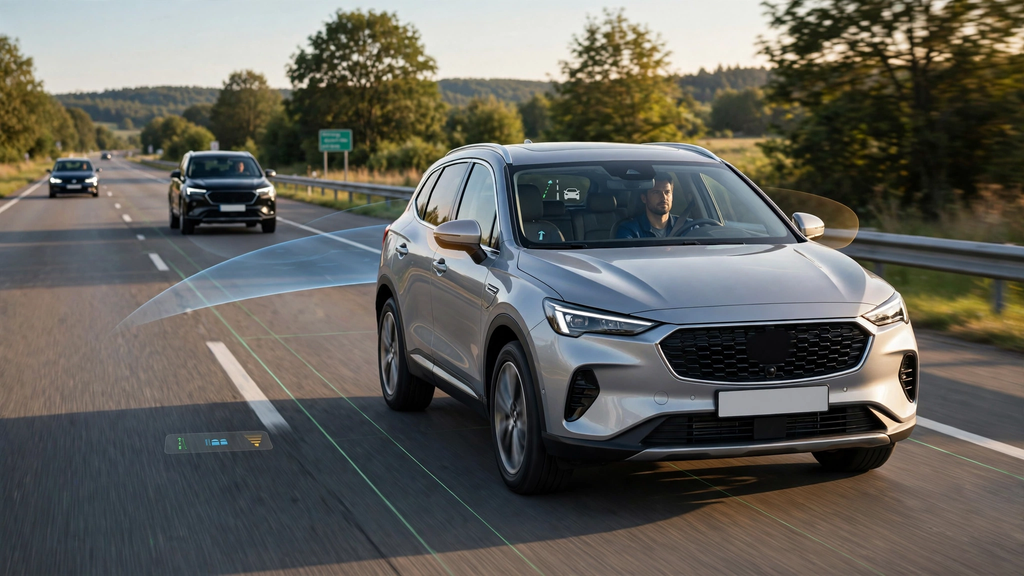
ADAS includes cameras, radar, ultrasonic sensors, and computer software which in turn support functions like speed control, lane keeping, emergency braking, parking, blind-spot alert, and traffic-sign identification. Such systems improve the safety and ease of today’s vehicles when used as intended.
The fact is that ADAS is a driver-assist feature, not full autonomy. You, as the driver, still have the responsibility of paying attention to the road and taking over when needed. It is important to understand what these technologies can and cannot do in order to get the most out of ADAS while also using it safely.