
Introduction
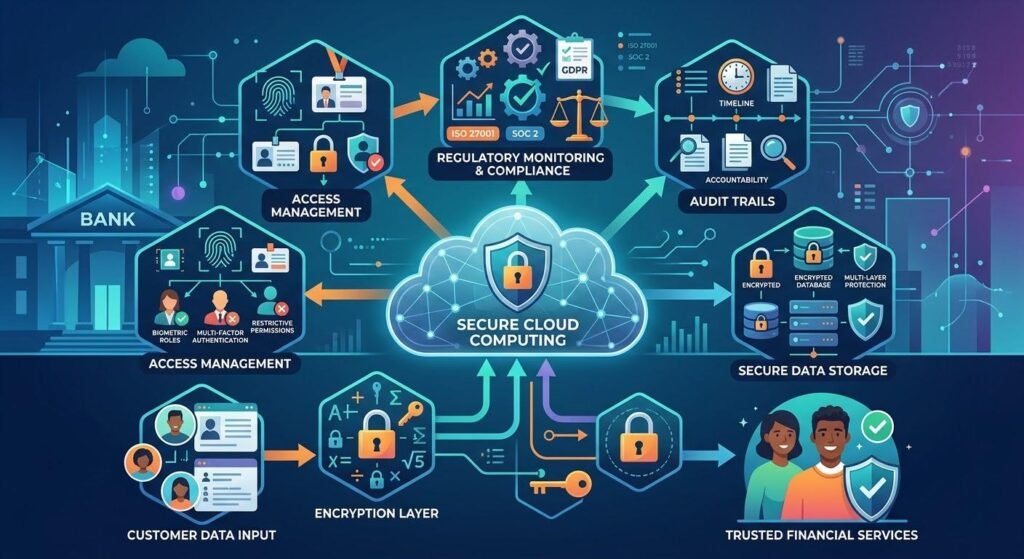
Cloud computing has become an important aspect of the financial sector. It means that banks, insurance companies, payment providers and financial institutions can store, manage and provide digital services more efficiently. However, there are compliance requirements that need to be considered when using the cloud. Financial institutions hold sensitive information about their customers, such as personal details, account information, transaction history and payment information. This needs to be ensured to be compliant with any legal, regulatory and security requirements. An important area to consider is access management to ensure sensitive information is only accessible by the correct people. There are a number of areas to consider when using cloud services, such as data protection, data residency, audit trails, third party risks, regulatory reporting and security responsibilities. Understanding these requirements can help financial institutions confidently utilize cloud technology.
Understanding Cloud Compliance
Cloud compliance refers to policies, processes and controls to ensure cloud services are used in a compliant way. In the financial sector, it can be an important requirement to ensure compliance with any laws or regulations. Financial institutions hold sensitive information and there could be serious financial and legal consequences if there is unauthorized access, exposure of information and poor record keeping. If banks use cloud services to host applications, databases or transaction processing systems then they will usually still have the same regulatory requirements. Whilst they are using a third party to host their technology they will still need to understand how this impacts their compliance. For example identifying what regulatory requirements they have, what services are being used, what risks could occur and ensuring that controls are in place to show that sensitive information is being protected.
Data Protection
One of the most important compliance requirements for financial institutions using cloud services is data protection. Financial organizations will have personal information that will need to be protected from being disclosed, altered, lost or misused. Privacy laws may also be in place meaning that organizations will need to have a lawful reason to process personal data. They will also need to ensure they are explaining how the information is collected and used, limiting the amount of data collected and securing the information. For example in the European Union there is a regulation called General Data Protection Regulation (GDPR). This outlines how personal data should be processed, secured and individuals’ rights. In Nigeria there is also a law called the Nigeria Data Protection Act 2023. Financial institutions should ensure they understand what privacy laws apply to their customers and that their cloud providers are following the correct contractual and legal requirements regarding the information. They should also have procedures in place for data breaches, managing customer requests and securely deleting information.
Data Residency
This refers to where your data is being stored. As financial institutions could be based in different countries you will need to ensure that you are compliant with any laws around where customer information can be stored. Some jurisdictions will have restrictions around transferring certain data outside of the country. However some will allow international transfers as long as there are certain security measures and legal requirements in place. Therefore banks should ensure they understand where their cloud providers are hosting their data centres, where back-ups are being stored and whether technical support teams in other countries will have access to customer information. Using a cloud provider with a global presence could also introduce new compliance requirements. Financial institutions should understand where their data can be stored, how international transfers work, what contractual requirements are in place and any guidance from the regulatory bodies. They should also keep accurate records of where their data is being stored and regularly review this.
Audit Trails
Financial institutions should have reliable records of what has been done within their cloud environment. Audit trails can help to identify any suspicious activity. They provide a record of events that have occurred in chronological order such as login attempts, changes to financial information, admin activities and data transfers. However, just having logging enabled will not be enough. Financial institutions should know what activities they need to log, how long they should be kept for, who will have access and how they will be protected. They should also ensure that logs have enough information to help with investigations whilst not disclosing sensitive information about their customers. They should regularly review their audit trails, set up alerts for any suspicious activity and ensure they have the evidence available. Having good logging practices will help increase transparency.
Access Management
Access management should be in place to ensure that unauthorized individuals cannot access, alter or transfer financial information. Financial institutions should ensure that employees, contractors, admins and third parties only have access to information if they require it. The principle of least privilege should be applied to ensure that users only have the minimum level of permission to do their role. Strong authentication should be in place, such as multi-factor authentication especially for users with privileged access. Procedures should be in place to ensure users have the correct access. This should include having a process for creating accounts, reviewing permissions, changing access as roles change and deactivating users immediately. Privileged access should be monitored more closely. If an admin account is compromised this could cause a large amount of information to be exposed. Regularly reviewing access, verifying identities and having clear approval processes will help show that access to the cloud is controlled. This will reduce the risk of insider threats, misuse of credentials and unauthorized changes to financial information.
Third Party Risks
Using cloud services can introduce third party risks. This is as financial institutions will be relying on a third party to host their infrastructure, software, storage, maintenance and technical support. However, if the cloud provider does not have strong security practices this could lead to data breaches, disruption, regulatory breaches and reputational damage. Banks should carry out a thorough due diligence process before agreeing to work with a provider. This should include understanding what security measures they have in place, financial stability, resilience, experience with regulations and incident management. They should also look at any independent assurance reports, relevant certifications, penetration testing, vulnerability management and business continuity. The contract should outline what confidentiality requirements are in place, what data can be processed, how quickly they will be informed of any incidents, what audit rights they have, where data will be stored, what sub-contractors they have and what the termination process will be. Financial institutions should also identify any key sub-contractors. As cloud providers will often rely on other organizations to provide their services. Due diligence should continue throughout the relationship to ensure that any changes to services, ownership, security practices or sub-contractors will not cause any unmanaged compliance risks.
Encryption
Encrypting data will help protect financial information. Financial institutions should consider encrypting data at rest and in transit. Encrypting at rest will ensure that databases, files and back-ups cannot be accessed by unauthorized individuals. Encrypting in transit will help protect information as it moves. They should have appropriate processes in place to ensure keys cannot be accessed by unauthorized individuals. Depending on how sensitive the information is and the type of service they may also want to consider other security measures such as tokenization, masking and secure back-up. However, encryption alone will not ensure compliance. Financial institutions should have processes in place to document their security controls. This will help to show that risks have been managed and can be reviewed by auditors and regulators.
Reporting
Some security incidents, disruptions and data breaches should be reported to the relevant regulatory body. This will depend on the country, type of institution, type of information and severity of the incident. A security incident relating to the cloud could include unauthorized access, exposure of customer records, ransomware, system outages and loss of important financial information. Financial institutions should have procedures in place to help manage incidents. This should include how they will detect, investigate, contain, document and report. The contract with their cloud provider should also state that they will be informed quickly if any incidents occur that impact their systems or customer information. If they are not informed quickly enough they will not be able to meet their own reporting requirements. Financial institutions should have clear lines of communication between compliance, IT, legal, senior management and external providers. They should also carry out regular incident management exercises to ensure staffs understand their responsibilities.
Shared Responsibilities
To ensure compliance with the cloud financial institutions should understand the shared responsibilities. Cloud providers will usually provide security for the infrastructure. This could include data centres, network equipment and some core services. However, financial institutions will have many responsibilities to ensure they are using the service appropriately. This will include protecting customer data, securing applications, managing identities, controlling access and meeting regulatory requirements. This will depend on the type of service they are using. Infrastructure as a service may mean customers have more responsibility for securing the operating system and applications, whereas with software as a service the provider will usually have more technical responsibilities. However, customers will still need to understand how their information is being processed and protected. Financial organizations should have clear information about what responsibilities the provider has. They should compare this to their internal controls. Using a responsibility matrix, contract, documented processes and regular reviews will help to ensure important security activities are not missed. Ultimately financial institutions will still have a responsibility to prove that they are compliant with requirements.
Strong Governance
Having strong governance will help provide a structure for managing compliance with the cloud. Financial institutions should have a governance framework in place. This should outline who will be responsible, what approvals are required, what risk management processes are in place, security standards and what monitoring is expected. This should involve senior management, compliance, information security, legal and operational managers. Using recognized standards such as ISO/IEC 27001 (Information Security Management) and the National Institute of Standards and Technology Cybersecurity Framework can help provide guidance. However, just using a recognized framework will not ensure they meet all regulatory requirements. They need to tailor this to their business, the sensitivity of the information and any laws that apply. Having effective governance will involve regularly reviewing policies, training staff, carrying out risk assessments, internal audits and providing management reporting. Assigning clear responsibilities for cloud related risks and having evidence of compliance activities will help increase accountability.
Why Compliance Requirements Will Vary Across Countries
Compliance requirements will vary between countries. This is as laws, financial regulations, privacy expectations and national security will be different. Financial institutions in Nigeria will have compliance requirements around data protection and financial regulation, if they have customers in the European Union they will also need to consider data protection requirements. If they have operations in a number of countries they may have to comply with a number of regulations. This could impact data residency, international transfers, breach notification, retention, outsourcing approvals, audit and access to information. Some authorities may provide detailed guidance around cloud outsourcing whereas others may have more general requirements for managing technology risks. Financial institutions should identify what countries they operate in, what laws apply to each type of information and ensure they have the right legal and regulatory guidance. They should also carry out local compliance checks when expanding into new markets, adding new cloud services and changing how customer information is processed.
Conclusion
Cloud services can provide financial institutions with great opportunities to become more efficient improve digital services and provide more accessible products. However, this should be supported by effective compliance management and strong security governance. Financial institutions will need to ensure customer information is protected, understand data residency requirements, have reliable audit trails, control access, assess third parties and have the correct procedures for regulatory reporting. They will also need to understand that there will be different security responsibilities between the cloud provider and financial organization. Using encryption, due diligence, documented controls and recognized governance frameworks can help reduce risks and increase accountability. Most importantly financial institutions should understand what laws and guidance apply to their specific countries. They should not assume that using a cloud provider will automatically make their operations compliant. By taking compliance seriously as an ongoing responsibility they can confidently utilize cloud technology. This will ensure customer information is protected, build trust with regulators and help ensure the security of the financial system in the future.
Get more well researched information about Cloud Compliance in Financial Services here.