
Introduction
Digital banking has transformed which services customers use, how they access money and what they say to financial institutions. Today customers’ expect their banking to play to their individual strengths, financial goals and buying trends which is not the case for a one size fits all approach. We see this is possible via big data which allows banks to analyze large sets of info we leave in our transaction history, through mobile apps, online banking we do on the go and in customer care. By using advanced analytics to that info banks are able to see what customers want, which in turn they use to better serve them. But for successful personalization banks must also play by the rules of responsibility in info management and strong privacy protections. Banks have to put in the work to get customer buy in, secure the info we give them, be transparent and protect very personal financial info.
Big Data in Digital Banking
Big data is what we call very large and complex data sets which in turn traditional data analysis methods may have trouble with. In digital banking we see this in transaction history, account balances, bill payments, savings trends, customer care issues, mobile app activity, and interaction via digital support channels. When put together and analyzed right, this info helps banks to better understand customer action. For example a bank may see that certain customers put money into their savings accounts very regularly, that others pay their bills online often, or that some use international payment services a great deal. From these trends banks are able to determine which services will best suit particular customers. Also we see in play here analytical tools which include machine learning and AI that which in turn help financial institutions to see relationships in this data and turn them into useable insights. In the end big data plays a role in a move away from one size fits all banking products towards more relevant, responsive, and customer centered financial solutions.
How Banks Implement Big Data to Personalize Customer Experience
1. Personalized Banking Recommendations
Personalized financial recommendations for our customers which we put forth to help them to find out what financial products and services best fit their needs. Via analysis of what they have transacted, how they save, account activity, and what financial goals they have stated we are able to put forth appropriate savings plans, budgeting tools, payment options, or account features. For example a customer which is seeing their savings grow may benefit from info we have on good savings products, also we may see that someone whose expenses are usually more than their income may in fact benefit from budgeting alerts. Also we put forth these recommendations to get customers to try out digital banking features they may not have known about. But at the same time these should be relevant, easy to understand, and given as options not pushed to get them to spend or borrow more. Also we do draw a line between what we put out as helpful suggestions and what is financial advice which requires a more in depth look at the individual’s situation. When we truly do what is in our customers’ best interest through personalization we make digital banking a more convenient experience and in turn that which improves their trust in the institution.
2. Customized Product Offers and Customer Segmentation
Customer segmenting is a process which we put our customers into groups based on what they have in common in terms of certain characteristics, preferences, financial behavior, or service needs. Big data allows banks to create more detailed segments as opposed to the past which was mainly based on age, income, or account type. For instance we see that customers who very often receive their salaries may have different issues from small business owners which have irregular cash flows. Students may do better with info on budgeting and low cost accounts, at the same time more established customers may be into savings plans or other financial products. We use this info to tailor out product info, our promotional messages and service options. Also it is important that we do not use segmentation in a way that is unfair to any individual’s financial situation. Institutions should also be looking at their models often to bring to light any results which are discriminatory and to also see that we are giving out fair access to products to all eligible customers. Responsible segmentation improves the relevance of our communications with the customer and also reduces the send out of not so relevant ads and poor product recommendations.
3. Spending Insights and Targeted Financial Education
Big in data banks are able to transform transaction records into what is basically useful spending insights. In digital banking we see that purchases are put into categories, monthly expenses are summed up, recurrent subscriptions are identified, and spending is compared across times. Customers use these to recognize between which we can say they are to see in to unnecessary expenses, monitor home budgets, and put in place real world savings goals. For example a notice may go out to a customer that transport costs have gone up from the past month or that many of the same payments are coming due. Also we see that banks are to give out very targeted financial education based on what the customer needs which may include budgeting advice, saving tips, debt management info, or info on interest and fees. This education is also that which helps customers to better know what is available to them without pushing a certain product. Also do note that automated spending categories may at times be off which is why we see the need for customers to be able to correct those errors. We put forth that clear explanations and practical recommendations are what make financial info more useful and accessible.
4. Real-Time Analytics and Improved Service Delivery
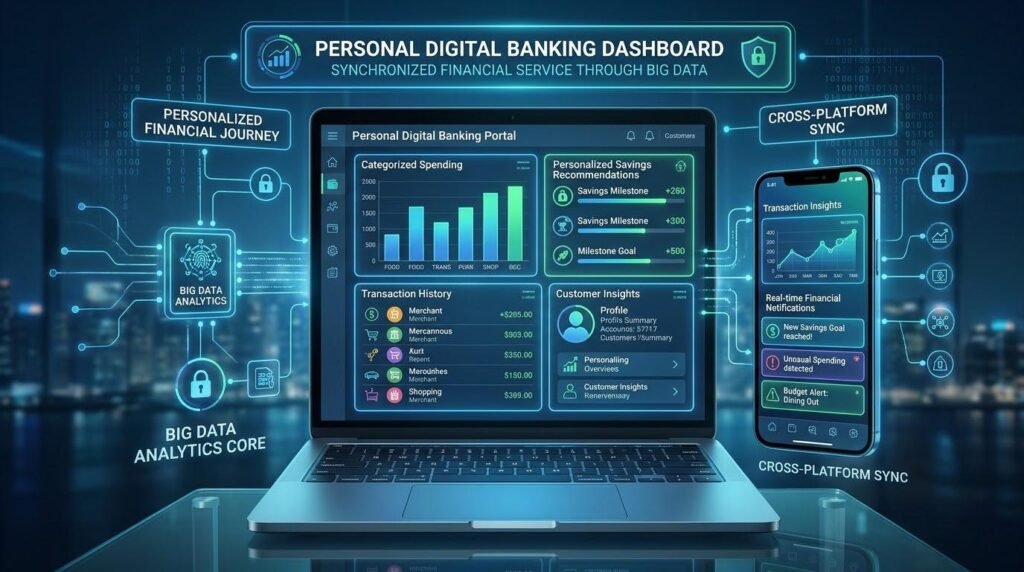
Real time analytics have which banks process and present relevant info as it happens as opposed to what is present in past reports. This is to say that real time analysis improves digital banking by which institutions may better react to customer issues. For example when a transaction is declined we may see analytical systems which determine what went wrong and put customers in touch with a solution. Also we see in real time balance updates, payment confirmations, notes on odd spending, and personalized notifications. When customers have the same issue with a digital product the bank may use service analytics to see the issue out and improve the product design. Faster responses to issues which in turn reduce customer frustration improve ease of use and in the end raise customer satisfaction. But at the same time real time personalization has to be done with care that it does not cross over into the customer’s space. Customers should have the ability to choose what they get notified of, how they get that info, and to change their notification settings in the banking system.
5. Predicting Customer Needs and Reducing Churn
Customer drop off is a term we use to describe when customers leave a bank’s services or take their business to a different institution. Big data analytics is tools which banks may use to identify customers which may be thinking of leaving by looking at telltale signs like decreasing transaction volume, lower digital interaction, repeat unresolved issues, or greater use of account closure options. We see that predictive models which put together these indicators are used to determine the chance of a customer leaving. At that point banks may look into the root of the issue and present solutions which may include fixing service issues, enhancing digital access, or going over the value of the account. For instance a customer that is having a go at getting payments out of the account which are failing may be more to leave if that issue is not fixed. Early in road intervention may help to put out that fire before it gets out of hand and improve the customer’s stay. But also it is important to note that predictions are not a sure thing and low activity does not mean for sure a customer is dissatisfied. Also banks should not go overboard with their interventions and use predictive data to better serve the customer instead of forcing them to stay with the bank.
6. Customer’s Consent, Privacy and Responsible Data Use
Although we see great value in personalization, we also see that collection and analysis of customer info comes with great responsibility. Financial info may reveal very private details of a person’s income, purchases, relationships, and daily doings. Thus it is the role of banks to report what info they are collecting, why they need it, how it will be used, and if it will be made available to third parties. Also customers should have input into optional personalization and marketing activities which are at no harm to core banking functions which must be handled according to the law. We also see that institutions should collect only what is necessary, set appropriate time frames for info storage, and also secure info from unauthorized access. That which we put in privacy policies should be easy for the customer to find and understand instead of being buried in technical jargon. Also banks must go by what the data protection laws say which includes the provisions of Nigeria’s Data Protection Act 2023. By respecting customer preferences and giving them control over their info we see to it that we build trust and at the same time reduce the risk of info misuse.
Cybersecurity and Fairness in Personalized Banking
Personalized banking is built on secure infrastructures that protect customer info against cyber-attacks, fraud and illegal exposure. Banks have to put forward encryption, multi-step authentication, access controls, secure application creation, constant monitoring, and appropriate incident response plans. Data should only be made available to authorized personnel and systems that have relevant access. Also banks must protect analytic models against interference and do a regular checkup of the base info which they use. Poor quality or incomplete data will present at in accurate results and also biased models may play into certain customer groups’ disadvantage. For instance a loan recommendation system will repeat past social issues if its training data has biased in some way. We also see a role for regular testing, human supervision, independent audit, and open complaint processes in to identify these issues. Also banks should report large scale automated decisions in easy to understand terms where it is appropriate. Combining security with fairness and account ability is what will make personalized services to work well without at the same time breaking customers’ rights.
Conclusion
Big data is transforming digital banking which in turn see to it that financial institutions are aware of customer behavior, which in turn they use to personalize recommendations, tailor made product offers,,, and improve spending insights also we see them use it to identify service issues and to put out relevant financial education. Also it is at is that personalization works best when customers have trust in the companies which are handling their info. We see that clear consent, responsible collection of data, strong cyber security, open decision making, and fair models are what build that trust. Also banks must constantly look at how their personalization is adding value to the customer as opposed to just upping sales or engagement. By using advanced analytics with privacy measures and a customer centered design approach financial institutions may put together digital banking that is convenient, secure, inclusive and better suited to individual financial needs.
Get more well researched information about Big Data in Digital Banking here.