Introduction
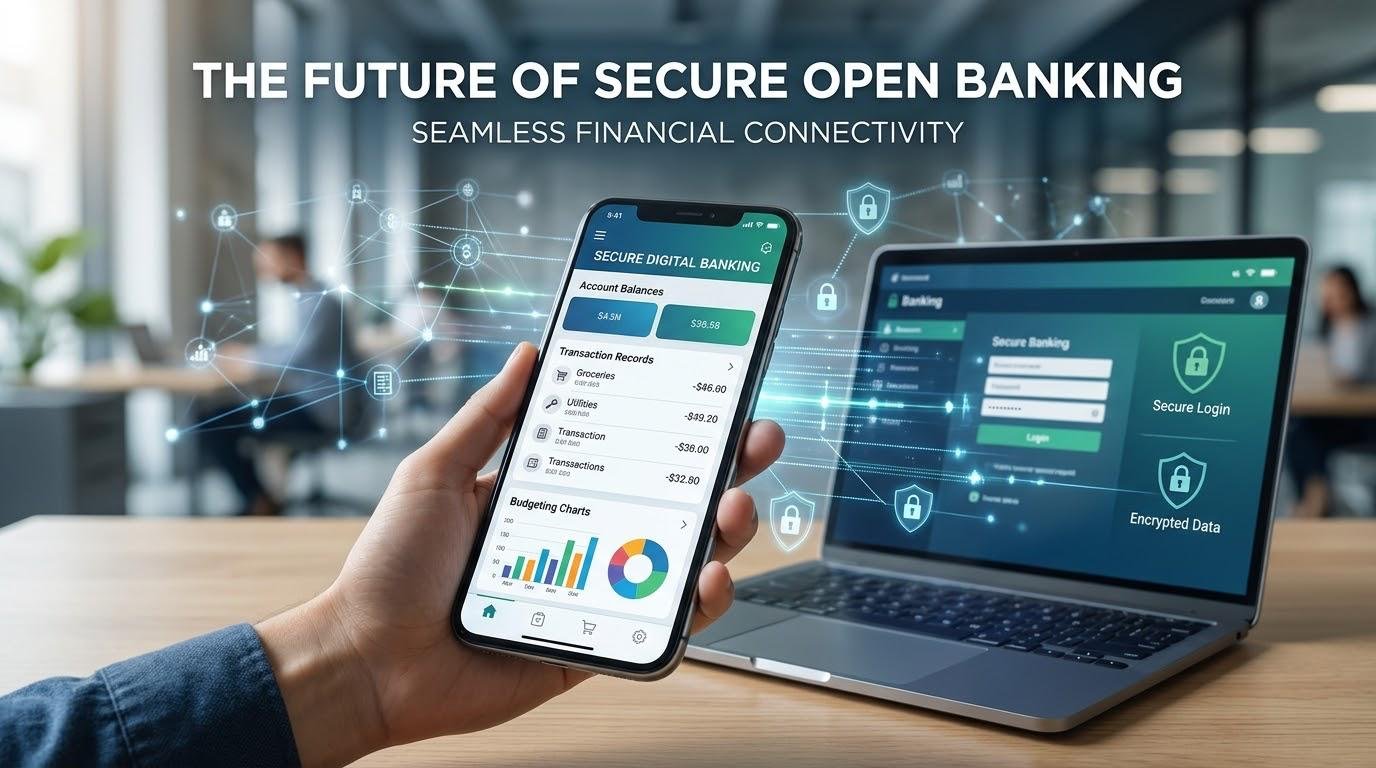
Open banking is transforming the way people and businesses access, manage and utilize financial information. Until now, customers with accounts from different banks had to visit different locations to check their balances, see how they spent their money or make payments. Open banking is the ability to share financial data between banks or financial institutions that are collaborating with each other and third-party applications that have been granted permission by the financial institution’s customer, as defined by the law. This allows customers to receive personalized financial tools that provide them with the information they need about their financial transactions, how they are organizing their finances and how they are making financial decisions. Open banking has the potential to foster innovation and competition in financial services through a secure technology framework and with data sharing controlled by the customer. The availability and capabilities, however, will depend on national legislation, the financial institutions that participate and the various services offered in each market.
What is Open Banking?
Open banking is a banking system paradigm that allows the regulated financial institution to share some of its financial data with its customers, and to use its customers’ account to authorize the third party provider to initiate some financial transactions. Customers can allow financial services to access their data across an application, enabling services to perform financial planning, payments, monitoring an account and budgeting. The customer continues to be the focus of the process since access should be based on informed consent and the extent of consent. Open banking is not open banking which means that everybody can access bank accounts and confidential information. Providers are responsible for complying with all applicable requirements for security, privacy and compliance with regulations. The information included in the framework may differ by country, such as information on payment accounts, saving information, transaction history, etc., as the services actually offered vary by market.
Open Banking Technology
1. Application Programming Interfaces (APIs)
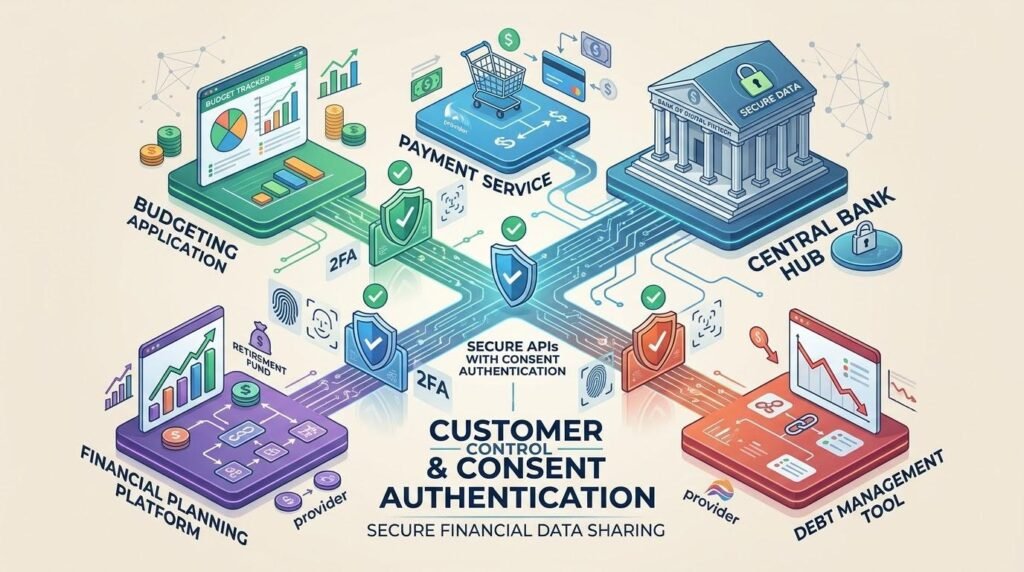
APIs, also known as application programming interfaces, enable secure communication between various software systems. Open banking is an approach in which the participating banks offer structured APIs to allow access to authorized information to approved third party applications. For instance, a money management program might ask to access a customer’s bank balance and transactions. The bank verifies the request and implements appropriate authentication and authorization processes before releasing allowed information. APIs can limit customer entry of banking passwords into other applications, although the exact authentication mechanisms may differ from one API provider to another. To mitigate risks, secure API connections can be encrypted, have access controls, and be monitored. They only work if implemented correctly, maintained and followed by relevant technical standards.
2. Applications to Obtain Customer Consent and Authentication
Customer consent is a fundamental part of open banking. Customers ought to be aware of the data being requested, why that information is being requested and the permissions that will be granted prior to an application accessing financial information. They will have to verify their identity with their bank and accept the connection, depending on the service they’re using. To ensure that permissions are used to the minimum extent necessary and where supported by the relevant framework, that there are adequate mechanisms for customers to review and withdraw access, and that customers have mechanisms for changing access. Certain services may need to have a new consent after a certain amount of time or particular services may ask for consent for specific actions. Customers need to be mindful about permissions and not accept all of them. Clear consent processes can ensure privacy is protected, boost trust, and ensure financial information is utilized appropriately.
3. Keeping Track of Account aggregation and Budgeting
By allowing customers to see data from many different eligible financial accounts in the same location, account aggregation makes it easier to keep track of their accounts. A person with a salary account, a savings account and other payment account can check balances and transactions on all of them with a compatible application on one dashboard. This can help you to understand the amount of money you’re spending, to see what you’re spending money on regularly, to keep track of your income, and to see where you can save money. Applications for budgeting can classify transactions, monitor spending limits, and warn of exceeded spending limits. These elements help to minimize switching between banking apps and manually merging financial records. The quality of the overview, however, relies on who participates in the institutions, who the accounts are funded by and how well the application classifies the transactions.
4. Payment Initiation
Open banking can also facilitate payment initiation, where a provider who is authorized can assist a customer in initiating a payment from an eligible bank account. It could allow for direct payments from bank accounts for goods, bills and payments made via accepted services, depending on the country’s framework. This can offer a substitute for some card payments, and can help to streamline the payment process for businesses and customers. Payment initiation is normally always there with proper authorization and authentication and the payment provider must adhere to the applicable law and security requirements. Not all banking transfers are instant and free just because they’re open banking. The processing times, transaction limits, charges and available payment solutions vary depending on the banks involved, payment infrastructure and regulation.
5. Personalized Financial Tools
Open banking allows services to be provided based on the financial information of authorized applications, depending on people’s situations. These tools can use data on income, spending trends, recurring bills, and savings to offer budgeting tips, reminders to save, a projection of cash flow, or financial habit insights. Someone looking to make a big purchase can use these features to help them determine what they can afford to save toward, or a small business person can keep an eye on who has paid them and who has not, as well as keep track of their expenses. Using personalized recommendations can help financial planning to be more practical since it is based on true account activity instead of assumptions. However, the automated insights aren’t always precise and customers should take their overall financial situation into account when following recommendations. Providers should also clarify how data will be analyzed, and how it will be used for other purposes.
6. Alternative Credit Assessments
Indeed, open banking could enable qualified lenders to evaluate borrowers with less than perfect credit records. A customer can allow the lender to access relevant account information to help assess regular income, expenditure and repayment potential, if they wish to. This can help make credit records more complete for some people and small businesses and offer further information when traditional records are missing, which may help to increase access to appropriate financial services. But having access to transaction data doesn’t mean approval, better interest rates or better treatment. Lenders should evaluate information responsibly, adhere to relevant lending and data protection regulations and refrain from acting in an inappropriate manner. Before granting access, customers should be aware of the information that will be taken into account, and how it will affect a lending decision.
Importance of Open Banking
Open banking can enhance convenience by helping to collate suitable financial information and ease repetitive manual processes. People can get a better idea of their finances, see where they’re going to waste and do a better job of managing their accounts. This can help businesses to better track their cash flow and streamline certain payment methods. Increased competition could also stimulate providers to create more useful financial products, enhance customer experiences and provide new offerings to the traditional service. At the same time, there can be some people who benefit from some financial services they are not able to access if they did not have the necessary data shared with them. But, these benefits are not automatic. They rely on reliable technology, real customer consent, responsible data usage and on services that are truly offered to the customer. Open banking is best when it helps consumers to manage their finances more easily and without undue privacy or security risks.
1. Data Privacy and Security
Financial information can provide a lot of personal information about a person’s income, spending, debt, and personal behavior. Inaccurate handling of this information could result in privacy breaches, fraud or other financial damage to customers. Open banking providers must consequently have in place the necessary security measures, such as robust authentication, encryption, access controls, monitoring and protocols for responding to security incidents. Customers are advised to utilize legitimate applications, ensure security of their devices and never share their passwords or verification code with people they don’t trust. They must also look at privacy notices to see if data can be stored, passed on or processed for other reasons than the service they are being used for. Though strong security measures can minimize risks, they cannot completely eliminate them, which mean it is important to remain vigilant on an ongoing basis both for customers and providers.
2. The Protection and Regulation of Consent
Consent can also be a challenge since customers can consent to multiple applications, tracking different accounts. They require straightforward options to learn what specific permissions are enabled for a service and how to stop it from accessing them when it no longer requires them. If an application is revoked its access to data may be denied, not all data retrieved by the application may be deleted, and existing data may be deleted in accordance with applicable laws and legitimate retention requirements. Another difference across countries is in the regulation. In some jurisdictions, the formal conditions for banks and third party providers, consent, security and technical standards are set out, and in others, it is less extensive. Purchasers need to make sure if their bank and the application they select are part of a known system and what protections are guaranteed in their nation.
The Future of Open Banking
Financial institutions such as banks and credit unions might also continue to evolve with enhanced API infrastructure, and digital service providers, potentially expanding their offerings. Increased integration may simplify the management of multiple accounts, tracking financial commitments, initiating financial payments supported by the integration, and having access to relevant financial insights. In a few markets, data access models that are analogous to “open finance” might also support a broader concept of authorized access to financial products, as appropriate, in addition to bank accounts. To achieve greater uptake, robust technology, clear business models, robust consumer protection and consumer awareness of the data sharing process need to be put in place. Financial institutions and technology firms need to also work to ensure that services are available to those who have varying levels of digital literacy and Internet access. Innovation is not the only yardstick to measure progress, customer safety, fairness and practicality are other yardsticks.
Conclusion
The use of Open banking is changing financial services by permitting customers to securely share specific financial data with trusted service providers and link compatible financial accounts, apps, and payments. APIs enable communication between systems; consent and authentication facilitate access to information and its purpose. These can enhance convenience and financial decision making, such as account aggregation, budgeting applications, payment initiation, personalized financial tools, and alternative credit assessments. Meanwhile, privacy concerns, cybersecurity concerns, consent management and regulatory variance are issues to consider. Not all bank accounts or services will be open banking. Availability is dependent on national legislation, participating institutions, approved institutions and approved technologies. If used responsibly, it can empower consumers to have more control over their financial data, and promote helpful innovation throughout the financial industry.
Get more well researched information about Open Banking here.


