Introduction
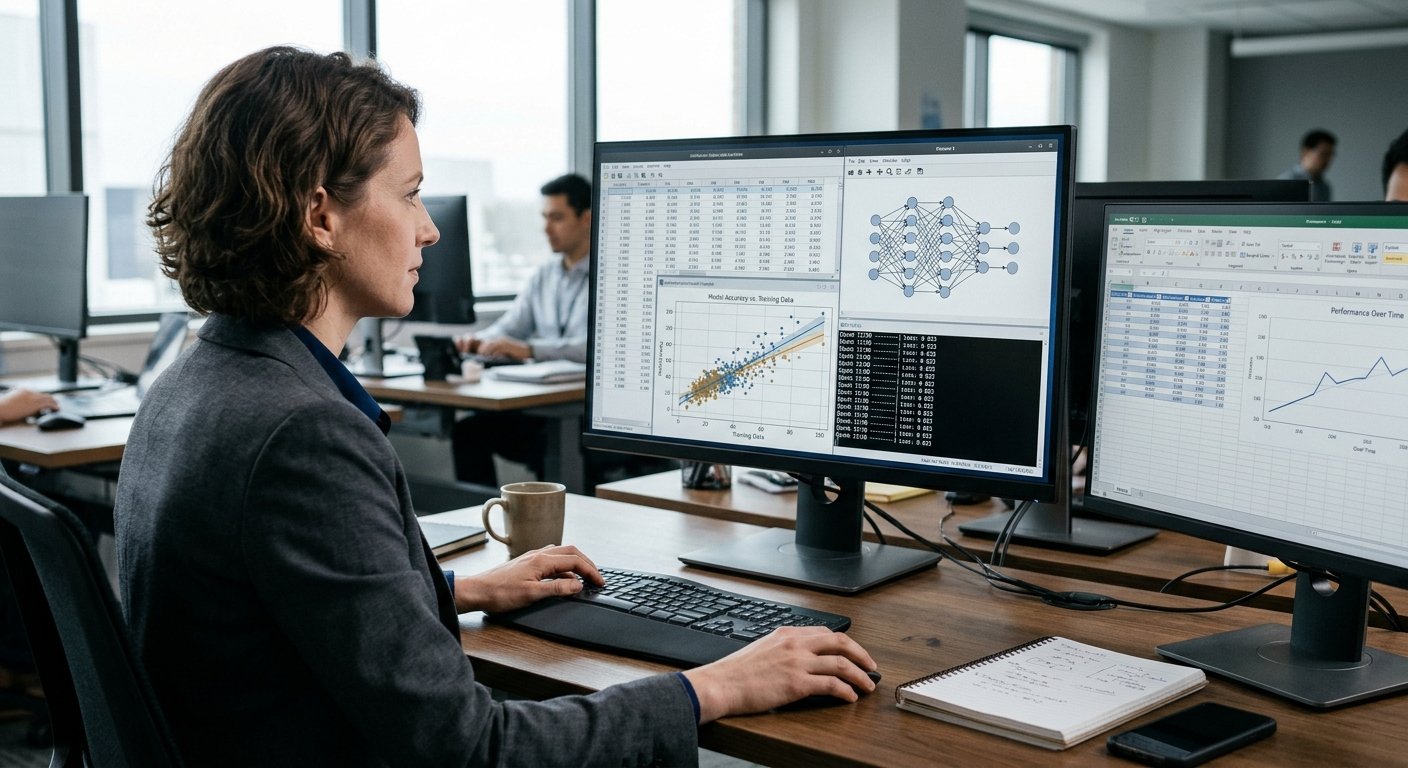
Computer Vision (CV), is a branch of Artificial Intelligence (AI) that allows computers to analyze and interpret visual information from photos, videos, camera outputs and medical scans. The computer programs need to be trained to identify the relationships between patterns in numerical data in an image – something that most people can easily do. Computer vision is an AI application under machine learning and deep learning, which interlinks the ability of machines to perceive objects, detect movement, and interpret information from visual data like photographs.
In recent years, the computing framework of computer vision has expanded to numerous applications, including smartphone, security, self-driving car, medical imaging, manufacturing platforms and eCommerce platforms. They can classify pictures, detect objects in pictures, identify visual patterns in pictures and analyze images. To grasp the concept of computer vision, it’s essential to understand the fundamental building blocks of digital images.Before beginning the study of computer vision, it is important to be familiar with the elements of digital images.
What is Computer Vision in AI?
Computer vision is one of the subcategories of AI, which specifically deals with computer visual knowledge. Digital images consist of picture cells (pixels) to which a number has been assigned.Digital images are constructed from the numbers for each of the pixels (colour and brightness). A computer vision model examines the values, and extracts patterns that are related to objects, shapes, textures, and environments.
They can be trained using machine learning by learning from examples and artificial neural networks of deep learning can be used to understand more complex components of visual data. A computer can be trained to recognise the difference between a cat and a dog from thousands and thousands of pictures of animals by using a model. But, the accuracy is dependent on the quality of the training data, image condition and the design of the model.
Computer Vision (CV) uses a computer to see images and video.Computer Vision (CV) is the ability of a computer to “see” video and images.
1. Capturing Visual Data
Computer vision begins with taking pictures or videos using a camera, smartphone camera, scanner, or other imaging sensor. The data collected is used as input to the AI system. Why is image quality important? If the images are poor, blurry, or objects are “eyes out,” then it will be more difficult to recognize the images.
For video systems, the individual frames or perhaps indirect motion information contained in a frame is compared to some, or all, of the previous frames to gain the information that is needed about the motion of the image. Computer vision, for example, can be used to detect people entering into an unallowed area by a security camera and a monitoring system installed on a traffic camera can monitor vehicles that are driven along a road.
2. Convert Numeric Information into an Image.
The computer stores an image as a set of numbers after it’s captured. Colour images are made up of three channels, corresponding to red, green and blue, with values attached to each of the pixels for each channel. From those numbers, the model works and searches for patterns that may be a view of objects, or some other visual focus.
Images can be resized, normalized and adjusted to satisfy the model requirements prior to analysis. These are pre-processing steps that ensure uniformity of input and efficient processing. The kind of preparation depends on the application and upon the amount of visual detail which is necessary to the reader.
3. Patterns and predictions
Once processed, the computer vision model will analyze the image, looking for patterns that were taught to it in its training process. Early layers might detect the edges and textures, while deeper layers can be used to recognize more intricate features related to full objects.
Then the system provides an output in accordance with its function. May recognize the type of picture, find objects, or pinpoint certain areas of the image. These results can be used in applications to build alerts, arrange photos, check products or help to make decisions.
Major Computer Vision Tasks
1. Image Classification
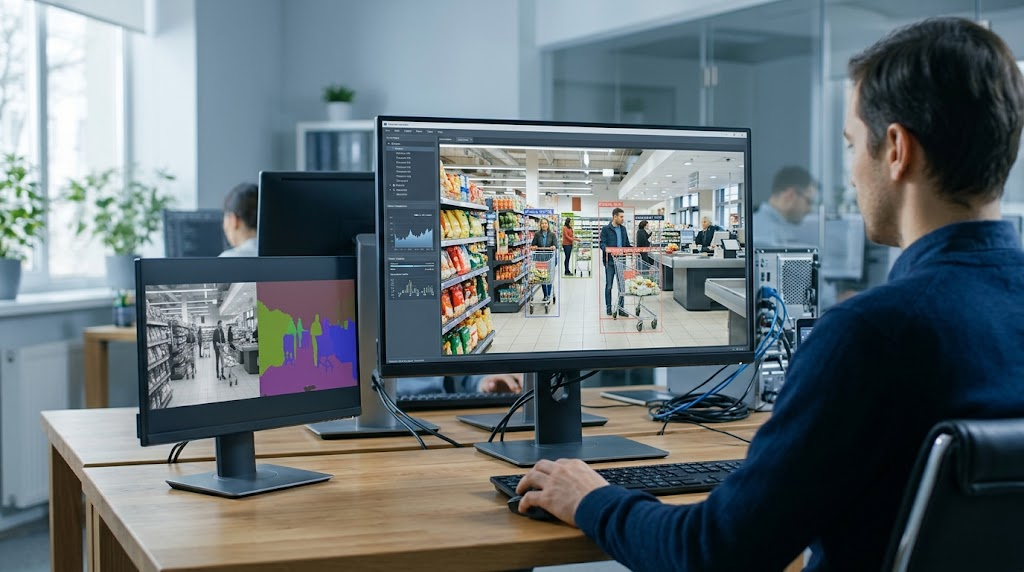
Image classification is the grouping of an image to a category. An AI model can recognize an image as a dog, or car, or a building, or landscape, for instance. It figures out these categories from labeled training examples and applies the knowledge to new images.
Classification is the process of categorizing digital images that might be useful for categorization of web pages or finding patterns in agricultural images. At the core of learning a classification model, however, is the fact that a simple classifier can detect the main actor but not be able to see the person or thing or even situate it within a relationship.
2. Object Detection
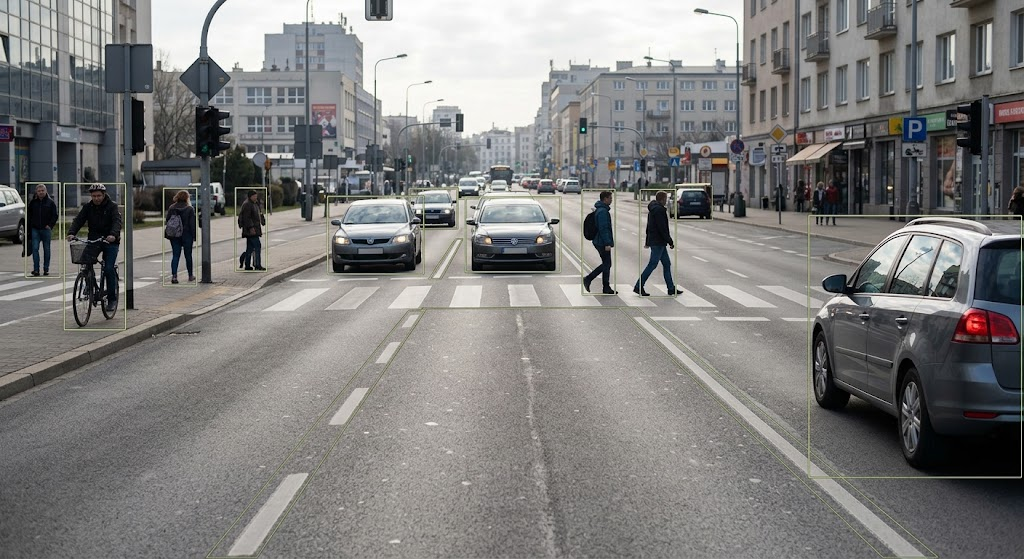
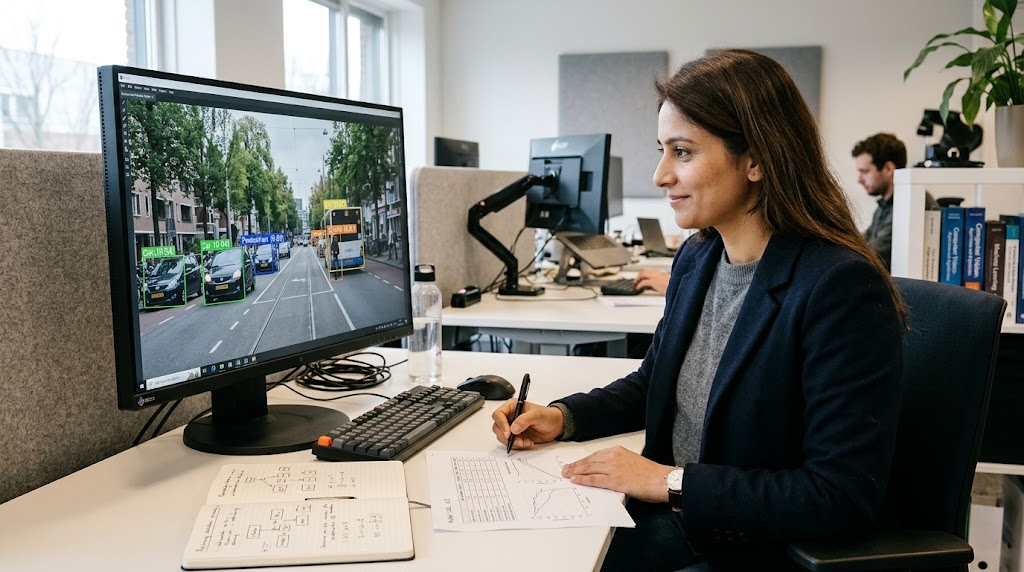
Object detection identifies an object and estimates the position of the object in an image. Object detection differs from classification, which detects only one object in one photograph, by identifying numerous objects within a single photograph, through the use of bounding boxes.
The technology is used to monitor traffic, warehouse processes, security systems and manufacturing inspections. A factory camera might alert of missing parts on an assembly line, for instance. Small, hidden and less-illuminated objects can be missed, however.
3. Facial Recognition
Facial Recognition is a method used to verify or identify people by their face. In general, the system recognises a face, transforms the image into a number that describes its characteristics and then compares the number to a stored set.
Facial recognition could also be used on smartphones as an authentication mechanism, or even as a means of identity verification by some organizations. These systems can still be in error and a privacy concern. Proper safeguards and protection of your data, and proper human review, are important, especially when identities can be misidentified and lead to serious consequences.
4. Image Segmentation
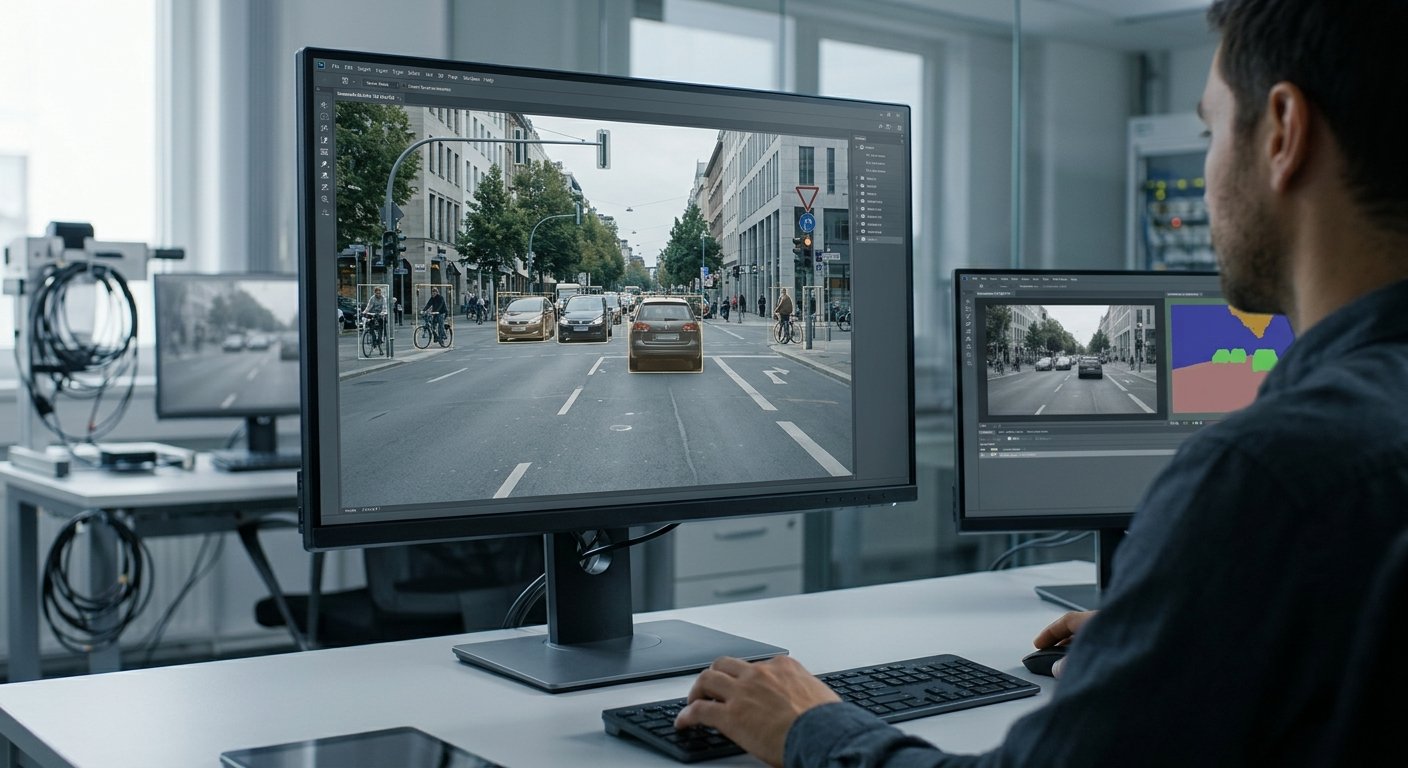
Image segmentation assigns labels to the separate pixels that helps identify locations with the computer. Segmentation can go around the actual edges of objects, as opposed to rectangular boxes as with object detection.
This technique can be applied in medical imaging, autonomous driving, and industrial inspection. For instance, a model can be used to distinguish different types of road surfaces from pedestrians and vehicles, or to delineate different types of anatomical structures in medical scans.
How Convolutional Neural Networks (CNNs) Works
Several deep learning models such as convolutional neural networks (CNNs) are commonly employed in the instance of computer vision in AI. These networks learn visual features through layers of mathematical operations rather than relying entirely on manually written recognition rules. During training, machine learning models learn patterns from examples and adjust their parameters to improve predictions. Early layers may detect edges, shapes, and corners, while deeper layers identify more complex patterns associated with complete objects.
CNNs operate with the convolutional filters that slide across image data to look for patterns and form feature maps. The network will take part in the adjustments it must make to improve its predictions during the training phase. CNNs have found several applications like image classification, object detection, and medical image analysis. Understand what is a convolutional neural network and their use.
While CNNs are beneficial, they may not perform well in new settings or when presented with incorrect visual structures. The accuracy of their performance relies on proper training data, appropriate model design, and rigorous testing.
Newer Models used in Computer Vision.
- Vision Transformers
Vision transformers are built using Transformer models for visual data. They tend to break down an image into small patches and they train relationships between different patches, often with attention mechanisms.
These models can be used to classify images, and for other visual tasks, sometimes learning relationships that are hard to encode by only considering local features of the image. Nevertheless, their computational needs differ and CNNs could be still more suitable under certain circumstances.
- Vision-Language Models
Vision-language models are models that utilize vision and natural language processing (NLP) simultaneously. They can provide descriptions of photographs, respond to questions about pictures, and assist users in locating pictures through written descriptions. As these systems process visual information that may contain identifiable people, it is also important to understand the privacy risks associated with collecting and handling personal data. These models can make it easier to search, understand, and interact with visual content.
These models facilitate the visual search, accessibility features, and document analysis. They do not always interpret pictures correctly or credit them with detailed descriptions, though, so their responses could not be used when such accuracy is required.
Real World Applications of Computer Vision
- IPhone, iPad, and consumer devices.
With smartphone FRBR, computer vision solves the problems of face recognition, photo enhancement, background blur, document scanning, and object identification. Certain applications can extract text from images and/or allow users to use a picture to search for comparable products.
The features render day-to-day devices more convenient, as they bridge the gap between visual information and searchable information of use to the user.
2. Security Systems
Security cameras observe people, vehicles or motion through an application of computer vision. Some kind of automated alerts can alert operators to instances that warrant attention without needing to observe all these cameras.
But light, shadows and blind spots can work the other way round and cause errors. These systems need to be protected for privacy and have some human control.
3. Autonomous Vehicles
Computer vision enables the autonomous vehicle and the driver assistance systems to detect traffic signs, lane markings, cars and even pedestrians. Object detection and image segmentation are used to provide the system with information about the road situation.
Computer vision needs to be paired with safety systems and testing – either because there will be unexpected obstacles, rain, fog or glare that will impair accuracy, all of these require the use of computer vision in conjunction with proper safety systems and testing.
4. Medical Imaging
Medical images include X-rays, CT scans, MRI scans and can be analyzed using the computer vision system for medical purposes. The AI models can point out areas of concern, quantify anatomic tissues or enhance recognition of visual patterns.
Such tools might help with some aspects of the clinical evaluation, but they cannot replace the expertise of qualified health care providers who interpret them and make decisions.
5. Online Search for Goods and Internet Services.
Computer vision is used by manufacturers to look out for irregularities, missing parts, and other product defects during the manufacturing process. Consistency can be achieved and issues can be detected earlier with automated inspection.
Online services use it to: organise pictures, enhance product searches, extract text from documents, categorise digital content. The accuracy will be dependent on the accuracy of visual information and the accuracy of the model.
Challenges and Limitations of Computer Vision
Computer vision systems may have difficulties with anything from blurry images, low light, unexpected objects, to environments that are different to their training examples. Another problem of biased datasets is uneven performance across populations or conditions, due to the lack of balance.
Other issues are privacy, security and computing expenses. To safeguard visual data, test models in realistic conditions, keep an eye on performance, and have human review for critical decisions, organizations must take steps to protect visual data, test models under realistic conditions, monitor performance, and establish human review procedures for critical decisions. The predictions made by AI tools must not be taken as common knowledge.
The Future of Computer Vision
Computer vision technology is being enhanced by innovations such as deep learning, vision transformers, and multimodal AI. Future systems could gain their ability to understand complex scenes, to interpret longer video sequences and to integrate the visual with language and other sensor data.
New models could also enable the addition of sophisticated visual recognition to small devices, such as phones, cameras and robots, as well. However, continued progress will depend upon reliable testing, responsible use of data and appropriate human oversight.
Conclusion
Computer vision involves interpreting images and videos with machine learning of the visual pattern in numerical data. AI technologies like image classification, object detection, facial recognition, segmentation, and convolutional neural networks enable computers to recognize objects and gain valuable data.
The features enable use in smartphones, security, transportation, medicine, industrial solutions, online services and other areas. While computer vision is getting better with time, there are conditions of correctness, model design and high quality of data involved. Knowing its strengths and weaknesses helps to decode how AI can process the visual world and support humans to get increasingly complicated tasks done.