Introduction
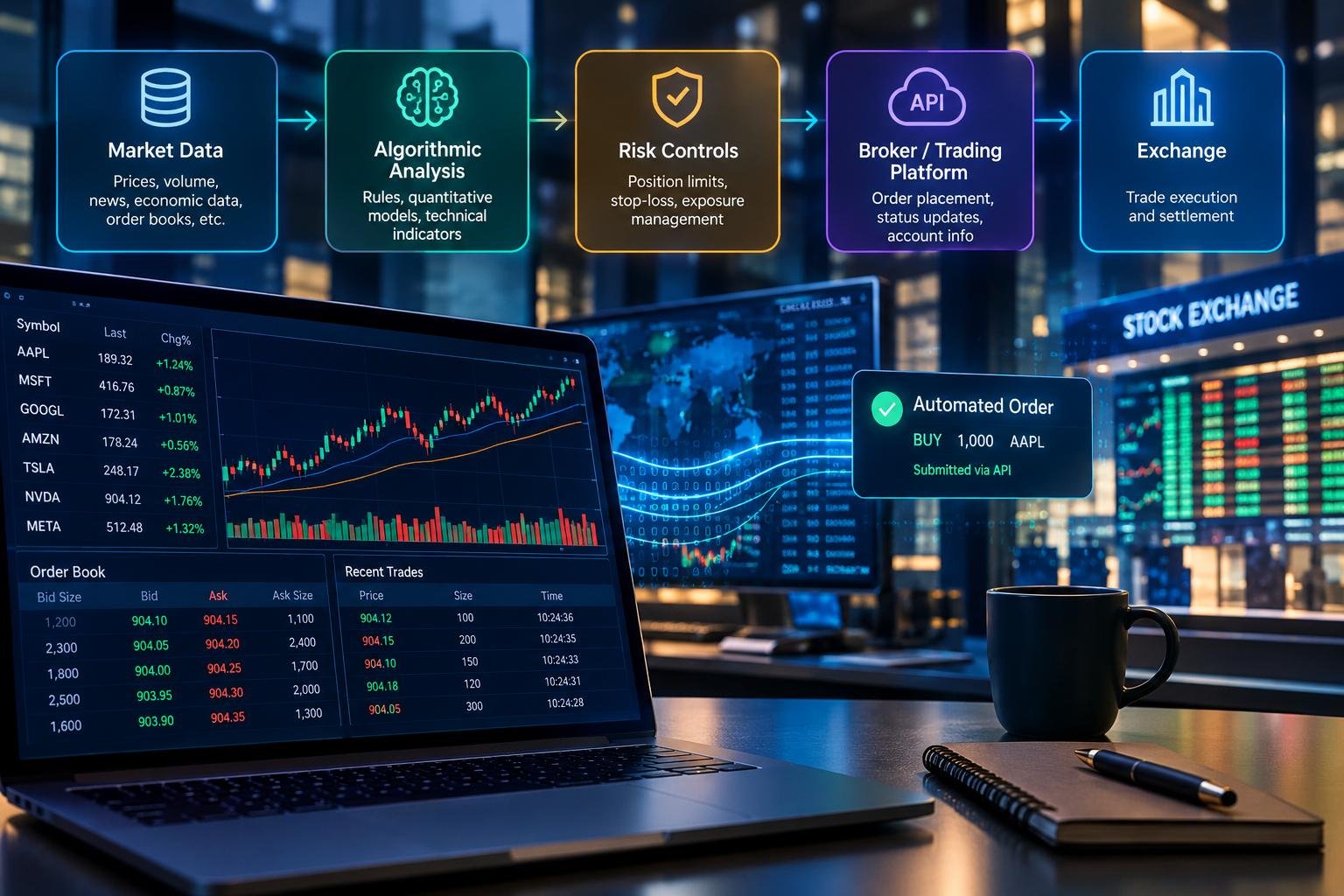
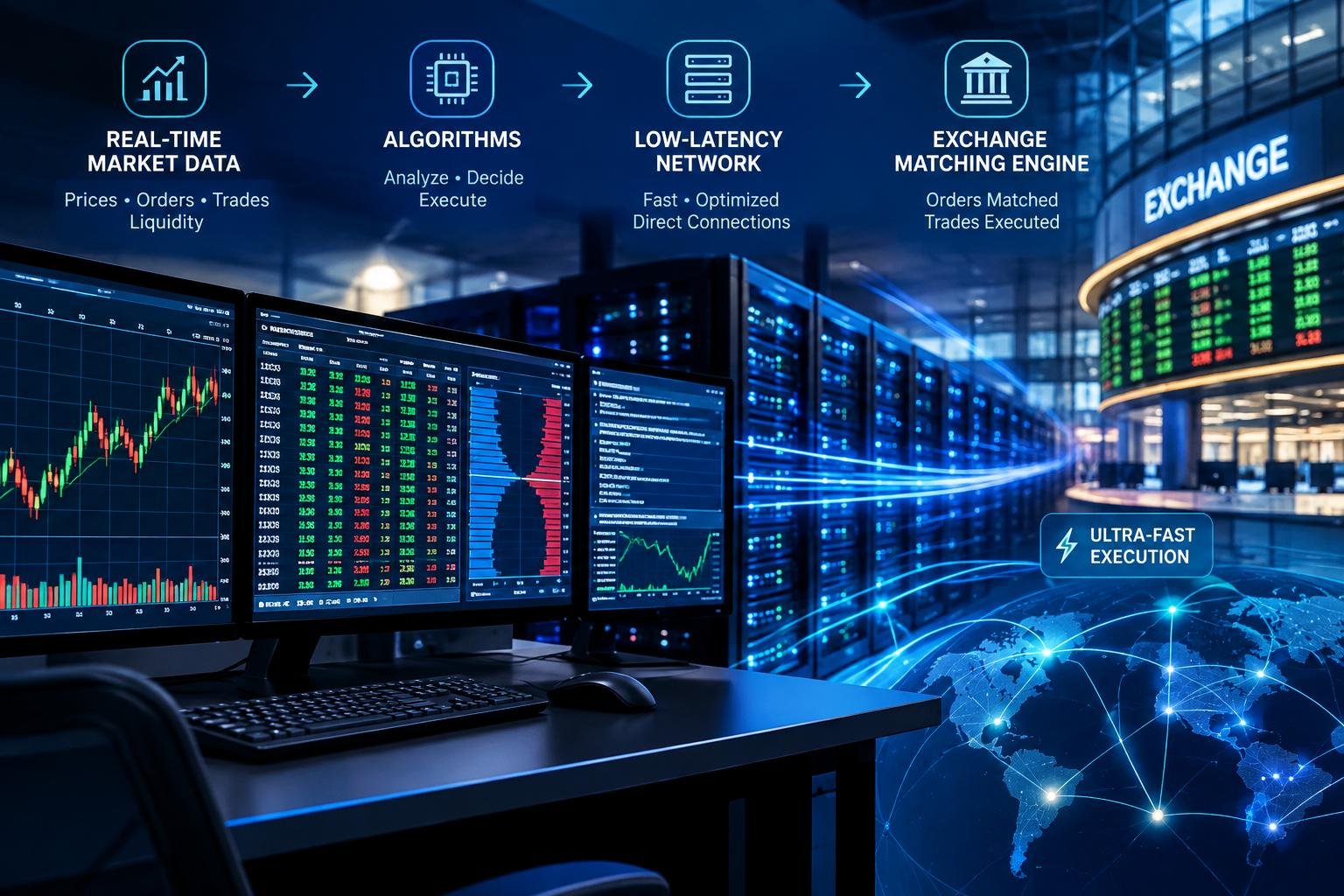
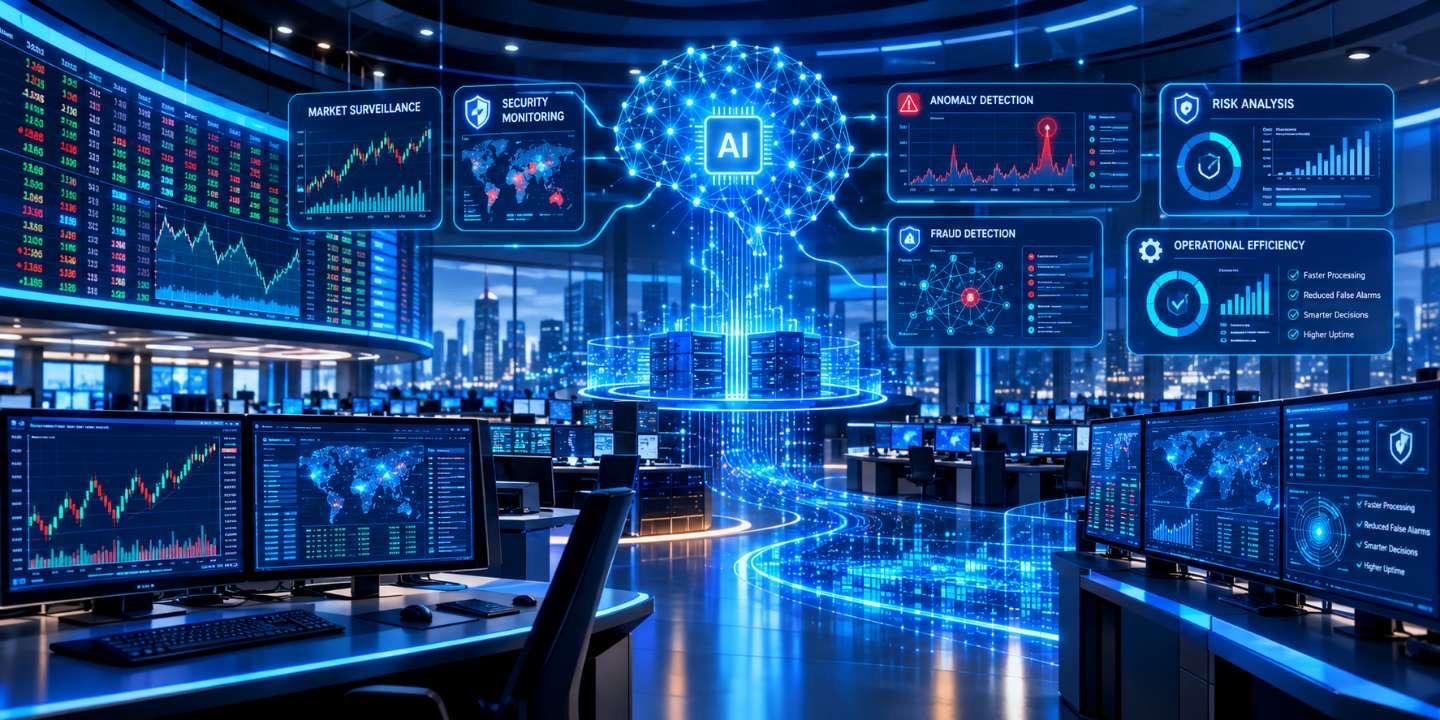
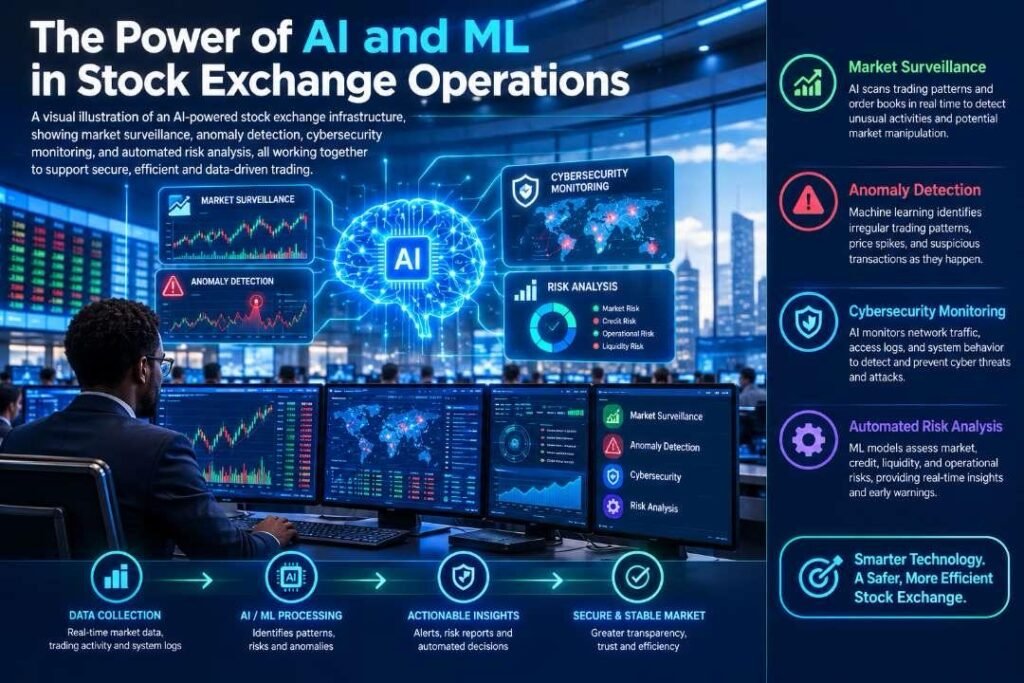
The vast number, velocity, and complexity of today’s financial markets are increasingly putting a strain on stock exchanges that rely on a complex technology to operate. Exchanges are handling millions of orders, price changes, cancellations, transactions and other points of data every trading day, and they are required to keep a close, accurate and efficient watch on them. Artificial intelligence (AI) and machine learning (ML) are now being integrated into this infrastructure to aid exchanges in recognizing unusual activity, bolstering surveillance, analyzing large amounts of data, bolstering cybersecurity and automated risk monitoring processes. As opposed to a system of AI that mainly recommends investments or forecasts asset prices, these applications help to support infrastructure that can enable financial markets to operate safely and efficiently.
Using AI in an exchange is not just about AI’s ability to make stock recommendations to an investor; it’s also about how AI can help with order entry, execution, and settlement. Thus, the application of AI in an exchange can be much more than the ability of a computer to recommend a stock to an investor. Exchanges host intricate technological systems with matching engines, market data systems, clearing connections, surveillance systems, cybersecurity protocols and operational databases. These systems produce enormous amounts of data, which can be challenging to look at in real time by human teams. This information can be processed by a machine-learning algorithm, which can detect patterns that warrant investigation and aid human investigators in prioritizing their investigations. AI can also help with repetitive tasks during operations, enabling humans to concentrate on tasks that call for judgment and specialized knowledge. But, the integration of AI doesn’t mean that humans have been replaced. Models can generate false alarms, fail to recognize threats that are not in their repertoire, or be unpredictable when market conditions shift. That’s why, AI is slowly becoming seen as “extra” market infrastructure, not a replacement for individuals and existing controls.
AI and Market Surveillance
Artificial intelligence plays a crucial role in exchange infrastructure, particularly in market surveillance. Exchanges are responsible for tracking trading activity for conduct that could be in violation of the rules of trading or compromise in the integrity of the market. One of the common approaches used in traditional surveillance systems is to define specific rules that detect certain patterns, e.g., unusually large orders, unusual trading sequences or trading around market events. These rules are still helpful, they are open and can be constructed on models of misbehavior known. Financial markets are, however, very dynamic, and suspicious behavior is not necessarily predictable. Machine learning systems can be used in conjunction with the traditional rules to look for relationships and patterns in past and current trading data that can be hard to spot with the naked eye.
Order frequency, order cancelation, trading volumes, price trends, timing, and trading patterns between various market participants and securities can be analyzed using AI-powered surveillance. A model can assess if a series of transactions is unusual given a series of typical transactions rather than just whether an individual transaction is unusual. This can be useful for surveillance teams to look at if they suspect that the market is being manipulated, trading patterns are odd, or other activity is suspicious and needs to be explored. As another advantage the technology can also help filtering out the number of irrelevant alerts by prioritizing cases based on their characteristics. But if there’s an unusual pattern, it’s not necessarily indicative of wrongdoing. Unusual activity can be caused by legitimate trading strategies, market news, changes in liquidity or unexpected events. Human investigators are therefore still needed for the interpretation of alerts and to decide if more action is necessary.
Financial Markets Anomaly Detection
Anomaly detection has close relationship to surveillance, but with a much wider application. A financial anomaly could be a strange pattern in the market, an unusual amount of activity in the system, unusual transactions, or data that deviates from norms. Past data can be used to train machine-learning algorithms to generate a model of “typical” behavior, and then to identify observations that are at odds with that model. This ability is useful as exchanges have to take in massive amounts of information and it is not feasible for staff to manually check each and every piece of data. An AI can continually analyze input data and flag what it believes should be given special attention, which enables an operational/surveillance team to focus their efforts more precisely.
The problem is that there is a good deal of “natural variation” in financial markets. It doesn’t necessarily mean there’s manipulation or any failure in the system when a major economic announcement, corporate earnings release, geopolitical development or sudden change in investor sentiment results in unusual prices and trading volumes. A model that overstates the likelihood of an unusual event indicating a suspicious activity might produce too many false positives or “alarms” and burden the persons tasked with investigating the case. On the other hand, if a model is overfitted to the past, it may not identify an abnormal type of behavior from the past. Crafting a good anomaly detector, then, requires careful selection of the data, frequent checking of the model, selection of proper thresholds and human review. The goal isn’t just to look at what’s different, but to give helpfully discernable signals that can aid in the investigation and operational decision-making process.
Detecting and Monitoring Transactions for Fraud
AI and machine learning can also be used in the financial-market infrastructure to detect fraud. Fraudulent activity can include unauthorized transactions and/or account takeovers, unusual logon activity, or multiple simultaneous logons coming from the same account. Typical fraud controls are based on predefined conditions to detect potentially fraudulent activity. For instance, an alert could be triggered if a transaction is greater than a specific amount or if the account activity is not the same as a pre-determined pattern. With machine learning, you can leverage more than these capabilities, as you can analyze multiple variables and find relationships that are not represented by a simple rule.
Machine learning can be used to create a model that can learn from past transactions and identify patterns that are characteristic of a legitimate or suspicious transaction. The model can analyze new activity as it comes in and provide a risk signal if there are large differences between the activity and the learned patterns. This can be especially helpful where fraud is more of a series of lesser transactions vs. one suspicious transaction. AI can also be used to synthesize data from various events, accounts, devices or access points, potentially uncovering patterns that are hard to discern when analyzed on a case-by-case basis. Meanwhile, there are certain systems that detect fraud that have to be carefully managed, as false alarms will be a nuisance to legitimate users, and no alarms will be noticed could be a serious problem. Responsible deployment is thus essential and should ensure that data quality and model transparency, privacy and continuous monitoring are part of it.
AI and Cybersecurity
AI is increasingly being applied to exchange infrastructure in the field of cybersecurity. The stock exchanges are very tempting targets, as they run important financial systems and deal with valuable information. Cybersecurity teams need to scrutinize network traffic, user access, system logs, applications, and other indicators for signs of breaches. The volume of information produced by these systems can be huge, and we can see an increasing need for automated analysis. Machine-learning systems can analyze the activity continuously and recognize patterns that don’t match the normal operations of the system, which could aid in faster detection of suspicious activity by security staff.
AI can be a helpful tool in cybersecurity to detect abnormal login profiles, abnormal changes in system activity, suspicious communication patterns, or other factors that could be of interest. It can also be used to filter out alerts when thousands are generated by monitoring systems, and prioritize them. But AI poses cybersecurity challenges in its own right. There are two types of approaches that attackers can take: They can try to alter the training data or they can try to exploit vulnerabilities in the models; they can even intentionally generate a type of activity that fools automated detection systems. A successful model in normal circumstances could be different in the presence of a novel attack. Exchanges should thus have multi-layered security measures that integrate AI with traditional security technologies, access controls, encryption, human resources, testing, and incident response protocols.
Data Analysis and Market Intelligence
The volume of data generated by financial exchanges is massive, and it can be leveraged to enhance market knowledge and operations. AI has the ability to analyze more information, both structured and unstructured, often much faster than humans would, and can help identify trends, relationships and operational patterns. Machine learning tools can analyze trading volume, trading order activity, distribution of market data, system performance and more data created during trade. The analyses can lead to the identification of shifts in system demand, potential constraints, unexpected market dynamics and opportunities for increasing infrastructure capacity.
AI can also help enhance market-data services by analyzing data. Exchanges provide information to users, financial technology firms, institutional players, and brokers, which all systems need to be accurate and responsive. Machine-learning methods can be used to analyze data quality and to detect inconsistencies or anomalies that might warrant further investigation. Predictive analytics can also help operations teams identify times of higher system traffic. Notably, these applications differ from AI investment strategies. An exchange that’s leveraging machine learning to study performance in its infrastructures or to gather and process market data is no longer using AI to decide which securities investors should buy is not an exchange that’s using AI to decide which securities investors should buy. Technology is now being invested in to enhance the processes by which market information is generated, processed, monitored and distributed.
Automated Risk Monitoring
Another significant use of AI in financial-market infrastructure is automated risk monitoring. Like other market participants, exchanges must be able to recognize, identify and monitor the operational, market, technology, and compliance risks they are taking. Manual risk reviews can be useful but cannot be used to continuously monitor very large and complex systems. Automated monitoring can analyze relevant data continually and trigger alerts based on set thresholds, or on machine-learning models that detect unusual conditions. This enables risk teams to explore potential issues early, instead of through regular review.
Machine learning can provide a more adaptive, automated risk monitoring that takes into account a range of factors. A system could look at several aspects of trading activity, system performance, transaction behavior, etc. to determine if there are combinations that are worthy of consideration. This can facilitate exchanges to adapt to shifting circumstances whilst keeping a controlled method to risk management. But automation must not be the end-all, be-all solution for risk decision-making. Risk in financial markets may be related to situations not captured in past experience, especially when it comes to unusual market conditions or technologic shocks. Good systems will thus incorporate automated notifications and straightforward escalation pathways, manual checks, recorded controls, and on a regular basis testing.
Maximizing Efficiency and Automating Processes.
AI can also help enhance the efficiency of exchanges in their operations, as well as for surveillance and security purposes. Financial-market infrastructure entails numerous repetitive tasks such as data classification, alert processing, system monitoring, reporting and documentation, and information management. Automation can save time for manual work for repetitive tasks, and free up time for employees to focus on decisions involving judgment. Machine-learning systems can also be used to identify recurring operational issues and offer information that can be used to enhance processes over time.
The exchanges need to be highly available and reliable, which is why operational efficiency is crucial. An issue with a component of the infrastructure could impact brokers, investors, market-data users and other participants. AI systems can be used to track the condition of infrastructure and detect any odd changes that might signify an emerging technical issue. Predictive methods also may be used to warn maintenance personnel of systems that need attention before failure. These applications can help to avoid unnecessary manual monitoring, but they mean yet another dependence on technology. If the automated monitoring system fails or gives false information, then employees must have other systems to maintain monitoring. Thus, AI should enhance operational resilience instead of it being a single point of failure.
Difference between Exchange AI and AI-Driven Investment Strategies
It’s crucial to differentiate between AI utilized by exchanges and AI-driven investment methods. In general, AI used for investing tries to assess financial data and provide indicators that may affect investment buying, selling, allocation and investment management. AI for exchange infrastructure is not used for the same purpose. It exists mainly to facilitate the functioning, security, monitoring and efficiency of the marketplace itself. For instance, a surveillance model could detect abnormal trading when it does not call for buying or selling of a security. A second example of a cybersecurity model is one that identifies suspicious network activity, but does not actually make a security investment decision.
The difference is important due to the different goals, risks, and measures that are applied. The quality of the financial predictions or trading results in an investment model can be used for its evaluation, the quality of detection, the number of false detections, the speed of the response and the reliability of operation in an exchange surveillance model can be used for its evaluation. Both systems (data and algorithms) have their responsibilities and operate in different environments. This distinction helps clarify why it’s easier to see why AI is becoming a part of the financial markets’ infrastructure even if the exchange itself is not managing an investment portfolio via AI.
Restrictions and Dangers of AI in Exchange Infrastructure
While AI offers significant advantages, it also has its drawbacks that need to be handled with care by financial-market operators. The quality and relevance of the training data for machine-learning models are crucial. An historical record may have biases, gaps, errors, etc. that only represent historical market conditions, which may not be representative of current market conditions, and if it does, may not be reliable. Another occurrence in models is what is sometimes referred to as model drift when the model’s performance adapts to the environment. A system that is well-trained in a more normal market environment could act differently in extreme markets, when technology is changing, or under any type of unusual trading activity. This restriction makes it essential that AI systems are not only tested, validated, monitored and updated, but that this process is continuous and never ends.
It’s also important of transparency. In some systems that use machine learning, it’s hard to understand how the system makes a decision, especially if there are many factors involved in making a complex decision. In financial-market infrastructure, this can pose problems when regulators, auditors, security teams, or exchange operators have to determine the reason for an alert or the reason that a system has acted in a certain manner. Other privacy, cybersecurity, data-governance and accountability issues also exist. If an automated system sends out a false alert, or misses an important threat, one can’t just say that the algorithm was to blame. Human organizations are still responsible for the design, deployment, monitoring and governance of these technologies. As a result, robust governance and limits must be placed on data, trials, access, model updates, human oversight, and incident response to ensure responsible AI implementation.
Conclusion
Artificial intelligence and machine learning will be a growing part of the technology infrastructure of financial markets. They can be used in various applications, including market surveillance, anomaly detection, fraud prevention, cybersecurity, data analysis, risk monitoring, and operational automation. The primary opportunity is not necessarily the ability of computers to perform a task that humans cannot, but rather the ability of financial-market organizations to process vast numbers of data and process important clues in a timely manner. As exchanges go digital, and increasingly connected with one another, the capability to get the information, and analyze it, on an ongoing basis will continue to be valuable.
Concurrently, AI needs to be considered as a technology that must be governed and not simply a panacea for all infrastructure issues. Models may be wrong, historical data may be dated and new types of market or cyber activity may not look anything like in the past. Human intervention is thus still crucial in the process. The role of people in the future of AI in stock exchanges will be to give context, investigation, judgment, accountability and the future of AI will be to collaborate between the different kinds of automated systems and for monitoring and analyzing large numbers of stocks. AI, when properly applied in a controlled environment, can be a valuable asset in modern-day exchange systems, assisting in maintaining reliability, security, and efficiency in financial markets.
Get more well researched information about AI and machine learning in stock exchanges here.