Introduction
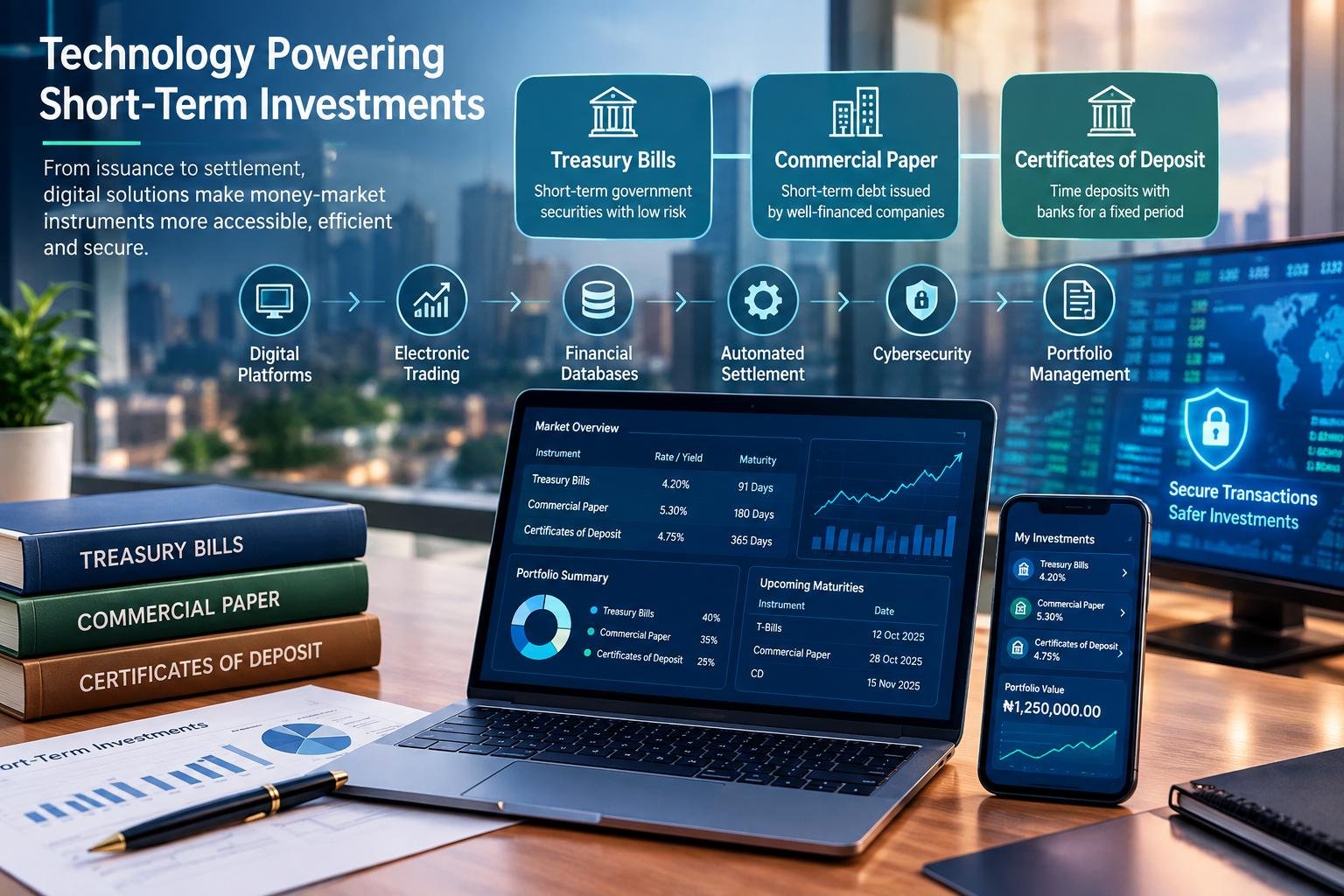
Short-term investments are an essential component of the modern financial markets since governments, businesses, banks, and investors can use these to safeguard cash in the financial markets and to earn returns reasonably quickly. Some of the most common money-market instruments include certificates of deposit, commercial paper and Treasury bills. Although traditional, the processes of issuing, trading, recording, monitoring and settling these products has become more and more digitalized. In the present day, digital investment platforms can provide investors with information about the market, transaction services, investment opportunities and records of investment portfolios through a website. These platforms are supported by electronic trading networks, financial databases, automated accounting systems, payment systems and cyber security measures. Technology not only helps investors to make investing convenient, it also seems to have a role in making investing more efficient. It links market participants, minimizes human effort, accelerates financial transactions, and assists institutions to manage liquidity risk and operational risk, as well as keeping a record of transactions.
Understanding Money-Market Instruments
Money-market instruments are financial instruments that are traded in the money market generally for a period of 1 day to 1 year. They have significance due to the fact that institutions may require a place to temporarily park excess cash and businesses and governments may require short-term financing. The treasury bills are short-term government securities that are issued to raise funds and manage public finances. Commercial paper is a short-term debt that is mainly issued by well-financed corporations to finance their working capital and short-term requirements. A c.d. or certificate of deposit is a time deposit that is made by a bank or other financial institution that is usually paid interest for a specified period of time. The reliability of financial infrastructures is essential for the success of each instrument, which has different issuers, risk, returns, and accessibility. This infrastructure is complemented with technology, which enables participants to access information, transact, keep track of ownership, track maturities, determine returns and arrange payments.
The New Treasury Bills and the Electronic Issuance
One of the best-known money-market instruments is the Treasury bill and is considered relatively low-risk because it is the obligation of the government issuing the bill. Often they are sold at a discount and at maturity the investor will get back the face value, although there are different possibilities from market to market. The changes in the technology have modified the issuance and administration of Treasury bills. Electronic auction systems can be used for the announcement of an offering, receive bids, allocate, and keep transaction records, all by government debt offices, central banks, and authorized financial institutions. An electronic system can quickly process many bids and verify information, compared to paper systems. Digital records can identify the amount allocated, price or yield, and maturity date, after an auction. Electronic records also provide an audit trail which enables market operators and regulators to review transactions, report on them and to detect any administrative discrepancies.
Trade in Commercial Paper and Digital Market Operations
Commercial paper provides companies with another financing option for short-term finance, in addition to bank borrowing. It can be used to meet working capital needs, stocking inventory, paying salaries, receivables, and other short term needs of the business. Investors in commercial paper require some helpful information about the issuer, the amount of the paper, its maturity, its pricing, and its financial position. These activities are facilitated with the help of technology such as electronic issuance systems, dealer platforms, financial databases, and analytics. Documentation can be managed electronically by issuers and intermediaries, disseminated to investors, and records kept of existing obligations. Market information can be used by investors to make comparisons based on yield and credit quality of the various issuers. Automated monitoring might also detect maturities that are coming up and inform the treasury teams of the tasks due. In markets characterized by high levels of activity, these capabilities are very useful especially when a large number of instruments need to be monitored with precision and efficiency.
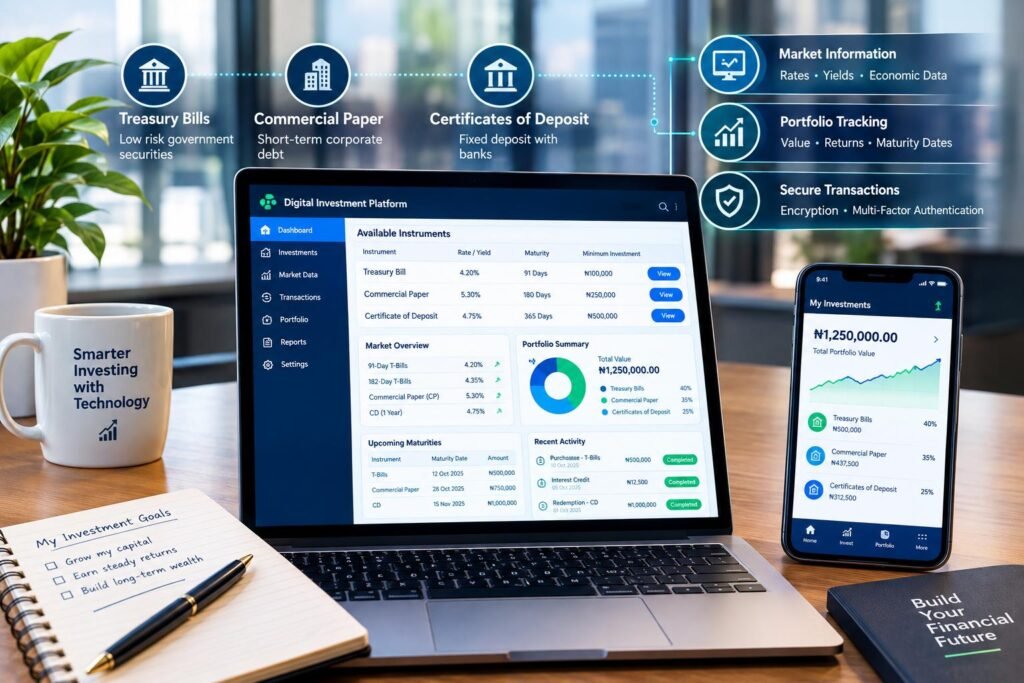
Certificate of Deposit through Banking Technology.
CDs have a close relationship with the banks because they are a form of investment of funds with a bank for a fixed time, typically exchanged for a guaranteed rate of interest. They can be offered to individual, institutional and business investors, depending on the product and jurisdiction. Technologies have been developed to facilitate certificates of deposit from the time they are acquired until they mature. The banking system can develop electronic records of the principal amount, interest terms and conditions, the date of the issue, the date of the maturity, and the details of ownership. Investment information can be accessed via secure internet banking systems and automated systems can make interest calculations, statements, record updates, and maturity instructions. Automation is a solution that gives institutions a better understanding of when funds will be available when they have numerous certificates. This assists the treasury manager’s decision making process on investment, according to the cash requirements, and minimizes the risk of missed maturity dates as well as risk of manual calculation mistakes.
Access and Investment through Digital Platforms
With the introduction of information and transaction services into online platforms, digital investment platforms have made it easier for people to gain access to short-term investments. Depending on the market, an investor can view the instruments available, compare rates or yields, make an instruction, get an instruction confirmation, and track his/her investments in one window. Such platforms can link the investors with banks, brokers, dealers, government securities systems or other financial infrastructure. They’re not just convenient due to the ability to arrange investment balances, transaction history, maturity dates, and projected cash flows. Some will even alert or offer account-security features. Technology doesn’t mean investment risk is removed though. However, there are still some fees, liquidity, maturity, issuer quality and the trustworthiness of the platform invested that investors need to know of. A quick-digital process is worthless without accurate information, the proper level of security and investment judgment.
ETP- Electronic Transactions and Trade Processing
A major part of the business conducted by the money market is electronic transactions; these transactions involve a vast volume of orders, confirmations and payments, which must be made correctly. An electronic workflow can also confirm and validate, identify and match, confirm trade, arrange payment and update ownership records upon purchase of a short-term instrument. An automated interface between financial systems can enable a transaction to be sent directly without having to re-enter the same information into the system by an employee. This saves time in the processing, and minimizes manual data entry errors. Electronic confirmations also provide records which may be utilized for reconciliation and auditing. Integration of trading platforms, treasury applications, accounting systems and payment networks for banks and institutional players creates a seamless flow of information from the time of trade initiation to the time of trade settlement. This leaves for a better and more coordinated process, with various aspects of the financial institution having access to consistent transaction data.
Financial Information and Market Information
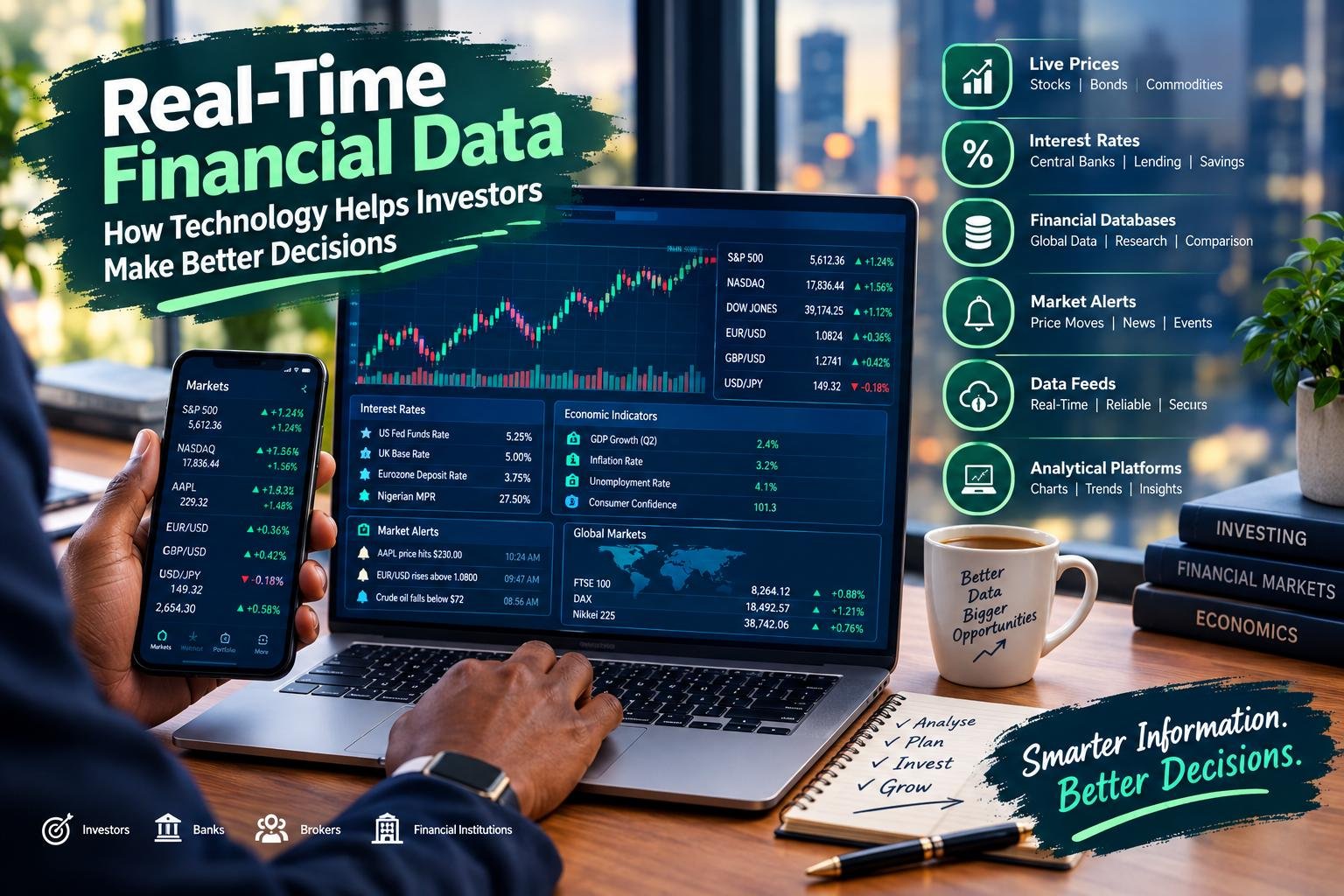
Financial databases and market-information systems are crucial as investors must have accurate information before they can make their investment decisions and allocate their short-term capital. Such databases may include indicators, economic data, maturities, historical transactions, issuer data, interest rates and prices. Large-scale amount of financial information can be gathered, organized, updated and transferred to the professional users with the help of technology. Treasury teams are able to track short-term rates and consider their impact on investment performance and/or the cost of corporate financing. Analytical systems can be used to compare instruments, to compute portfolio measures, to spot trends and to aid in forecasting. Some of the other things a portfolio tracking tool can capture are the dollar value of investments, the price at which they were bought, their current value, the anticipated income, and the investment’s maturity date. Automated alerts can inform users of securities that are coming to maturity as well as when certain market conditions occur that were selected by the user, thereby providing greater visibility and enabling the manager to respond faster.
Automated Settlement and Financial Record-Keeping
Automated settlement and record-keeping aid in ensuring that a settled transaction is accurately recorded in cash and securities records. Settlement takes place when the buyer furnishes payment and the financial asset or ownership record is given or changed. Technological solutions for settlement infrastructure can include using banks and settlement systems, payment systems and securities depository through electronic systems in order to complete the settlement. This automated reconciliation process then checks records from other systems to identify discrepancies in amounts, prices and dates or any account information in the records. This is crucial as it can lead to operational and reporting issues even if there’s a minor discrepancy. Technology can also assist in financial reporting processes, such as keeping the transactions in history, producing reports, computing earnings on financial investments, and getting ready details for audits or regulatory needs. Reliable settlement systems, therefore, are more than just fast – they set the operating basis for making short-term investments in a safe manner.
Protecting the Security of your Systems and your Liquid Assets
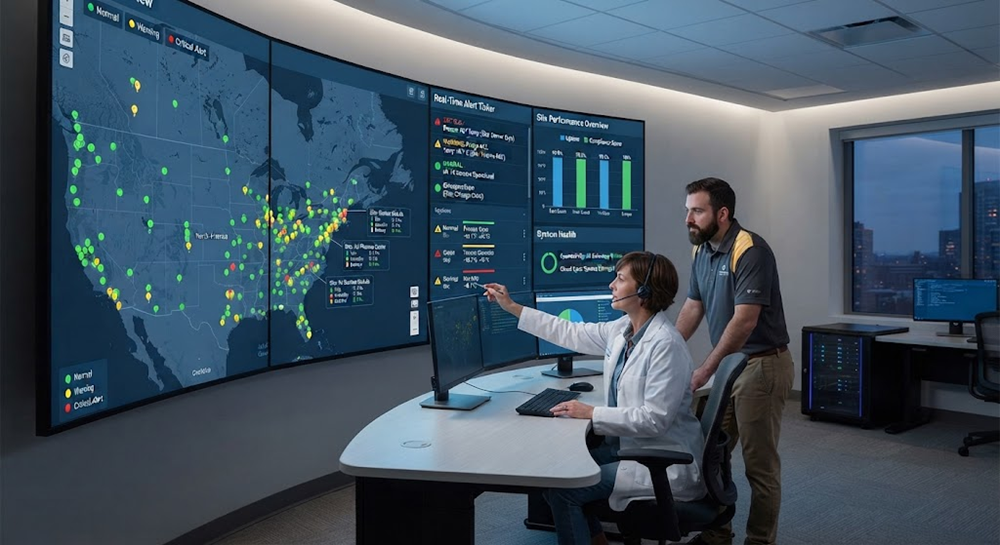
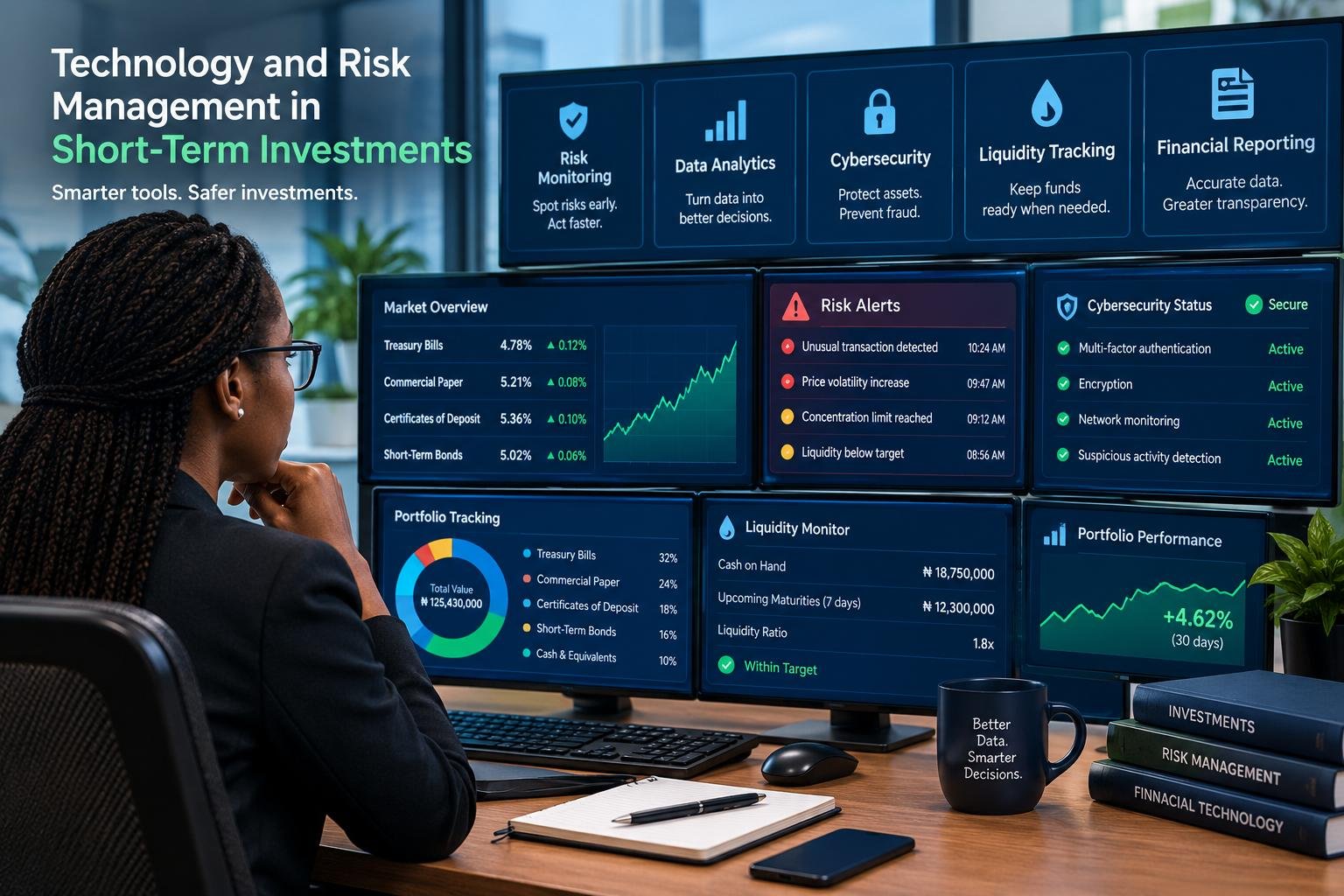
Along with the technology-enabling money-market investing, cybersecurity is a crucial component of liquidity management. The financial institutions and investment platforms possess valuable assets and sensitive information, which are targeted by phishing and account takeover, malware, fraud, and unauthorized transactions. Multi-Factor authentication, encryption, access control, transaction monitoring, and automatic alerts are all security features that safeguard digital investment activity. Meanwhile, liquidity systems can keep treasury teams track of cash holdings, when investments are due to be paid out, what is due to be paid and available cash on demand. Banking and investment data can be integrated on dashboards to allow managers to view their liquidity situation. Advanced analytics could also be used for scenario analysis and to detect over-exposure of a specific maturity or issuer. While technology can’t provide absolute liquidity or stop all cyberattacks, it helps provide visibility and enhance controls, while providing decision makers with information that is timelier as they navigate operational and financial risks.
Conclusion
Money-market operations will likely become even more automated and connected, with increased data analysis. AI and advanced analytics can aid in making credit decisions, detecting fraud, predicting future transactions, tracking for anomalies, and analyzing financial portfolios, and cloud-based systems can provide flexibility and scalability for financial applications. As regulation and market conventions evolve, digital record technologies also could have an impact on the issuance, transfer and settlement of certain financial assets. But as automation takes over more functions, it is essential that there is an increase in cybersecurity, data accuracy, system resilience and human supervision. While treasury bills, commercial paper and certificates of deposit are old investment vehicles, the technology has become all-important to their efficient operation. Electronic issuance, electronic platforms, financial databases, automated settlement, portfolio management and security controls all combine to create a more efficient and efficient short-term market. By understanding this connection, investors will realize that they need not only select a money market instrument to invest in, but also the technology that will enable them to manage the investment life cycle.
Get more well researched information about Technology in Short-Term Investments here.