There is packaging, and then there is packaging for equipment that absolutely needs to arrive ready for use.
That distinction matters in the defense industry.
A commercial shipment might spend a few days moving between warehouses before reaching a customer. Military and defense equipment can have a much tougher journey. Components may travel long distances, move through multiple facilities, encounter changing climates, and remain in storage for extended periods.
A basic cardboard box and some packing material? Sometimes that’s simply not enough.
Military packaging provides a more comprehensive approach to protecting equipment throughout transportation and storage. Military Packaging serves as a go-to source for MIL-SPEC packaging, military packaging supplies, military specification boxes, ASTM D5118 boxes, W5C boxes, V3C boxes, Fast Packs, desiccants, barrier materials, creped neutral wrap, films, bags, tubing, wooden crates, and custom military packaging solutions.
The objective is straightforward: protect the equipment and make packaging procurement easier.
Military Packaging Begins With Risk
Professional packaging design should begin with an assessment of potential hazards.
Physical risks include shock, vibration, compression, abrasion, and movement within the shipping container. Environmental concerns can include humidity, moisture, dust, contamination, and extended exposure to changing storage conditions.
The product itself introduces another set of considerations.
Weight, fragility, dimensions, materials, surface finishes, and sensitivity to corrosion can all influence packaging selection.
Military packaging brings these factors together.
The exterior container is important, but it is only one element of the complete system. Interior cushioning, wrapping materials, barriers, desiccants, blocking, and bracing can be equally important depending on the application.
Think About What Happens After the Loading Dock
It’s easy to package something based on what you see in front of you.
The product fits. The box closes. Everything looks secure.
Done, right?
Not quite.
Think about what happens after that package leaves your building. Someone loads it onto a truck. It gets unloaded. Maybe it goes into a warehouse. Then another truck. Maybe an aircraft. Maybe an ocean shipment. Then another warehouse.
Every step adds another opportunity for something to go wrong.
Good military packaging anticipates that journey rather than simply surviving the first trip across the loading dock.
Military Specification Boxes
Corrugated packaging is widely used throughout defense logistics because it provides an efficient combination of strength, versatility, and relatively low weight.
Military applications, however, may require specific types of corrugated containers.
Depending on the requirement, buyers may encounter ASTM D5118 boxes, W5C boxes, V3C boxes, weather-resistant boxes, MIL-SPEC boxes, and other military shipping containers.
These aren’t terms a procurement team should have to figure out after the product is already waiting to ship.
Military Packaging provides military specification boxes for defense contractors, government suppliers, manufacturers, and other organizations handling demanding shipments.
Having a reliable military packaging supplier also makes repeat purchasing much easier when the same packaging configuration is used across ongoing orders.
Moisture Can Be a Bigger Problem Than Impact
People naturally think about physical damage when they think about shipping.
Dropped boxes. Crushed corners. Forklift damage.
But moisture can quietly create just as serious a problem.
A metal component may arrive with no visible damage to the container yet show signs of corrosion after extended storage. Humidity can affect sensitive equipment without ever leaving an obvious clue on the exterior packaging.
Military preservation packaging helps address these environmental concerns.
Barrier packaging can help isolate equipment from external conditions, while desiccants can help control moisture inside properly prepared packages.
For sensitive equipment, these materials can become essential parts of the packaging system rather than optional extras.
Military Packaging supplies desiccants, flexible barrier materials, bags, films, and other moisture-protection products for military and industrial applications.
The Role of Protective Wrapping
Protective wrapping creates separation between the product and other packaging materials.
Creped chemically neutral wrap is particularly useful for military packaging applications where components need a flexible protective layer.
The creped construction allows the material to conform around irregular shapes while providing surface protection.
It can be used around machined components, assemblies, metal parts, and other products before additional packaging materials are applied.
Combined with an appropriate container, cushioning, desiccants, or barrier packaging, chemically neutral wrap can become one component of a complete preservation system.
Military Packaging provides creped neutral wrap alongside the other materials needed to build that system.
Small Part? Still Important.
A $50,000 assembly isn’t automatically more mission-critical than a small replacement component.
Sometimes the entire machine is waiting on that one small part.
That is why smaller military components still need appropriate protection.
Military Fast Packs provide a practical option for many electronics, instruments, repair parts, and precision components.
Fast Packs combine an exterior container with internal cushioning designed to reduce the effects of shock and handling.
They’re standardized, practical, and easy to incorporate into packaging operations.
For organizations shipping many smaller components, that’s a pretty useful combination.
Poly Bags, Films, and Tubing Keep Packaging Flexible
Military packaging operations rarely deal with products in one convenient size.
One day the packaging department may handle a small machined component. The next shipment could involve a long assembly or a group of individual replacement parts.
Flexible packaging materials help accommodate that variety.
Poly bags can keep components separated and protected from dust and dirt. Films provide wrapping and covering options. Tubing can be cut to accommodate different product lengths.
Barrier bags provide additional protection when the packaging method requires greater environmental control.
Military Packaging supplies these products alongside rigid military containers, giving customers more flexibility when developing packaging configurations.
When the Equipment Is Too Big for a Box
Eventually someone rolls a massive piece of equipment onto the packaging floor and asks, “How are we shipping this?”
That’s when things get interesting.
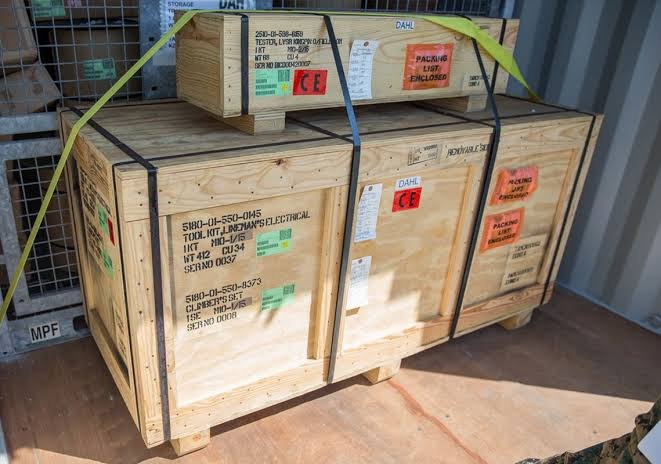
Heavy machinery, vehicle components, aerospace assemblies, industrial equipment, and oversized defense products may require custom wooden crates.
The crate should be designed around the equipment.
A good crating system can include blocking and bracing to prevent movement, structural supports to distribute weight, cushioning around sensitive areas, and preservation materials when environmental protection is necessary.
Custom crating is especially valuable when the equipment is expensive or difficult to replace.
Military Packaging can provide custom military crates and heavy-duty packaging solutions for demanding defense and industrial applications.
Military Packaging Is Also About Efficiency
Protective performance matters, but procurement efficiency matters too.
Defense manufacturers operate under schedules, contract requirements, production deadlines, and shipping dates. Waiting until the final stage of production to locate specialized packaging materials can create unnecessary problems.
Working with a dedicated military packaging supplier helps organizations plan ahead.
When boxes, desiccants, barrier materials, protective wraps, Fast Packs, films, bags, and custom crates can be sourced through one supplier, purchasing becomes considerably simpler.
Fewer vendors can mean fewer quotes to manage, fewer purchase orders, and less time spent tracking down specialized packaging materials.
That’s time the procurement team can spend somewhere else.
From Small Machine Shops to Major Defense Programs
The military packaging market isn’t limited to giant defense corporations.
Thousands of smaller businesses participate in defense and government supply chains.
Machine shops manufacture precision parts. Electronics companies build components. Metal fabricators produce assemblies. Aerospace suppliers manufacture specialized hardware. Logistics providers handle transportation and storage.
Any of these companies can encounter military packaging requirements.
Sometimes they have dedicated packaging engineers who know exactly what they need.
Sometimes someone in purchasing gets a requirement they have never seen before.
Either way, having a military packaging source that understands these products helps.
One Source for Military Packaging Supplies
Military Packaging brings together products used throughout military preservation, shipping, storage, and protective packaging.
Customers can source MIL-SPEC packaging materials, military specification boxes, ASTM D5118 boxes, W5C boxes, V3C boxes, military Fast Packs, creped neutral wrap, desiccants, barrier packaging, poly bags, films, tubing, custom wooden crates, and other military packaging supplies.
That broad selection makes Military Packaging a practical resource for defense contractors, government suppliers, aerospace manufacturers, machine shops, industrial companies, and logistics operations.
Get the Packaging Right Before the Shipment Leaves
Nobody wants to receive the phone call saying a critical shipment arrived damaged.
At that point, you’re dealing with inspections, replacement products, additional freight, repackaging, paperwork, and possibly a very unhappy customer.
It’s much easier to address packaging risks before the truck leaves.
Military Packaging helps customers do exactly that.
Whether you need a military specification box for a recurring contract, desiccants for moisture-sensitive equipment, Fast Packs for small components, protective wrapping for machined parts, or a custom crate for a large assembly, Military Packaging provides a go-to source for military packaging products.
Because the real test of packaging isn’t how good it looks sitting in your warehouse.
It’s how well the product looks when someone opens it at the other end.