Introduction
Car problem diagnosis can be made easier with modern cars that rely on computers, sensors, and electronic control modules to monitor various systems and detect abnormal operating conditions. If the vehicle detects a problem, it could log a diagnostic trouble code and illuminate the check-engine light. These codes can be retrieved by an OBD2 scanner, and useful information about the systems being scanned can be given. It can also present live data from the sensors, freeze-frame data, and other diagnostic information that can provide a vehicle owner with clues as to what may be going on.
But an OBD2 scanner is not a magic bullet to tell you which part to replace. Typically, a trouble code will signal some problem with a system, circuit, or condition that needs to be examined further. The most effective way to do this is to use the scanner’s data in conjunction with the vehicle’s symptoms, basic visual inspections, and reliable research. It helps the owner to troubleshoot common problems with more logic and also in reducing the chances of replacing good parts and attempting to solve problems with the help of professional equipment.
Read and Record Trouble Codes
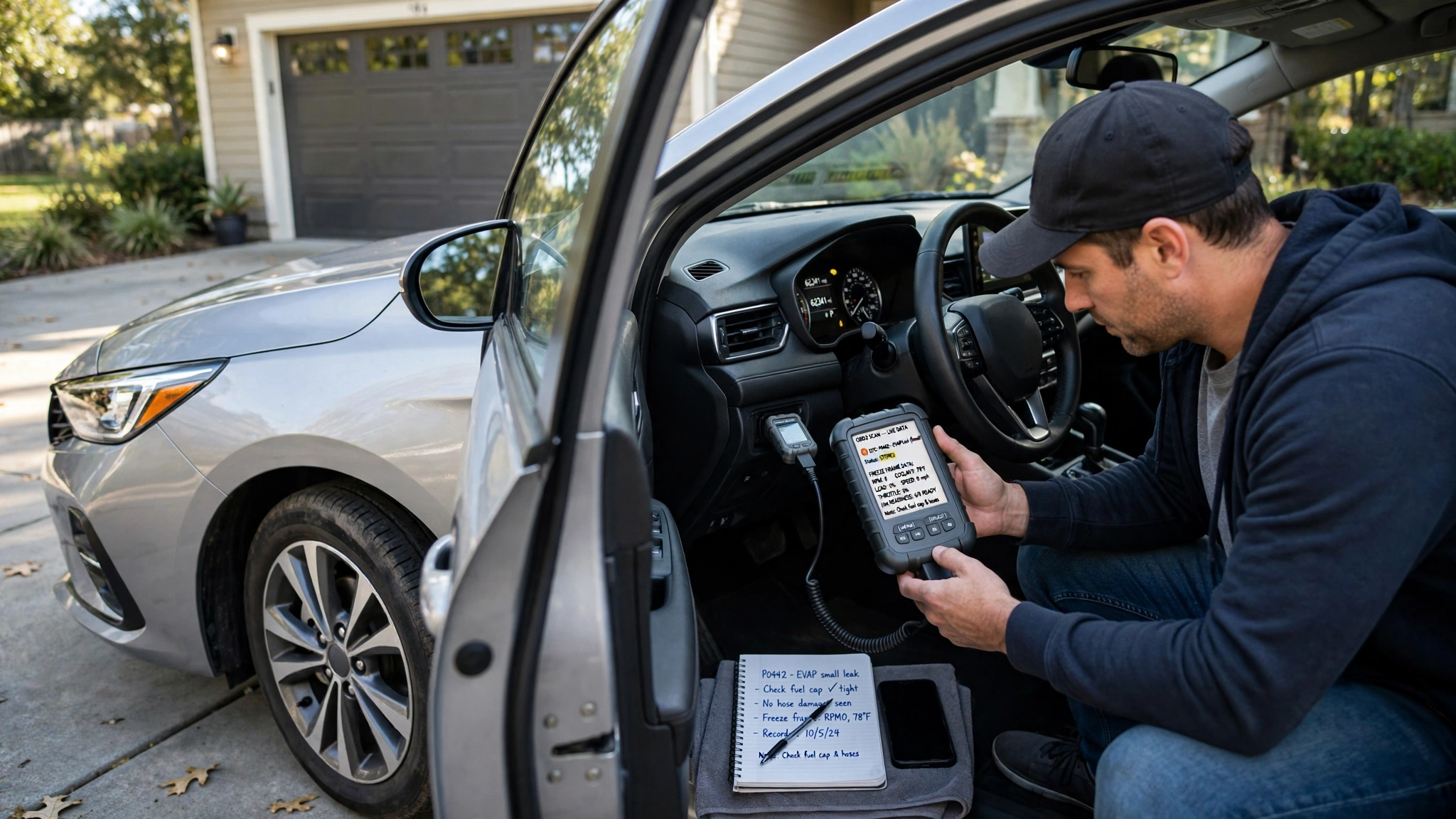
Park the vehicle in a safe place and find the OBD2 diagnostic port, which is usually found under the dashboard. Install the scanner per the manufacturer’s instructions and let the scanner communicate with the vehicle. After the scan, save and note any trouble codes that are saved or pending. Save or record any freeze-frame data that the scanner will display. It can display conditions of the vehicle at the time of the detection of the fault, including engine speed, temperature, etc.
Never clear the codes immediately after reading them. Too early can eliminate valuable data that can assist in determining when and how the problem occurred. Also, don’t presume the failed component by the description beside the code. A code with an oxygen sensor, for instance, might be connected to wiring, an electrical connection, a leak in the exhaust, or another engine condition. Documenting the information will provide a good starting point for diagnosis.
Inspect Vehicle’s Symptoms
Scanner information is much more helpful when it’s used in conjunction with the symptoms you are suffering from. Pay attention if there are any issues related to rough idling, hesitation, poor acceleration, difficulty getting started, stalling, excessive fuel consumption, or change in engine performance. Make an effort to determine when the symptom is happening. For instance, does it occur when the car is cold, when accelerating and during cold starts, when the engine is warm, or when the car is idling?
Another point to take into account is the vehicle’s history. Consider if the problem was caused by servicing, battery change, component replacement, or other maintenance. While the vehicle is parked and the engine is off, look for visible signs of damage to wiring, hoses, or any other mechanical parts, or any loose electrical connections, and check for any signs of fluids leaking from the vehicle. These simple observations can be helpful clues and can be used to link the scanner results to a physical issue.
Look at Available Live Data
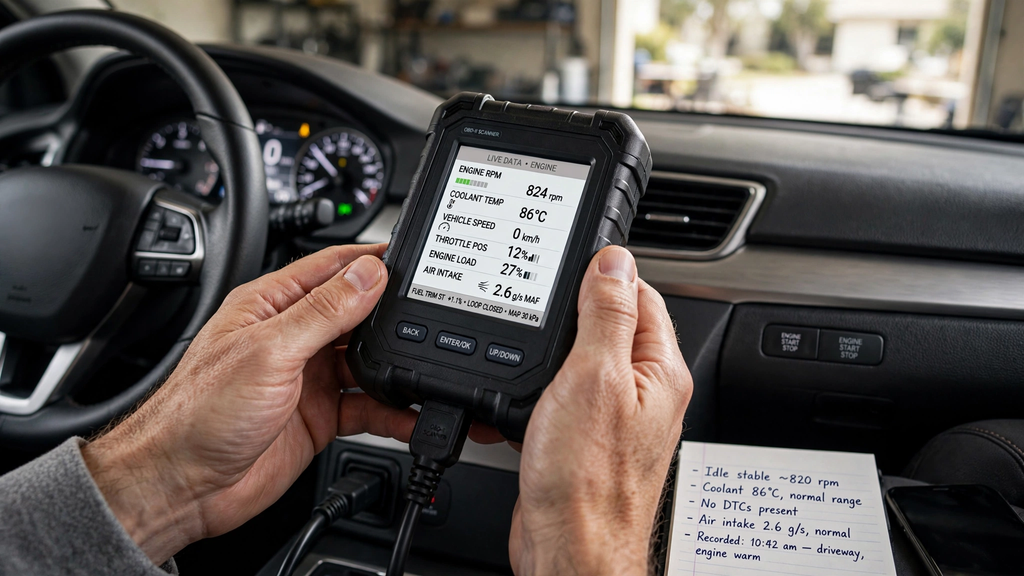
Live data is a feature of many OBD2 scanners that helps you see the information from the car’s various sensors and other systems as they are active during the engine’s operation. The readings you can get vary from vehicle to scanner: engine speed, coolant temperature, throttle position, air intake reading, fuel-related data, and oxygen-sensor data are some examples. This data is useful in determining what the computer in the vehicle is receiving from various sensors.
In order to interpret the live data, the following parameters are to be taken into account: engine temperature, vehicle speed, engine load, etc. The presence of one of these unusual values is not an outright rejection of the sensor. If possible, check the manufacturer’s specifications for comparison and inspect multiple values in parallel. This can be helpful to see a pattern, rather than making a judgment on one number.
Research Possible Causes
Once the codes have been documented and the data reviewed, research the meaning of the codes for your vehicle. There may be many reasons for the same diagnosis, and many reasons for the same diagnosis in different makes, models, engines, and model years. A trusted auto resource, manufacturer records, and suitable repair materials can assist you in comprehending what you should check next.
The aim of this research is to find the possible causes of the situation, not to buy the replacement part immediately. For instance, if a code is linked with one of the sensors, the sensor could not be faulty. Similar symptoms can occur if a wire is damaged, an electrical connection is not good, if there’s a leak in the air, or a problem with the power supply, or if another part is damaged. When purchasing parts, it is important to know these options ahead of time to avoid unnecessary repairs and expenses.
Safely Check Simple Problems
After determining the most likely possibilities, start with simple checks that are safe to make. You may check accessible connectors, look for any broken wires, check hoses for any obvious disconnections, or check components that may have been disturbed during recent maintenance, depending on the fault. The checks should be based on the diagnostic information gathered and not a list of possible repairs.
Safety is always a priority. Never put your hands in close proximity to moving engine components, operate around hot surfaces without taking the necessary precautions, or be in the way of fuel, braking, steering, or airbag systems without the proper knowledge and equipment. If further testing involves complex electrical tests, specific equipment, or a lot of parts removal, it might be best to halt and seek a professional diagnostic, since the chances are that the issue is beyond your capabilities.
Avoid Unnecessary Parts Replacement
One of the common errors made in self-diagnosis of vehicle troubles is to just swap out the part identified in the trouble-code description without further diagnostic steps. It can be a costly process if it turns out that the real issue is wiring, a connector, another component, or some other problem contained within the system. The inability to confirm the cause of the issue when replacing parts can also cause future diagnosis to be a challenge.
Instead, think of the scanner as part of the “process of elimination.” Begin by consulting the trouble code and matching it with the vehicle’s symptoms, review available live data, and conduct research on possible causes. Then make reasonable inspections of things which can be reasonably completed at home. If the evidence isn’t conclusive on the part that failed, don’t keep swapping parts for the sake of it! Additional testing may be needed prior to a repair decision.
Use Freeze-Frame Information
Freeze-frame information may be helpful as it can capture some of the operating conditions that a vehicle was in at the time of a fault detection. This can be a range of parameters such as engine speed, coolant temp, engine load, and others depending on the scanner and vehicle. This information will be helpful if you want to determine if the issue was due to cold start, normal operation, acceleration, or other factors.
This data should not be regarded as a complete diagnosis, but can be useful for working out the circumstances of the fault and linking to the stored code. In some cases, the problem will only occur under certain circumstances, and a freeze-frame may yield a valuable clue. It is thus valuable to note it prior to removing the codes.
Don’t Clear Too Soon
You might want to clear a trouble code right away, particularly if the car seems to be operating as normal. Removing information from the code before studying it, however, may be a problem. It can also reset some readiness monitors, which may need more driving for them to return to their normal state.
Depending on the vehicle and repair procedure, clearing the code may be appropriate if a repair has already been made that has been confirmed. Nevertheless, document the original code, symptoms, and the work done. This information can be useful if the warning light comes back on to see if the original issue is present or if there is another issue that has occurred.
Know When to Seek Professional Help
An OBD2 scanner can be helpful for a variety of common automotive diagnostics, but it is not capable of solving all vehicle issues. Many mechanical issues cannot generate a trouble code, and complex electrical issues can require special test equipment. Issues with brakes, steering, suspension, transmission, airbags, fuel systems, overheating, or other advanced electronic systems might need to be diagnosed by a professional, and not simple scanner tests.
There also are occasions when the vehicle is unsafe to operate and when the trouble can’t be resolved through standard troubleshooting procedures, when professional help is indicated. The technician might be able to use advanced scan tools, special diagnostic equipment and electrical testing equipment, as well as manufacturer’s service information. Providing the technician with the codes, symptoms, freeze-frame, and live-data observations that you have made may help to get things rolling and make the diagnostic process more efficient.
Conclusion

Owners who wish to work on their own vehicles can find an OBD2 scanner useful in some simple troubleshooting work. It may be able to retrieve diagnostic trouble codes, display available live data, offer a freeze-frame of data, and indicate systems that might be further investigated. These results, if they are used in conjunction with the symptoms of the vehicle and thorough investigation, can help to make diagnosis more systematic and minimize the guesswork.
The important thing to keep in mind is a scanner will only give you information, not a full repair diagnosis. Don’t clear codes, find out what might be causing the problem, check live data, and only look at codes that you can safely check. Most importantly, do not replace parts just because the names of the parts are mentioned in a trouble code description. If the problem is a safety-critical system, complex mechanical or electrical work, or something you don’t know or can’t work with using your tools, it is better to call in the professionals for diagnosis.