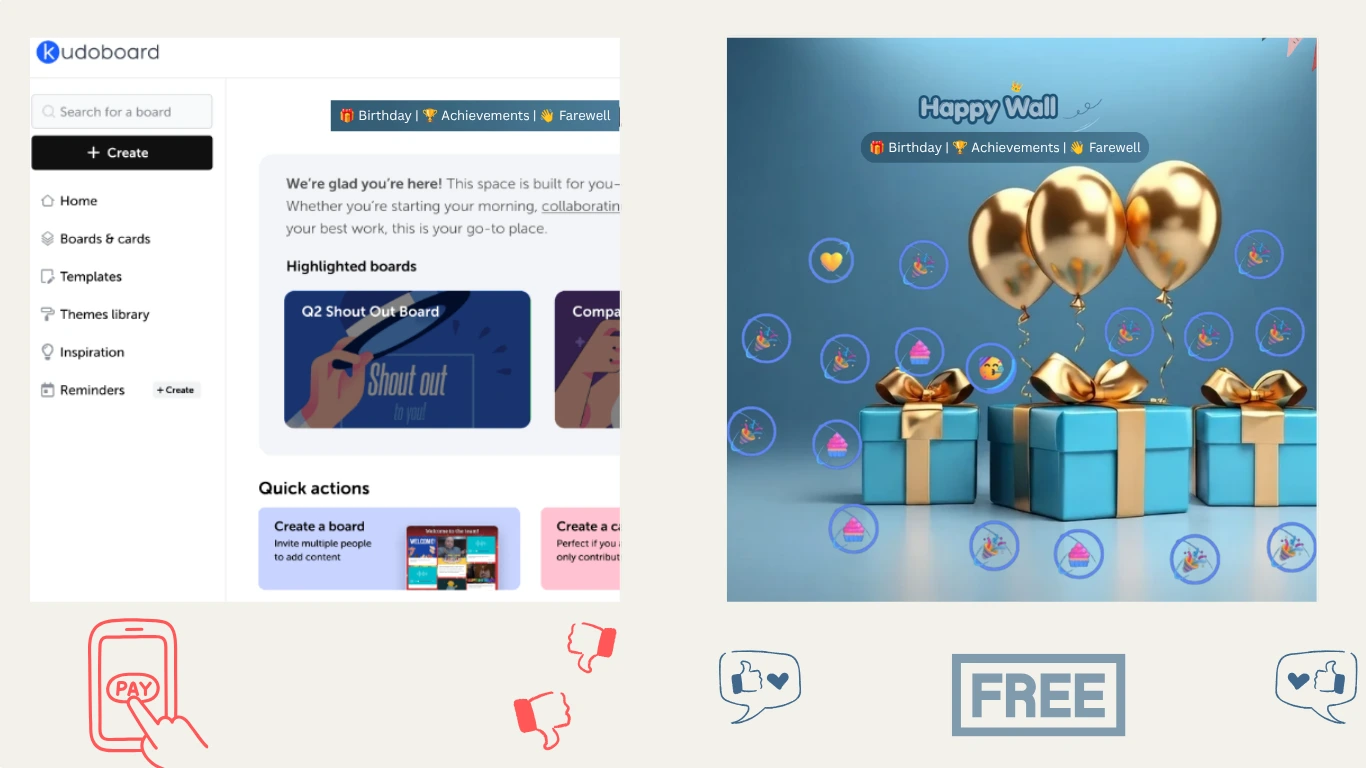
Group cards used to be simple. Someone starts a Kudoboard, drops the link in the team chat, and by the end of the week it’s full. That still holds for a five-person team. Once a department grows past ten or twelve people, the same process starts breaking down in a very specific, very predictable place.
Where Kudoboard’s Free Plan Runs Out
Kudoboard’s free tier puts a limit on how many people can add a message to one board. Once a card reaches that limit, adding more people means paying for the board. For a small team that ceiling rarely comes up. For a 40-person office trying to sign one card for a retiring manager, it comes up almost every time, and someone usually ends up buying a paid board just so the rest of the department can add a line.
There’s a second friction point that shows up before the cap even matters: Kudoboard asks every contributor to create an account before posting. On a phone, between meetings, that’s often the exact moment people close the tab and never come back. A card sent to 40 people with 9 actual messages is a normal outcome, not a rare one.
The Free Kudoboard Alternative Growing Teams Are Switching To
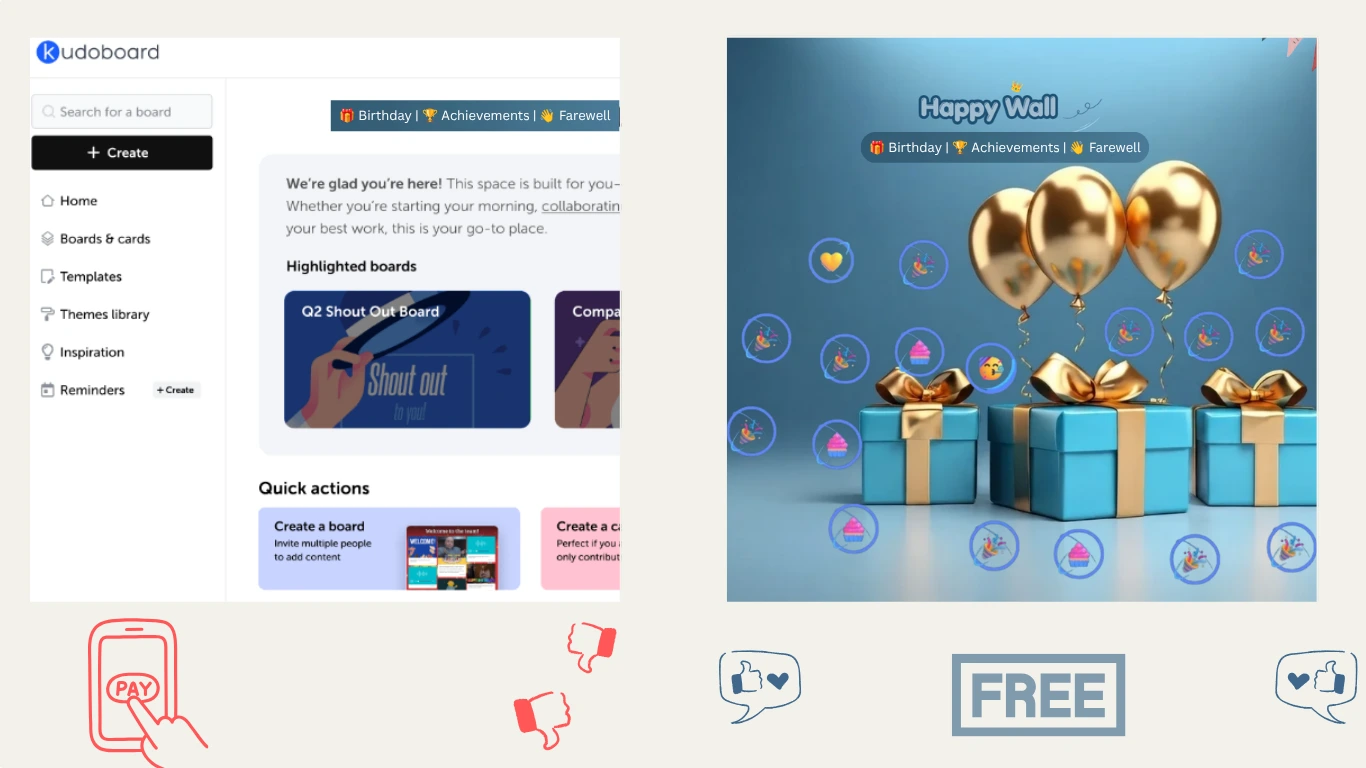
The teams working around this aren’t all buying the paid tier. A good number are moving to Happy Wall, a group card tool built around a different assumption: the card should scale with the team, not stop at ten people.
Anyone with the link can post a message, a photo, a GIF, or a short video, no account required. There’s no cap on contributors and no cap on messages, more messages is the whole point rather than something to manage around. Anyone staring at a blank box gets a few emoji-based prompts to suggest what to write, a short line counts just as much as a long one. The wall also updates live, so during the actual send-off or party, messages from remote coworkers can appear on a projected screen in real time instead of being read out later from a static page.
We put together a full free Kudoboard alternative breakdown covering pricing, contributor limits, and what each tool is actually good at, worth a look before deciding either way.
How the Two Actually Compare
| Kudoboard (Free) | Happy Wall | |
|---|---|---|
| Contributor limit | Capped, paid board needed beyond that | None |
| Account required to post | Yes | No |
| Live updates during the event | No | Yes |
| Cost past the free tier | Per board | Free to start |
Setting Up a Card in a Few Minutes
Starting a wall takes about as long as starting a Kudoboard: pick a background, add a photo of the person being celebrated, set a title and a short welcome message, then share the link. The real difference shows up later, once the card grows past what the free plan allows and everyone can still add their message instead of hitting a paywall.
For a small team, Kudoboard’s free plan is still perfectly fine, there’s no reason to switch if your card comfortably stays under the free limit. For anything bigger, a growing department, a whole office, a graduating class, it’s worth trying the version that doesn’t ask for a second purchase halfway through collecting messages.