Introduction
Honda Fuel Economy Guide covers compact cars to big SUVs and pickups. Honda MPG will vary from one model to another due to the different body, drivetrain, and engine configurations. Generally, hybrid models produce the best fuel economy, while larger vehicles like the Pilot, Passport, Odyssey, and Ridgeline have higher fuel usage due to their emphasis on passenger space, capability, and utility. Machines from both companies have their differences, and buyers will want to understand them before selecting a Honda that will meet their transportation requirements and budget for fuel.
The Civic Hybrid, Accord Hybrid, CR-V Hybrid, and Prelude Hybrid are some of the top choices when it comes to fuel-efficient Honda models for drivers looking for the most fuel efficient Honda: https://automobiles.honda.com/fuel-efficient-vehicles. But official EPA ratings are just a beginning. A number of factors, such as driving habits, tire pressure, traffic, weather, vehicle load, and maintenance, can influence real-world mileage. The choice of the right Honda, combined with proper driving and maintenance practices, can minimize fuel expenses in the long term.
Honda MPG Chart
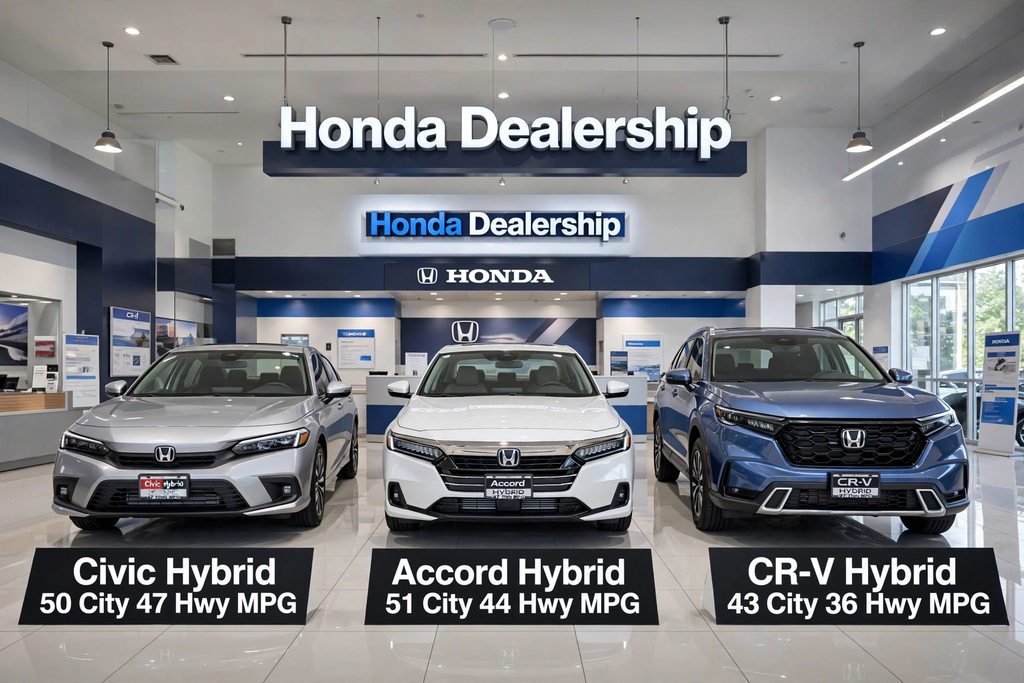
The following is a quick-reference guide to the fuel economy of major Honda models. Actual MPG may differ depending on the trim, drivetrain, wheel size, and equipment levels of each vehicle, so customers are advised to verify the specifications of the vehicle they are interested in.
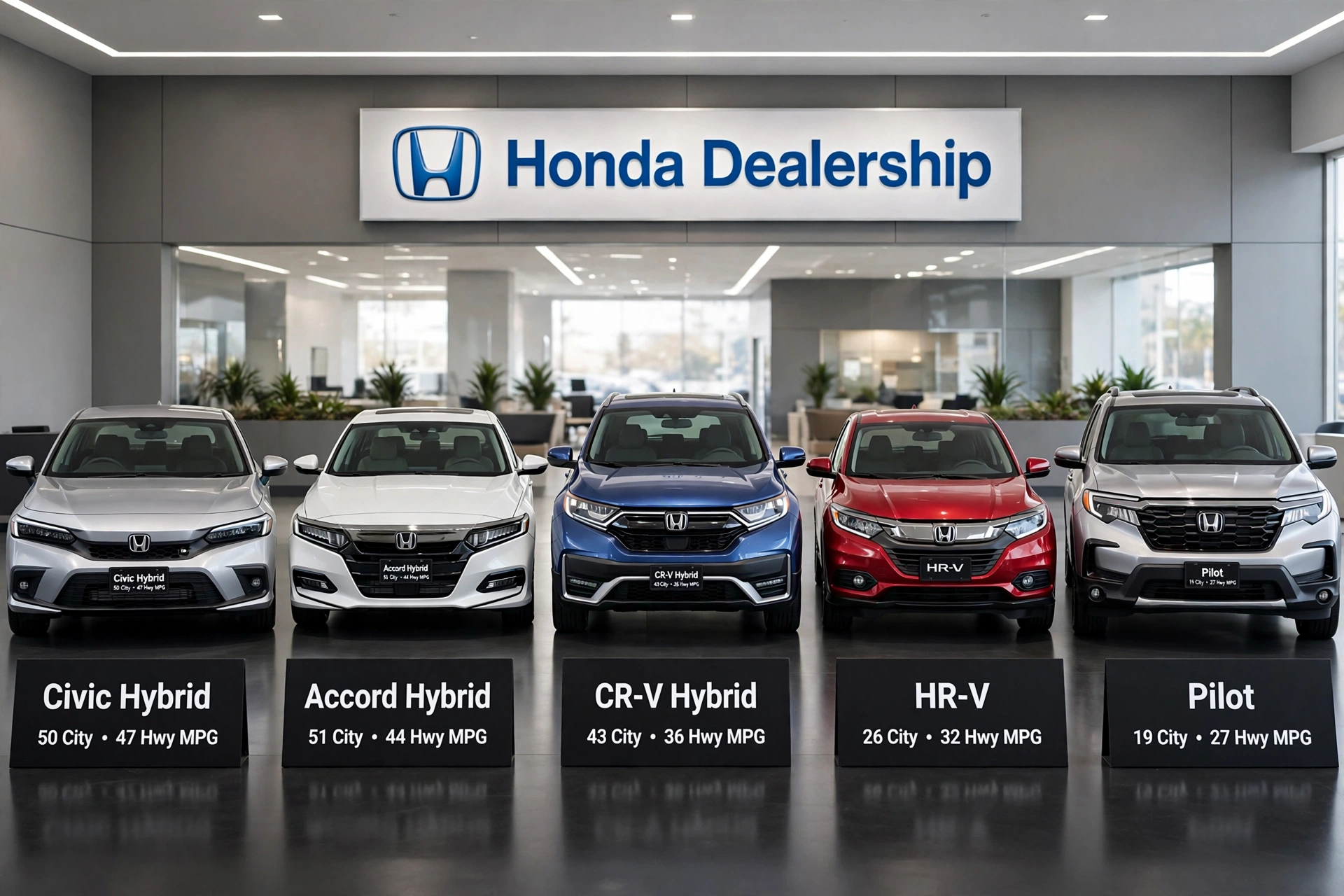
| Honda Model | City MPG | Highway MPG | Powertrain |
| Civic Sedan | Up to 32 | Up to 41 | Gasoline |
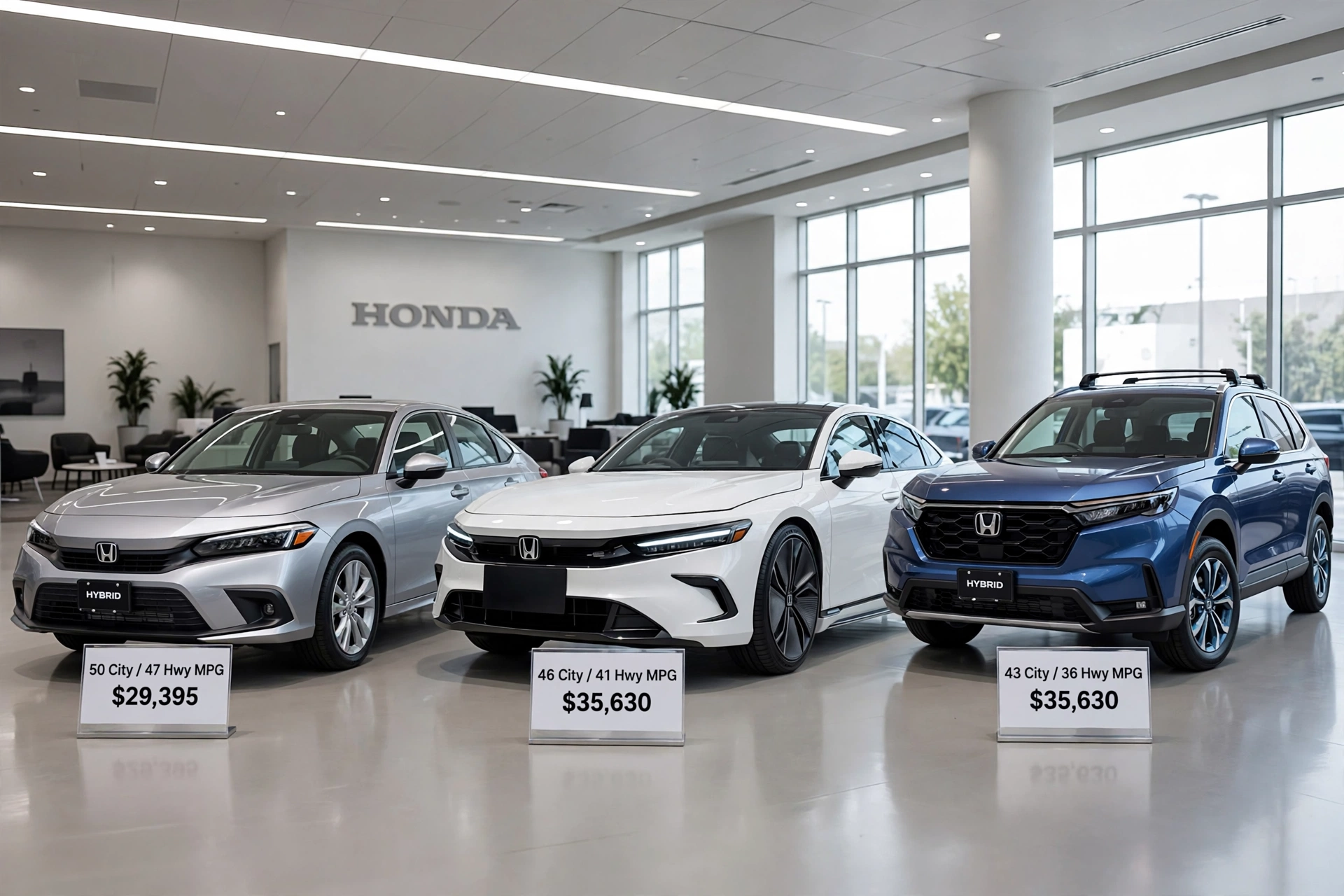
| Civic Hybrid | Up to 50 | Up to 47 | Hybrid |
| Accord | Up to 29 | Up to 37 | Gasoline |
| Accord Hybrid | Up to 51 | Up to 44 | Hybrid |
| HR-V | Up to 26 | Up to 32 | Gasoline |
| CR-V | Up to 28 | Up to 33 | Gasoline |
| CR-V Hybrid | Up to 43 | Up to 36 | Hybrid |
| Pilot | Up to 19 | Up to 27 | Gasoline |
| Passport | Up to 19 | Up to 25 | Gasoline |
| Odyssey | Up to 19 | Up to 28 | Gasoline |
| Ridgeline | Up to 18 | Up to 24 | Gasoline |
| Prelude | Up to 46 | Up to 41 | Hybrid |
The chart tells you why Honda’s hybrid models are appealing to a driver who is concerned about fuel savings. The Civic Hybrid can achieve up to 50 city MPG, the Accord Hybrid up to 51 city MPG (configurable). For those that prefer SUV functionality while sacrificing less fuel economy, the CR-V Hybrid is another solid option. Bigger Honda models have worse fuel economy but are bigger and more capable.
Civic and Accord Fuel Economy
Honda’s best shot when it comes to choosing an efficient everyday car is the Civic. The Civic provides good highway mileage on gasoline models, and the Civic Hybrid models get much more efficient. The hybrid boasts up to 50 city MPG and is particularly attractive to those who commute a lot in city conditions. The Civic is a good choice for commuters and small families, as it is a practical balance of passenger space, technology, and operating costs.
The Accord is more roomy than ever without sacrificing competitive fuel economy. In some configurations, its hybrid versions can reach up to 51 city MPG as well. This makes the Accord Hybrid an ideal option for those who are looking for a comfortable midsize sedan without taking on a car that normally consumes more gas. Over the years, the gap between the two may start to add up for those who put in a lot of miles behind the wheel.
HR-V and CR-V Fuel Economy
The HR-V is Honda’s smaller SUV and offers a great balance between SUV use and fuel efficiency. It achieves up to 26 city and 32 highway MPG in the most efficient configuration using a gasoline engine. The extra drivetrain components and weight can impact fuel economy, so opting for AWD can have a small negative effect. The HR-V offers a good choice for drivers looking for a small SUV but not the cost of a larger car.
The CR-V is available with gasoline or hybrid engines and has more room. The gasoline version can be up to 28 city/up to 33 highway MPG, and the CR-V Hybrid can be up to 43 city MPG. The hybrid makes a particularly good option for those who want to save on gas but still enjoy the space of an SUV. The best option, however, is tailored to the specific situation of how much the car will be driven and whether the extra expense of a hybrid is worth it for the buyer.
Pilot, Passport, Odyssey, and Ridgeline MPG
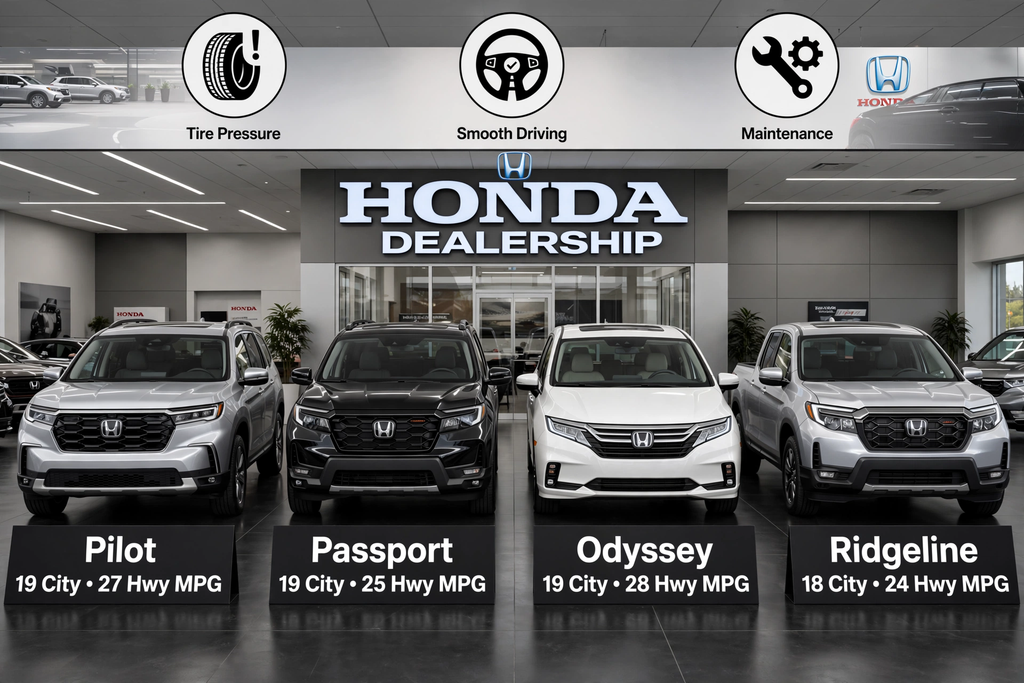
The Pilot, Passport, Odyssey, and Ridgeline are engineered with functionality in mind rather than for the highest fuel economy. The Pilot gets up to 19 city and 27 highway MPG, and the Passport gets up to 19 city and 25 highway MPG. The Odyssey can get up to 19 city and 28 highway MPG, while the Ridgeline pickup gets up to 18 city and 24 highway MPG. Much of this is related to their greater size, weight, and engines, and their utility drive design.
While they consume a bit more fuel, with proper driving practices and maintenance, they can achieve better MPG in real-world conditions. Getting rid of unnecessary cargo, keeping tires properly inflated, not driving too fast, and keeping unnecessary idling times to a minimum can all help. For those that require a bigger Honda, they should concentrate on finding the smallest one that fits their needs for passengers, cargo, towing, or hauling.
Tips for Improved Honda MPG Performance and Reduce Gas Usage
One of the simplest methods of improving fuel economy is to drive smoothly. Needlessly quick acceleration and hard braking are a waste of energy, particularly in heavy traffic. Rather, speed up slowly, stick to the speed, and anticipate traffic changes and slow down gracefully. Highway speed can also have a positive effect on mileage, as aerodynamic drag increases with speed. With a suitable road, cruise control can be useful since it will help to avoid unnecessary changes in speed.
Unnecessary idling and trip consolidation can also help save fuel. Running the engine when it is not moving burns gasoline for no gain, and multiple short trips may be less efficient than errands done in one trip. It can also be inefficient to have excess weight, which can also lead to fuel consumption. These adjustments are easy to make but can really add up over the course of the year.
Maintenance Tips to Maximize Fuel Economy
Nitrogen gas is one of the key factors in maintaining proper tire pressure on roadsters that can impact fuel economy. If the tires are not inflated properly, then there is more rolling resistance, which means the engine has to work harder to overcome it. Honda owners should keep an eye on the tire pressure and follow the recommended pressure for their car. Proper wheel alignment is also important because it can lead to uneven tire wear and resistance if the wheel is misaligned.
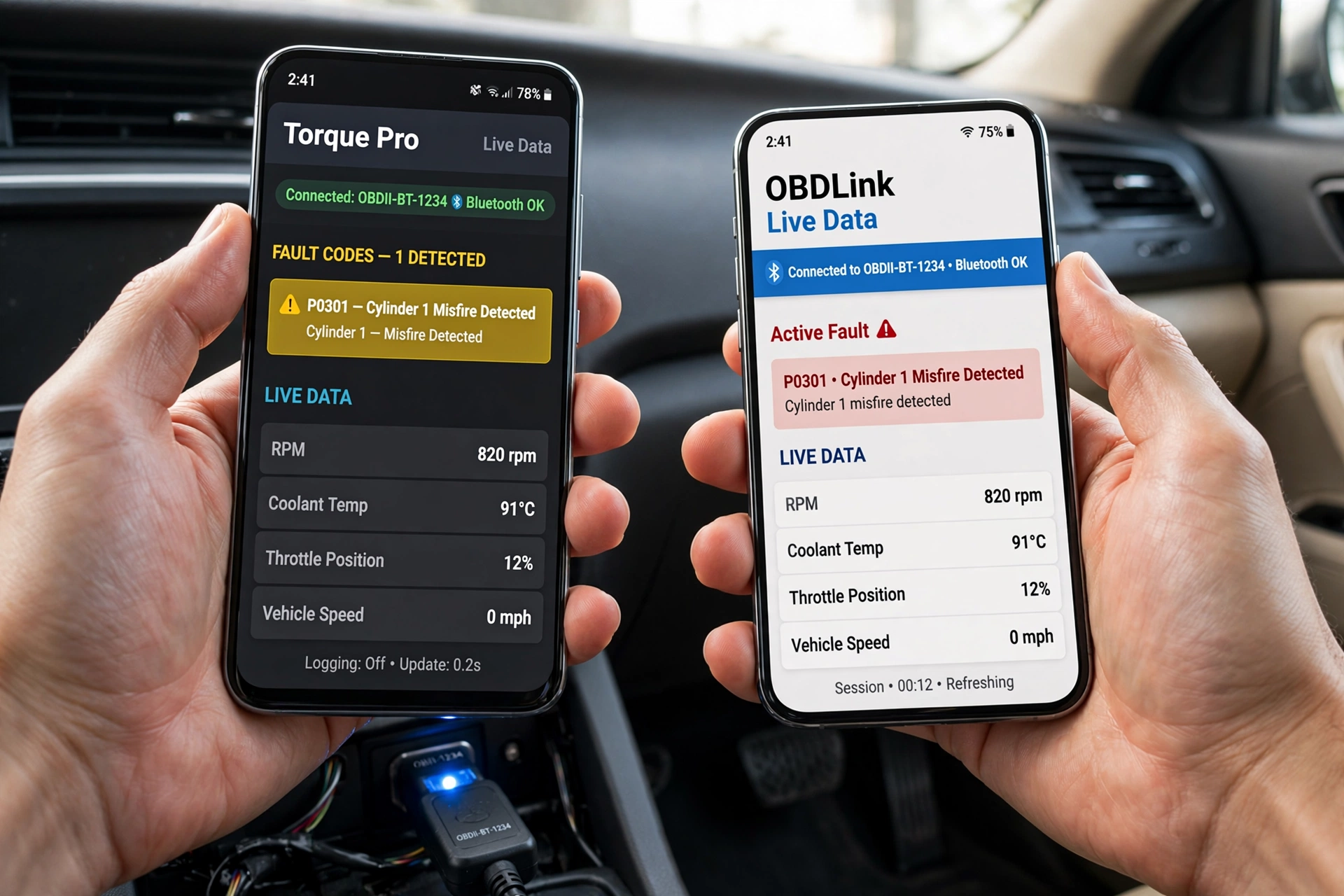
Adhering to the Honda maintenance plan will help keep the engine and drivetrain running efficiently. Oil changes, inspections, and necessary filter and fluid services should not be overlooked. If the check-engine light is on or the car is consuming a lot more gas than normal, it is a problem that should be addressed. Mechanical problems can decrease MPG without creating an apparent performance problem.
How Weather and Traffic Affect the Honda MPG
Fuel economy ratings don’t always match what you’ll see in real-world driving conditions since actual driving situations are not exactly the same as those used for EPA ratings. Elements such as cold weather, extra loads, hills, strong winds, low-pressure tires, and low tire pressure can all lower MPG. Another factor affecting the fuel economy of short trips is the time the engine takes to warm up for the trip. It’s important for drivers to consider fuel consumption over a series of trips, and not on any given trip.
Fuel use is also greatly influenced by speed on the highway. Generally, an increase in speed will mean an increase in energy expenditure because aerodynamics become more important at higher speeds. Smooth acceleration, acceptable speed on the highways, and minimizing unnecessary stops can help to increase efficiency. It’s also good to keep an eye on MPG over time, as this can help owners see if the fuel efficiency has improved or declined, which may indicate that they are driving or maintaining their cars in a manner that is impacting it.
Which Honda Is the Most Economical?
Honda’s hybrid models are the best cars for fuel efficiency in general. The Civic Hybrid is ideal for those seeking a small hybrid that gets great city fuel economy, while the Accord Hybrid offers more room and holds its own when it comes to fuel economy. The CR-V Hybrid is more popular among SUV buyers, while the Prelude Hybrid offers another option that’s sportier in nature with efficient performance.
But there is no one ideal Honda for everyone. The person who requires three rows might require a Pilot, and a family may want an Odyssey. If a buyer requires a pickup, he/she will need the Ridgeline. The best Honda to pick is the most economical with the right space, performance, and capability for daily driving.
Conclusion
Honda offers fuel-efficient options within many of its vehicle categories, including hybrid options, which get the best MPG ratings. Among the Civic, Accord, CR-V, and Prelude models, the hybrid versions are especially appealing for those looking for ways to save gas. Meanwhile, the HR-V evokes a sense of efficiency in its compact SUV form, while larger vehicles like Pilot, Passport, Odyssey, and Ridgeline focus on space and utility.
An efficient Honda is just one way to solve the problem. Better real-world fuel economy can be achieved by smooth acceleration, moderate speeds, correct tire pressure, regular maintenance, less idling, and avoiding unnecessary weight. With the proper vehicle and some of Honda’s smart driving techniques, owners can save on gas costs and boost their fuel economy over time.