Introduction
It’s an exciting time to start and build a new business, but getting and maintaining a steady stream of customers can be the toughest part. Business owners often have a great product or service and are unable to market it to the right audience because they don’t have a marketing plan set up. Marketing is not just about selling products; it’s about establishing relationships, building trust and communicating value to prospective customers all the time. These businesses can benefit from a strategic marketing approach to improve their visibility, reach more targeted leads, and foster customer loyalty, which can lead to repeat sales. By adopting a strategic marketing approach, these businesses can build brand awareness, attract more targeted leads, and nurture customer loyalty, which can result in repeat sales over time. Entrepreneurs need to concentrate on activities that can be measured and will build their businesses and not on random promotional activities. Knowing what marketing strategies are effective and which ones are not can help business owners determine which ones are effective and avoid wasting money. For a new business or an established one seeking to reach a larger audience and generate a greater competitive edge for their business, the use of the right mix of marketing strategies can make all the difference in making them visible, increasing customer base and, ultimately, ensure the success of their business.
The importance of marketing in the growth of small business
Marketing is the link between business and customers. Even the best products and services can go unrecognized if there is no marketing done. Small businesses may have only limited financial resources available and it is important to invest in activities where returns are maximized. Good marketing will enable businesses to inform their customers about the products they offer, tell them what makes them special and build trust within their sector. It also establishes opportunities to establish brand recognition, therefore increasing the chances of customers to remember and suggest the business. Many customers nowadays do an Internet search before buying, so having a customer-facing and reliable Internet presence in all channels is essential for businesses. Maintaining a consistent marketing campaign can help keep companies relevant, and can also improve chances for repeat business from happy clients. In addition, marketing also leverages the insights it can gain from analytics, surveys, and engagement data to make better improvements to products, enhance messaging, and find new opportunities for businesses. If marketing is a continual process of strategic planning and not a one-off promotional stunt, then companies can cope with the shifting habits of consumers and ensure that they maintain their growth for the long-term.
1. Content Marketing: Publishing Useful Information to gain trust.
Content marketing is an increasingly successful tool for small business to draw in and keep customers. Content marketing is not about selling products but about sharing information that helps to solve customer problems and answer their questions, in a helpful, educational or entertaining way. It’s a great way to establish trust, as customers will feel that business is helping them solve problems without asking for purchases. Content can be in a wide variety of formats such as blog articles, tutorials, info graphics, handouts, podcasts, case studies, and commonly asked questions. Search engines also appreciate the quality of the content and boost the ranking of the website which is beneficial for the business as potential customers can find the business organically. Having valuable pieces of content that are published consistently, can show industry expertise and make the business a trusted resource. Great, good content continues to get traffic over time, after publishing, without ongoing spend – thus benefiting marketing in a long-term way. To get the most out of content marketing for their businesses, they should research what matters to them; what are the keywords they want to use; what are the common questions customers have; and have a consistent publishing schedule.
2. Making Content from Readers to Customers
It’s not just about creating content; businesses need to develop content that will lead to actionable insights. Each article, video or downloadable resource should clearly have an aim, such as asking the reader to subscribe to a newsletter, query a product or even actually purchase the product. By comprehending what your audience is seeking, companies can craft incredibly relevant content that’s addressing their actual issues rather than just information. The use of real-life examples, step-by-step instructions, customer success stories and actionable advice helps to boost engagement and build credibility. Relaying a strong headline will keep visitors’ attention and clear formatting will make the page easier to read and keep them on the page longer. CTAs seamlessly integrated into the content guide the next steps of the customer’s journey while not being intrusive. It’s important to refresh content periodically as well, to keep it competitive and well-informed. By tracking website metrics like traffic, conversion rates, and engagement, marketers can determine which content is doing well and which isn’t, which enables them to optimize their content strategy and continue to enhance marketing performance.
3. Social media is a great way to increase your brand’s visibility.
Social media has revolutionized the way businesses can reach their clients in a way that is more direct and interactive, and at a lower cost. Those who like a brand on social media can get the brand’s updates; the brand can promote products on social media, and can respond to customer queries and engage in conversations in real time without spending a massive amount of money on advertising. Each platform (Facebook, Instagram, LinkedIn, TikTok, Pinterest, and X) attracts a distinct audience and offers various business goals, so it’s crucial to select the channels that appeal to customers. A regular post schedule, genuine content and eye-catching posts help increase audience engagement. It’s important for businesses to shift the focus from promotions to value, and to strike a balance between learning, behind-the-scenes content, customer reviews, funny content. When you respond to comments and messages, it helps to foster better customer relationships and shows you are great customer service. Social media analytics, in addition, deliver useful data on audience demographics, the performance of content and engagement patterns, which can help organizations, fine-tune future campaigns and improve their social media efforts.
4. Demonstrate how to Create an Effective Social Media Strategy.
The first step to any successful social media strategy is to have clear goals that will meet overarching business goals. Every post should be crafted to fulfill the goals of the website, whether that be boosting website traffic, creating leads, enhancing customer service, or enhancing brand awareness. Companies need to have a uniform brand tone and visuals, which will increase brand recognition and professionalism. Making a content calendar will assist you to consistently produce content, and also to stay on track with the balance of educating, marketing, and engaging. Engaging audience participation through user generated content, customer’s reviews, contests and live video sessions boosts visibility and engagement. Reach can also be further expanded with paid social media advertising through the use of demographics, interests, behaviors and geographic target marketing. Keeping an eye on metrics like likes, comments, shares, click-through rates, and conversions enables businesses to determine what’s working and tweak their content strategy accordingly. An effective social media strategy can help to build customer engagement and ensure long-term growth and sustainability for your business.
5. Email Marketing: Long-Term Customer Relationship Building.
One reason why email marketing is still one of the most successful digital marketing channels is that it enables businesses to directly reach their customer base, be it for marketing or communication. Unlike social media algorithms that restrict visibility, email offers a solid method for getting messages to subscribers’ inbox. Lists of email subscribers that have paid attention to the business for some reason are already an audience waiting to hear from you. When people sign up for your email list on your website, downloadable content, promotional offers, or event registration, it means that they have already shown interest in your business. Successful email marketing campaigns feature newsletters, product promotions, educational materials, seasonal offers, and personalized product suggestions that don’t load up on too much sales verbiage. With segmentation, businesses can send targeted emails to customers based on their preferences, purchasing history, or engagement levels, which can enhance the relevance and boost conversion rates. Automation also boosts efficiency by sending welcome sequences, abandoned cart emails, birthday emails, and follow-up communications consistently, without manual work. As businesses will track open rates, click-through rates and conversions on a regular basis, it will help them to tweak the content of their emails, without compromising customer relationship over time.
6. Create Success in Your Email Campaigns with these Best Practices
Collecting emails is not the only thing that makes for a successful email marketing campaign. Permission-based marketing is a strategy that requires obtaining explicit consent before sending marketing messages and needs to be a priority for businesses. Subject lines that engage users will lead to high open rates and brevity and beneficial content will draw the user to read the rest of the business. Many customers read emails from their smart phones, which mean it’s important to optimize emails for mobile. Personalizing a customer experience like addressing their name and suggesting items based on their previous purchases makes it more relevant. It is important for businesses to not inundate subscribers with too many emails and still be consistent in communicating to keep the brand in their mind. Each email should contain a clear call to action, which is a next step that tells the reader what they should do to take the next step, whether they are to visit the website, read a blog post or make a purchase. It means that you need to clean your email lists regularly to ensure that the ones that are not using your services are removed, thus rendering your emails more deliverable and helping to concentrate on a higher quality audience.
7. Consumer Referral is a Marketing Tactic that is both Powerful and Well-liked.
Word of mouth advertising is among the most trusted forms of advertising, as customers may value recommendations from friends, family, and colleagues over traditional advertisements. Having happy customers to refer others is a great way for small businesses to build up customers. The beginning of any successful referral program is to deliver outstanding customer experiences, as a happy customer will tend to share that experience with their network of people. In addition, providing referral incentives like discounts, loyalty points, gift cards, special rewards for both customers and their referrals can encourage more referrals. Making the referral process easier – with individualized referral links, digital sharing capability, and instructions, boosts participation. Recognition of loyal customers who are actively promoting the business both within and beyond their community also promotes community engagement. Regularly gathering and showcasing review videos, online reviews, and case studies builds trust and a foundation of social proof to help sway future buyers. The structured referral program converts happy customers into excited brand advocates, helping sustainable growth of the business.
Leveraging Local Advertising to Enhance Local Presence
While digital marketing is a significant part of the conversation for many businesses, local advertising remains important, especially for businesses that cater to a local audience. Local marketing is crucial for companies to build good relationships with customers in their region and gain greater brand awareness in their areas of operation. Local advertising can be through community newspapers, community radio, sponsoring community events, working with neighboring businesses, direct mail and trade fairs and local exhibitions. Businesses should also make sure their online local footprint is optimized by keeping their contact details current, gather their customers’ feedback on the Internet, and keep their business information consistent on online directories. Involving in charitable activities, educational seminars or community events can also positively enhance brand reputation and brand commitment to community development. Traditional location-based advertising coupled with online advertising can help businesses reach customers both in-person and online. Having a strong local visibility can make a business familiar, build more trust and help businesses get more repeat business from within the community, since they like supporting local businesses.
How to Measure Marketing Success and Fine-tune your Marketing Strategy
Without measuring the performance of the marketing activities, it will be very difficult to determine which ones have real impact. A business that is successful sets up key performance indicators (KPIs) prior to starting campaigns so that it can measure the progress objectively. Some crucial marketing metrics are website visitors, conversion rates, lead generation, customer acquisition costs, email engagement, social media interactions, referral participation, and customer retention rates. Analytics tools are helpful to understand customer behavior, as they will help businesses determine what avenues are the most profitable. As a result of regular performance reviews, marketers can stop any ineffective strategies and boost their budgets for any effective ones. Complementing numerical data, customer feedback, online reviews, surveys and direct conversations offer further qualitative insights. Marketing strategies need to be flexible as customer tastes and fashions, technology and competitive landscapes are always changing. If businesses continuously measure, test, and adjust, they can be more successful in sustainable growth, with the best possible use of marketing dollars.
Creating a Marketing Plan that Integrates all the Tools.
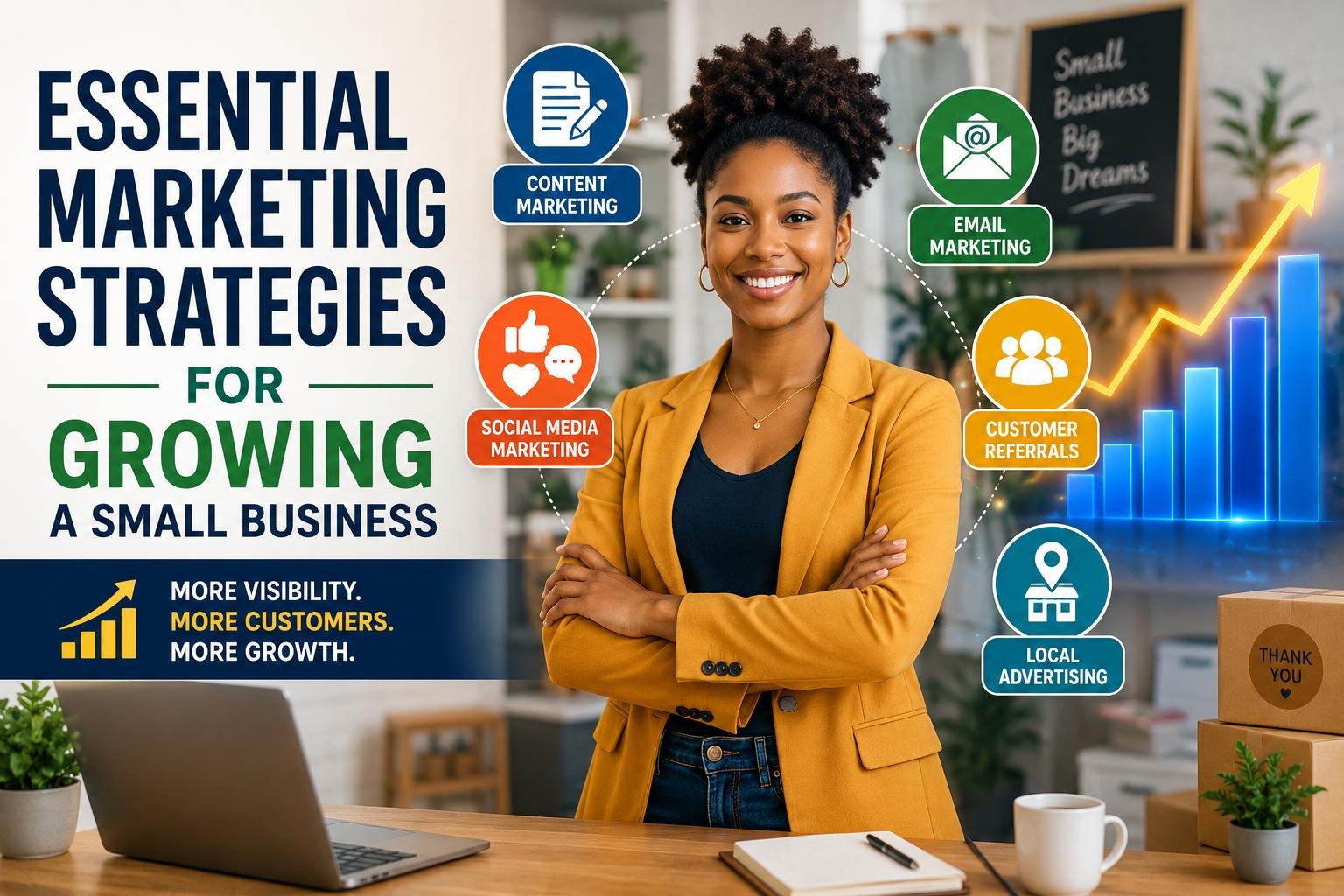
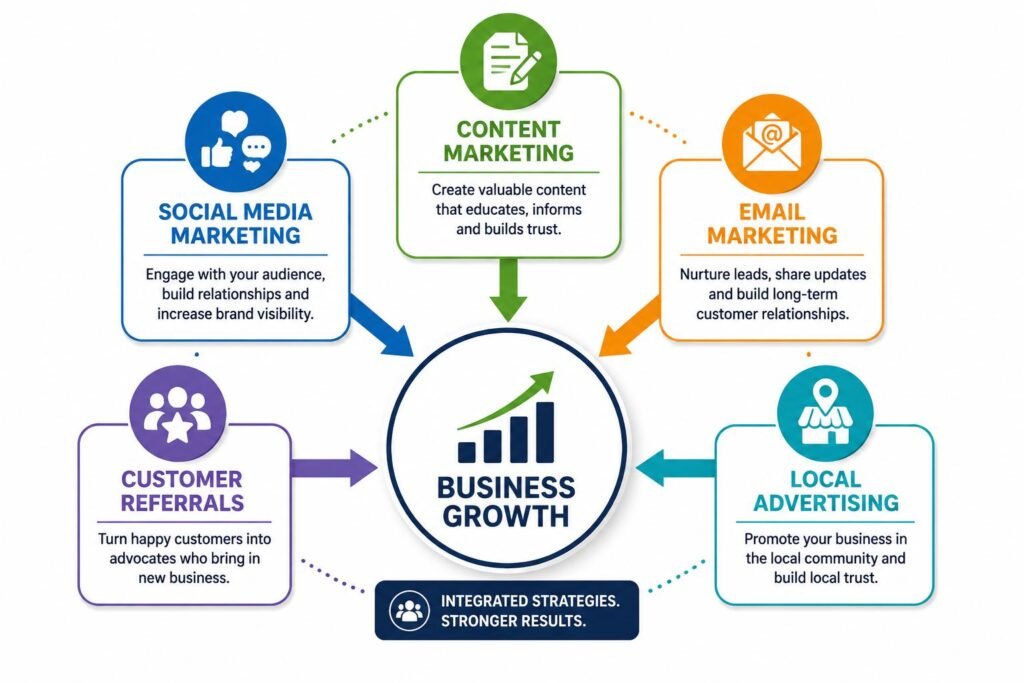
Small businesses that are most successful don’t rely on only one marketing strategy. Rather, they use a number of complementary tactics in an integrated marketing campaign that ensures the same message is sent out via the various media. Content marketing draws viewers to the website by offering useful content, social media increases visibility and interaction, email marketing builds relationships, customer referrals make for trusted recommendations, and local advertising makes the business more prominent in the surrounding area. Combined, these tactics provide a number of chances to the customer to find, trust and buy the brand. Having a documented marketing plan sets goals, clarifies target customers, budgets, who is responsible for each element, and allows for tracking of results throughout the year. The strategy is continually reviewed to keep it relevant to the changing business goals and market conditions. By sticking to this process and focusing on the value of customers, while continuously improving upon measurable outcomes, small businesses can create a sense of brand recognition, acquire new customers, retain loyal client base, and create a solid foundation for long-term success.
Conclusion
As a small business grows, its marketing approach needs to be more than just a product or service marketing. It should be a strategic marketing approach that is tuned to reach, engage and retain customers. Each marketing tactic has its own set of benefits that add value to the overall business performance, such as content marketing, social media marketing, email marketing, customer referral marketing, and local advertising. These techniques should not be used in isolation but must be incorporated into an overall marketing strategy tailored to the business owners’ objectives, target market and resources. Regular measurement and strategy adjustment using actual data also means constant improvement and the effective utilization of marketing budgets. Companies that continue to provide value, establish genuine relationships with customers and keep the dialogue open will be more likely to be successful in increasingly competitive markets. These are the basic marketing strategies that small business owners should employ to boost their visibility, gain high-quality customers, build a loyal customer base, and ensure their business’s long-term success.
Get more well researched information about Essential Marketing Strategies for Growing a Small Business here.