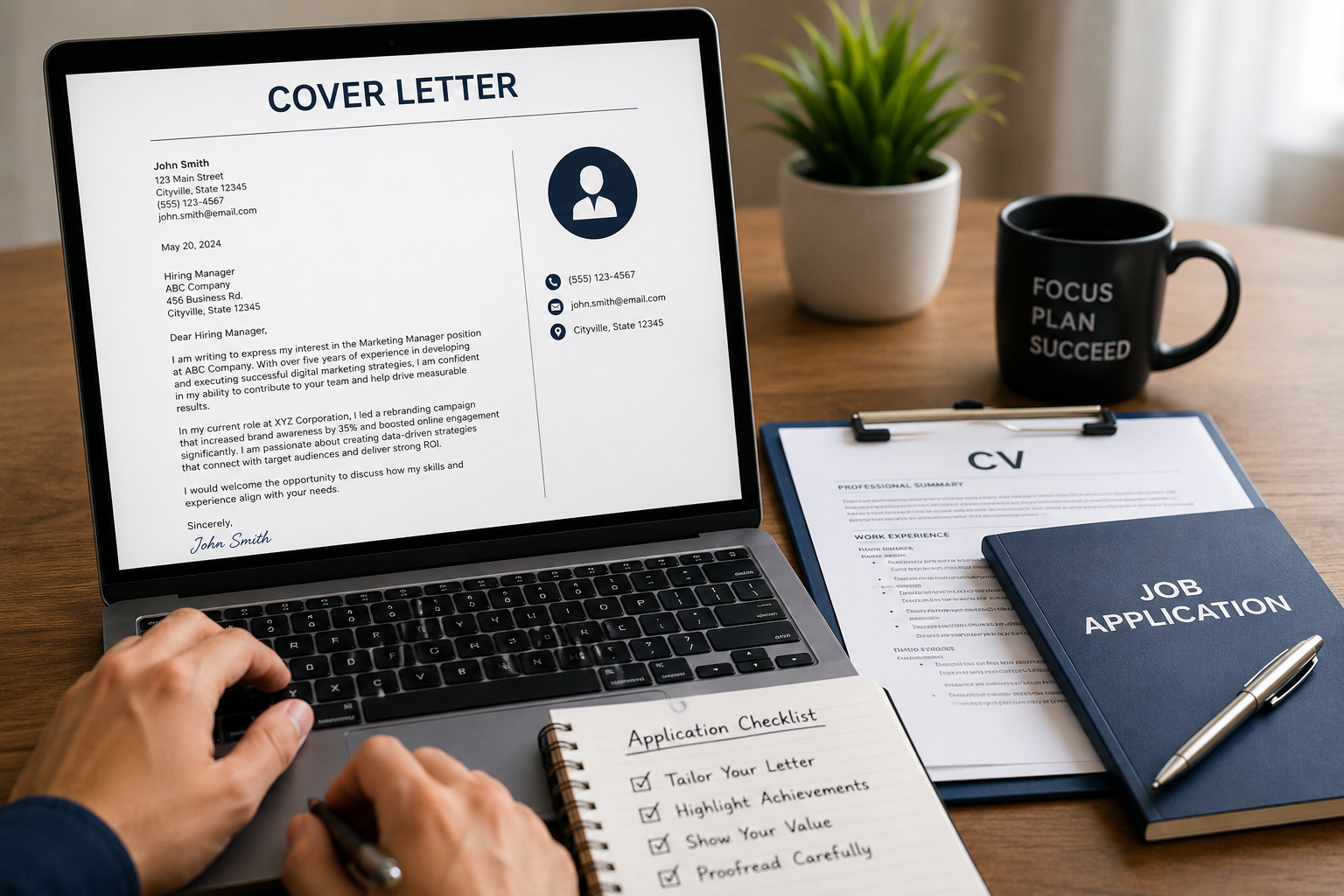
But even in a highly-digital recruitment landscape a cover letter is one of the most vital documents that can be included as part of a job application. A Curriculum Vitae (CV) features the qualifications, work experience, and accomplishments of a candidate, whereas a cover letter offers context and information regarding the candidate, their interest in the position, and their background to meet the needs of the employer.
While creating a CV many candidates put in hours of effort but hardly spend the time on the cover letter. This means they lose out on creating a first impression and stand out from the other candidates.
A cover letter is a connection between your experience and the employer’s expectations. It provides the interviewing party with an understanding of your communication abilities, drive, personality and grasp of the position.
Writing a compelling cover letter is a great way to provide information that might not be conveyed in a CV, like instances of career change, unusual achievements, or an authentic passion for the organization. A well-constructed cover letter can enhance your job application and much better your possibilities of getting an interview.
Why A Cover Letter is Important in the Hiring Process
People seeking a job often question the validity of cover letters. The answer is yes. While a few employers don’t require cover letters, a large number of recruiters read cover letters to gauge candidates’ professionalism and fit for the job.
Having a well written cover letter reflects effort and attention to detail, and will demonstrate that the applicant has taken the time to know and understand the company and the role.
Cover letter is also the chance to introduce the value proposition in a manner that a CV can’t. Rather than going through the list of your responsibilities and accomplishments, you can describe how your experiences have prepared you to make a contribution to the organization.
This personal narrative gives the employer a glimpse into the person behind the credentials and makes a connection between your past and the needs of the employer. An understanding of how to effectively communicate value can be a competitive edge for candidates that possess similar qualifications.
Understanding the Purpose of a Cover Letter
It’s important to know what a cover letter is all about before composing one. Cover letter is NOT a CV summary. Rather, it serves as a supplement to your CV that showcases your experiences, skills, and achievements that are germane to the job. It should contain information that will make the employer want to learn more about you and call you in for an interview.
The best cover letters should be focused and targeted. They go to work for the employer and they show how they can work for the employer. They do not simply restate information that is already contained in the CV, but they give important context and examples that help to substantiate the applicant’s qualification for the position. This way, you will make an effective and interesting application package that will definitely get the employer’s attention.
Learning How to Write a Cover Letter
Applicants may also find examples and tips for crafting a strong cover letter to help in their application process.
The Essential Structure of a Strong Cover Letter
Cover letters should have a clear organization and layout that allows the reader to read and comprehend information easily. The content is structured correctly which ensures that your message will be conveyed in the most effective manner while also being seen as professional.
1. Header and Contact Information
Write your name, address, phone and email number and location as your first line of your cover letter. Write the date and the employer’s contact details if available, below the information. This format makes for a professional look and is in line with standard business communication.
2. Greeting
Whenever possible, address the hiring manager by name. Customized e-mails demonstrate your research and thoughtfulness in applying. If you don’t know the name of the hiring manager, a professional option is fine (“Dear Hiring Manager”). Do not use the general greetings which may seem impersonal or old fashioned.
3. Opening Paragraph
The first paragraph of the cover letter should grab the employer’s attention. Describe the job you wish to apply for and briefly outline your interest in the job. Talking about a particular part of the business or job that you are interested in can show your enthusiasm and interest and create a connection with the reader. An effective introduction will make the employer want to read further and find out more about you.
4. Body Paragraphs
Your letter should include a paragraph or two that addresses the experiences, accomplishments and skills that are relevant to the job. Rather than stating duties, describe how your accomplishments met the employer’s needs. Point out specific examples of your value and what you’ve accomplished in previous jobs. Not only should this section demonstrate what you’ve accomplished, it should also show how it can help the organization.
5. Closing Paragraph
Your last paragraph should repeat your interest in the job and thank the employer for considering and taking the time to read your letter. Concisely present your reasons for being a good fit and express your eagerness to speak with more depth about your skills. The confident and professional closing will leave a positive final impression.
Why Personalization is so important
The biggest error that job seekers make is to send out a generic cover letter to multiple employers. A general cover letter typically does not get noticed because it fails to reference the organization’s needs. To connect with the employer and show you’re interested in the opportunity, you must personalize your letter.
Investigating the business before drafting your cover letter, might yield some strong information regarding the company culture, values, aims, and difficulties. Develop a response to this to convey your interest in the organization and how your background is relevant to the organization’s mission. You can demonstrate that you have done some research about the company, and that you are serious about working for them, by referring to specific projects that the company has done, successes, or values that you hold dear.
The job description is another aspect of personalization. Thoroughly read the posting and expectations for this position. Be aware of all the skills and experiences you have that are relevant to the job and bring them up in your cover letter. This specific approach helps to show the employer that you know what they are looking for and are ready to do what they ask.
Using Storytelling to Make Your Cover Letter Memorable
One of the best ways to create a cover letter that will stand out is through storytelling. Avoid just listing your skills; instead, include a short story of how you have used these skills successfully. Stories help to give context, to make you feel emotionally connected and to make your achievements more memorable.
For instance, rather than claiming to have great leadership skills, cite an example when you led a project, faced obstacles and successfully completed it. This will help employers understand what you’re capable of and how you’ll provide value in an environment. The best stories are short, specific and outcome-driven.
But effective storytelling can also enable employers to imagine you in the job. If you can provide tangible examples of how you’ve solved problems, adapted to new circumstances, contributed to a team or shown leadership, it’s likely that hiring managers will see you as a viable candidate. A good cover letter story will make your job application letter more than a list of skills, it will be a compelling tale of your career.
Choosing the Right Tone
Your cover letter helps employers get a good sense of you. Normally, a professional and friendly tone will be best. You should be assertive but not arrogant and enthusiastic but not too informal.
Do not use too sophisticated a style, foreign jargon or terms that are not industry specific. Use clear, concise communication to convey professionalism and respect for the reader’s time. Meanwhile, have a little fun being yourself. Besides your skills, employers are also interested in whether you’ll be a good fit for their team and organization culture.
It is also essential to have a positive tone for the entire letter. Avoid talking about weaknesses or negative experiences, instead talk about strengths and achievements and what you are able to contribute. A positive and forward message makes a good impression and substantiates your qualification for the job.
Common Cover Letter Mistakes to Avoid
Unfortunately, even top-notch applicants can make errors on their cover letter that will weaken their applications. Knowing about these frequent mistakes can help you make your document more powerful and effective.
1. Repeating the CV
Some of the main pitfalls include repeating information from the CV. Employers can already see your work history and qualifications. The cover letter should help the letter’s recipient better understand the information contained in the CV and complement it with context, insights, and examples.
2. Using a Generic Template
Templates can be a good place to start, but it’s easy for your cover letter to sound robotic if it’s too formulaic. Employers are looking for proof that you’ve customized your resume to the company and job you are applying for.
3. Focusing Too Much on Yourself
Do not write a cover letter that’s purely about what you are looking for in your job. Rather, it should focus on the ways that your skills and experiences can aid the employer in meeting its objectives. This balance will reflect professionalism and an awareness of the employer’s point of view.
4. Including Irrelevant Information
Each sentence of your cover letter should be geared towards supporting your candidacy for the position. Do not add personal information, unrelated experiences or too much information that does not relate to your application. Stick to the point and keep the employer’s attention.
5. Ignoring Proofreading
Correct spelling, grammar and formatting are important because it will give a bad impression and may be seen as lacking in detail. Make sure to thoroughly read your cover letter and if possible, get someone else to do it as well before you submit it. Any error can blow an otherwise well-rounded application.
Tips for Creating a Cover Letter That Stands Out
The standout cover letter is a blend of personalization, storytelling, professionalism, and relevance. Do some background research on the employer and job description. Concentrate on the results you achieved that have helped the organization be successful. Provide specific examples to highlight strengths and keep the document professional and clear.
Additionally, your cover letter must be brief. Many hiring managers have a limited amount of time to go through the applications and every paragraph needs to add value. Keep it clear and meaningful, not long. Good formatting, organization, and writing with no errors can further improve readability and professionalism.
Keep in mind that your cover letter may be your first direct line of communication with the employer. Use it as a marketing document to highlight WHY your candidacy is different and what you hope the employer learns about.
Conclusion
An effective cover letter can make the difference in being successful on your job application and offer the context, enthusiasm and relevant accomplishment that your application needs. A cover letter is the story behind your qualifications and why you are the right person for the job, whereas a CV is the statement of your qualifications. A cover letter that’s well-structured, thoughtful, and avoids pitfalls can grab the hiring manager’s attention and make a strong impression.
The best cover letters are creative, specific, and employer need-focused. Together with a compelling CV, they form a formidable application package, and they can help you develop your odds of advancing to the next round of the hiring process and eventually landing your preferred job opportunity.