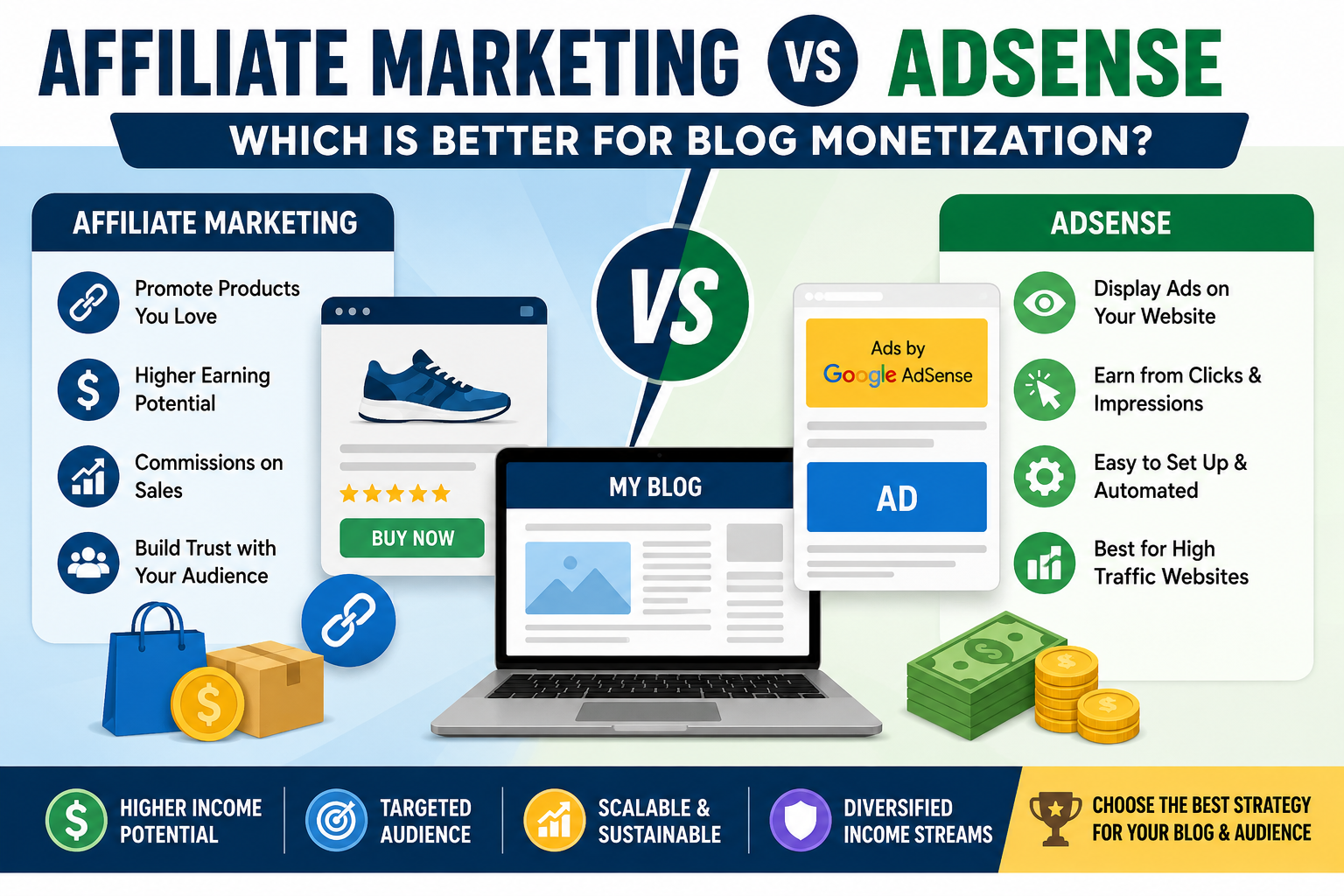
Blog monetization is among the most crucial matters for blog owners seeking to convert their websites into a genuine money-making business. With blogging undergoing a lot of changes, website owners have an array of strategies to earn money with their content and readers. At present, affiliate marketing and Google AdSense are two popular models of monetization that are widely used. They both provide ways to make money online, but they are different and have different success rates based on niche, traffic, and content strategy.
It is important to know the strengths and weaknesses of these approaches when making informed decisions. There are many bloggers who don’t know which one will draw more returns for their efforts. AdSense is geared towards ad clicks and impressions, while affiliate marketing is geared towards bloggers who can promote sales or actions using referral links. These disparities manifest in various ways that can have substantial implications with respect to earnings, scalability, and long-term growth.
Whether you are considering which monetization strategy to use, it is important to compare affiliate marketing and AdSense. The selection of the appropriate monetization methods can contribute to the growth of income, involvement, and even overall website performance.
The Importance of Selecting the Appropriate Monetization Strategy
A blogger’s choice of monetization has a direct impact on all aspects of website development. It impacts content choices, audience targeting, user experience, and potential earnings. For some websites, display advertising works great, while for others, affiliate partnerships have proven to work well.
Choosing the wrong monetization method can lead to:
• Lower revenue despite an increase in traffic
• Reduced user engagement
• Poor conversion rates
• Slower website growth
• Missed earning opportunities
Knowing about the various ways to monetize a blog will help bloggers develop a strategy that meets their objectives and audience expectations.
Understanding Blog Monetization
Blog monetization is the way to make money from a site by generating income in a number of ways. The more people who come to your blog, the more money you can make from ads, affiliate marketing, sponsored posts, selling products, memberships, and more by engaging in various digital business models.
Some of the most popular monetization techniques are:
• Google AdSense
• Affiliate marketing
• Sponsored posts
• Online courses
• Digital products
• Membership programs
• Consulting services
• Email marketing promotions
Many bloggers will eventually have several income avenues, but two of the most common ways for bloggers to monetize their blogs are affiliate marketing and AdSense.
What Is Google AdSense?
Google AdSense is an advertising service that lets website publishers place advertisements on their websites and receive revenue when their visitors see or click on the ads. After the site is approved, its owner adds some advertising code to their web pages, and Google provides ads based on the content of the page and user interests.
How AdSense Works
The process of AdSense is very simple:
- Apply and get approval from Google.
- Add advertising code to website pages.
- Google shows advertisements relevant to your content.
- Visitors see and click on advertisements.
- Revenue is generated based on impressions and clicks.
Benefits of Google AdSense
Some key benefits include:
• Easy implementation
• Passive income generation
• No product to create
• Automated ad management
• Appropriate for informational websites
Limitations of Google AdSense
Although it is simple, there are a few disadvantages to AdSense:
• Lower earnings per visitor
• Depends heavily on traffic volume
• Limited control over displayed ads
• Potential impact on user experience
What Is Affiliate Marketing?
Affiliate marketing is one of the types of revenue that bloggers can earn, in which they receive a commission whenever they recommend a product or service with a unique tracking link. If the visitor clicks the affiliate link and takes an action, then the blogger will benefit from a commission. Affiliate marketing is a different model from display advertising, where the emphasis is on results, not traffic.
How Affiliate Marketing Works
The usual procedure is:
- Being part of an affiliate program.
- Having customized affiliate links sent to you.
- Marketing products through content.
- Visitors clicking referral links.
- Earning commissions on sales.
Advantages of Affiliate Marketing
There are a number of benefits to affiliate marketing:
• Higher earning potential
• More authority over promotion
• Strong scalability
• Improved match between audience needs and content delivery
• Can generate revenue from the right audience
Limitations of Affiliate Marketing
Potential challenges include:
• Requires audience trust
• No guarantees of sales
• Needs more strategic content planning
• Earnings may fluctuate
Comparing Two Major Monetization Models
1. Earning Potentials
AdSense Earning Potentials
There are several things that you need to take into consideration when it comes to how much money you will make with AdSense.
AdSense income depends on several variables:
• Monthly traffic volume
• Visitor location
• Click-through rates
• Advertiser competition
• Content niche
The majority of websites take a long time to generate any significant revenue. If there are not a lot of people interacting with ads, a blog that gets thousands of visitors a month may only bring in a little revenue.
Affiliate Marketing Earning Potentials
In the world of affiliate marketing, commission amounts can be significant, and your income per visitor can be huge. There are programs that will pay you a set amount on each sale, and there are others that will pay you a percentage commission.
Some of the elements that affect affiliate income are:
• Product pricing
• Commission rates
• Conversion rates
• Audience intent
• Content quality
Affiliate marketing can earn much more than AdSense, as a single conversion can lead to much higher profits than a number of ad clicks.
Winner: Affiliate Marketing
Most niche sites are going to be more profitable through affiliate marketing, especially if you’re attracting targeted visitors who are looking for specific products or services.
2. Traffic Requirements
The quality of traffic is one of the greatest differences between these monetization models, and each requires a different level of traffic to be successful.
Requirements for AdSense Traffic
For most sites, AdSense works best on websites with:
• High numbers of visitors per month
• Consistent page views
• Broad audience appeal
• High content consumption rates
Each click only earns a relatively small amount of money, which means that you’ll need a lot of traffic.
Requirements for Affiliate Marketing
With affiliate marketing, it is possible to make substantial income with:
• Smaller audiences
• Highly targeted visitors
• Strong purchase intent
• Trustworthy content
A blog that attracts a few thousand visitors who are qualified buyers may outperform a much bigger site that relies only on display advertisements.
Winner: Affiliate Marketing
With affiliate marketing, it is generally not about traffic; it’s about conversions, so you don’t need to have a ton of traffic.
3. Control Over Revenue Sources
AdSense Control Level
When using AdSense, Google determines:
• Which ads appear
• Which advertisers bid
• Ad placement optimization
There are limited controls that a publisher can use, although there are some customization options.
Affiliate Marketing Control Level
Affiliate marketers are free to select:
• Products they promote
• Brands they support and believe in
• Content formats
• Promotional strategies
The flexibility enables bloggers to correlate their recommendations with their audience’s interests as well as brand values.
Winner: Affiliate Marketing
Affiliate marketers have much more control because they can choose the products and promotions they use.
4. User Experience Comparison
User experience can have a direct impact on engagement rates, bounce rates, and conversions.
AdSense and User Experience
Potential concerns include:
• Intrusive advertisements
• Longer page loading times
• Visual distractions
• Reduced readability
Over-advertising can have a negative impact on visitor satisfaction.
Affiliate Marketing and User Experience
Affiliate content can fit easily into:
• Product reviews
• Buying guides
• Tutorials
• Comparison articles
• Resource pages
When affiliate marketing recommendations genuinely help readers solve problems, they can enhance the user experience.
Winner: Affiliate Marketing
As long as affiliate marketing is done ethically, it usually leads to a better visitor experience.
5. Long-Term Growth and Scalability
AdSense Scalability
Generally, the growth of AdSense is correlated with growth in the following areas:
• Traffic volume
• Page views
• Advertisement impressions
But to significantly increase revenue, websites typically need to expand substantially.
Affiliate Marketing Scalability
Affiliate marketers can make more money by:
• Promoting additional products
• Joining multiple programs
• Increasing conversion rates
• Building email lists
• Negotiating higher commissions
Revenue growth does not always require traffic growth.
Winner: Affiliate Marketing
There are greater opportunities for long-term growth and income diversification through affiliate marketing.
Best Niches for Google AdSense
There are some niches that naturally perform well with display advertisements.
Examples include:
• News websites
• Entertainment blogs
• Viral content platforms
• Educational resources
• General lifestyle blogs
These sites can drive a lot of traffic, but visitors may be less likely to make purchases.
Best Niches for Affiliate Marketing
Affiliate marketing thrives in niches where people research before buying.
Some of the most popular affiliate niches are:
• Technology
• Web hosting
• Personal finance
• Health and fitness
• Travel
• Online education
• Business software
• Home improvement
These categories tend to have higher commissions and better conversion opportunities.
Is the Use of Both Possibilities Feasible?
Many successful bloggers combine AdSense and affiliate marketing to take advantage of both.
The advantages of combining both are:
• Diversified income streams
• Increased earning opportunities
• Opportunities to monetize different audience groups
• Multiple revenue sources that support growth
However, there must be a balance. Too many ads of any kind can negatively affect affiliate conversions, and too many affiliate promotions can hurt audience trust.
How to Decide the Best Option
Use Google AdSense If:
• You have high traffic volume on your website
• The content you share is primarily informational
• You want passive monetization
• You prefer little or no management
Use Affiliate Marketing If:
• You have an audience that purchases products or services
• You want to earn more money from each visitor
• You are comfortable creating review content
• You want long-term scalability
Use Both If:
• You would like to have several sources of income
• You have a diverse audience
• You can maintain a positive user experience
• You are interested in generating as much income as possible
Final Verdict
When comparing affiliate marketing and Google AdSense, the better option depends on a blogger’s specific goals, niche, and audience preferences. AdSense is simple and can generate passive income for websites with high informational traffic. However, affiliate marketing offers greater earning potential, more control, stronger scalability, and better opportunities for long-term growth.
Affiliate marketing will pay off for most niche bloggers because commissions can be much higher than advertising earnings. However, AdSense is still beneficial for monetizing visitors who are not necessarily looking to buy something. Many successful bloggers use both simultaneously to create a balanced and sustainable income stream for their blogs.
Frequently Asked Questions (FAQs)
Is affiliate marketing more profitable than AdSense?
In many cases, yes. Commissions can create a significant difference in earnings per visitor, making affiliate marketing a better avenue for generating revenue.
Is affiliate marketing a good way for newbies to make money?
Yes. Affiliate marketing can be started by beginners right away. However, it takes time to succeed because trust must be built and content must provide value.
How much traffic do I need for AdSense?
There is no specific requirement, but websites generally need significant traffic before AdSense becomes highly profitable.
Is it possible to use affiliate marketing together with AdSense?
Absolutely. Many successful blogs use both strategies to maximize income and diversify revenue streams.
What is the most sustainable way of making money?
In general, affiliate marketing can be more scalable because it allows you to earn more money without necessarily increasing traffic.