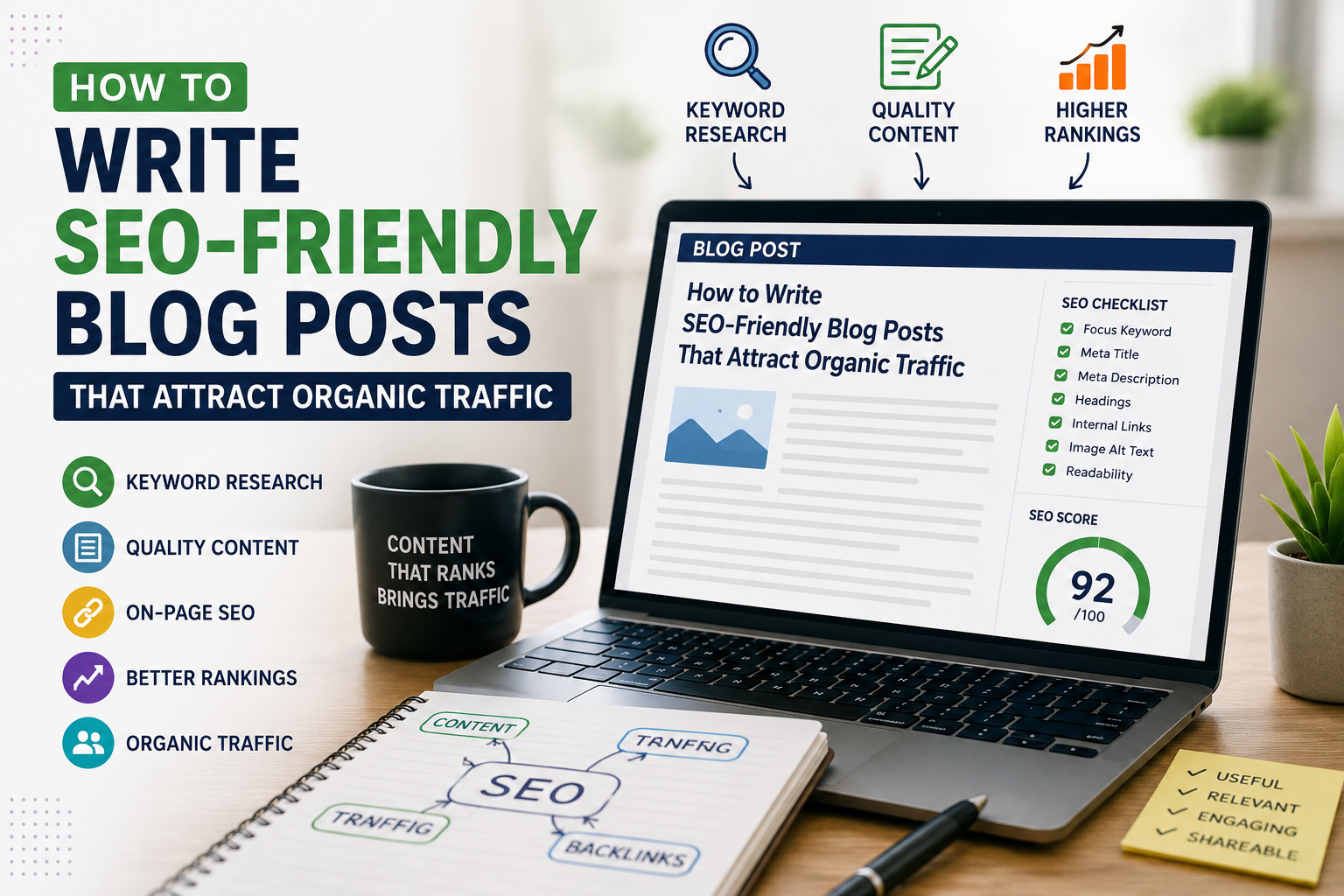
Writing blog posts without knowledge of search engine optimization (SEO) is like going to open up a store in a back alley and waiting for people to just walk in. Bloggers post good content on a regular basis but still don’t receive the readers they need because it is not optimized for search. With the knowledge of writing SEO-friendly blog posts, bloggers can produce blogs that will have the ability to appear on search engines like Google and attract visitors. Blog posts that combine helpful and readable content with proper SEO strategies can be traffic generators for months or even years after they are written.
It is not a blogging practice to stuff articles with keywords anymore. Relevance, usability, content quality, structure, and search intent are now top priorities for search engines. Blog writers who grasp these aspects can consistently generate articles that score better and keep readers satisfied. This guide is designed to show you how to use both optimization and writing in a style that will get your blog posts sustainable organic traffic while remaining readable and professional.
What Are SEO-Friendly Blog Posts?
SEO-friendly blog posts are articles that are created to help search engines comprehend the content while also providing value to readers. A variety of different factors are taken into account by search engines when deciding on the importance of a page, such as keyword relevance, user engagement, content quality, readability, and page structure. If a blog post is well optimized, it will be more likely to reach the first page of search engine results, where most online traffic goes.
Organic traffic is useful because it is not something that you pay for; it is free and long-lasting. While paid advertising campaigns only continue to bring in traffic until they are exhausted, content that is optimized for search engines can keep bringing in traffic for months or years. Organic search traffic is significant for businesses, affiliate marketers, content creators, and bloggers alike as a means to gain visibility and authority.
A good SEO article will typically contain:
- Strategic keyword placement
- Clear content structure
- User-focused writing
- Internal and external links
- Optimized images
- Helpful and informative information
- Proper heading hierarchy
The idea is to develop material that search engines can easily understand while also being entertaining and informative for readers.
Why SEO Matters for Bloggers
Many bloggers don’t realize that SEO is a critical tool for long-term blogging success. Even the best-written articles can fail to reach their target audience if they do not have proper SEO. SEO helps connect useful content with web traffic.
There are many advantages of SEO, some of the most significant ones are:
- Increased organic traffic
- Better brand visibility
- Greater credibility and authority
- Long-term traffic generation
- Improved visibility and engagement through natural organic search results
- Improved user experience
Regularly using SEO strategies can help bloggers gain loyal followers and sustain the growth of their blogs over time.
Comprehending User Intent Before Writing
Knowing what users want is a crucial aspect of SEO writing. User intent is the “why” behind a search query. Every individual searching on the web wishes to achieve a goal, and search engines focus on content that most suitably meets that goal.
There Are Four Types of Search Intent
1. Informational Intent
Users are looking for answers or educational information.
Examples include:
- How to create search engine-friendly blog posts
- What is the meaning of keyword research?
- Hints for increasing website traffic
2. Navigational Intent
Users are searching for a particular website, brand, or platform.
3. Transactional Intent
The user is prepared to buy products or take an action.
4. Commercial Investigation
Users are comparing products or services before making a decision.
Informational intent is generally the main goal when creating blog posts. You must clearly answer questions in your article, give useful information, and solve the reader’s problem effectively.
Conducting Effective Keyword Research
Keyword research is the basis of good SEO writing. If you don’t target the right keywords, your article could never be read by the right audience. Using keywords assists search engines in understanding the subject of your content and relating your article to search queries.
Keyword research involves identifying:
- Relevant search terms
- Search volume
- Competition level
- User intent
- Related keyword opportunities
Some of the most popular keyword research tools are:
- Google Keyword Planner
- Ahrefs
- SEMrush
- Ubersuggest
- Moz Keyword Explorer
Bloggers should learn from experts how to leverage search trends and optimize their content for long-term growth to grasp advanced SEO techniques.
1. Concentrate on Long-Tail Keywords
Long-tail keywords are more specific search terms that are less competitive and have stronger intent behind them.
Examples:
- Broad keyword: SEO
- Long-tail keyword: how to write SEO-friendly blog posts
Long-tail keywords tend to generate higher levels of engagement because they target people looking for precise information.
2. Analyze Search Competition
Research the websites that are already ranking for a given keyword before trying to target that keyword. If major authority websites dominate the results, it could be challenging for newer blogs to rank well. If you can find areas where you will not be competing with strong websites, you may have more success ranking quickly.
3. Implement Related Keywords Naturally
Search engines can recognize the semantic relationship between words. Don’t overuse the same keyword repeatedly; use related words throughout the text.
Related phrases:
- Organic traffic
- Search engine optimization
- SEO writing
- Content marketing
- Keyword optimization
The use of related terms enhances topical relevance without sounding repetitive.
Creating a Strong Content Structure
The structure of your content can make a huge difference for both readability and SEO. Use headings and formatting to structure your content so that readers can easily scan it and search engines can easily understand how your content is organized.
A good structure enhances:
- User experience
- Readability
- Search engine crawlability
- Content engagement
1. Utilize Proper Heading Hierarchy
Headings structure your content in a logical manner and serve as a guide to help readers navigate through articles.
The usual heading structure is:
- H1 for the article title
- H2 for the main sections of the article
- H3 for subsections under a subtopic
- H4 for detailed breakdowns (if required)
Clear headings make text easier to read and understand and help search engines determine the topics covered in the text.
2. Keep Paragraphs Informative
Poor content is often caused by thin or underdeveloped paragraphs. Each paragraph should provide some kind of insight, example, or explanation. Readers should feel that they are benefiting from the article all the way through.
3. Use Bullet Points for Improved Readability
Use bullet points to make information easily digestible and help readers scan the content.
Make use of bullets to present:
- Lists
- Tips
- Examples
- Benefits
- Step-by-step instructions
- Key takeaways
Appropriate formatting makes reading more pleasurable and engaging.
Writing High-Quality SEO Content
Search engines value content that demonstrates expertise, relevance, and usefulness. Low-quality or thin content created only for search engines will not be able to maintain strong rankings over time.
A good piece of SEO content should do all of the following:
- Solve reader problems
- Provide actionable advice
- Include practical examples
- Be understandable
- Maintain originality
- Encourage engagement
1. Write for Humans First
Don’t include the same words repeatedly in your content. This technique is outdated and not beneficial to rankings. Instead of stuffing keywords into sentences, write relevant and valuable content.
Good SEO writing:
- Sounds natural
- Uses conversational language
- Maintains professionalism
- Presents useful information clearly
Search engines increasingly reward content that provides user satisfaction.
2. Use a Conversational Tone
Readers relate more easily to content that is approachable and engaging. Try to minimize the use of overly technical jargon or robotic language unless it is necessary.
Using a conversational tone helps:
- Improve readability
- Make your website more “sticky”
- Build audience trust
- Encourage return visits
3. Include Practical Examples
Examples help make difficult concepts easier to understand.
Example:
- Very weak title: Blog Tips
- Better headline: 10 Blogging Tips to Help You Boost Organic Traffic Quickly
Content is more easily applied to real-world situations when practical demonstrations are included.
Optimizing Blog Titles and Meta Descriptions
The blog title is a key factor in search engine results. Good titles attract visitors to your article and generate more clicks.
A good SEO title should:
- Include the main keyword
- Have a clear and specific message
- Create curiosity or provide value
- Remain concise
- Match user intent
Examples of good SEO titles:
- How to Write SEO-Friendly Blog Posts That Rank
- Beginner’s Guide to SEO Content Writing
- SEO Writing Tips for More Organic Traffic
Writing Better Meta Descriptions
Meta descriptions provide a summary of your content in search results. While they are not ranking factors themselves, they can have a significant impact on click-through rates.
A great meta description should:
- Briefly summarize the article clearly
- Include relevant keywords
- Encourage clicks naturally
- Avoid exceeding the recommended character limit
Well-written titles and descriptions can have a huge impact on traffic performance.
Improving On-Page SEO Factors
On-page SEO relates to the optimizations you make within your content and webpages.
1. Optimize URL Structure
URLs should be simple, descriptive, and keyword-oriented.
Examples:
- Poor URL: yourblog.com/post12345
- Better URL: yourblog.com/seo-friendly-blog-posts
2. Use Internal Links
Internal linking increases the usability of your website while helping readers discover related articles.
Advantages include:
- Increased page views
- Better crawlability
- Improved user experience
- Stronger topical authority
3. Carefully Add External Links
Linking to authoritative sites helps build trust and provides reliable sources for your content.
4. Optimize Images Properly
Images make articles more interesting and engaging. Search engines also evaluate image optimization factors.
Best practices for optimizing images include:
- Compressing image sizes
- Using descriptive filenames
- Including keywords in image alt text
- Choosing relevant visuals
The Importance of Readability in SEO
Readability has a direct impact on user engagement. If readers cannot easily understand content, they may leave the page, increasing bounce rates and potentially lowering rankings.
Improving readability helps:
- Extend time on page
- Improve reader satisfaction
- Encourage social sharing
- Boost return visits
1. Improve Content Scannability
The majority of users scan articles before reading them in full. To address this, make your content easily scannable by using:
- Headings
- Bullet points
- Numbered lists
- Bold text where necessary
- Examples and details where relevant
- Shorter sentences
2. Avoid Overcomplicated Language
Professional writing should remain accessible. Avoid unnecessarily complicated words and phrases.
3. Maintain Logical Flow
Each section should connect naturally to the previous and following sections. Logical organization enhances the overall reading experience and holds readers’ attention.
Updating Content for Better Rankings
Search engines value fresh and relevant information over outdated content. Updated blog posts can help improve rankings and extend the lifespan of your content.
Regular content updates may consist of:
- Adding new statistics
- Refreshing outdated information
- Improving keyword targeting
- Expanding thin sections
- Updating examples
- Fixing broken links
Maintaining and updating content is a crucial aspect of a successful long-term SEO strategy.
Measuring SEO Performance
It will be easier for bloggers to identify what works and what does not if they track SEO performance.
Essential SEO metrics include:
- Organic traffic
- Bounce rate
- Average session duration
- Keyword rankings
- Conversion rates
- Click-through rates
Useful SEO tracking tools include:
- Google Analytics
- Google Search Console
- Ahrefs
- SEMrush
Tracking performance can improve future blog performance and help bloggers optimize their strategies.
Common SEO Writing Errors to Avoid
Many bloggers make common mistakes that negatively impact rankings without realizing it.
1. Keyword Stuffing
Keyword stuffing makes content difficult to read and may result in search engine penalties.
2. Ignoring Search Intent
Failing to deliver content that meets user expectations can lead to lower rankings and engagement.
3. Weak Content Structure
Poor formatting reduces readability and makes users reluctant to continue reading.
4. Publishing Thin Content
Short, low-value articles are unlikely to compete successfully in modern search results.
5. Neglecting Mobile Optimization
The majority of internet users browse from mobile devices. Content should be readable and responsive on smaller screens.
Building Long-Term Organic Traffic
SEO is an ongoing process; it is not a one-time activity. Consistency, patience, and continuous improvement are required for traffic growth.
Successful bloggers typically:
- Publish content consistently
- Put user needs first
- Target relevant keywords
- Improve older content regularly
- Build topical authority
- Maintain content quality
Building trust with both people and search engines is essential for long-term SEO success.
Conclusion
It is crucial for bloggers to know how to create SEO-friendly blog posts if they are looking to gain organic traffic in a sustainable manner. There are four key components to SEO writing: keyword research, user intent alignment, quality content creation, and proper structure. Together, these produce articles that satisfy both readers and search engines.
Successful blog posts are not just optimized for algorithms. They provide value, make sense, and create an enjoyable reading experience. Bloggers can achieve long-lasting visibility and consistent traffic without excessive paid advertising if they emphasize usefulness, clarity, and optimization.
While SEO is always changing, the basic idea remains the same: create valuable content that truly helps users while making it easy for search engines to understand your topic. Bloggers can use the principles and methods outlined in this guide to boost visibility, engagement, and long-term organic traffic by optimizing their pages for search engines.
Frequently Asked Questions (FAQs)
What are the elements of a blog post that make it SEO-friendly?
The right keywords, well-organized headings, optimized images, internal links, and user-centric, high-quality content make up an SEO-friendly blog post.
What is the ideal number of keywords for a blog post?
It isn’t possible to say exactly how many. Keywords should be used naturally throughout the text but should not be repeated excessively.
Why is it significant to use long-tail keywords?
Long-tail keywords are less competitive and often reflect stronger user intent, making them easier to rank for and more effective at generating targeted traffic.
Do images have a positive impact on SEO?
Yes. Images positively impact engagement, readability, and accessibility. When optimized with descriptive alt text, they can also contribute to SEO performance.