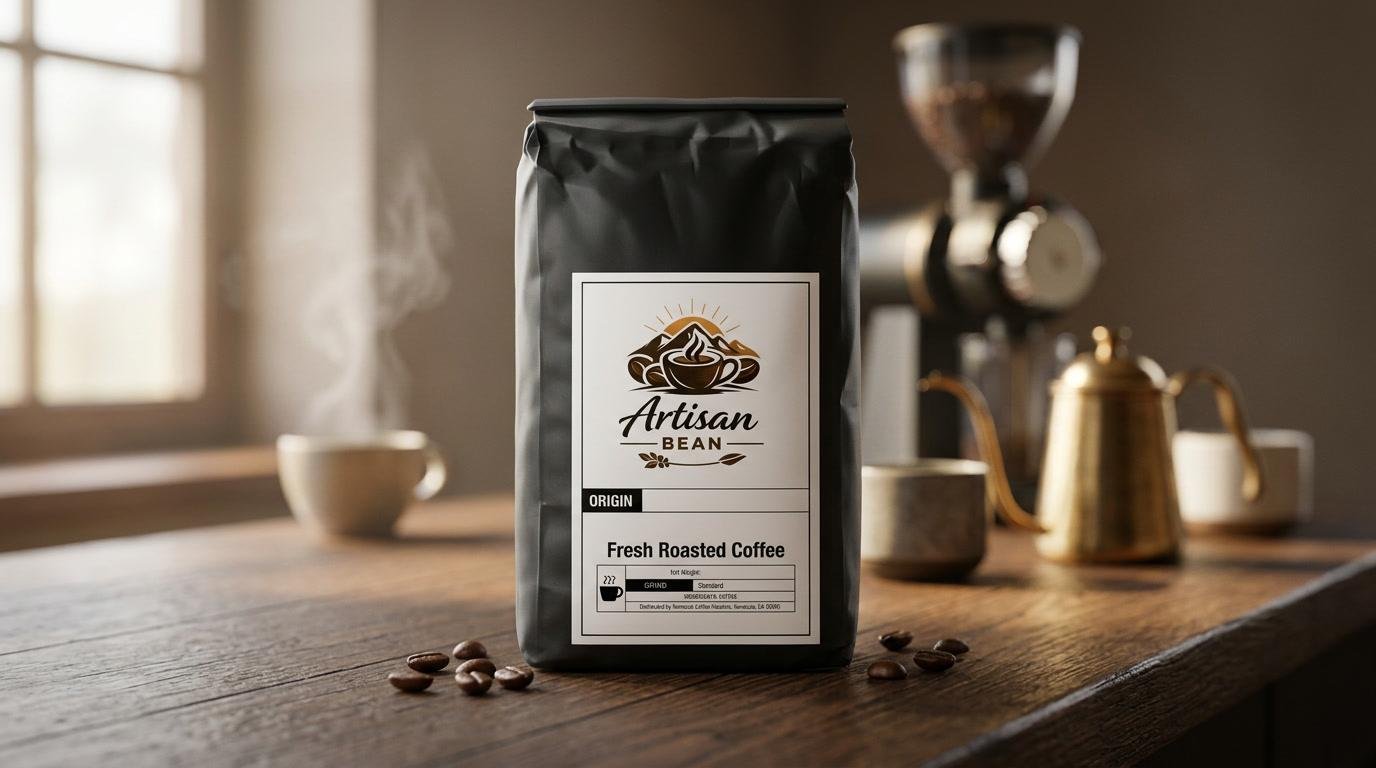
Have you ever woken up craving that perfect, soul-warming cup of coffee, only to brew something that tastes flat, lifeless, and vaguely of cardboard?
It’s a quiet disappointment that can ruin the entire ritual. You might blame the beans, the grind, or even the water, but the real culprit is often invisible: time.
That bag of coffee promising notes of chocolate and citrus has gone stale, its vibrant life faded long before it reached your cup. It’s a problem that inspired Artisan Bean, a brand built on the belief that coffee should be the best part of your day, and that starts with uncompromising freshness.
What Are the Main Signs My Coffee Beans Are Stale?
You don’t need to be a professional taster to identify stale coffee; you just need to pay attention to your senses. The difference between fresh and stale coffee is dramatic, and once you know what to look for, you’ll never see that generic supermarket aisle the same way again.
Here are five overlooked signs that your coffee has lost its magic.
1. The Vanishing Aroma: It starts the moment you open the bag. Freshly roasted coffee releases a powerful, intoxicating fragrance that fills the room. Stale beans? They whisper. You might catch a faint, dusty, or woody scent, but that rich, complex aroma is gone. The volatile aromatic compounds that create coffee’s magnificent smell are fragile and dissipate quickly after roasting.
2. A Dull, Dry Appearance: Take a close look at the beans themselves. Fresh roasted coffee often has a subtle, delicate sheen on its surface from the natural oils that carry so much flavor. As beans age and oxidize, these oils dry up, leaving them with a dull, matte, and lifeless appearance.
3. The Missing “Bloom”: If you use a pour-over or French press, this is your most reliable test. When hot water first hits fresh coffee grounds, they swell and release a bubbling foam of carbon dioxide. That reaction is the “bloom,” a beautiful, visible sign of freshness. If your grounds just sit there and turn into a soggy, bloom-less mass, it’s a clear signal the beans are old and degassed.
4. The Ghost of Crema: For espresso lovers, the truth is in the crema. A shot pulled with fresh beans should have a thick, stable, reddish-brown layer on top. Stale beans produce a thin, pale, and bubbly crema that vanishes within a minute. So if you’re asking, “My espresso has no crema, what does that mean?” it almost always means your coffee is stale.
5. A Flat, Bitter Flavor Profile: Of course, the most important sign is in the taste. Instead of complex notes like the bright citrus of a Honduras single-origin or the deep chocolate of a Brazil roast, stale coffee tastes one-dimensional. It’s often just generically bitter or harsh, tasting “like coffee” without any real character. If you’ve ever wondered, “Why does my coffee taste bitter and flat?” you’re tasting the unfortunate result of flavor degradation.
Is Freshly Roasted Coffee Really That Much Better Than Supermarket Coffee?
The short answer? Absolutely.
The problem with most supermarket coffee is a business model built for shelf life, not for flavor. Coffee is a fresh agricultural product with a surprisingly short peak flavor window, typically lasting from a few days to a few weeks after roasting.
The bag on a grocery store shelf might have a “best by” date months or even a year away, but the crucial “roasted on” date is often missing. That coffee could have been roasted months ago, traveling through a long supply chain and sitting in warehouses before it even got to the store.
A “roasted to order” model completely changes the game. When you order from a company like Artisan Bean, the green coffee beans aren’t roasted until after you click “buy.” This ensures the coffee that arrives at your door is at its absolute peak, ready to deliver the maximum flavor and aroma the farmers and roasters intended.
It’s the difference between eating a freshly baked loaf of bread and one that’s been sitting on a shelf for three weeks.
The Artisan Bean Difference: A Freshness-Focused Supply Chain
To see why the debate over fresh versus stale coffee is so critical, you just have to follow the beans. The typical retail path works against quality, whereas a direct-to-consumer model is built to protect it.
• Sourcing: While many mass-market brands use anonymous commodity-grade beans, Artisan Bean builds direct partnerships with sustainable farms in renowned regions like Colombia, Honduras, and Brazil. This commitment to sustainable coffee sourcing ensures not only ethical practices but also superior bean quality from the very start.
• Roasting: Supermarket coffee is roasted on an industrial scale, often far in advance. Artisan Bean uses micro-batch coffee roasters, a hands-on approach that allows for precise control over the roast profile. This is how they bring out the unique, delicate notes of each single-origin bean.
• Freshness: Here’s the biggest difference. The typical model involves warehousing and distribution, adding weeks or months to the timeline. Artisan Bean’s roasted to order coffee model means your beans go from the roaster to your mailbox in a matter of days, preserving their peak flavor.
• Delivery: Instead of a multi-step journey to a retail shelf, Artisan Bean provides direct whole bean coffee delivery to your home, collapsing the supply chain and locking in freshness.
The Growing Shift to Specialty Coffee Online
Consumers are increasingly voting with their clicks, driving a massive trend toward what industry analysts call “at-home premiumization.”
People want to replicate high-quality café experiences at home, and they know it starts with better beans.
The numbers back this up. Market Research Future and recent industry trackers report that by the end of 2025, the online distribution channel had expanded its command to nearly 48% of the global specialty coffee market, solidifying its status as the industry’s fastest-growing segment. Simultaneously, data from Grand View Research and the Specialty Coffee Association (SCA) reveals that the U.S. specialty coffee retail market reached a value of $48 billion in 2024 and is projected to climb toward $64.82 billion by the end of the 2021–2025 growth cycle.
This explosive growth is fueled by coffee drinkers who are no longer satisfied with stale, generic options. They’re looking for artisan coffee brands that offer transparency, quality, and, most importantly, freshness. Companies like Artisan Bean are at the heart of this movement, connecting discerning customers directly with the craft of specialty coffee.
Is Artisan Bean Coffee Worth the Price?
When you see prices for premium coffee, which for Artisan Bean start at $18.99 for blends, it’s fair to ask about the value. It helps to think of it less as buying a commodity and more as an investment in a daily experience.
You’re paying for a process designed to eliminate every sign of staleness: micro-batch roasting that protects delicate flavor notes, direct-from-farm partnerships that ensure quality, and a “roasted to order” promise that delivers an experience supermarket coffee cannot match.
And when you factor in the value of their Free US Shipping on All Orders!, the total cost becomes highly competitive. It comes down to deciding that the daily ritual of coffee is too important to compromise on. It’s an accessible luxury that elevates your morning from a routine into “the best part of your day.”
Who Should Choose Artisan Bean?
Artisan Bean is for a wide range of coffee lovers who all share one common desire: a better cup. This includes:
• The home brewer who has grown frustrated with the lackluster results from grocery store beans.
• “Pour-over purists” and espresso aficionados seeking the complex flavor clarity that only comes from peak freshness.
• Conscious consumers who value transparency and want to support brands committed to sustainable and ethical sourcing.
• Anyone who simply wants their morning coffee, whether black or with milk and sugar, to taste exceptionally good.
Key Takeaways
• The main signs of stale coffee are a weak aroma, a dull appearance, no “bloom” during brewing, a disappearing espresso crema, and a flat, bitter taste.
• Coffee’s flavor degrades rapidly after roasting, making the “roasted on” date far more important than the “best by” date.
• Supermarket coffee is designed for a long shelf life, while buying specialty coffee online from brands like Artisan Bean prioritizes peak flavor.
• Artisan Bean’s “roasted to order” and micro-batch model solves the freshness problem, ensuring you receive beans just days after they’re roasted.
• The investment in fresh, high-quality coffee transforms a daily routine into a genuinely enjoyable and flavorful ritual.
In the end, the quest for a better cup of coffee is a quest for freshness. By understanding the signs of staleness and choosing a roaster that puts freshness first, you can finally make every single morning brew the rich, aromatic, and satisfying experience it was always meant to be.



We started ordering this coffee for our office. We buy the fresh roasted beans. My employees absolutely love it. Small investment in a machine and then stocking these beans has made a huge difference in our breaks and their satisfaction we are taking care of our staff.
This coffee is so good. Fresh roasted and so many choices. I’ve been taking a trip around the world with their coffee.